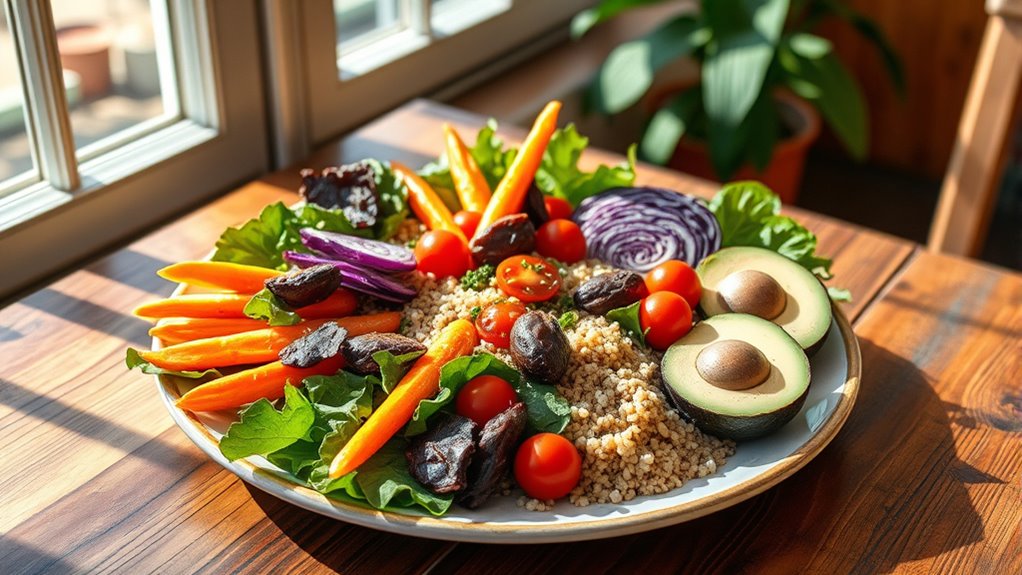
To create a balanced plant-based plate, focus on including a variety of nutrient-dense foods like vegetables, legumes, whole grains, and healthy fats. Prioritize colorful produce and experiment with textures and flavors to keep meals exciting. Planning ahead, prepping ingredients, and combining different cooking methods can make healthy eating easier and more enjoyable. Keep these tips in mind, and you’ll discover how to build satisfying, nourishing meals with confidence. Continue exploring for more helpful ideas.
Key Takeaways
- Plan meals with a variety of plant proteins, whole grains, and colorful vegetables for balanced nutrition.
- Prepare ingredients in advance to streamline meal assembly and reduce reliance on processed foods.
- Incorporate diverse textures and flavors with herbs, spices, and different cooking methods to keep meals interesting.
- Fill half your plate with vegetables to maximize vitamin, mineral, and fiber intake.
- Use nutrient-dense foods and a mix of food groups to support overall health and satiety.

A balanced plant-based plate combines a variety of nutrient-rich foods to support your health and satisfy your taste buds. If you’re new to plant-based eating, understanding how to assemble meals that are both nutritious and appealing can feel overwhelming. One of the best ways to simplify this process is to incorporate effective meal prep tips. Planning ahead allows you to organize ingredients and flavors, making it easier to create balanced plates throughout the week. For example, cook grains like brown rice or quinoa in advance, prepare a batch of roasted vegetables, and store them separately. When mealtime arrives, you can quickly assemble a plate with minimal effort. This approach guarantees you don’t rely on processed foods and helps you stick to your nutritional goals.
When it comes to flavor combinations, don’t be afraid to experiment. Combining different textures and tastes keeps your meals exciting and prevents boredom. For instance, pairing creamy avocado with crunchy raw vegetables, or balancing sweet roasted carrots with tangy lemon juice, adds depth to your dishes. Incorporate herbs and spices to elevate simple ingredients—cumin, paprika, garlic, and fresh cilantro can transform a bland mix into a flavorful meal. Remember, variety is key: rotate different legumes, grains, and vegetables to ensure you’re getting a broad spectrum of nutrients. Using a mix of colors on your plate also signals a diverse intake of vitamins and minerals, supporting overall health.
A good rule of thumb is to aim for a balanced plate that includes a source of protein, a complex carbohydrate, healthy fats, and plenty of vegetables. Legumes like chickpeas, lentils, and black beans provide plant-based protein and fiber, helping you feel full longer. Whole grains such as oats, barley, or whole wheat bread serve as your energy base, while nuts, seeds, and olive oil add healthy fats that support brain function and heart health. Vegetables should take up at least half of your plate—think leafy greens, colorful peppers, zucchini, or cruciferous vegetables like broccoli. Incorporate different cooking methods—raw, roasted, steamed, or sautéed—to keep textures interesting.
Frequently Asked Questions
Can I Get Enough Protein From a Plant-Based Diet?
Yes, you can get enough protein from a plant-based diet. By including diverse protein sources like beans, lentils, tofu, tempeh, nuts, and seeds, you guarantee adequate intake. Combining different sources improves nutrient absorption, making the protein more beneficial. Also, eating a variety of foods helps meet your overall nutritional needs, so you stay healthy and energized while enjoying a plant-based lifestyle.
How Do I Ensure Adequate Iron Intake?
To guarantee adequate iron intake, include plenty of plant-based sources like lentils, spinach, and fortified cereals. Enhance iron absorption by pairing these foods with vitamin C-rich options such as bell peppers or citrus fruits. Avoid drinking tea or coffee around mealtime, as they can hinder absorption. Consistently incorporating diverse plant-based sources and optimizing absorption strategies helps you meet your iron needs effectively.
Are Plant-Based Diets Suitable for Children?
Yes, plant-based diets can be suitable for children if you plan carefully. Many plant-based myths and vegan misconceptions exist, but with proper attention to nutrients like protein, iron, and calcium, children can thrive. Make certain they eat a variety of fruits, vegetables, legumes, nuts, and fortified foods. Consult a pediatrician or nutritionist to address specific needs and dispel any vegan misconceptions, making sure your child gets all necessary nutrients.
What Are Quick Plant-Based Meal Ideas?
For quick plant-based meal ideas, you can whip up a smoothie with fruits, spinach, and plant-based milk for breakfast or grab some hummus with veggie sticks for a snack. Prepare overnight oats with chia seeds and berries for an easy breakfast. For snacks, try nut butter on whole-grain toast or trail mix. These options are fast, nutritious, and perfect for busy days.
How Can I Prevent Nutrient Deficiencies on a Plant-Based Diet?
To prevent nutrient deficiencies on a plant-based diet, make sure you include calcium sources like fortified plant milks, leafy greens, and tofu, and consider taking a vitamin B12 supplement, as it’s mainly found in animal products. Incorporate a variety of fruits, vegetables, grains, and legumes to guarantee balanced nutrients. Regularly check your levels with a healthcare provider, and adjust your diet to meet your nutritional needs.
Conclusion
Now that you know how to build balanced plant-based plates, think of your meal as a vibrant garden bursting with life. Each component—protein, grains, vegetables—are like colorful flowers working together to create harmony and nourishment. Embrace this approach, and your plate will flourish with flavor and health. Remember, cooking is your garden—tend to it with care, and you’ll reap a harvest of delicious, nourishing meals every time.