
To optimize your vegan meal prep, focus on balancing protein, carbs, and minerals for energy and recovery. Include plant-based proteins like lentils, tofu, and edamame, paired with complex carbohydrates such as quinoa, sweet potatoes, and oats. Don’t forget mineral-rich foods like leafy greens, nuts, and seeds, which support muscle and bone health. Hydrate well and consider supplements like B12 or iron to fill gaps. Continue exploring to discover more tips for maximizing your plant-based athletic performance.

Get kitchen staples and gadgets delivered free — and shop member deals
- Fast, free delivery on millions of items
- Access to Prime Big Deal Days deals on October 6–7
- Prime Video, Amazon Music and more included
Key Takeaways
- Incorporate complex carbs like quinoa, sweet potatoes, and oats for sustained energy during training and recovery.
- Use plant-based protein sources such as lentils, tofu, and vegan protein powders to meet muscle repair needs.
- Include mineral-rich foods like leafy greens, nuts, seeds, and dried fruits to support bone health and immune function.
- Pair iron-rich foods with vitamin C sources to maximize absorption and prevent deficiencies.
- Plan and prep meals ahead to ensure consistent intake of balanced nutrients and avoid unhealthy last-minute choices.
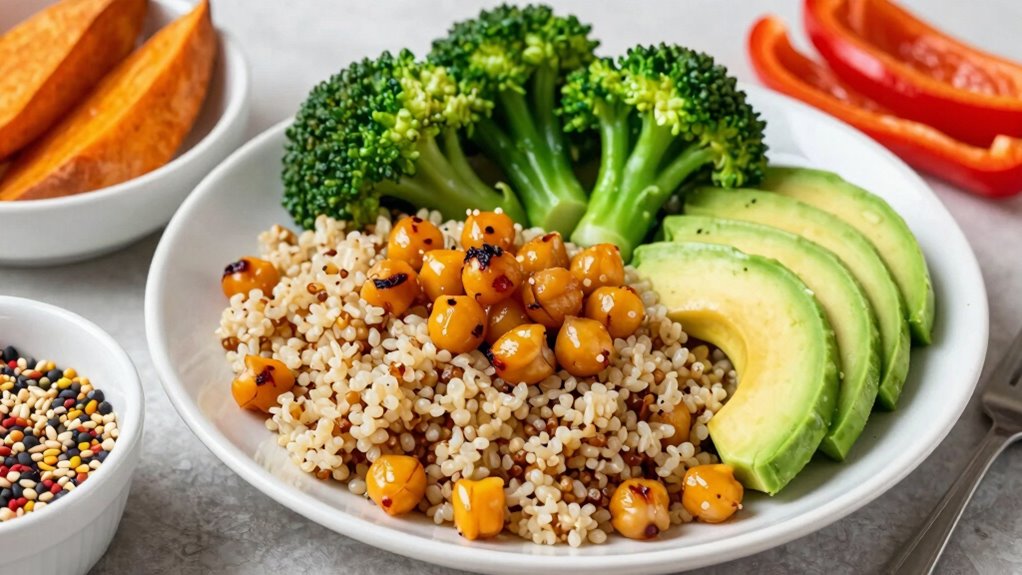
If you’re an athlete looking to optimize your performance while following a vegan diet, meal prep can be a game-changer. Planning your meals in advance guarantees you get the right balance of protein, carbs, and minerals, which are essential for sustaining energy, building muscle, and recovering efficiently. When focusing on plant-based nutrition, you’ll want to incorporate plant-based supplements to fill any gaps in your diet. These supplements, like vegan protein powders, B12, or iron, can boost your nutrient intake without compromising your vegan principles. They’re especially handy around workouts when your body demands quick, easily digestible nutrients. Pairing your meals with hydration strategies is equally crucial. Staying well-hydrated helps maintain performance, supports digestion, and aids in nutrient absorption. Drinking water consistently throughout the day, adding electrolyte drinks post-workout, or consuming hydrating foods like watermelon and cucumbers can keep you in top shape.
Meal prep, plant-based supplements, and hydration are key to optimizing vegan athletic performance.
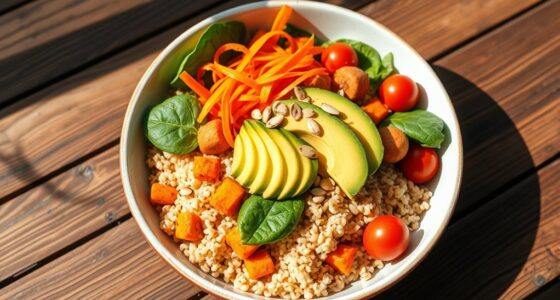
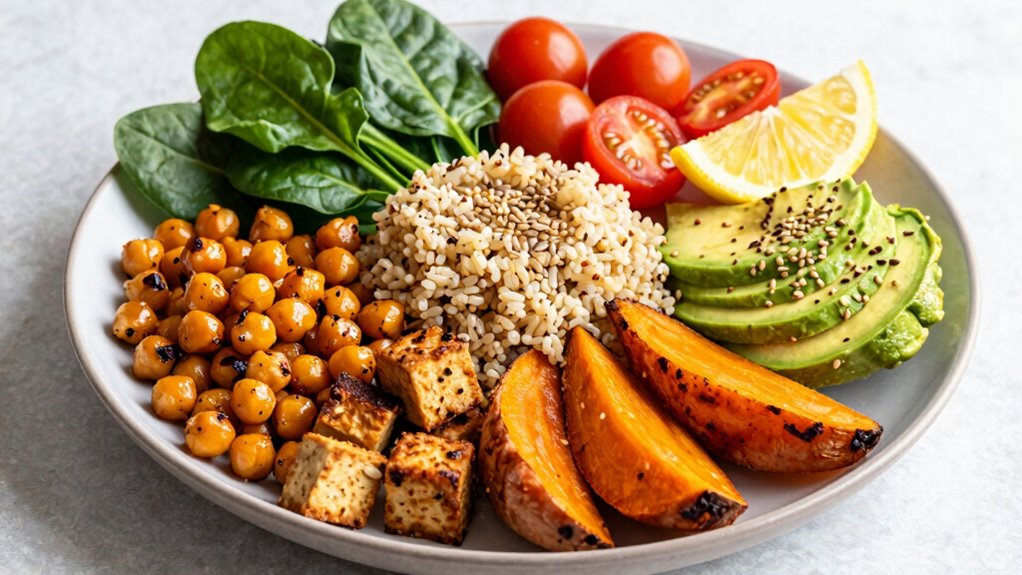
For your carb sources, think beyond plain grains. Incorporate complex carbs such as quinoa, sweet potatoes, oats, and brown rice, which provide sustained energy during training sessions. These carbs replenish glycogen stores and prevent fatigue, allowing you to push harder and recover faster. Proper carbohydrate timing can also enhance your energy levels during workouts and improve recovery afterward. Protein is equally critical, so include diverse plant-based options like lentils, chickpeas, tofu, tempeh, and edamame. To streamline your intake, prepare protein-rich salads, stir-fries, or grain bowls in bulk, ensuring you have convenient, nutrient-dense options ready to go. Adding vegan protein powders to smoothies or oatmeal is another effective way to boost your daily protein intake without fuss. Additionally, understanding plant-based nutrition can help you tailor your diet to meet all your athletic needs effectively. Incorporating nutrient-dense foods into your meal prep also supports overall health and performance. Regularly consulting dietary guidelines can further optimize your meal planning and ensure you’re covering all your nutritional bases.
Minerals like iron, calcium, magnesium, and zinc play a crucial role in muscle function, bone health, and immune support. To meet these needs, incorporate leafy greens like spinach and kale, fortified plant milks, nuts, seeds, and dried fruits into your meal prep. These foods are rich in essential minerals and easy to include in your prepped meals. Always remember to pair iron-rich foods with vitamin C sources like bell peppers or citrus to enhance absorption. Consistency is key; by establishing a routine of meal prepping, you’ll avoid last-minute unhealthy choices and stay aligned with your nutritional goals.
Ultimately, your success as a vegan athlete depends on a strategic approach that balances plant-based supplements, hydration strategies, and nutrient-dense foods. With thoughtful planning and preparation, you’ll fuel your body properly, perform at your best, and recover faster—all while sticking to your vegan lifestyle.
Frequently Asked Questions
How Do Vegans Ensure Sufficient Vitamin B12 Intake?
You guarantee sufficient vitamin B12 intake by incorporating plant-based supplementation, such as fortified foods or B12 supplements, into your diet. Since B12 absorption methods are vital, choose options like sublingual tablets or injections that bypass stomach acid, increasing absorption efficiency. Regularly consuming fortified plant milks, cereals, or nutritional yeast helps maintain adequate B12 levels, supporting your overall health and athletic performance on a vegan diet.
What Are the Best Plant-Based Protein Sources for Athletes?
Think of plant-based proteins as your athletic fuel—powerful and versatile. You ought to focus on vegan protein sources like lentils, chickpeas, quinoa, and tofu, which pack a punch of essential amino acids. Seeds like chia and hemp also boost your intake. These plant-based proteins fuel your muscles, help recovery, and keep your energy steady. Incorporating a variety ensures you get all the nutrients needed for peak performance.
How Can I Balance Electrolytes in a Vegan Meal Plan?
To balance electrolytes in your vegan meal plan, incorporate mineral-rich foods like spinach, bananas, and sweet potatoes, which provide potassium and magnesium. You can also drink electrolyte drinks during intense workouts to replenish lost minerals. Including a variety of these foods and beverages guarantees you maintain proper hydration and mineral balance, supporting ideal performance and recovery. Keep track of your intake to stay energized and avoid imbalances.
Are There Any Common Nutrient Deficiencies in Vegan Athletes?
You’re risking more than just a slight dip in energy if you overlook common nutrient deficiencies in vegan athletes! Iron, B12, omega-3s, and calcium are often scarce in plant-based diets. To combat this, incorporate plant-based superfoods like chia seeds, spirulina, and fortified foods. Vegan supplement strategies, such as B12 supplements or algae oil, are essential to fill these gaps and keep your performance at an unstoppable level.
How Do I Prevent Muscle Loss on a Vegan Diet?
To prevent muscle loss on a vegan diet, focus on muscle preservation through adequate protein intake and proper meal timing. Consume protein-rich foods like beans, lentils, tofu, and tempeh evenly throughout the day, especially post-workout. Incorporate carbohydrate sources for energy and minerals to support recovery. Staying consistent with your meal schedule guarantees your muscles get the nutrients they need, helping you maintain strength and muscle mass.
Conclusion
By embracing vegan meal prep, you’re fueling your body like a high-performance machine, packed with all the protein, carbs, and minerals it craves. With simple planning, you’ll crush your workouts and recover faster than ever before. Think of it as revealing the secret to unstoppable energy—your secret weapon in the game of athletic greatness. Stick with it, and you’ll witness your strength and endurance skyrocket to levels you never imagined possible.
NFL season / tailgating Picks
team gear
As an affiliate, we earn on qualifying purchases.