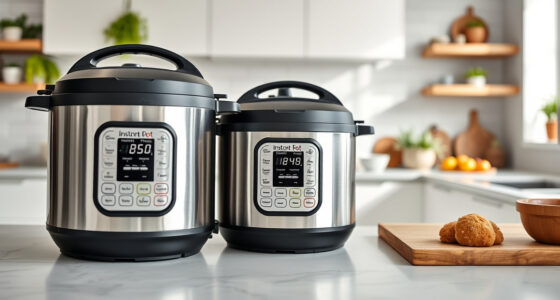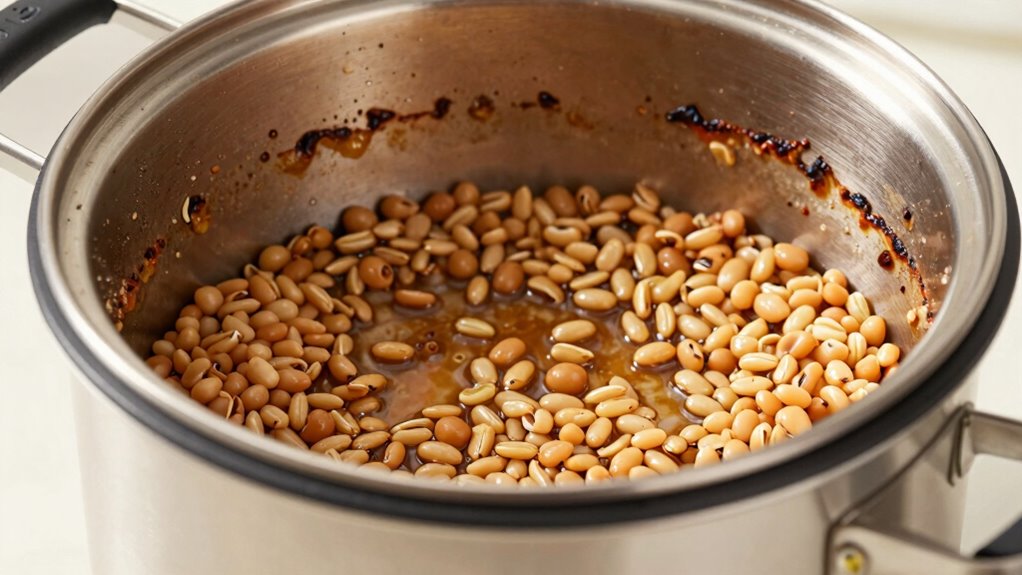

An electric bean cooker pot can make dried beans easier to prepare, but capacity, controls, and cleanup vary widely across multi-cookers and electric hot pots. My best overall pick is the Instant Pot Duo 6 Qt for its practical capacity and pressure-cooking versatility; the Cosori 6-Quart stands out for its ceramic inner pot, while the OLIXIS 3 Quart suits smaller kitchens and portions. The main tradeoff is between a pressure cooker built for hands-off batches and a simple hot pot better suited to small, quick meals. Pot size also affects how much you can cook at once and how much counter space the appliance takes. Read on for the full comparison and a guide to choosing the right fit.

Get kitchen staples and gadgets delivered free — and shop member deals
- Fast, free delivery on millions of items
- Access to Prime Big Deal Days deals on October 6–7
- Prime Video, Amazon Music and more included
Complete the kit


Key Takeaways
- The 6-quart Instant Pot Duo earns the lead because its capacity and pressure-cooking format suit regular batches of beans without jumping to an especially large appliance.
- The Cosori 6-Quart and DUMOS 8 QT stand apart through their ceramic inner pots, but the larger DUMOS makes more sense for bigger batches than for a compact kitchen.
- The Instant Pot Duo, Duo Plus, and Rio Mini offer familiar pressure-cooker formats; the Duo Plus adds more cooking programs, while the 4-quart Mini trims the footprint.
- The 3-quart OLIXIS and Instant Pot Duo Mini fit smaller households, though their reduced capacity limits batch cooking and leftovers.
- The Elite Gourmet Noodle Express and AORAN hot pot serve a different purpose from pressure cookers: they favor direct, flexible hot-pot cooking over automated pressure-cooked bean batches.
| Instant Pot Duo 6 Qt 7-in-1 Electric Pressure Cooker, Stainless Steel | 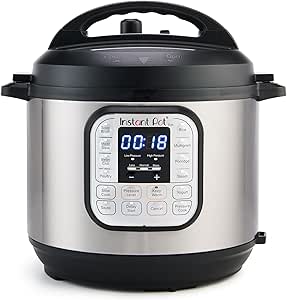 | Best Overall for Beans | Capacity: 6 quarts | Cooking functions: 7: pressure cook, slow cook, sauté, steam, rice, yogurt, keep warm | Smart programs: 13 one-touch options | VIEW ON AMAZON | See Our Full Breakdown |
| DUMOS 16-in-1 Electric Pressure Cooker, 8 QT Programmable Multi-Cooker with 12 Presets, Ceramic Inner Pot, Delay Start & Keep Warm, Black |  | Best for Large Batches | Capacity: 8 QT (also listed as 8 liters) | Functions: 16-in-1 | Presets: 12 one-touch presets | VIEW ON AMAZON | See Our Full Breakdown |
| COMFEE’ 12-in-1 Electric Pressure Cooker, 6 Quarts, Nonstick Pot |  | Best for Easy Cleanup | Capacity: 6 quarts | Functions: 12-in-1, including pressure cook, slow cook, rice, steam, sauté, yogurt, cake, egg, and keep warm | Presets: 14 programmable preset functions | VIEW ON AMAZON | See Our Full Breakdown |
| Elite Gourmet 1.25 Qt Noodle Express Electric Hot Pot, Stainless Steel |  | Best Compact Bean Pot | Capacity: 1.25 quarts | Interior material: Food-grade 304 stainless steel | Temperature settings: Low and high | VIEW ON AMAZON | See Our Full Breakdown |
| AORAN 6-Quart Multi-Function Electric Hot Pot Cooker, 1400W, Nonstick, with Accessories |  | Best for Shared Hot Pot Meals | Capacity: 6 quarts | Power: 1400W | Functions: Frying, boiling, slow cooking, stewing, and hot pot | VIEW ON AMAZON | See Our Full Breakdown |
| OLIXIS 10-in-1 Electric Pressure Cooker, 3 Quart Multi-Cooker |  | Best for Programmable Small-Batch Cooking | Capacity: 3 quarts | Power: 700 watts | Cooking presets: 10 | VIEW ON AMAZON | See Our Full Breakdown |
| Instant Pot Rio Mini 4 Qt 7-in-1 Electric Pressure Cooker, Black |  | Best for Compact Kitchens | Capacity: 4 quarts | Cooking functions: 7 | Power: 800 watts | VIEW ON AMAZON | See Our Full Breakdown |
| Instant Pot Duo Plus 6-Quart 9-in-1 Electric Pressure Cooker |  | Best for Family Bean Batches | Capacity: 6 quarts | Cooking functions: 9 | Smart programs: 15 | VIEW ON AMAZON | See Our Full Breakdown |
| Instant Pot Duo 7-in-1 Mini Electric Pressure Cooker, 3 Quart, Stainless Steel |  | Best for Small Portions | Capacity: 3 quarts | Cooking functions: 7 | Smart programs: 11 | VIEW ON AMAZON | See Our Full Breakdown |
| Cosori 6-Quart 9-in-1 Pressure Cooker with Ceramic Inner Pot |  | Best for Ceramic-Pot Preference | Capacity: 6 quarts | Power: 1100 watts | Voltage: 120 V AC | VIEW ON AMAZON | See Our Full Breakdown |
| electric bean cooker pot | Capacity | Power | Inner pot |
|---|---|---|---|
| Instant Pot Duo 6 Qt 7-in-1 El | 6 quarts | 1000 watts | 18/8 stainless steel with tri-ply bottom |
| DUMOS 16-in-1 Electric Pressur | 8 QT (also listed as 8 liters) | 1200 watts | Ceramic |
| COMFEE’ 12-in-1 Electric Press | 6 quarts | — | Nonstick |
| Elite Gourmet 1.25 Qt Noodle E | 1.25 quarts | — | — |
| AORAN 6-Quart Multi-Function E | 6 quarts | 1400W | — |
| OLIXIS 10-in-1 Electric Pressu | 3 quarts | 700 watts | Ceramic nonstick |
| Instant Pot Rio Mini 4 Qt 7-in | 4 quarts | 800 watts | — |
| Instant Pot Duo Plus 6-Quart 9 | 6 quarts | 1000 watts | 18/8 stainless steel with tri-ply bottom |
| Instant Pot Duo 7-in-1 Mini El | 3 quarts | 700 watts | — |
| Cosori 6-Quart 9-in-1 Pressure | 6 quarts | 1100 watts | Ceramic coating |
More Details on Our Top Picks
Instant Pot Duo 6 Qt 7-in-1 Electric Pressure Cooker, Stainless Steel
For cooks who want one pot to handle beans and a wider set of family meals, the Instant Pot Duo’s pressure-cooking and slow-cooking modes make it the most flexible bean-focused pick here. Its 6-quart capacity suits batches for up to six, while the 18/8 stainless steel pot with a tri-ply bottom offers a durable cooking surface. Compared with the COMFEE’ 6-quart cooker, the Duo adds yogurt and keep-warm functions but has fewer listed presets. It also cooks under pressure, which can shorten bean preparation compared with slow cooking. The tradeoff is that stainless steel can need more attention during cleanup than COMFEE’s nonstick pot, and 6 quarts may be limiting for larger households. I’d choose it for a dependable all-rounder, not for maximum batch size.
Pros:- Pressure and slow-cooking modes suit different bean recipes and schedules
- Six-quart capacity serves up to six
- Tri-ply stainless steel inner pot
- Dishwasher-safe lid and inner pot
Cons:- Six-quart size may be small for large families or extensive batch cooking
- Stainless steel may take more care to clean than a nonstick pot
Best for: Families who want pressure-cooked bean batches alongside rice, steaming, and slow-cooked meals
Not ideal for: Large households that need more than a six-quart batch, or cooks who prioritize a nonstick inner pot
- Capacity:6 quarts
- Cooking functions:7: pressure cook, slow cook, sauté, steam, rice, yogurt, keep warm
- Smart programs:13 one-touch options
- Inner pot:18/8 stainless steel with tri-ply bottom
- Power:1000 watts
- Voltage:120V, 60Hz
- Safety:UL and ULC listed; 10+ safety mechanisms
- Included accessory:Stainless steel steamer rack
Our verdict“Choose the Instant Pot Duo for a versatile six-quart bean cooker that can also cover many everyday cooking jobs.”
DUMOS 16-in-1 Electric Pressure Cooker, 8 QT Programmable Multi-Cooker with 12 Presets, Ceramic Inner Pot, Delay Start & Keep Warm, Black
The 8-quart capacity makes the DUMOS the batch-cooking specialist in this group, with room for bean meals intended to stretch across several servings. Its delay start and keep-warm settings add scheduling flexibility that the listed AORAN hot pot does not offer, while 12 presets support a broader range of automated cooking tasks. It is a pressure cooker, so it is a closer fit for bean-focused cooking than the compact Elite Gourmet hot pot, which has only low and high heat settings. The cost of that capacity is its footprint: at more than 14 pounds and roughly 14 inches wide, it needs a dedicated storage spot. The product details also refer to conflicting capacity measurements, so buyers should verify the stated 8-quart size before choosing it.
Pros:- Eight-quart listed capacity accommodates larger batches
- Twelve presets cover multiple cooking tasks
- Delay start and keep-warm functions support flexible meal timing
- Ceramic inner pot and dishwasher-safe removable parts simplify cleanup
Cons:- Large footprint and 14.4-pound weight take up storage and counter space
- Product details contain conflicting capacity references
Best for: Meal preppers and larger households who want to pressure-cook substantial bean batches and schedule cooking
Not ideal for: Small kitchens or buyers seeking a compact appliance with clearly consistent capacity details
- Capacity:8 QT (also listed as 8 liters)
- Functions:16-in-1
- Presets:12 one-touch presets
- Inner pot:Ceramic
- Power:1200 watts
- Voltage:120 volts
- Special features:Delay start up to 24 hours; keep warm
- Dimensions:13.15 in D × 14.57 in W × 13.78 in H
- Weight:14.4 pounds
Our verdict“Pick the DUMOS if batch size and programmable scheduling matter more than compact storage.”
COMFEE’ 12-in-1 Electric Pressure Cooker, 6 Quarts, Nonstick Pot
For cooks who want a straightforward bean cooker with fewer cleanup hassles, the COMFEE’ pairs a 6-quart nonstick pot with pressure and slow-cooking functions. Its 14 programmable presets and 24-hour delay timer give it more listed presets and scheduling detail than the Instant Pot Duo, making it appealing for varied meal routines. The included steam rack, measuring cup, spoon, and ladle also mean there are useful accessories in the box. Against the Duo’s stainless steel inner pot, the nonstick surface can make serving and washing easier, but its coating may wear over time and calls for gentle handling. It offers substantial versatility, though its 12-in-1 label covers several roles beyond beans; buyers who mainly want a small, dedicated cooker may find it more appliance than they need.
Pros:- Six-quart capacity suits family-size batches
- Nonstick inner pot can ease serving and cleanup
- Fourteen programmable presets and a 24-hour delay timer
- Includes a steam rack, measuring cup, spoon, and ladle
Cons:- Nonstick coating may wear over time
- Coating requires gentler utensil and cleaning care than stainless steel
Best for: Busy households that want a six-quart pressure cooker with a nonstick pot, preset programs, and included cooking accessories
Not ideal for: Cooks who prefer an uncoated stainless steel pot or want a compact appliance dedicated to small bean portions
- Capacity:6 quarts
- Functions:12-in-1, including pressure cook, slow cook, rice, steam, sauté, yogurt, cake, egg, and keep warm
- Presets:14 programmable preset functions
- Delay timer:24 hours
- Safety features:10, including overheat protection, auto pressure release, and lid-safety lock
- Inner pot:Nonstick
- Included accessories:Spoon, ladle, condensation cup, measuring cup, steam rack, and power cord
Our verdict“Choose the COMFEE’ if an easy-release nonstick pot and scheduling features matter more than a stainless steel cooking surface.”
Elite Gourmet 1.25 Qt Noodle Express Electric Hot Pot, Stainless Steel
The Elite Gourmet is the small-space pick for simple bean dishes, reheating portions, or boiling ingredients when a full-size pressure cooker would be excessive. At 1.25 quarts, it is far smaller than the 6-quart Instant Pot Duo, so it suits individual meals rather than batch cooking. Its 304 stainless steel interior gives it a durable alternative to the AORAN’s nonstick surface, but the basic low and high thermostat lacks the pressure and program controls that make the Duo better suited to cooking dried beans efficiently. A vented glass lid and cool-touch handle support everyday stovetop-style use, while the removable cord makes storage easier. This is a compact hot pot with broad simple uses, not a full-featured bean cooker; hand washing is another tradeoff.
Pros:- Compact 1.25-quart capacity fits tight kitchens and small servings
- 304 stainless steel interior
- Low and high heat settings cover simmering and faster cooking
- Removable power cord supports easier storage
Cons:- Small capacity is unsuitable for family-size bean batches
- Only two heat settings, with no pressure-cooking programs
- Hand wash only
Best for: Students, office workers, or RV owners who need a compact pot for small bean portions and simple meals
Not ideal for: Families, batch cooks, or anyone who needs pressure cooking and programmable bean settings
- Capacity:1.25 quarts
- Interior material:Food-grade 304 stainless steel
- Temperature settings:Low and high
- Lid:Vented tempered glass
- Handle:Cool-touch
- Power cord:Removable
- Cleaning:Hand wash only
- Warranty:1 year
Our verdict“Choose the Elite Gourmet for small portions and limited counter space, rather than for batch cooking beans.”
AORAN 6-Quart Multi-Function Electric Hot Pot Cooker, 1400W, Nonstick, with Accessories
The AORAN suits readers who use “bean cooker” to mean a roomy pot for simmering bean dishes at the table, rather than a pressure cooker for speeding up dried beans. Its 6-quart capacity and 1400W heating system support shared meals, and the listed functions include frying, boiling, stewing, and slow cooking. Compared with the Instant Pot Duo, it offers a hot-pot format and a micro-pressure moisture-lock lid, but the supplied details do not list the Duo’s pressure-cooking programs or programmable presets. The nonstick surface may simplify serving and cleanup, and the included soup spoon, slotted spoon, and spatula are useful for communal cooking. In return, the coating needs gentle care, and its larger footprint is a poor fit for small counters.
Pros:- Six-quart capacity is suited to shared meals
- 1400W heating system for frying, boiling, stewing, and slow cooking
- Nonstick pot surface
- Includes soup spoon, slotted spoon, and spatula
Cons:- Product details do not list the pressure-cooking programs found on the Instant Pot Duo
- Large capacity takes more counter and storage space
- Nonstick coating calls for gentle cleaning and utensil care
Best for: Households and groups who want to serve hot pot or simmered bean meals from one large cooker
Not ideal for: Cooks seeking dedicated pressure-cooking programs for dried beans or those with little counter space
- Capacity:6 quarts
- Power:1400W
- Functions:Frying, boiling, slow cooking, stewing, and hot pot
- Pot surface:Nonstick
- Lid:Micro-pressure moisture lock
- Temperature control:Yes
- Serving capacity:4–8 people
- Included accessories:Soup spoon, slotted spoon, spatula
Our verdict“Pick the AORAN for communal hot pot and simmered meals; choose a listed pressure cooker for faster dried-bean cooking.”
OLIXIS 10-in-1 Electric Pressure Cooker, 3 Quart Multi-Cooker
The OLIXIS 3-quart suits a small kitchen where bean dishes are usually cooked for one or two people. Its 24-hour delay start and automatic keep-warm make it easier to plan a meal ahead, while pressure cooking can shorten cooking time for beans and stews compared with traditional methods. It also adds yogurt, rice, steaming, and canning presets, giving it a broader menu than the Instant Pot Duo Mini, which has a stainless steel pot and 11 one-touch programs. That ceramic nonstick pot may make serving and cleanup simpler, but it calls for gentle handling. The 700-watt output and compact capacity are limiting for dense recipes or batch cooking, so I’d choose a 6-quart cooker for a family-sized pot of beans.
Pros:- Three-quart capacity fits small meals and side dishes
- Ten presets include stew, yogurt, rice, steaming, and canning
- Delay start and automatic keep-warm support meal planning
- Ceramic nonstick inner pot may simplify serving and cleanup
Cons:- Capacity is restrictive for family meals or batch cooking
- 700-watt power may be modest for large, dense batches
- Ceramic coating needs gentle handling
Best for: One- or two-person households that want a compact pressure cooker with delayed start and keep-warm features
Not ideal for: Families or batch cooks who need room for large portions of beans, or buyers who prefer a stainless steel inner pot
- Capacity:3 quarts
- Power:700 watts
- Cooking presets:10
- Inner pot:Ceramic nonstick
- Delay start:24 hours
- Dimensions:10.43 × 11.02 × 11.06 inches
- Weight:7.9 pounds
- Safety:Triple integrated pressure release valves and heat sensors
Our verdict“Choose the OLIXIS if you cook beans in small portions and value preset variety and scheduled cooking over batch capacity.”
Instant Pot Rio Mini 4 Qt 7-in-1 Electric Pressure Cooker, Black
For bean cooking in a tight kitchen, the Instant Pot Rio Mini offers a useful middle ground between a 3-quart cooker and a full-size family model. Its 4-quart capacity is listed to serve up to four people, leaving more room for a modest bean batch than the OLIXIS or Instant Pot Duo Mini. Pressure cooking is joined by slow cooking, sautéing, steaming, rice, and yogurt functions, so browning aromatics before adding beans does not require another pan. The stainless steel pot and dishwasher-safe lid simplify cleanup, while the progress indicator and anti-spin design support hands-on stirring. Compared with the 6-quart Instant Pot Duo Plus, this model takes less storage space but gives up capacity and functions such as sous vide. Its 800-watt power is also lower than that larger cooker’s 1000 watts.
Pros:- Four-quart capacity provides more room than the 3-quart compact models
- Sauté function lets cooks soften aromatics in the same pot
- Stainless steel pot and dishwasher-safe lid ease cleanup
- Progress indicator, anti-spin design, and over 10 safety features add practical support
Cons:- Four-quart capacity still limits batch cooking for larger households
- 800-watt power is lower than the 6-quart Duo Plus
- Product data lists the color as black while also mentioning a Rosewater finish
Best for: Students, singles, and small households seeking a space-conscious cooker for modest bean meals and everyday sides
Not ideal for: Large households or cooks who regularly prepare beans in bulk and need a larger capacity
- Capacity:4 quarts
- Cooking functions:7
- Power:800 watts
- Voltage and frequency:120 V, 60 Hz
- Included accessory:Stainless steel steam rack
- Safety:Over 10 safety features
- Cleaning:Dishwasher-safe lid and stainless steel pot
- Color listed:Black
Our verdict“Pick the Rio Mini if counter and storage space matter and a four-quart batch is enough for your household.”
Instant Pot Duo Plus 6-Quart 9-in-1 Electric Pressure Cooker
The 6-quart capacity makes the Duo Plus a stronger fit than the compact OLIXIS or Rio Mini when you want beans for a family meal or several servings to use later. It combines pressure and slow cooking with sautéing, steaming, yogurt, and sous vide, among nine functions; 15 one-touch programs reduce the need to set every cook manually. The stainless steel pot with a tri-ply bottom is a practical choice for cooks who want a durable cooking surface rather than the ceramic coating on the Cosori. Its 1000-watt power also exceeds the compact models’ listed outputs. The tradeoff is footprint: this is a larger appliance for a small kitchen, and its 120 V requirement may limit use where that supply is unavailable. For a basic small pot of beans, the Duo Mini takes less space.
Pros:- Six-quart capacity suits family portions and batch cooking
- Nine functions include pressure cooking, slow cooking, sautéing, and sous vide
- Fifteen one-touch programs simplify common cooking settings
- Stainless steel tri-ply-bottom pot and dishwasher-safe parts support regular use and cleanup
Cons:- Six-quart size may be bulky in a small kitchen
- Requires a 120 V power supply
- Larger capacity may be unnecessary for cooks making only small portions
Best for: Families and meal-preppers who want room for larger bean batches and several cooking methods in one appliance
Not ideal for: People with limited counter or storage space, or anyone needing a cooker for a supply other than 120 V
- Capacity:6 quarts
- Cooking functions:9
- Smart programs:15
- Inner pot:18/8 stainless steel with tri-ply bottom
- Power:1000 watts
- Voltage and frequency:120 V, 60 Hz
- Included accessories:2 extra sealing rings and stainless steel steam rack
- Safety listing:UL and ULC Listed
Our verdict“Choose the Duo Plus for family-sized bean batches and broad functionality if you have room for a full-size cooker.”
Instant Pot Duo 7-in-1 Mini Electric Pressure Cooker, 3 Quart, Stainless Steel
The Instant Pot Duo Mini is the straightforward compact pick for cooks who usually make beans as a side dish or a small meal. Its 3-quart stainless steel pot has a tri-ply bottom, and the seven functions cover pressure cooking, slow cooking, sautéing, steaming, rice, yogurt, and warming. Eleven smart programs give it more one-touch options than the Rio Mini’s seven listed cooking functions, though the Rio offers an extra quart of capacity. Compared with the OLIXIS, this model swaps a ceramic nonstick surface and delay start for stainless steel construction and a dishwasher-safe inner pot. That compact size is easy to fit into a small kitchen, but it limits batch size; households cooking beans for several meals at once will be better served by the 6-quart Duo Plus. Its 700-watt power also favors modest portions.
Pros:- Compact 3-quart size suits small portions and side dishes
- Seven cooking functions include pressure cooking and sautéing
- Eleven smart programs provide one-touch settings
- Dishwasher-safe stainless steel pot and lid simplify cleanup
Cons:- Three-quart capacity is too limited for many family meals or batch cooking
- 700-watt power is modest compared with the 6-quart models
- Compact batch size may require cooking in multiple rounds
Best for: Singles, couples, or cooks who want a small stainless steel cooker for bean sides and occasional compact meals
Not ideal for: Families and meal-preppers who need larger batches or leftovers from a single cook
- Capacity:3 quarts
- Cooking functions:7
- Smart programs:11
- Power:700 watts
- Voltage and frequency:120 V, 60 Hz
- Pot material:18/8 stainless steel with tri-ply bottom
- Safety:Over 10 safety mechanisms, including overheat protection and safety lid lock
- Cleaning:Dishwasher-safe lid and inner pot
Our verdict“Choose the Duo Mini when a durable stainless steel pot and small bean portions matter more than batch capacity.”
Cosori 6-Quart 9-in-1 Pressure Cooker with Ceramic Inner Pot
The Cosori pairs a 6-quart capacity with a ceramic-coated inner pot, making it a family-scale alternative to the 3-quart OLIXIS and Instant Pot Duo Mini. Its nine cooking functions include pressure cooking, slow cooking, rice, steaming, sautéing, and sous vide, so bean dinners can be built around more than a single preset. At 1100 watts, it has the highest listed power among these five picks, while the angled steam release directs steam away from the control area. The Duo Plus offers a stainless steel tri-ply pot and extra sealing rings; the Cosori instead suits buyers who prefer a ceramic-coated cooking surface and dishwasher-safe accessories. That coating may need more careful handling than stainless steel. For recipes with excess liquid, the product information recommends natural steam release to reduce splattering.
Pros:- Six-quart capacity accommodates family meals and larger bean batches
- Nine cooking functions include pressure cooking, sautéing, and sous vide
- Ceramic-coated pot and dishwasher-safe accessories support easier cleanup
- Angled steam release and 12 safety features add practical protection
Cons:- Ceramic coating may require more careful handling than stainless steel
- Product information recommends natural release for excess-liquid recipes to reduce splattering
- Slow Cook preheating may feel cool because the function uses a low temperature
Best for: Families who want a 6-quart multi-cooker and prefer a ceramic-coated inner pot for bean dishes
Not ideal for: Cooks who prefer an uncoated stainless steel pot or want a compact appliance for small portions
- Capacity:6 quarts
- Power:1100 watts
- Voltage:120 V AC
- Product size:13.4 × 12.6 × 12.5 inches
- Weight:11.9 pounds
- Inner pot:Ceramic coating
- Safety features:12
- Food-contact materials:BPA-free
Our verdict“Choose the Cosori if you want family-sized bean cooking with a ceramic-coated pot and accept its care and release guidance.”
How We Picked
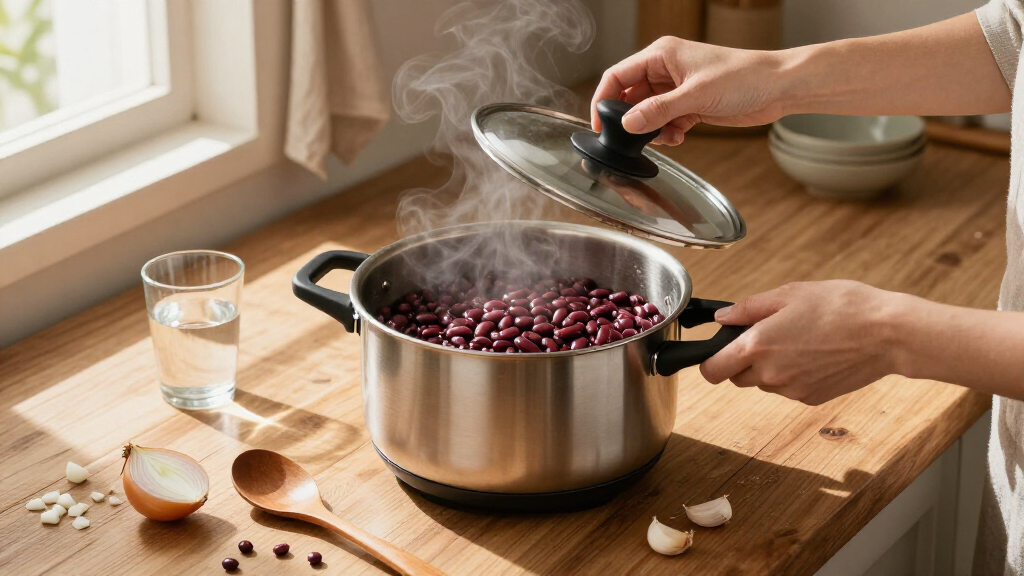
I compared these options for the job implied by “electric bean cooker pot”: preparing beans conveniently, in a useful quantity, with controls and cleanup that suit regular home cooking. Capacity, pressure-cooking capability, cooking programs, inner-pot material, and ease of use shaped the comparison. I also considered whether each appliance offers useful flexibility beyond beans and whether its size makes sense for typical household portions.
The ranking favors pressure cookers that pair practical batch capacity with straightforward controls and broad everyday use. Models with extra programs or a ceramic pot can suit buyers who value those features, but added capacity or complexity is only an advantage when it fits the cook’s routine. Compact pressure cookers rank well for smaller portions, while electric hot pots sit lower for bean cooking because their format is geared toward direct hot-pot meals rather than pressure-cooked batches.
Factors to Consider When Choosing Electric Bean Cooker Pot
Choosing an electric bean cooker pot starts with how you cook beans, but the right capacity and pot style depend on your household and kitchen habits. These broader tradeoffs can help narrow the options before you focus on individual features.
Choose Capacity Around Your Usual Batch
Think about how many portions you cook at once, including whether you freeze leftovers or cook beans as part of meal prep. A bigger pot can handle larger batches, but it also takes up more storage space and can feel cumbersome for routine small meals. Compact models suit one or two diners, though frequent batch cooks may find themselves running the appliance more often. Avoid choosing capacity solely for a rare gathering if most of your cooking is for a small household. Leave room for the appliance’s stated fill limits, since beans expand and need space during cooking.
Decide Whether Pressure Cooking Fits Your Routine
Pressure cooking is useful when you want a hands-off way to cook dried beans, particularly if you have not soaked them ahead of time. It does not remove the need to follow the appliance’s instructions for liquid, fill level, and pressure release. A conventional electric hot pot supports direct cooking and shared meals, but it does not offer the same pressure-cooking approach. Consider how often you cook dried beans versus soups, rice, or quick hot-pot dishes. If beans are the main reason for buying, prioritize a model explicitly built for pressure cooking.
Match Controls to Your Cooking Style
Preset programs can reduce guesswork, though a long list of buttons can add clutter if you mainly use one or two functions. A straightforward control panel may be easier for a first-time owner to learn and repeat. Check whether the appliance lets you adjust time and keep food warm, since those functions can matter more than a high preset count. Avoid assuming that similar program labels behave identically across brands. Read the manual’s bean guidance before relying on an automatic setting.
Think Through Pot Material and Cleanup
The inner pot affects both cooking and the work after the meal. Nonstick surfaces can make serving and washing easier, but they need careful handling to prevent scratches. Ceramic-coated pots appeal to buyers who prefer that surface, yet they still require the cleaning and utensil practices specified by the maker. Stainless steel is a durable, familiar option, though cooked-on starch may need more attention during washing. Check which parts can go in a dishwasher and whether replacement pots are available before making the appliance a daily staple.
Make Space for the Whole Appliance
Measure the counter or cupboard where the cooker will live, including enough room to open the lid and handle steam safely. Capacity alone does not tell you how bulky an appliance will feel in a small kitchen. A larger cooker may save time on batch days but become inconvenient if it has no permanent place. Compact models trade batch size for easier storage and smaller portions. Also check the appliance’s weight and the space needed to lift out and wash its inner pot.
Pay for Features You Will Use
Extra cooking modes are useful when they replace appliances or steps you already rely on, such as preparing rice or soup in the same pot. If you only need beans, a simpler pressure cooker may be easier to operate and maintain. A larger capacity earns its place when you regularly cook for a group or portion meals ahead. A specialty hot pot is a better match for direct table cooking than for someone seeking a bean-focused pressure cooker. Compare the everyday routine each feature supports, rather than treating a longer feature list as a measure of quality.
Frequently Asked Questions
Can an electric pressure cooker cook dried beans without soaking?
Many electric pressure cookers can cook dried beans without a presoak, which can make spontaneous meals easier. Cooking time and texture vary by bean type, age, and appliance, so follow the cooker’s manual or a reliable recipe for the specific beans. Sort and rinse beans first, and keep within the stated fill limit because beans expand and foam. Allow for the pressure release method recommended by the manufacturer. Soaking remains an option when you want to plan ahead or prefer its effect on cooking time and texture.
Should I buy a 3-quart, 4-quart, 6-quart, or 8-quart cooker for beans?
Choose based on your normal batch, not the largest batch you might make once a year. A 3- or 4-quart cooker can suit a small household, while 6 quarts gives more room for batch cooking and leftovers. An 8-quart model fits larger batches and group meals but takes more space. Remember that beans need headroom and the cooker’s fill limit still applies. If you often freeze portions, a larger capacity may save repeat cooking sessions.
Is a ceramic inner pot worth choosing for bean cooking?
A ceramic inner pot may appeal if its surface and care instructions fit your preferences, but it does not by itself make a cooker better at preparing beans. Pressure control, usable capacity, and clear operating instructions matter more to the cooking process. Compare cleaning directions and recommended utensils, since surface care can affect how convenient the pot is over time. Also check whether a replacement inner pot is sold for that model. Choose ceramic for its fit with your kitchen routine, not as a substitute for the core cooker features.
Can an electric hot pot replace a pressure cooker for beans?
An electric hot pot can be useful for direct cooking and shared meals, but it does not provide the pressure-cooking function that makes many multi-cookers a convenient choice for dried beans. That difference can affect how you plan bean meals and how much attention cooking requires. Hot pots make more sense when your priority is hot-pot-style dishes or flexible stovetop-like cooking at the table. For regular dried bean batches, choose a pressure cooker with instructions for beans. Check the product’s stated functions rather than assuming all electric pots cook in the same way.
What should a first-time pressure cooker owner prioritize?
Start with a cooker that has a clear control panel, a capacity that matches your household, and a manual that explains bean cooking and pressure release plainly. Presets can help, but you still need to follow guidance for liquid, fill levels, and releasing pressure. A familiar multi-cooker format can also be useful if you plan to prepare foods beyond beans. Avoid choosing mainly by the number of programs, since more options do not guarantee easier everyday use. A manageable size and understandable instructions are often better starting points.
Conclusion
For most households, I recommend the Instant Pot Duo 6 Qt as the best overall choice because its practical capacity and pressure-cooker format suit batch bean cooking. The COMFEE’ 6-quart is my best value-style pick for shoppers seeking a straightforward multi-cooker, while the Instant Pot Duo Plus is the best premium-style fit for buyers who want more cooking programs. Beginners may prefer the familiar Duo controls, and smaller households can look to the OLIXIS 3 Quart or Instant Pot Duo Mini. Choose the Cosori for a ceramic inner pot, the DUMOS when you need a larger batch size, or an electric hot pot when shared, direct cooking matters more than pressure-cooked beans.
NFL season / tailgating Picks
team gear
As an affiliate, we earn on qualifying purchases.