
To make vegetarian meals taste rich without dairy, focus on using hearty plant proteins like lentils, chickpeas, or tofu that soak up spices well. Enhance flavor with spices such as cumin, smoked paprika, and garlic, and finish with umami ingredients like soy sauce, miso, or sun-dried tomatoes. Roasting vegetables and slow simmering stews help deepen flavors. Keep exploring ways to layer ingredients and techniques for even more satisfying, dairy-free dishes.

Get kitchen staples and gadgets delivered free with Prime
- Fast, free delivery on millions of items
- Prime Video, Amazon Music and more included
- Member-only deals all year
Key Takeaways
- Incorporate plant-based proteins like lentils, chickpeas, tofu, and tempeh to add texture, substance, and flavor absorption.
- Use spices and herbs such as cumin, smoked paprika, cilantro, and garlic to build depth and brightness.
- Add umami-rich ingredients like soy sauce, miso, nutritional yeast, and sun-dried tomatoes for savory complexity.
- Employ cooking techniques like roasting and slow simmering to develop caramelized, layered flavors.
- Choose sustainable, flavor-enhancing ingredients and methods to create satisfying, dairy-free vegetarian dishes.
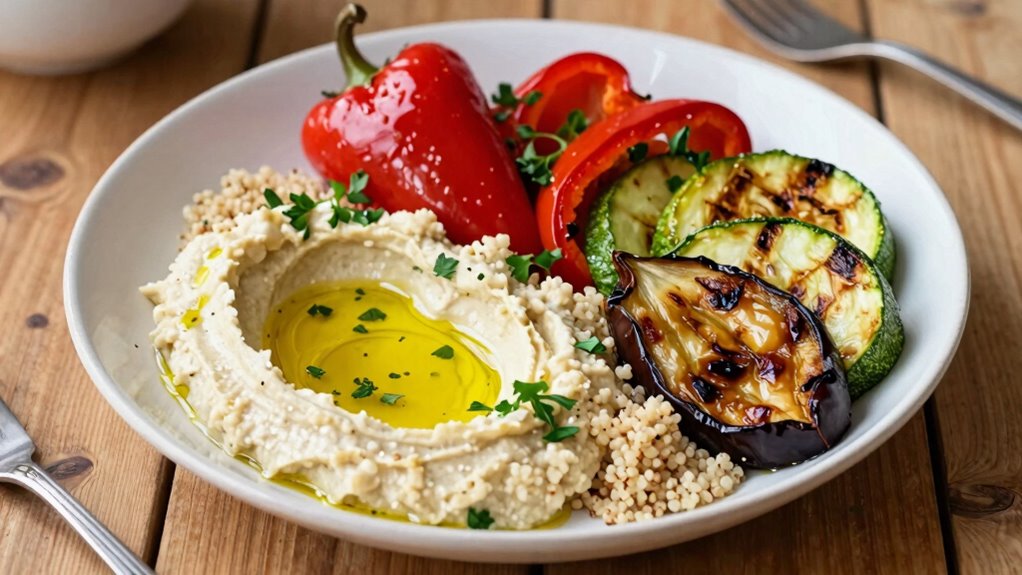
Vegetarian meals are a delicious and nutritious way to enjoy a variety of flavors while reducing your environmental impact. You don’t need dairy to make your dishes rich and satisfying; instead, you can focus on boosting flavors through clever ingredient choices. One of the keys is incorporating plant-based proteins like lentils, chickpeas, tofu, or tempeh. These ingredients not only add substance but also absorb spices and seasonings beautifully, making every bite flavorful and filling.
Plant-based proteins like lentils and tofu add flavor, substance, and richness to satisfying vegetarian dishes without dairy.
To make your vegetarian meals stand out without relying on dairy, you should pay special attention to flavor-enhancing spices. Think of cumin, turmeric, smoked paprika, coriander, and chili powder as your secret weapons. These spices bring depth and warmth to your dishes, creating a savory profile that rivals those with dairy-based richness. For example, a chickpea curry seasoned with a blend of cumin, turmeric, and chili powder can be incredibly hearty and satisfying, even without cream or cheese.
Using herbs such as cilantro, parsley, and basil can also brighten up your dishes, adding freshness that complements the spices. Incorporate aromatics like garlic, ginger, and onions to build layers of flavor. Sauté these ingredients at the start to release their essential oils, which will intensify the dish’s overall taste. The key is to layer your seasonings carefully, tasting as you go to ensure each component enhances the others. Exploring flavor layering techniques can further elevate your dishes. Additionally, experimenting with different cooking methods can bring out unique flavors and textures in your ingredients.
Another effective way to add richness without dairy is to introduce umami flavors. Ingredients like soy sauce, miso paste, nutritional yeast, or sun-dried tomatoes can give your meal a depth of flavor that feels indulgent. Nutritional yeast, in particular, is a popular vegan option that adds a cheesy, nutty flavor, making it perfect for enriching sauces, dressings, or sprinkled on top of roasted vegetables. Additionally, exploring sustainable ingredient choices can help you create environmentally conscious, flavorful dishes that align with conservation efforts.
Finally, don’t forget about cooking techniques that intensify flavors. Roasting vegetables and plant-based proteins caramelizes their natural sugars, creating a sweet, smoky complexity. Simmering stews slowly allows flavors to meld, resulting in a hearty, savory profile. Incorporating umami-rich ingredients further enhances the overall taste, making your dishes more satisfying. With a strategic combination of plant-based proteins, spices, herbs, and cooking methods, you can craft vegetarian dishes that are richly satisfying and dairy-free, proving that you don’t need dairy to enjoy bold, fulfilling meals.
vegetarian plant-based protein sources
As an affiliate, we earn on qualifying purchases.
As an affiliate, we earn on qualifying purchases.
Frequently Asked Questions
What Are Some Plant-Based Sources of Protein?
You can get plenty of plant-based protein from various sources. Legume options like lentils, chickpeas, and black beans are excellent choices, providing substantial protein and fiber. Other plant protein varieties include tofu, tempeh, quinoa, and edamame. Incorporating these into your meals boosts protein intake naturally, making your vegetarian dishes satisfying and delicious without relying on dairy. Mix and match these options to keep your meals diverse and nutritious.
How Can I Add Depth to Vegetarian Dishes Without Dairy?
You can add depth to your vegetarian dishes without dairy by using plant-based broths and umami-rich mushrooms. These ingredients boost flavor naturally, making your meals more savory and satisfying. Sauté mushrooms to release their umami, and simmer dishes with rich vegetable broths for added complexity. Don’t shy away from spices like soy sauce or miso, which enhance flavor without dairy, creating a richer, more satisfying vegetarian plate.
Are There Any Vegan Substitutes for Cheese?
Yes, there are vegan substitutes for cheese. You can try vegan cheese, made from plant-based ingredients like nuts, soy, or coconut oil, which mimic the texture and flavor of traditional cheese. Dairy alternatives like nutritional yeast add a cheesy, savory depth to dishes without dairy. These options boost richness and flavor, making your vegetarian meals more satisfying while keeping them entirely plant-based.
What Spices Enhance the Umami Flavor in Vegetarian Meals?
Think of spices as the secret paintbrushes that add depth to your culinary canvas. To enhance umami flavor, you should try umami boosters like mushrooms, sun-dried tomatoes, or miso paste. Spice combinations such as soy sauce, garlic, and nutritional yeast work wonders together. These ingredients and blends deepen flavor, making your vegetarian meals taste rich and satisfying without dairy, turning simple dishes into flavorful masterpieces.
How Do I Make Vegetarian Meals More Filling?
To make vegetarian meals more filling, you should add meat analogs like tofu, tempeh, or seitan, which provide protein and texture. Incorporate hearty grains such as quinoa, brown rice, or farro to boost fiber and keep you satisfied longer. Combining these ingredients with vegetables and flavorful spices creates a balanced, satisfying dish that fuels your body and keeps hunger at bay.
Conclusion
By mastering these flavorful techniques, you’ll transform simple vegetarian ingredients into dishes that sing with richness and depth. Think of your meals as a blank canvas, waiting for your brushstrokes of bold spices and clever substitutions. With a little creativity, you can turn everyday ingredients into a symphony of taste that satisfies the soul. Remember, your kitchen is your playground—dare to experiment and let your culinary passion bloom like a vibrant garden in full bloom.
Fall Picks
fall essentials
As an affiliate, we earn on qualifying purchases.