
Switching to energy-efficient methods like induction, pressure, and steam can markedly cut your kitchen’s energy consumption and environmental impact. Induction heats cookware directly, reducing energy loss and cooking time, while pressure cookers trap steam to speed up meals and save power. Steam cooking preserves nutrients and uses less energy compared to traditional methods. By choosing these techniques and smart appliances, you’ll not only save energy but also promote sustainability—discover more about making your kitchen greener as you explore further.

Get kitchen staples and gadgets delivered free with Prime
- Fast, free delivery on millions of items
- Prime Video, Amazon Music and more included
- Member-only deals all year
Key Takeaways
- Induction cooking heats cookware directly via electromagnetic fields, reducing energy loss and cooking time.
- Pressure cooking speeds up food preparation, lowering overall energy consumption.
- Steam cooking preserves nutrients while using less energy and water compared to boiling or frying.
- Smart appliances optimize energy use by adjusting power, timing, and integrating renewable energy sources.
- Combining these methods with renewable energy enhances sustainability and minimizes carbon footprint.
Cooking can be energy-efficient if you choose the right methods. One way to do this is by upgrading to smart kitchen appliances that optimize energy use and connect seamlessly with renewable energy sources. These appliances can automatically adjust power levels or shut off when not needed, reducing waste and lowering your energy bills. With renewable energy integration, your kitchen becomes even more sustainable, harnessing solar or wind power to fuel your cooking activities. This integration can further enhance energy efficiency by aligning power consumption with renewable energy availability. This not only cuts down on fossil fuel consumption but also promotes cleaner energy practices.
Smart appliances and renewable energy integration make cooking more sustainable and energy-efficient.
Induction cooking stands out as one of the most energy-efficient methods available. Unlike traditional electric or gas stoves, induction cooktops heat cookware directly through electromagnetic fields. This method delivers rapid heating, meaning you spend less time on the stove and considerably reduce energy consumption. Because induction only heats the cookware, heat loss to the surrounding air is minimal, making it a smart choice for conserving energy. Plus, many models come with smart features like touch controls and programmable timers, allowing you to cook precisely and avoid unnecessary energy use. When combined with renewable energy sources, induction cooking becomes an eco-friendly option that minimizes your carbon footprint.
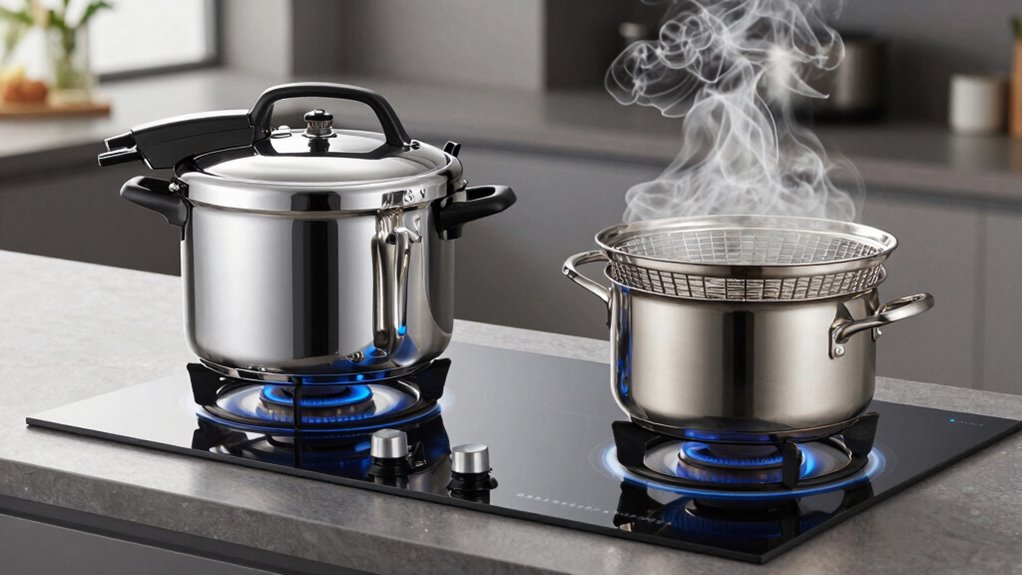
Pressure cooking is another effective way to save energy. It speeds up cooking times by trapping steam under high pressure, which raises the temperature inside the pot. Shorter cooking times mean less energy consumed overall. Modern pressure cookers are designed with safety features and can be controlled with smart technology, helping you monitor and optimize energy use from your phone or smart home system. Using pressure cooking with renewable energy integration allows you to prepare meals quickly while relying on sustainable power, making it ideal for busy households looking to cut costs and carbon emissions.
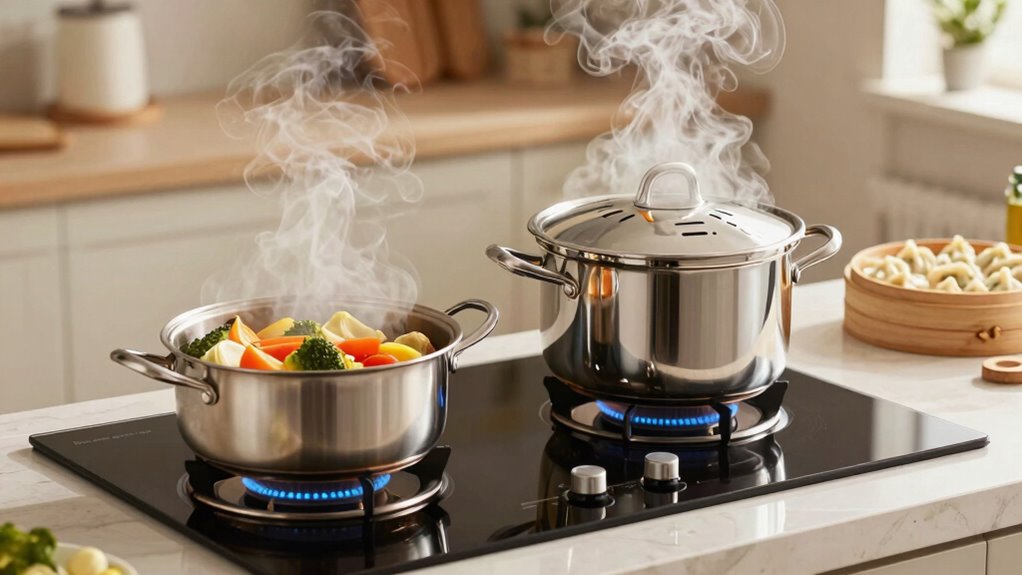
Steam cooking is also a gentle, energy-efficient method that preserves nutrients and reduces energy waste. Steaming requires less water and energy compared to boiling or frying, especially when done with modern electric steamers or stovetop models with smart controls. These appliances can be programmed to optimize steaming times and shut off automatically once the process is complete. When you combine steam cooking with smart kitchen appliances connected to renewable energy sources, you maximize efficiency and sustainability. You’re using less energy overall and making smarter choices for your health and the environment. Additionally, the use of smart appliances can further enhance energy savings by adapting to your cooking habits and energy availability.
induction cooktop with smart features
As an affiliate, we earn on qualifying purchases.
As an affiliate, we earn on qualifying purchases.
Frequently Asked Questions
Which Energy-Saving Method Is Safest for Beginner Cooks?
Pressure cooking is the safest energy-saving method for beginners. It requires strict safety precautions, like ensuring the lid is securely locked and following manufacturer instructions. As a beginner, you should focus on safety tips such as avoiding overfilling and releasing pressure properly. With proper safety precautions and beginner tips, you can confidently use a pressure cooker, making it a safe and efficient choice for energy-saving cooking.
How Do These Methods Impact Food Flavor and Texture?
These methods markedly impact flavor preservation and texture enhancement. Induction heats quickly and precisely, locking in flavors and maintaining fresh textures. Pressure cooking intensifies flavors by trapping steam and moisture, resulting in tender, flavorful dishes. Steaming preserves delicate textures and natural flavors by cooking with gentle, even heat. Overall, each method enhances food’s sensory qualities while saving energy, making your cooking both efficient and delicious.
Are There Specific Dishes That Benefit Most From These Techniques?
You’ll find that dishes like stews, braised meats, and steamed vegetables benefit most from these techniques. Their dish compatibility with pressure, steam, or induction enhances flavor and preserves nutrients. The technique versatility allows you to cook efficiently while maintaining quality. Whether you’re slow-cooking a stew on induction or steaming delicate fish, these methods optimize energy use and improve texture and taste, making your meals both delicious and eco-friendly.
What Are the Initial Costs for Installing These Appliances?
Thinking about upgrading your kitchen? Installation costs for induction, pressure, and steam appliances vary, but they’re generally an investment in appliance affordability and efficiency. You might find that initial expenses are a bit higher, yet the long-term savings in energy and time could be worth it. These modern methods promise faster cooking and lower energy bills, making them a smart, cost-effective choice in the grand scheme of your culinary adventures.
Can These Methods Be Combined for Even Better Energy Savings?
Yes, you can combine these methods for better energy savings, leveraging multi-method efficiency and the combined cooking advantages. For example, using induction for fast heating, pressure for energy-efficient cooking of tough ingredients, and steam for delicate dishes maximizes energy use. This integrated approach reduces overall energy consumption, speeds up cooking times, and enhances culinary versatility. Just make certain your kitchen setup supports these methods safely and effectively for ideal results.
Conclusion
By embracing energy-saving cooking methods like induction, pressure, and steam, you’re not just saving power—you’re dancing in harmony with your environment. These techniques act as your culinary compass, guiding you to faster, more efficient meals while conserving precious resources. Think of it as tuning your kitchen into a symphony of sustainability, where every sizzle and steam release plays a part in protecting our planet. Cooking greener isn’t just smart; it’s a delicious act of kindness.
NFL season / tailgating Picks
team gear
As an affiliate, we earn on qualifying purchases.