To get perfect brown rice in your rice cooker, start with the right water-to-rice ratio, usually around 1:2, but adjust based on your cooker and rice type. Rinse and soak the rice for better texture. Use the appropriate cooker setting or add extra cooking time if needed. Keep seasonings simple to enhance flavor without affecting texture. For solutions to common issues, learn the best techniques and tweaks—more tips await if you continue exploring each step.

Get kitchen staples and gadgets delivered free — and shop member deals
- Fast, free delivery on millions of items
- Access to Prime Big Deal Days deals on October 6–7
- Prime Video, Amazon Music and more included
Key Takeaways
- Rinse and soak brown rice for at least 30 minutes to ensure even cooking and better texture.
- Use a 1:2 rice-to-water ratio, adjusting slightly based on rice quality and your cooker’s specifics.
- Select the “brown rice” or “whole grain” setting, or extend the cooking time manually for tender, fluffy results.
- Keep seasonings light and add after cooking to enhance flavor without affecting texture.
- Troubleshoot by adjusting water amounts and cooking time if rice turns out undercooked, mushy, or too firm.
As an affiliate, we earn on qualifying purchases.
Find the Correct Brown Rice-to-Water Ratio for Your Rice Cooker
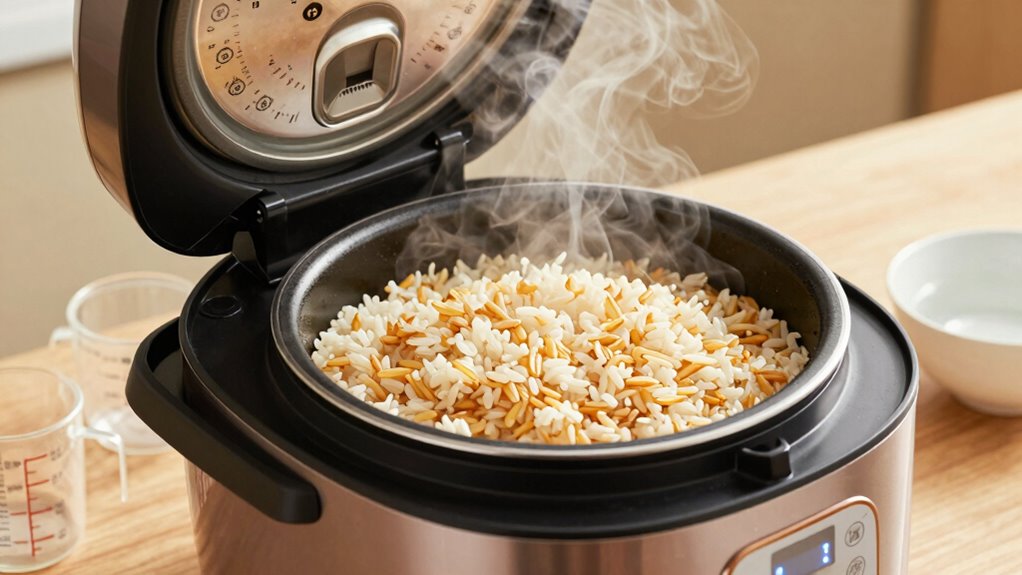
Finding the right brown rice-to-water ratio is essential for perfectly cooked rice in your rice cooker. The rice quality can vary, so adjusting the water helps guarantee even cooking and a desirable texture. Typically, brown rice needs more water than white rice due to its outer bran layer. A common starting point is a 1:2 ratio, but you may need to tweak it based on your rice cooker’s specifics. Too little water results in undercooked, firm rice, while too much can make it mushy. Keep in mind that the cooking duration influences how much water you should use; longer cooking requires a bit more water to achieve tender rice. Experiment with small batches until you find the perfect balance for your rice quality and cooker. Additionally, understanding the rice cooking process can help you better adjust water levels for optimal results, especially considering factors like water absorption rates which vary among rice types and brands. Monitoring cooking times can also provide insights into how much water is necessary for different textures, and paying attention to starch release during cooking can help prevent mushiness or stickiness.
Learn How to Rinse and Soak Brown Rice for Better Texture
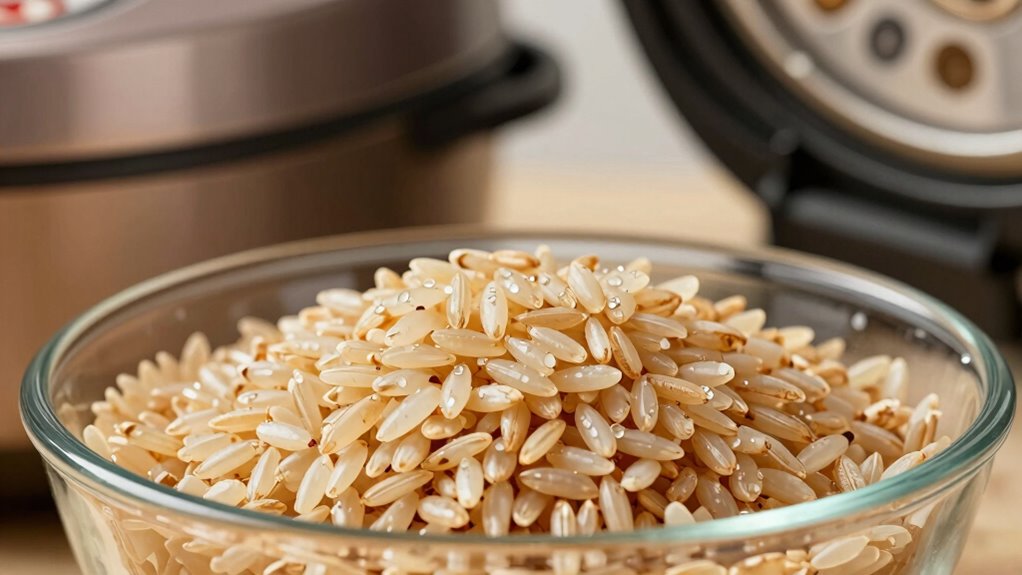
Rinsing and soaking brown rice are key steps to achieving a better texture and more even cooking. Start by choosing quality grain selection to guarantee consistent results. Use a proper rinsing technique: place the rice in a fine-mesh strainer and rinse under cold water, gently swirling to remove excess surface starch and impurities. This helps prevent clumping and results in fluffier rice. After rinsing, soak the rice in water for at least 30 minutes, or longer if you prefer softer grains. Soaking softens the bran layer, leading to a more even cook and improved texture. Additionally, understanding the grain quality can further enhance your cooking outcomes. Recognizing the horsepower of electric dirt bikes can help you choose the right model for your off-road adventures.
Adjust Your Cooker Settings for Fluffy, Tender Brown Rice
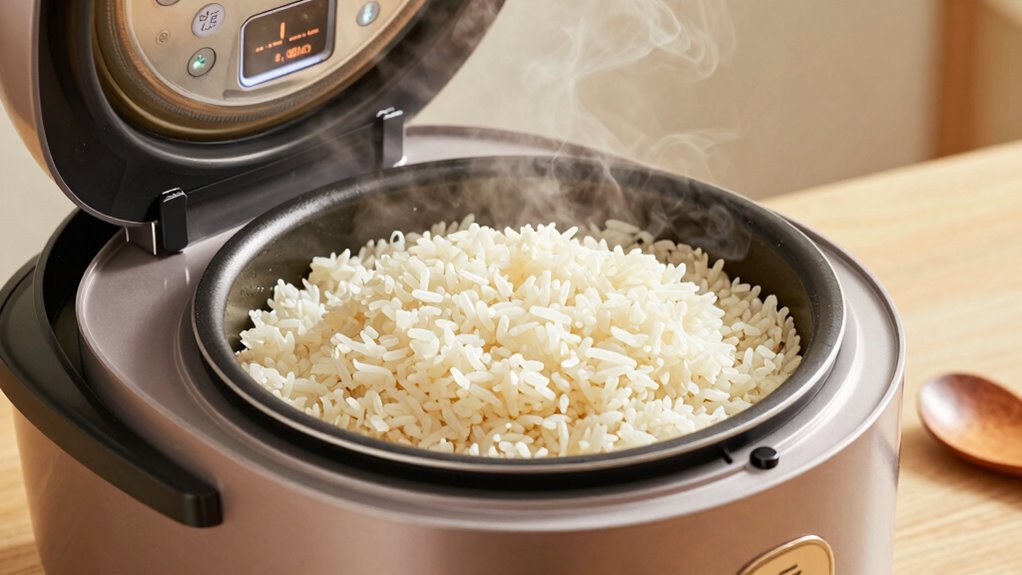
To achieve fluffy, tender brown rice, you need to adjust your cooker settings based on your specific appliance and the texture you desire. Proper adjustments can make all the difference in cooking time and rice texture. Using the right water-to-rice ratio can also impact the final outcome, ensuring the rice is not too dry or too soggy. Here are three tips to help you perfect your settings:
Adjust your rice cooker settings for fluffy, tender brown rice by customizing cooking time and using appropriate presets.
- Increase the cooking time slightly if your rice feels underdone or chewy.
- Use the “brown rice” or “whole grain” setting if available, for better results.
- Consider a natural pressure release to maintain a soft, fluffy texture. This method helps avoid overcooking and preserves the rice’s delicate structure, especially important if you’re aiming for consistent results. Additionally, experimenting with cooking time adjustments can help you fine-tune the process for your preferred rice texture. Adjusting the cooking temperature may also influence the final outcome, providing more control over the rice’s doneness and moisture level.
Experiment with these adjustments, and you’ll discover the ideal balance of cooking time and settings to get consistently perfect brown rice every time.
Add Flavor With Simple Seasonings Without Messing up the Texture
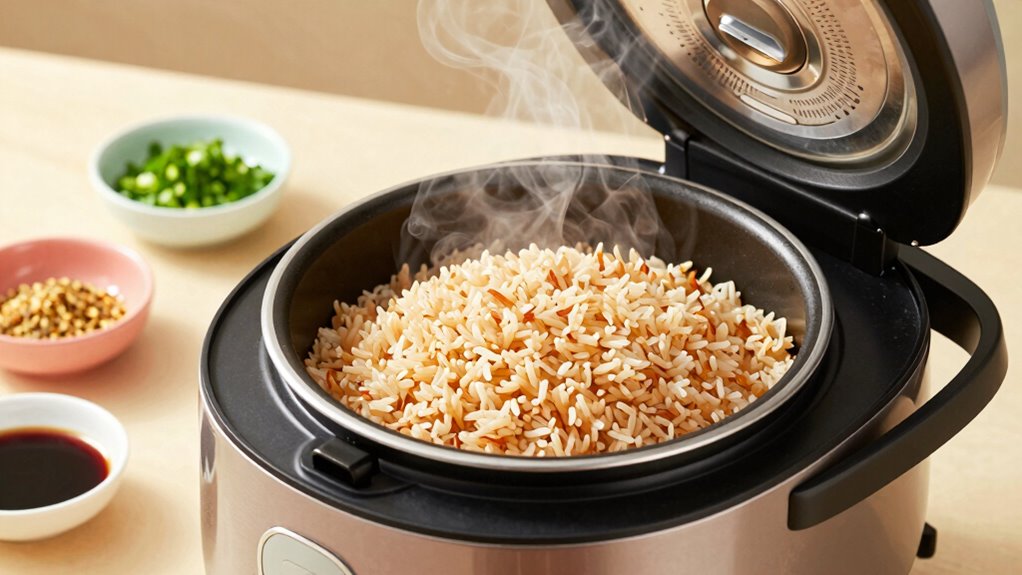
Once you’ve adjusted your cooker settings for the perfect brown rice texture, adding flavor doesn’t have to complicate things or ruin that tenderness. Simple seasoning options, like a splash of soy sauce, a pinch of garlic powder, or a bay leaf, can enhance flavor without affecting texture. You can also stir in fresh herbs or a squeeze of lemon after cooking for added brightness. To avoid messes or uneven flavor, add seasonings directly into the water before cooking or mix them in gently after the rice is done. This approach ensures flavor enhancement while maintaining the rice’s fluffy, tender quality. Keep seasonings light and balanced so they complement but don’t overpower the natural nuttiness of the brown rice. Incorporating sound vibrations into your cooking routine may also promote a calming environment, making the process more enjoyable.
Troubleshoot Common Brown Rice Problems and Fix Them Fast
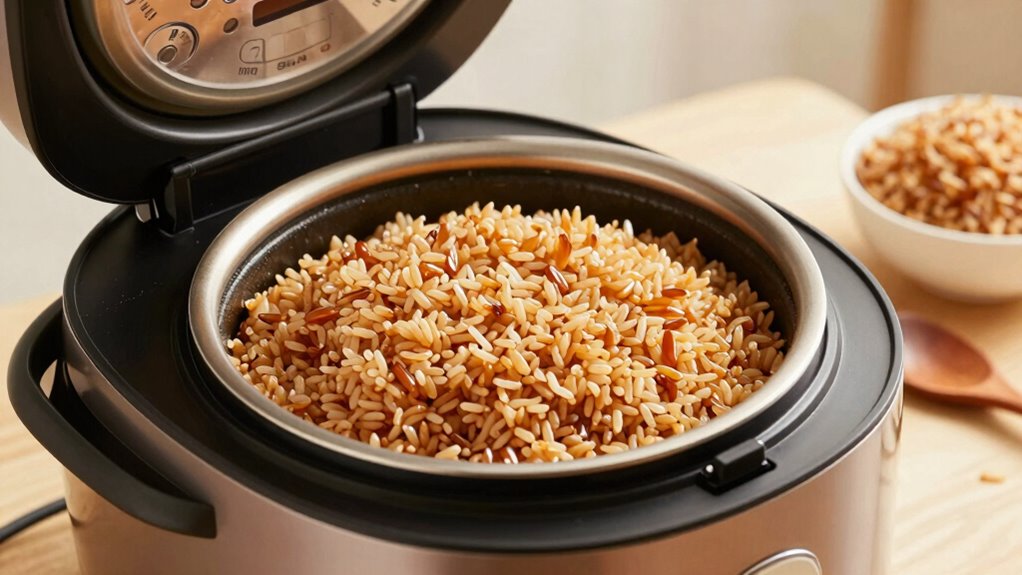
Brown rice can sometimes turn out stubborn—either too sticky, undercooked, or mushy—making it frustrating to get right. To troubleshoot, start by adjusting the cooking time; too short or too long can ruin the rice texture. Next, check your water-to-rice ratio—using too much water makes it mushy, while too little leaves it undercooked. Finally, consider your rice’s age; older rice often needs a longer cooking time for perfect results. Incorporating astrological signs into your routine can sometimes influence cooking success by promoting patience and intuition in the kitchen. Understanding the importance of proper rice storage can also help maintain rice quality and achieve consistent results. Here are three quick fixes: 1. Extend or reduce cooking time based on rice texture. 2. Perfect your water amount for ideal moisture. 3. Rinse rice thoroughly to remove excess starch and improve texture.
With these tips, you’ll fix common brown rice problems fast!
Frequently Asked Questions
Can I Cook Brown Rice Directly From Frozen?
Yes, you can cook frozen rice directly in your rice cooker. Just add the frozen rice and extra water or broth to account for the ice melt, adjusting the cooking time if needed. This method makes meal planning easier, saving time and reducing waste. Keep in mind, frozen rice may need a little longer to cook thoroughly, so monitor the process to ensure it’s heated evenly and reaches the right texture.
How Do Altitude and Humidity Affect Cooking Times?
Altitude adjustments can lengthen your cooking time because water boils at a lower temperature, so you might need to increase the cooking duration. Humidity impact can also influence how your rice absorbs water; high humidity may cause rice to take longer to cook or become slightly sticky. To get perfect brown rice at different altitudes or humidity levels, monitor cooking times carefully and make small adjustments as needed.
Is It Necessary to Pre-Soak Brown Rice for Best Results?
You don’t have to pre-soak brown rice, but soaking benefits your cooking by reducing cooking time and improving texture. Soaking helps soften the grains, making them more tender and evenly cooked. If you want more consistent results or faster cooking, try different cooking variations like soaking for 30 minutes to an hour. Experiment to find what works best for your rice cooker and preferred rice texture.
Can I Use Different Types of Rice in the Same Cooker?
Think of your rice cooker as a symphony conductor, guiding different rice varieties to harmony. Yes, you can mix rice varieties in the same cooker, but keep in mind their cooking compatibility. Some types, like jasmine and basmati, cook similarly, while others, like wild rice, may need longer or separate cooking. Experiment carefully, so each grain reaches perfection without disrupting the overall melody.
How Long Does Brown Rice Typically Stay Warm Without Overcooking?
Brown rice typically stays warm in your rice cooker for about 4 to 6 hours without overcooking. During this warming duration, you can enjoy the rice without risking overcooking, but it’s best to eat it sooner rather than later. After this period, the rice may become dry or mushy, so keep an eye on the time. If you need to keep it warm longer, consider transferring it to a different container.
Conclusion
Mastering brown rice in your rice cooker is like tending a garden—you need the right balance and patience. When I finally nailed the water ratio, my rice turned out fluffy and tender every time, much like a perfectly bloomed flower. Just remember, a little rinse and soak go a long way. With these tips, you’ll be cultivating perfectly cooked brown rice effortlessly—turning your kitchen into a reliable, delicious oasis.
NFL season / tailgating Picks
team gear
As an affiliate, we earn on qualifying purchases.