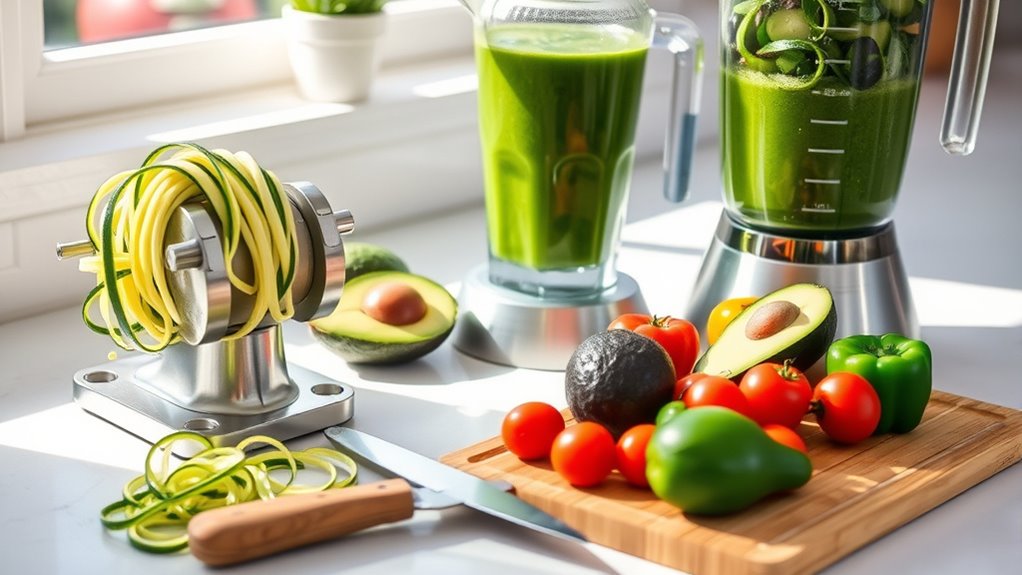

To create a thriving raw food kitchen, gather essential tools like a high-performance blender with sharp blades that can handle tough ingredients, and airtight storage containers—preferably glass—to keep your ingredients fresh. Organize your space with stackable containers and label everything clearly. Proper storage minimizes waste and spoilage, making meal prep more efficient. Investing in these tools enhances your ability to craft tasty raw recipes, and if you keep exploring, you’ll discover even more ways to optimize your kitchen.
Key Takeaways
- A high-speed, durable blender with sharp blades for efficient raw food processing.
- Airtight, stackable glass containers to store and preserve fresh ingredients.
- Sharp knives and cutting boards for precise preparation of produce.
- Food dehydrator for creating snacks, crackers, and dried fruits.
- Storage jars and labels to organize ingredients and maintain freshness.
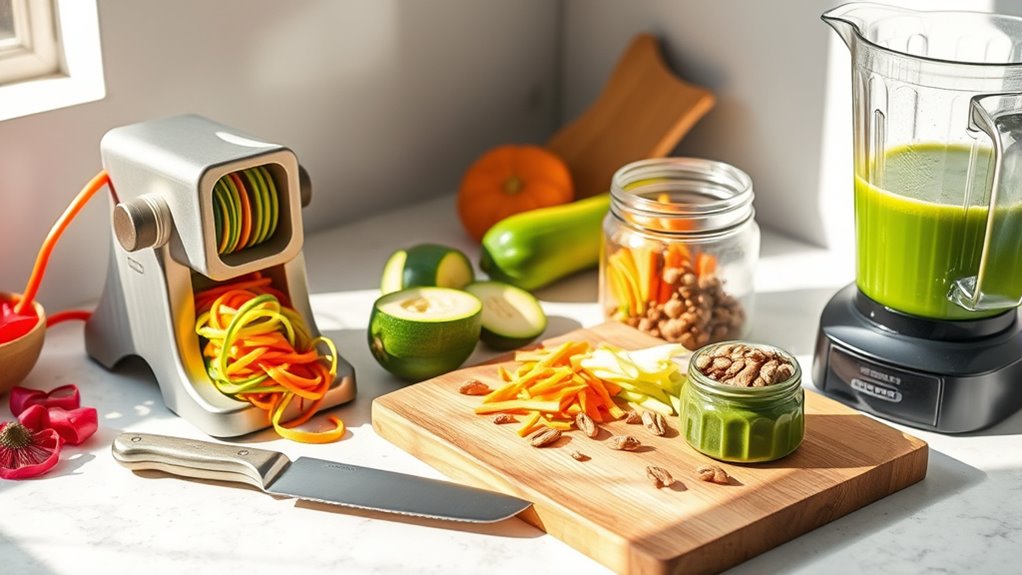
Creating a raw food kitchen requires more than just fresh ingredients; having the right tools can make preparing and enjoying raw meals much easier. One of the most versatile tools you’ll want to master is the blender. With the right blender techniques, you can whip up smoothies, sauces, nut butters, and even raw soups quickly and efficiently. To get the best results, ensure your blender has a powerful motor and sharp blades. When blending tougher ingredients like nuts or fibrous vegetables, start on a low setting and gradually increase speed. Use pulsing techniques to control texture, and don’t hesitate to stop and scrape down the sides to achieve a smooth consistency. Over time, learning these blender techniques will help you create a variety of raw dishes with ease, saving time and minimizing frustration. High-quality blenders are especially important for achieving optimal results in raw food preparation.
Beyond blending, storage solutions are vital for maintaining the freshness and safety of your raw ingredients. Proper storage helps prevent spoilage and keeps your kitchen organized. Invest in airtight containers of various sizes to store chopped vegetables, soaked nuts, and prepared sauces. Glass containers are ideal because they don’t stain or absorb odors, unlike plastic. Consider stackable options to maximize space, especially if your kitchen is compact. Keep perishable produce in the crisper drawer to extend its life, and store dried goods like seeds and grains in cool, dark places in sealed jars. Label everything clearly to streamline your prep process, especially when you have multiple ingredients on hand. Efficient storage solutions not only preserve the quality of your ingredients but also make meal prep faster and less cluttered, so you spend more time enjoying your raw creations.
Having the right tools and storage solutions in your raw food kitchen transforms it from a cluttered space into an efficient, inspiring environment. Mastering blender techniques allows you to create a wide array of dishes with different textures and flavors, pushing your culinary boundaries. Meanwhile, smart storage keeps ingredients fresh longer, reduces waste, and helps you stay organized. When you combine these tools with proper techniques and storage practices, preparing raw meals becomes a more enjoyable experience. You’ll find yourself more motivated to experiment with new recipes and ingredients, knowing your kitchen is set up to support your raw food lifestyle. Ultimately, these essentials help you stay consistent, healthy, and creative, making your raw food journey both satisfying and sustainable.
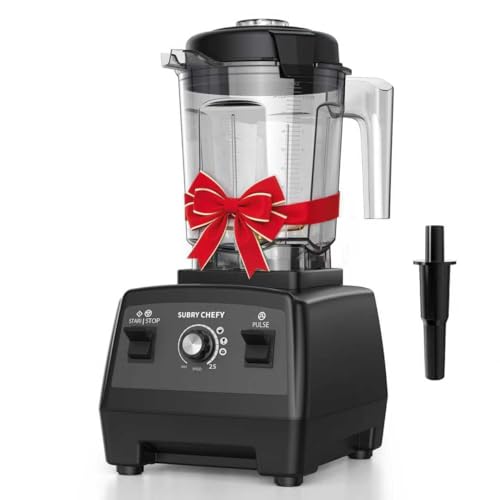
Subry Chefy Countertop Blender Pro 2000W, Professional High-Speed Blender with Powerful Brushless Motor, 25-Speed, 68oz, Heavy Duty Kitchen Blender for Smoothies, Ice Crushing & Food Prep, Black
- Powerful Motor: 2000W copper brushless motor for durability
- High-Speed Performance: Up to 28,000 RPM for efficient blending
- Versatile Speed Settings: 25 adjustable speeds for precise control
As an affiliate, we earn on qualifying purchases.
As an affiliate, we earn on qualifying purchases.
Frequently Asked Questions
What Are the Best Brands for Raw Food Kitchen Tools?
You should consider brands like OXO, KitchenAid, and Microplane, known for their strong reputation and product durability. These brands offer high-quality tools that withstand regular use in raw food prep. OXO provides ergonomic designs, KitchenAid is reliable for versatile kitchen gadgets, and Microplane offers durable graters. Choosing these brands guarantees you get long-lasting, dependable tools that help you prepare raw foods efficiently and safely.
How Do I Maintain and Clean Raw Food Kitchen Equipment?
You should regularly follow cleaning techniques like scrubbing with gentle brushes and using food-safe disinfectants to keep your raw food kitchen equipment spotless. Establish maintenance schedules, such as daily rinsing and weekly deep cleaning, to prevent buildup and cross-contamination. Always dry tools thoroughly after cleaning to avoid mold. By staying consistent with these practices, you guarantee your equipment remains safe, hygienic, and in top condition for preparing raw foods.
Can These Tools Be Used for Non-Raw Cooking?
Absolutely, these tools shine beyond raw food prep, showcasing impressive cookware versatility. You can use them for gentle steaming or light sautéing, expanding your culinary options. Just keep in mind that proper cleaning techniques are key to maintaining their longevity and preventing cross-contamination. With a little care, your equipment adapts seamlessly, allowing you to explore a broader range of cooking styles while preserving their quality and effectiveness.
Are There Eco-Friendly Options for Raw Food Tools?
Yes, you can find eco-friendly options for raw food tools. Look for biodegradable utensils made from plant-based materials like bamboo or cornstarch, which break down naturally. Additionally, choose recycled material cookware, such as pots and bowls crafted from recycled metals or plastics. These options help reduce waste and environmental impact while maintaining your raw food prep efficiency. Switching to eco-friendly tools makes your kitchen greener without sacrificing functionality.
What Safety Precautions Should I Take With Raw Food Tools?
You should always prioritize safety by practicing proper sanitation practices and preventing cross contamination. Wash your raw food tools thoroughly with hot, soapy water after each use, and sanitize them regularly. Use separate utensils and cutting boards for different ingredients, especially raw meats and vegetables. Store tools properly to avoid accidental contamination, and wear gloves when handling raw foods if necessary. These steps help keep your kitchen safe and your food fresh.
Conclusion
Now that you’ve got your essential tools, your raw food kitchen is ready to flourish. With a blend of modern gadgets and a touch of old-world charm, like a trusty mortar and pestle, you can craft vibrant, nutritious meals effortlessly. Remember, the right tools make all the difference—think of them as your culinary sidekicks. So, go ahead and create delicious, wholesome dishes, turning your kitchen into a true health sanctuary, no DeLorean needed!