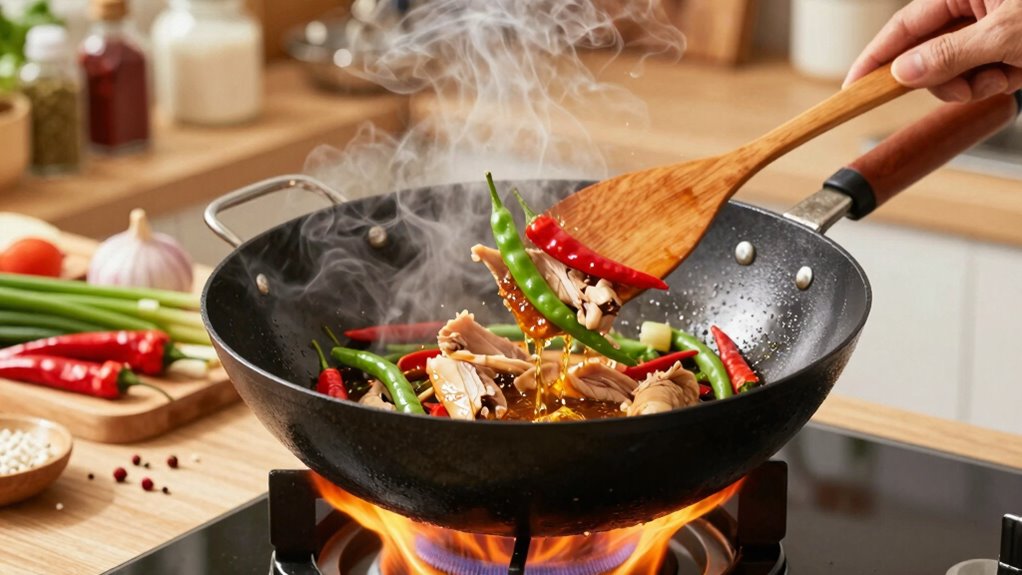

To master wok cooking at home, start by prepping ingredients uniformly and preheating your wok over high heat. Use a high-smoke-point oil like peanut or canola, and add it once the wok is hot. Follow the five key rules: prep ahead, don’t overcrowd, cook quickly, control your heat, and keep ingredients dry. Avoid common mistakes like uneven heating or overcrowding. Keep practicing these tips, and you’ll discover delicious, restaurant-quality stir-fries every time.
Key Takeaways
- Preheat your wok thoroughly over high heat before adding oil to ensure proper searing and prevent sticking.
- Use oils with high smoke points like peanut, canola, or avocado for stable, flavorful stir-fries at high temperatures.
- Prepare all ingredients in advance, dry them well, and avoid overcrowding to maintain heat and achieve even cooking.
- Add ingredients in stages, starting with proteins and denser vegetables, to control cooking time and prevent sogginess.
- Maintain consistent heat, stir constantly, and clean your wok properly after each use for optimal performance and flavor.
Preparing Ingredients and Setting Up Your Wok for Success
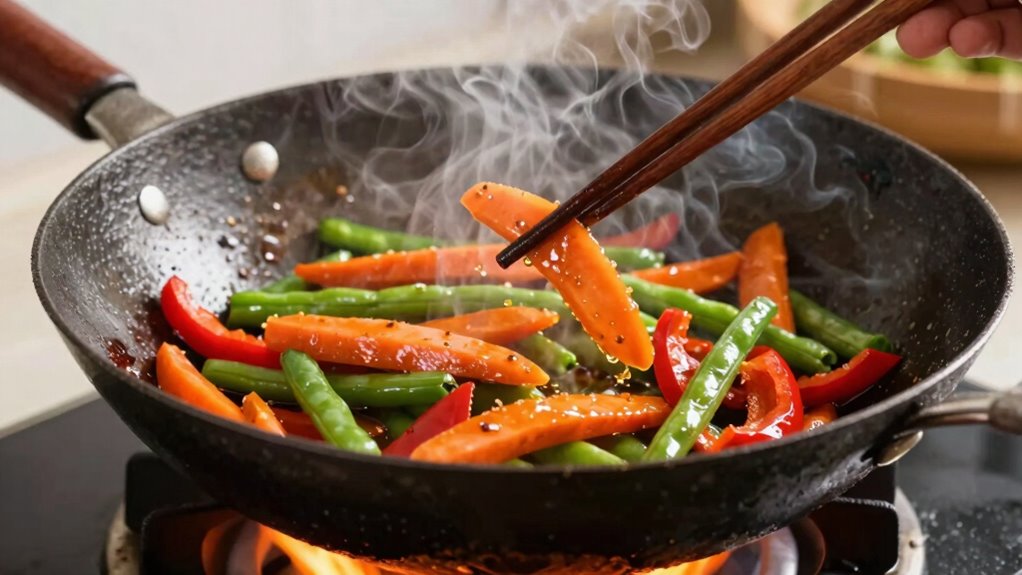
Before you begin cooking, it’s essential to prepare your ingredients and set up your wok properly. Start with ingredient prep by washing, peeling, and chopping vegetables and proteins into uniform pieces for even cooking. Having everything ready guarantees a smooth stir-fry process. Next, focus on wok setup: choose a well-seasoned or non-stick wok and heat it gradually. Make sure you have your oil nearby, ready for high-temperature cooking. Proper wok setup involves ensuring the wok is hot enough before adding ingredients, which helps prevent sticking and promotes quick searing. Keep all your ingredients within reach so you can add them swiftly during cooking. A well-prepared workspace and properly set-up wok are key to achieving delicious, restaurant‑quality stir-fries at home. Additionally, understanding heat management is crucial for controlling the cooking process and achieving optimal results. Proper temperature control allows for better caramelization and flavor development during stir-frying. Being aware of oil temperature also helps prevent burning and ensures ingredients are cooked evenly, especially when managing heat distribution across the wok surface. Incorporating knowledge of professional services can also assist in selecting the right tools and techniques for an efficient cooking experience.
How to Control Heat for Perfect Wok Cooking
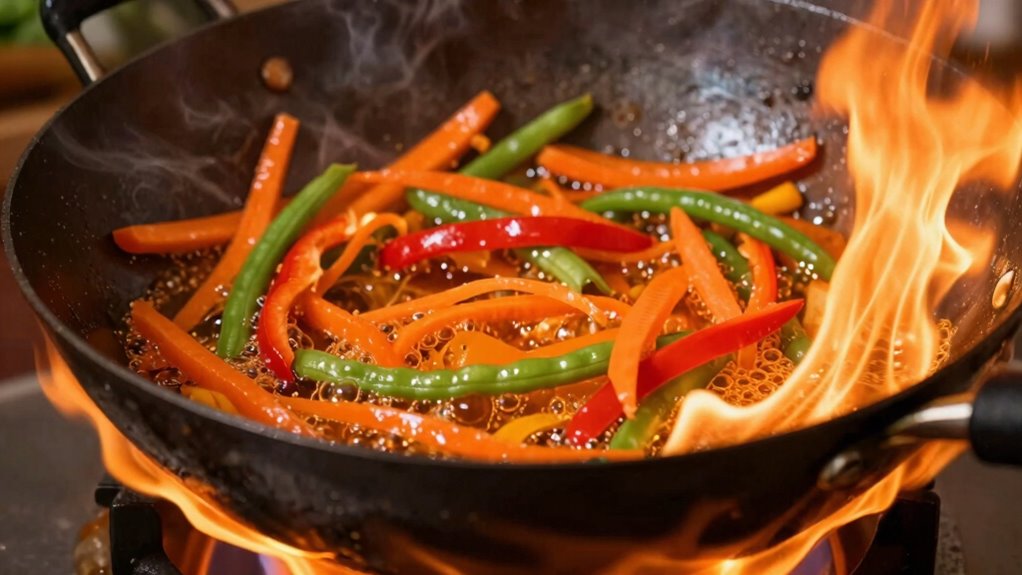
Controlling the heat is essential for achieving perfect wok cooking, as it directly affects how ingredients sear, stir-fry, or simmer. To maintain ideal heat, master seasoning techniques that help your wok distribute and retain high temperatures. Regular wok maintenance, like cleaning and seasoning, ensures a smooth surface that heats evenly and prevents sticking. Before cooking, turn your burner to high and let the wok heat thoroughly. Adjust the heat as needed during cooking to keep a consistent temperature, especially when adding ingredients. Remember, a well-maintained wok responds quickly to temperature changes, helping you avoid burning or undercooking. Staying attentive to heat levels allows you to develop flavors and achieve the perfect stir-fry each time. Proper heat management is a key factor in preventing food from burning or sticking, ensuring a successful cooking experience. Additionally, understanding how your stove’s heat output interacts with cooking surface materials can help you better control temperature and improve your wok cooking results. Using a thermometer or heat indicator can also help you gauge the precise heat levels for optimal cooking. Recognizing the importance of heat control through consistent practice can significantly enhance your stir-fry technique. Developing a good sense of temperature adjustments based on experience allows for more precise cooking and better results.
Choosing the Best Oil for High-Temperature Stir-Frying
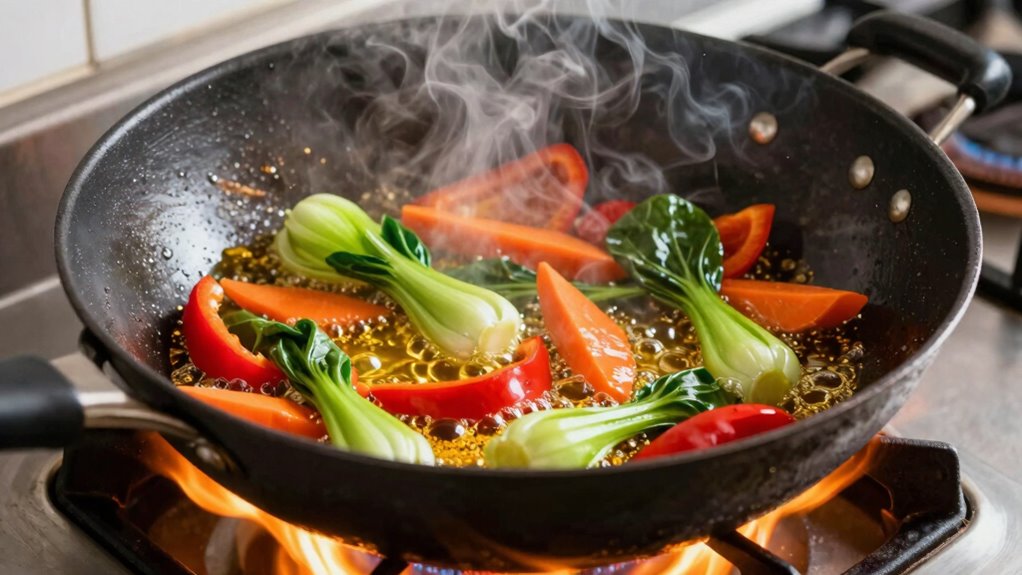
Ever wondered which oil is best for high-temperature stir-frying? The key is choosing an oil with a high smoke point, so it won’t start to burn or produce excess oil smoke. Oils like peanut, canola, and avocado are excellent options because their smoke points are well above typical stir-fry temperatures. When oil reaches its smoke point, it begins to break down, releasing smoke and potentially harmful compounds, which can affect flavor and health. Using an oil with a lower smoke point, like extra virgin olive oil, could cause your oil to smoke early and impart a bitter taste. For the best results, select an oil that can handle high heat without smoking, ensuring your stir-fry stays vibrant, flavorful, and safe. Choosing the right oil is essential for maintaining both flavor and health during high-temperature cooking. Additionally, understanding the smoke point of various oils can help prevent accidental burning and preserve nutritional value. Knowing the carrier oils suitable for high-heat cooking can also be beneficial, as some oils are better suited for stir-frying than others. Proper airflow around your cooking area can also help reduce smoke and improve kitchen safety. Moreover, selecting oils with appropriate heat stability is crucial for consistent results and overall health.
The 5 Key Rules for a Delicious Stir-Fry
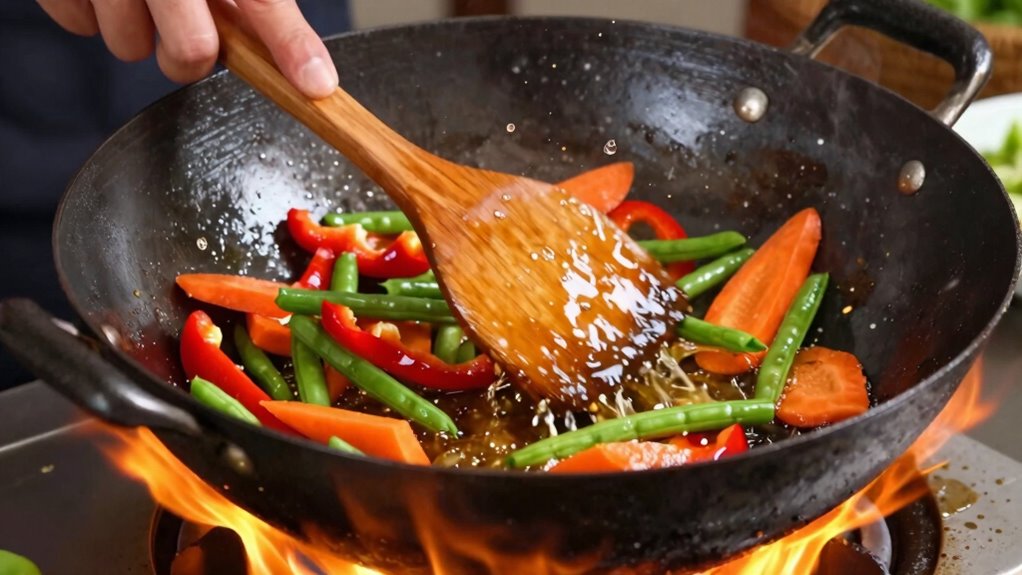
Choosing the right oil sets the foundation for a perfect stir-fry, but turning out a restaurant-quality dish also depends on following key cooking rules. First, prep all ingredients before heating your wok—stir-frying moves fast. When cooking, use high heat and add oil properly to prevent sticking. Master sauce techniques by adding liquids gradually, allowing flavors to develop without making the dish soggy. Wok cleaning is vital; clean it thoroughly after each use to prevent residue buildup that can affect flavor and heat. Keep your wok dry and season it regularly. Additionally, understanding the heat control of your wok ensures consistent cooking and prevents burning or undercooking. Proper heat distribution within the wok is essential for even cooking and browning. Maintaining a connected cooking environment that integrates temperature control and monitoring can enhance your stir-fry results. Finally, avoid overcrowding the wok, which lowers the temperature and hampers browning. Follow these rules to guarantee your stir-fry is flavorful, well-cooked, and restaurant-worthy every time.
Troubleshooting Common Wok-Cooking Mistakes
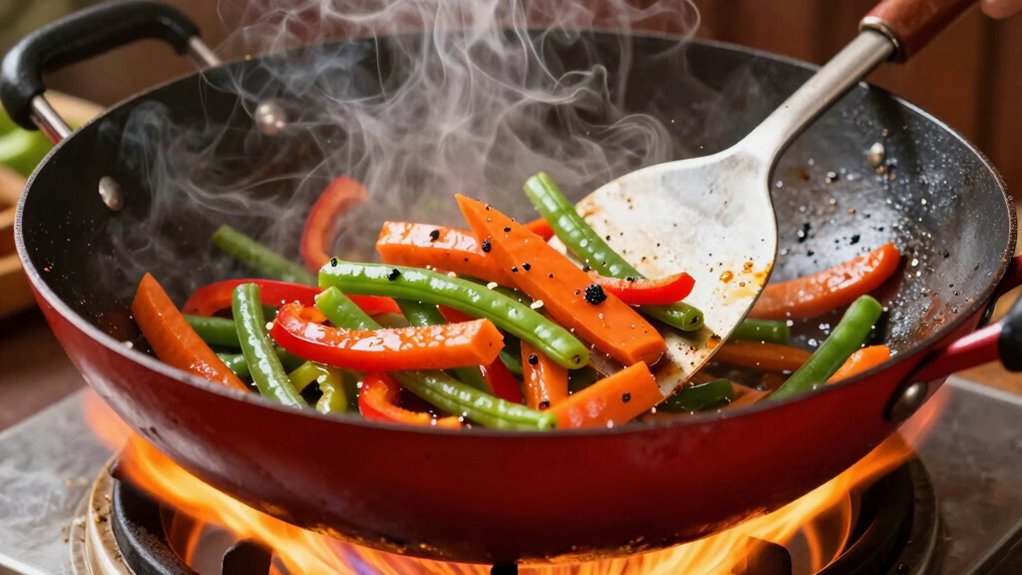
Many common wok-cooking mistakes can derail your dish if you’re not careful. Overcrowding the wok causes ingredients to steam instead of stir-fry, resulting in soggy food. Uneven heat distribution can burn some ingredients while leaving others undercooked. To avoid these issues, use small batches and preheat your wok properly. Keep ingredients dry for quick searing and stir constantly to ensure even cooking. Proper heat management is essential for achieving the perfect stir-fry texture. Here’s a visual to help:
| Mistake | Solution |
|---|---|
| Overcrowding wok | Cook in smaller batches |
| Uneven heat distribution | Preheat wok fully, adjust flame as needed |
| Poor ingredient prep | Dry ingredients, cut uniformly |
Mastering these tips will help you create flavorful, perfectly cooked stir-fries every time.
Frequently Asked Questions
What Are Some Common Mistakes Beginners Make With Wok Cooking?
You often overcrowd your wok, which causes ingredients to steam instead of fry, resulting in soggy dishes. Additionally, improper heat control leads to uneven cooking or burning your food. To avoid these mistakes, cook in small batches, keep the heat high enough to sear ingredients quickly, and stir constantly. Mastering these skills guarantees you get that perfect stir-fry with vibrant flavors and crisp textures every time.
How Can I Tell if My Wok Is Heated Enough?
Did you know that a properly heated wok can reduce cooking time by up to 30%? To tell if it’s heated enough, try temperature testing by adding a small drop of oil—if it shimmers and dances, your wok’s ready. You’ll see it ripple and shimmer when hot, signaling perfect temperature. Once the oil glistens and moves easily, you’ve hit the right heat for stir-frying success.
Can I Reuse Oil After Stir-Frying?
Yes, you can reuse oil after stir-frying, but you should filter out food particles to prevent spoilage. Keep in mind, oil reuse can raise health concerns because it may degrade and produce harmful compounds over time. If the oil smells rancid or looks dark, it’s best to discard it. Reusing oil in moderation is okay, but avoid reusing it multiple times to maintain health and flavor.
What Are Alternative Oils if I Don’T Have Traditional Stir-Fry Oils?
Imagine your kitchen as a garden, and oils as different plants. If you lack traditional stir-fry oils, try alternative oils like avocado, sesame, or grapeseed—each bringing unique flavors and healthy substitutions. These oils can withstand high heat and add richness to your dish. Don’t worry if you don’t have the classic options; your creative garden of oils still offers vibrant, tasty, and nutritious choices for your stir-fry adventures.
How Do I Prevent Food From Sticking to the Wok?
To prevent food from sticking, you should start by seasoning your wok properly, which creates a natural non-stick surface. Always heat the wok until the oil reaches the right temperature—hot enough to sizzle but not smoke—before adding ingredients. Use enough oil to coat the surface evenly, and avoid overcrowding the wok, as this can cause sticking. Regular seasoning and proper oil temperature are key to a smooth stir-fry.
Conclusion
Mastering wok cooking at home is all about controlling heat, selecting the right oil, and following key stir-fry rules. Did you know that high-temperature stir-frying can cook ingredients in just 2-3 minutes? By applying these tips, you’ll turn simple ingredients into restaurant-quality dishes. Keep practicing, stay attentive to your wok’s heat, and enjoy the vibrant flavors you create—your perfect stir-fry is just a few quick steps away!