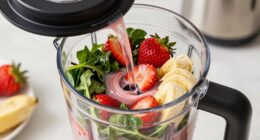
When your smoothie separates, it’s usually due to incomplete emulsification—the process of blending oil and water-based ingredients to stay mixed. Factors like ingredient properties, blending technique, and temperature play a role. Without proper stabilizers or emulsifiers, oil and water naturally separate over time. To keep your smoothie smooth longer, you need to understand how emulsification works. Keep exploring, and you’ll discover simple tricks to prevent separation and get a perfectly blended drink.
Key Takeaways
- Incomplete blending or overloading causes poor emulsification, leading to separation of liquids and solids.
- Natural stabilizers like pectin and proteins help maintain uniformity by trapping water and fats.
- Oil and water naturally separate without proper emulsifiers, resulting in layered textures.
- Proper layering, ingredient temperature, and blending techniques improve emulsion stability.
- Adding thickeners or re-blending with liquids can help re-emulsify and prevent separation over time.
Why Does Your Smoothie Sometimes Separate, and How Can You Fix It?
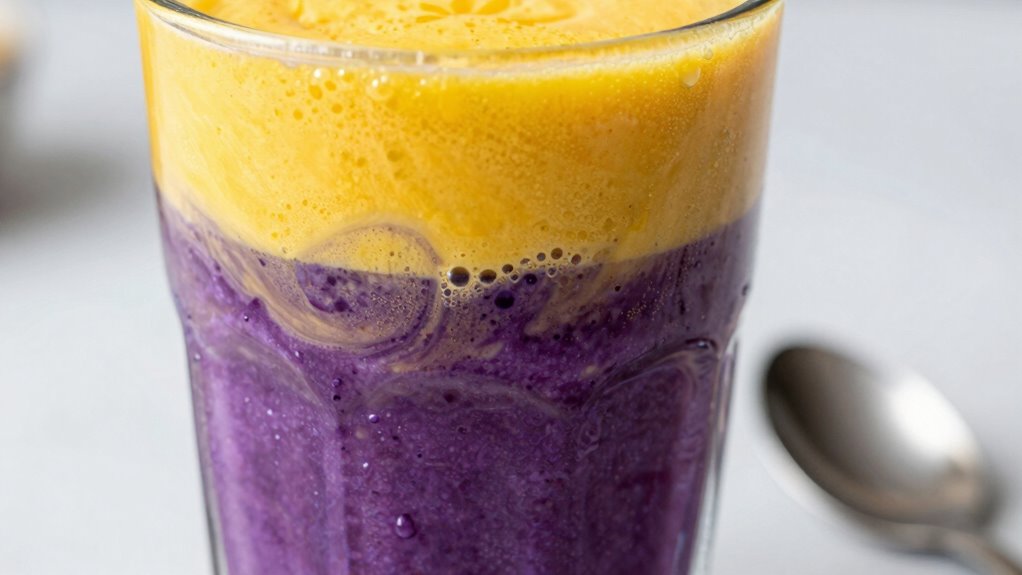
If your smoothie sometimes separates, it’s usually because the ingredients haven’t fully blended or the emulsion has broken down. Over time, fruit antioxidants can oxidize, affecting texture and stability. To prevent this, ensure your blender is well-maintained; a clean, sharp blade helps achieve a smooth, consistent blend. Proper blender maintenance includes regularly checking for wear and ensuring all parts are secure, which promotes better emulsification. When blending, start slow to incorporate ingredients evenly, especially those rich in antioxidants like berries and citrus, which can influence the smoothie’s stability. Additionally, incorporating energy-efficient ingredients or additives can help improve the overall texture and prevent separation. Using proper blending techniques, such as layering ingredients or adding liquids gradually, can also enhance emulsion stability. For optimal results, consider the emulsification process and how the order of ingredient addition impacts the final texture. If separation occurs, give your blender a quick pulse or stir with a spoon before serving. This keeps the ingredients well-integrated and your smoothie tasting fresh and smooth.
What Is Emulsification and Why Is It Key to Smoothie Texture?
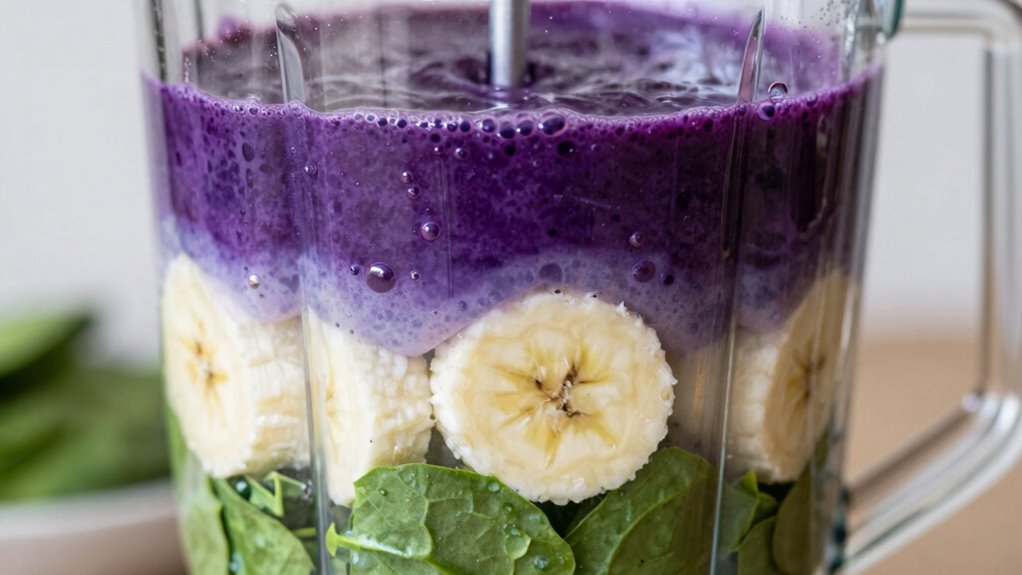
Ever wonder why some smoothies turn out creamy and well-blended while others seem watery or separated? That’s where emulsification comes in. It’s the process that keeps liquids like fruit juice and milk mixed smoothly, preventing separation. Emulsification depends on factors like fruit pectin and protein bonds. Fruit pectin acts as a natural stabilizer, forming a gel-like network that traps water and oil particles, creating a cohesive texture. Protein bonds from ingredients like yogurt or milk also help hold the mixture together by linking water and fat molecules. When these elements work together, they create a stable emulsion, giving your smoothie that rich, uniform consistency you crave. Without proper emulsification, your smoothie might look appealing at first but quickly separate.
How Oil and Water Separate in Blenders: and What It Means for Your Drink
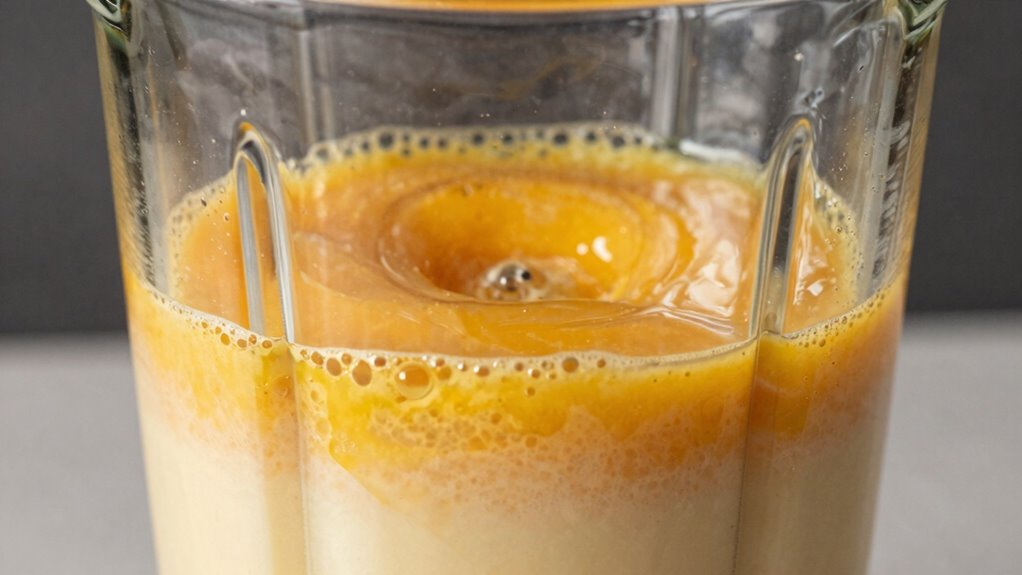
When blending ingredients with different properties, oil and water naturally tend to separate rather than stay mixed. This oil separation occurs because water and oil are immiscible; they don’t form a stable emulsion on their own. Without proper emulsification, your smoothie’s oil droplets quickly rise to the top or settle at the bottom, causing uneven texture and appearance. Poor emulsion stability means your drink won’t stay uniform for long. Understanding this process helps you realize why your smoothie might look layered or separated after a while. To improve emulsion stability, you need to incorporate ingredients or techniques that keep oil and water dispersed, preventing separation and ensuring a smooth, consistent drink every time. Additionally, applying creative storytelling techniques to your ingredient choices or presentation can make your smoothies more appealing and memorable to consumers. Recognizing emulsion stability as a key factor allows you to select the right ingredients and methods to achieve a beautifully blended drink. Recognizing the physical properties of ingredients can help you better control the blending process and achieve a more stable emulsion. Being aware of emulsifiers and their role can further enhance the consistency of your smoothie.
How Emulsifiers and Stabilizers Keep Smoothies Homogeneous
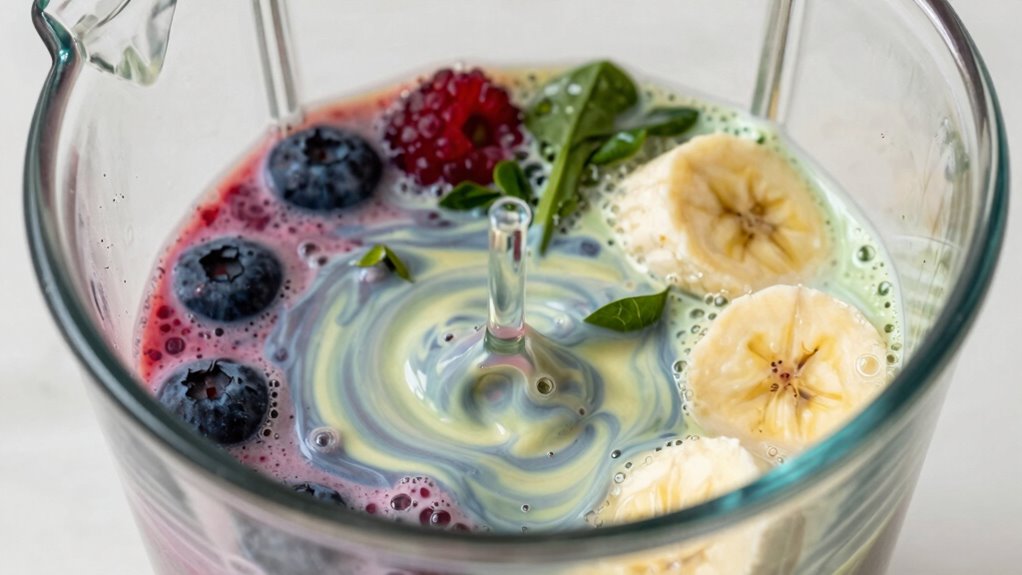
Emulsifiers and stabilizers work together to keep your smoothie smooth and uniform. They help blend oil and water-based ingredients so they don’t separate over time. You’ll learn how natural stabilizers and specific techniques can make your smoothies perfectly homogeneous. Incorporating water resistance features in your blender can also enhance durability and performance in various conditions.
Role of Emulsifiers
Emulsifiers and stabilizers play a crucial role in keeping smoothies smooth and uniform by preventing ingredients from separating. Emulsifiers work by reducing the surface tension between liquids like oil and water, allowing them to blend more effectively. Stabilizers, especially natural ones, help maintain this uniform mixture over time, stopping ingredient layering that causes separation. Natural stabilizers like pectin or guar gum can act as gentle emulsifiers, binding ingredients without overpowering flavors. By forming a stable network, they keep the ingredients evenly distributed, ensuring each sip has the same taste and texture. High refresh rates enhance the overall stability of emulsions by reducing the likelihood of separation during blending and storage. Without these agents, smoothies tend to separate quickly, leading to an unappetizing layer of liquids and solids. Incorporating appliance maintenance plans can help ensure your blender operates at optimal performance, further aiding in proper emulsification. Proper ingredient selection can also influence how well your smoothie remains homogeneous over time. Additionally, understanding the science of emulsification can help you choose the right stabilizers and emulsifiers for your specific ingredients, resulting in a more consistent beverage. Emulsifiers and stabilizers are essential tools for creating a consistent, homogeneous smoothie.
Natural Stabilizers Used
Natural stabilizers such as pectin, guar gum, and xanthan gum are popular choices for maintaining smoothie consistency because they easily form a gel-like network that binds ingredients together. These natural stabilizers enhance ingredient interactions, preventing separation by creating a viscous matrix that holds everything in suspension. When you blend, these stabilizers interact with water and other ingredients, forming a cohesive structure that keeps your smoothie smooth and uniform over time. Additionally, emulsifying agents help to evenly disperse fat and water-based ingredients, further contributing to a stable and homogeneous mixture. By selecting the right natural stabilizer, you can improve texture and extend shelf life without altering flavor. Proper incorporation of these stabilizers ensures your smoothie remains homogeneous, making every sip as delicious and consistent as the first. Understanding ingredient interactions can help you optimize your blending process for better stability and texture. Incorporating eco-friendly ingredients aligns with sustainable practices and can enhance the overall quality of your smoothies.
Techniques for Homogeneity
When you blend ingredients with stabilizers, they work together to create a uniform mixture by preventing separation. Techniques like adding natural thickeners such as chia seeds, ground flaxseed, or yogurt help achieve smoothness and consistency. Emulsifiers like egg yolk or soy lecithin break down fat molecules, promoting a stable, homogeneous blend. Using a high-powered blender guarantees even dispersion of ingredients, enhancing flavor by blending everything thoroughly. These methods also boost nutritional benefits, as stabilizers can add fiber, healthy fats, or probiotics. Proper technique minimizes the need for added sugars or artificial thickeners, keeping your smoothie fresh and nutritious. Incorporating knowledge about thermal behavior and investment options can inspire you to explore diverse ways to enhance your health and well-being. Additionally, understanding the industry trends can help you stay updated on new stabilizer and emulsifier options that improve your blending results. Staying informed about air quality improvements can also influence the choice of ingredients and techniques for healthier smoothies. Exploring new processing technologies can further optimize your blending process and preserve nutrient integrity. Overall, employing emulsifiers and stabilizers strategically results in a smoother, tastier, and more nutritious beverage.
How Fruits, Proteins, and Other Ingredients Affect Smoothie Stability

Fruits with high fiber content can help stabilize your smoothie by preventing separation, but they might also thicken the mixture too much. Fiber content plays a crucial role in maintaining emulsion stability and texture consistency over time. Incorporating traditional culinary techniques can further enhance the blending process, ensuring a smoother and more cohesive final product. Proteins interact with other ingredients, influencing the emulsion’s stability and texture over time. The way ingredients layer or combine affects how long your smoothie stays uniform and smooth. Understanding the principles of body jewelry measurements and materials and meticulous craftsmanship can also be a metaphor for how precise ingredient selection and blending techniques contribute to a perfectly emulsified smoothie.
Fruit Fiber Effects
In smoothies, fruit fibers play a essential role in maintaining stability by acting as natural thickeners and emulsifiers. These fibers, found in fruits like bananas, berries, and apples, enhance the texture and help prevent separation. Fruit fiber contributes to emulsification properties by trapping air and fat particles, creating a more uniform mixture. When blended, these fibers form a network that stabilizes the liquid, reducing the likelihood of oil or fruit separation over time. The presence of fruit fiber also improves mouthfeel and consistency, making your smoothie smoother and more satisfying. By incorporating fruits rich in fiber, you naturally boost the stability of your blend without needing added thickeners or stabilizers. This natural mechanism keeps your smoothie well-mixed and pleasing to drink.
Protein Interactions Dynamics
Proteins in ingredients like dairy, nuts, and certain fruits actively influence smoothie stability by interacting with fats, liquids, and other particles. During the emulsification process, protein bonding occurs when proteins attach to fat globules, forming a stabilizing layer around them. This interaction helps prevent fats from separating and creates a more uniform texture. Proteins also influence how well the ingredients combine and stay mixed, enhancing the overall stability of your smoothie. As you blend, these molecules work together, forming a network that traps air and other components, reducing separation over time. Understanding protein interactions helps you craft smoother, more stable smoothies by harnessing the natural bonding properties of proteins to maintain emulsion integrity.
Ingredient Layering Impact
The way ingredients are layered in your smoothie considerably impacts its stability. Proper ingredient layering helps guarantee even blending and prevents separation. When you layer heavier fruits like bananas or berries at the bottom and lighter ingredients such as leafy greens or liquids on top, it promotes better emulsification. This technique also aids in flavor preservation, as each ingredient maintains its taste longer. Adding proteins or nuts strategically prevents them from sinking or clumping, which can cause uneven textures. By paying attention to ingredient layering, you minimize the risk of separation and achieve a smoother, more cohesive drink. This method helps maintain the intended flavor profile throughout your smoothie, making each sip consistent and enjoyable. Proper layering ultimately enhances both stability and flavor retention.
Tips for Blending Smoothies Without Separation
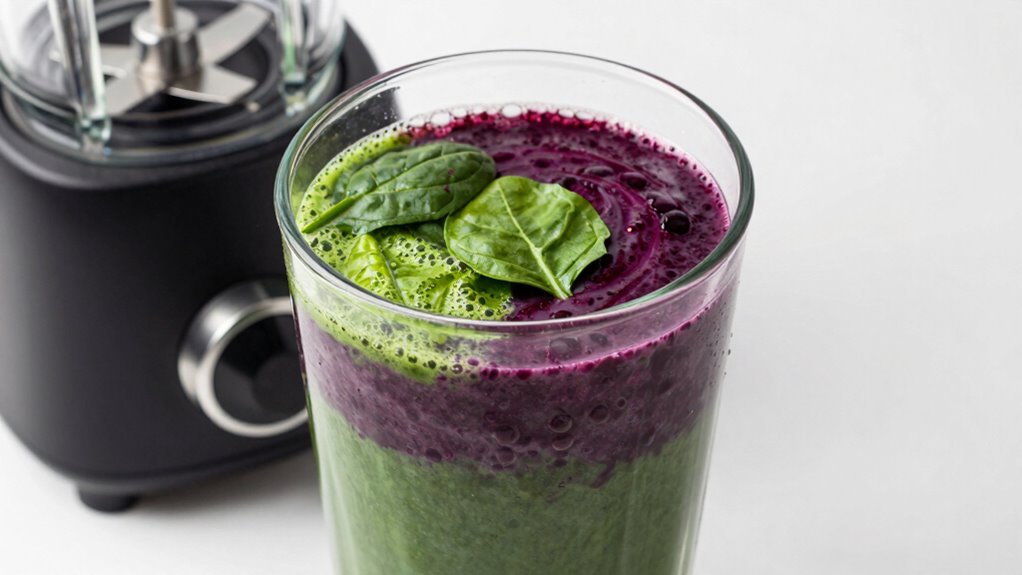
To keep your smoothies smooth and evenly blended, start by adding ingredients in the right order. Begin with liquids like milk or juice to create a stable base, helping emulsify fats and proteins from the start. Next, add soft ingredients such as bananas or yogurt, which blend easily and promote a uniform texture. Incorporate ingredients with complementary flavors, ensuring good flavor pairing, so each sip is balanced and enjoyable. Including nutrient-dense items like seeds or nuts can boost nutritional benefits without causing separation if blended thoroughly. Avoid overloading the blender, as excessive ingredients can hinder proper emulsification. Using ice or frozen fruit helps maintain a smooth consistency. Proper layering and blending techniques prevent separation, ensuring your smoothie stays creamy and delicious from first sip to last.
Common Causes of Smoothie Separation and How to Prevent Them
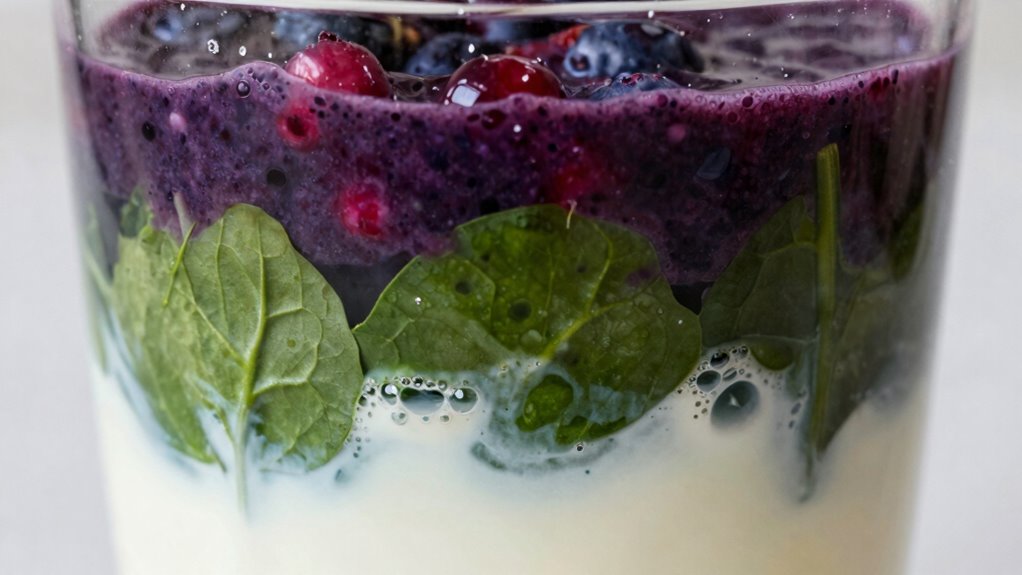
Even when you follow the right blending techniques, smoothies can still separate over time. Common causes include using ingredients with different densities or fat contents, which can hinder proper emulsification. Overloading your blender or blending at too low a speed can also prevent thorough mixing, leading to separation. Additionally, adding ingredients like oils or nut butters late in the process may cause uneven distribution, reducing nutrient absorption and flavor enhancement. Temperature plays a role too; warm ingredients tend to separate faster than chilled ones. To prevent this, use fresh, cold ingredients, blend thoroughly, and avoid overloading the blender. Ensuring a well-emulsified smoothie not only maintains a smooth texture but also maximizes nutrient absorption and enhances flavor consistency over time.
How to Re-Emulsify a Separated Smoothie Quickly
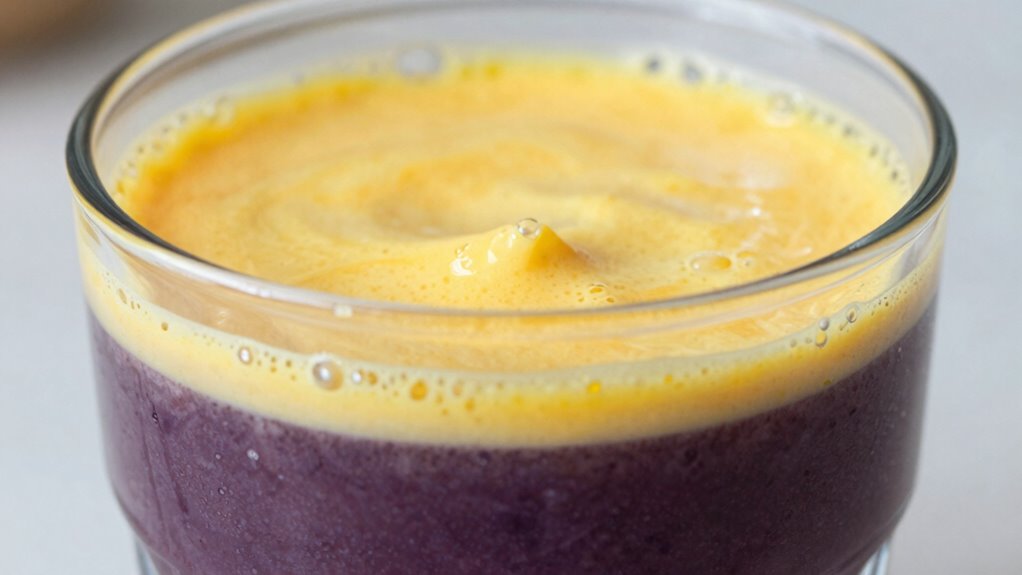
When your smoothie separates, quick action can restore its creamy consistency without starting over. First, add a small splash of liquid—like juice or milk—to help re-emulsify the ingredients. Use a different fruit pairing, such as bananas or avocados, which contain natural fats that promote better emulsification. Blend on high for 10-15 seconds, ensuring all ingredients are thoroughly combined. Regular blender maintenance, like cleaning the blades and container, helps keep the blades sharp and prevents separation issues. If separation persists, stop the blender, scrape down the sides, and blend again. Proper fruit pairing supplies the right fats and sugars to stabilize the mixture, while routine blender care ensures it functions at peak performance, making re-emulsification quick and effective.
When to Use Additives or Thickeners to Improve Emulsification
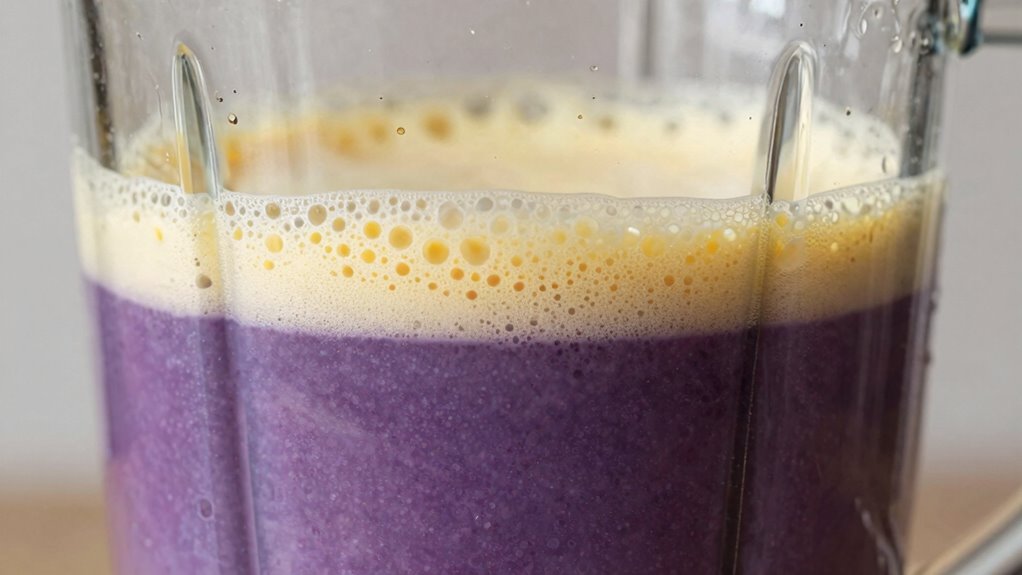
You should consider adding emulsifiers or thickeners when your mixture struggles to blend smoothly or separates quickly. Choosing the right type depends on your ingredients and desired texture, as different emulsifiers have unique effects. Using these additives can improve stability and give your final product a richer, creamier feel.
Types of Emulsifiers
Choosing the right emulsifier depends on the ingredients and desired consistency of your mixture. If you’re aiming for a creamy, stable blend, natural options like egg yolks or honey can act as effective emulsifiers, offering flavor pairing and nutritional benefits. For dairy-free smoothies, plant-based emulsifiers such as aquafaba or lecithin work well, providing stability without altering taste. Commercial additives like soy lecithin or xanthan gum are also popular when you need reliable results. Each type has its unique properties and benefits, so consider the flavor profile and nutritional value you want to achieve. Using the appropriate emulsifier guarantees your smoothie stays well mixed, enhances texture, and boosts flavor harmony.
When to Add Thickeners
Adding thickeners or additives becomes essential when your mixture isn’t emulsifying properly or appears too thin and separation is imminent. You should consider adding these when the emulsion struggles to hold together or the texture feels watery. For example, if your smoothie isn’t creamy enough or starts to separate quickly, it’s time to boost stability. Use fruit pectin or xanthan gum to help maintain emulsification and improve consistency.
- When your ingredients aren’t combining smoothly
- If separation begins within minutes
- To achieve a thicker, creamier texture
- When using high-water content fruits or liquids
Adding these stabilizers at the right moment keeps your smoothie uniformly blended, preventing separation and ensuring a satisfying texture.
Effects on Texture
When your mixture starts to feel watery or uneven, it’s a clear sign that the texture needs improvement. Additives or thickeners can help with texture enhancement, making your smoothie creamier and more consistent. Using ingredients like chia seeds, oats, or Greek yogurt increases viscosity, resulting in better mouthfeel improvement. These additives stabilize the emulsion, preventing separation and creating a smoother, more satisfying drink. Keep in mind that too much thickener can make your smoothie gloopy or heavy, so add gradually and blend thoroughly. When used appropriately, thickeners can transform a watery blend into a luscious, well-textured beverage, ensuring your smoothie stays uniformly mixed and enjoyable from first sip to last.
Mastering the Science for Smoothies That Stay Blended Longer

Understanding the science behind emulsification is key to creating smoothies that stay blended longer. To master this, focus on combining ingredients that naturally promote stability, like healthy fats and proteins. These help suspend particles, improving texture and preventing separation. Experiment with flavor combinations that include ingredients like nut butters, seeds, or yogurt, which enhance both taste and nutritional benefits.
You can also:
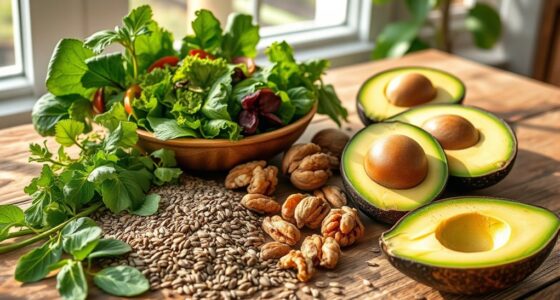
- Use ingredients with natural emulsifiers, like avocado or bananas
- Blend in stages to ensure even distribution
- Add a small amount of natural thickening agents, like chia seeds
- Avoid overloading with high-water content ingredients that cause quick separation
Frequently Asked Questions
Can Adding Ice Affect a Smoothie’s Tendency to Separate?
Adding ice can help prevent your smoothie from separating because ice melting lowers the mixture’s temperature, reducing temperature fluctuation that causes separation. When you blend with ice, it keeps the ingredients cold and stable longer, maintaining emulsification. However, as the ice melts, the increased water content may slightly alter texture, but overall, it helps keep your smoothie smooth and well-blended by minimizing separation.
Does Blending Time Influence Emulsification and Separation?
Did you know that blending for just 30 seconds can improve emulsification efficiency by up to 40%? Yes, blending time markedly influences how well ingredients combine and stay mixed. If you blend too briefly, separation is more likely; too long, and heat can break down emulsifiers. Find the perfect duration for your ingredients to create a stable, smooth consistency, preventing separation and ensuring your smoothie stays delicious.
Are There Natural Ingredients That Improve Smoothie Stability?
Yes, you can improve your smoothie’s stability with natural ingredients like chia seeds, flaxseeds, and banana, which act as natural emulsifiers and stabilizing agents. These ingredients help bind ingredients together, preventing separation. Adding a spoonful of Greek yogurt or honey can also enhance stability. Incorporate these into your blend, and you’ll notice your smoothie stays creamy and uniform longer without needing artificial stabilizers.
How Does Temperature Impact Smoothie Emulsification?
Did you know that a slight change in temperature can affect your smoothie’s stability by up to 30%? When you blend at colder temperatures, thermal stability improves, helping ingredients stay emulsified longer. Higher temperatures decrease viscosity effects, making the mixture more prone to separation. So, for a smoother, more stable smoothie, blend with cold ingredients or refrigerate before blending. Temperature truly influences how well your smoothie stays combined!
Can Over-Blending Cause Your Smoothie to Separate Faster?
Yes, over-blending can cause your smoothie to separate faster. When you blend too long, the fruit pectin and stabilizing agents break down, weakening the emulsion. This results in less stability, making ingredients like liquids and solids more prone to separation over time. To avoid this, blend just until smooth, and consider adding stabilizers like fruit pectin to maintain a consistent texture longer.
Conclusion
Think of your smoothie as a delicate dance between oil and water, and knowing how to keep them in step makes all the difference. By understanding emulsification and choosing the right ingredients, you can prevent separation and enjoy that perfect, creamy blend every time. With a little science in your toolkit, your smoothie stays vibrant and harmonious—like a well-choreographed performance you’re proud to serve. Cheers to smoothies that stay beautifully united from first sip to last!