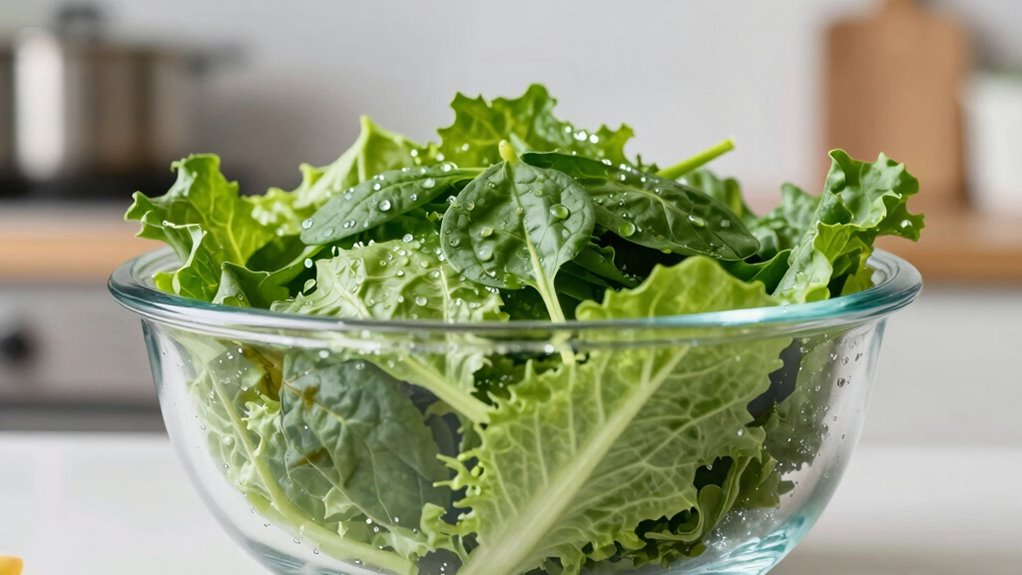

Using a salad spinner removes excess water from greens through centrifugal force, which helps them retain their natural flavor and crisp texture. When greens are wet, moisture dilutes their taste and makes them soggy, reducing freshness. The spinning process causes micro-tears in leaves, breaking down cell structure to improve texture while expelling water efficiently. Learning how proper spinning techniques maximize flavor and crunch can make your salads taste even better—you’ll discover the science behind it all.
Key Takeaways
- Removing surface moisture prevents dilution of greens’ natural flavors, making them taste fresher and more vibrant.
- Drying preserves crispness and prevents sogginess, enhancing the texture and overall salad eating experience.
- Proper spinning causes micro-tears and cell deformation, which tenderizes greens and boosts their flavor.
- Eliminating excess water reduces bacterial growth and spoilage, keeping greens tasting better for longer.
- Well-dried greens retain nutrients and flavor without dilution, resulting in a more flavorful and satisfying salad.
Why Do Greens Taste Better When They’re Dry?
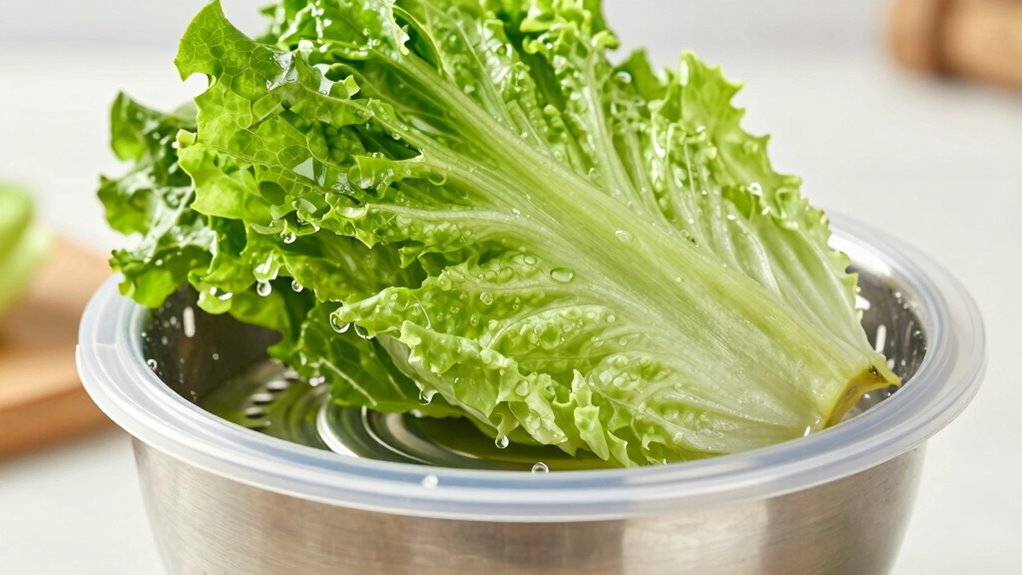
When greens are wet, they can taste muddier and less fresh because excess moisture dilutes their natural flavors. The leaf structure plays a significant role in how much water they retain. Leaves with a more porous or delicate structure tend to hold onto water longer, making them seem soggy and bland. On the other hand, sturdier leaves have better water drainage, helping you achieve a crisp, vibrant taste. Excess water also causes dilution of essential oils and flavors that give greens their fresh, slightly bitter taste. Removing this moisture allows their natural flavors to stand out. Proper drying techniques are essential for maximizing flavor and texture. When you dry greens thoroughly, you’re not only improving their texture but also ensuring they taste as fresh and flavorful as possible. Utilizing effective drying methods can make a significant difference in achieving the perfect balance of moisture and flavor. Additionally, understanding the leaf structure can help you select greens that dry more efficiently and taste better, especially since some varieties are naturally more porous or fragile.
How Does a Salad Spinner Remove Excess Water?
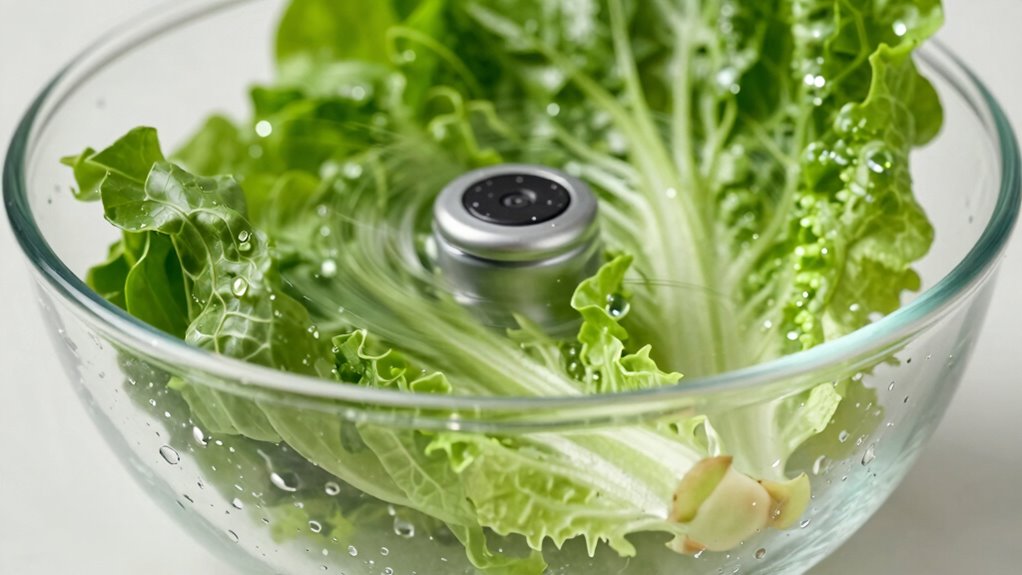
A salad spinner removes excess water by using centrifugal force to fling moisture away from the greens. When you spin the basket, the rapid rotation creates outward force, pushing water off the leaves’ surface. This process helps maintain hydration retention without soaking the greens, so they stay crisp and fresh. The spinner quickly expels water, which minimizes damage to leaf integrity, preventing bruising or tearing. The force efficiently removes water trapped in crevices and between leaves, which would otherwise lead to sogginess if left to air dry. This method ensures your greens are less wet, making them more appealing and easier to dress. Incorporating a salad spinner is also an excellent way to improve food prep efficiency, saving time and effort in the kitchen. Additionally, the mechanical action of the spinner can help preserve leaf quality by reducing exposure to excess moisture that can cause wilting. Using a salad spinner is a simple yet effective kitchen tool that enhances the overall quality and presentation of your salads. In fact, understanding the mechanics of centrifugal force behind the spinner can help you use it more effectively to achieve perfectly dry greens.
What’s Happening During Spin Cycles?
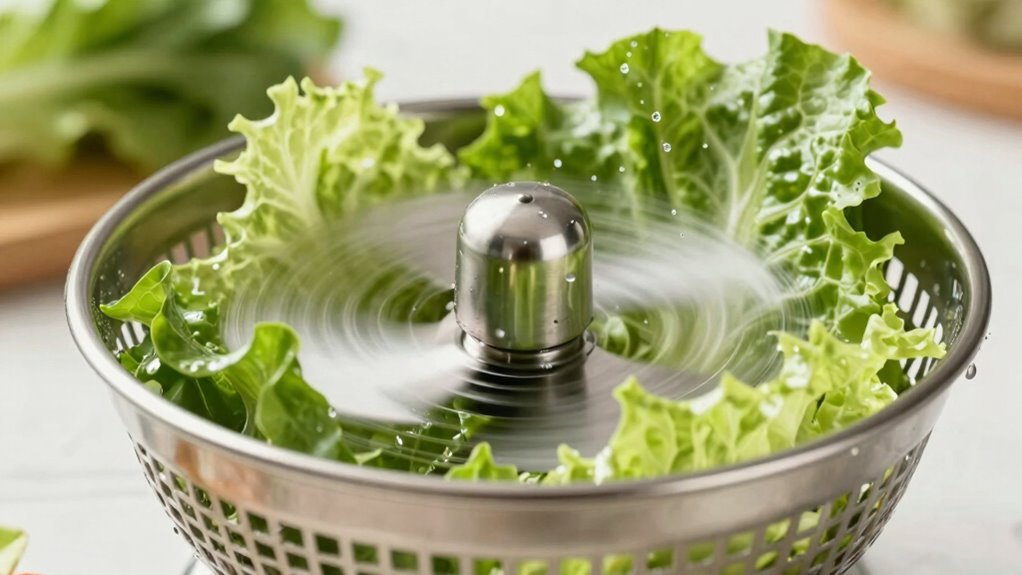
During spin cycles, water is forced out of the greens through centrifugal force, removing excess moisture quickly. As the spin speed increases, more water gets extracted, but it can also cause structural changes in the leaves. These effects influence how dry your greens become and their overall texture after spinning. Understanding the physics of centrifugation helps explain why some greens retain more moisture despite similar spin settings. Additionally, the youngster choice of greens can affect how they respond to spinning, with some varieties more prone to damage or retaining moisture. Recognizing leaf structure can aid in selecting greens best suited for spinning and drying. Knowing the machine weight can also be important for safely moving and setting up your salad spinner.
Water Extraction Process
As the salad spinner starts to spin, centrifugal force pushes water outward from the greens and vegetables, causing it to move toward the sides of the bowl. This rapid movement effectively removes surface moisture, which is essential for nutrient retention. When excess water is expelled, the greens stay fresh longer, enhancing storage longevity. The spinning action creates a thin water film on the surface of the produce, making it easier to extract the moisture without damaging delicate leaves or vegetables. By removing most of the water, you reduce the risk of spoilage caused by moisture buildup. This process guarantees your greens stay crisp and flavorful longer, while also preserving their nutritional value by preventing the dilution of nutrients caused by excess water. Additionally, the use of energy-efficient salad spinners aligns with sustainable practices by reducing electricity consumption during food preparation. Understanding the physics behind spinning helps explain why this method is so effective at drying greens quickly and thoroughly. Proper spin cycle settings can optimize water removal without damaging the produce. Incorporating smart kitchen appliances that monitor and adjust spin speed can further enhance efficiency and preserve produce quality.
Spin Speed Effects
When you increase the spin speed on a salad spinner, the centrifugal force becomes stronger, pulling water away from the greens more rapidly and forcefully. Higher spin speeds mean water is removed more efficiently, leaving greens drier in less time. As you spin faster, the force pushes water outward from the center of the basket, overcoming the water’s natural adhesion to the leaves. This increased water removal improves the texture and taste of your greens, making them less soggy. Additionally, the filtration process during spinning helps separate even tiny water particles, contributing to a drier result. Proper spin speed is essential to balance water removal and avoid damaging delicate greens. However, spinning too fast can sometimes cause greens to bounce or get damaged. Finding the right spin speed ensures ideal water removal without compromising the greens’ integrity. Ultimately, adjusting spin speed allows you to control how dry your greens become, directly impacting their flavor and crunch. Understanding the water adhesion properties of greens can help optimize your spinning technique for the best results. Recognizing how centrifugal force interacts with water adhesion can further refine your technique for optimal drying. For example, technological advancements in spinner design can enhance efficiency and protect delicate greens from damage.
Greens’ Structural Changes
Increasing the spin speed not only removes water more effectively but also causes physical changes in the greens themselves. As you spin, the rapid force impacts the leaf cell structure, making cells collapse or deform. This structural shift reduces internal tension and alters how water moves within the leaves. This process demonstrates how physical forces can influence plant tissue integrity and enhance their sensory qualities. Here are three key changes you might notice:
- Disrupted capillary action, which normally helps keep leaves moist, leading to quicker drying.
- Micro-tears or weakening of cell walls, making greens more tender.
- Reduced water retention, preventing sogginess and improving flavor.
These changes help greens dry faster and taste better because the cells no longer hold excess moisture, resulting in crisper, more appealing greens.
How Water Evaporates During Spinning

During spinning, water on the salad leaves is forced outward by centrifugal force, which causes it to move toward the edges of the spinner. As the water gathers at the periphery, the evaporation mechanism kicks in. Heat from the environment and the slight friction generated by spinning help convert some of this water into water vapor. When water molecules gain enough energy, they break free from the leaf surface and enter the air as vapor, leaving the greens drier. The rapid spinning accelerates this process by reducing the water’s contact time with the leaves, making evaporation more efficient. Additionally, understanding water quality can influence how effectively greens dry and taste afterward. The air circulation created by spinning also helps remove moisture-laden air from around the leaves, further promoting evaporation. Moreover, the efficiency of evaporation can be affected by the leaf surface properties, which vary based on the type of greens and their natural coating. Ultimately, the combination of centrifugal force and evaporation mechanism results in less residual moisture, improving the texture and taste of your greens.
Why Wet Greens Diminish Flavor and Texture?
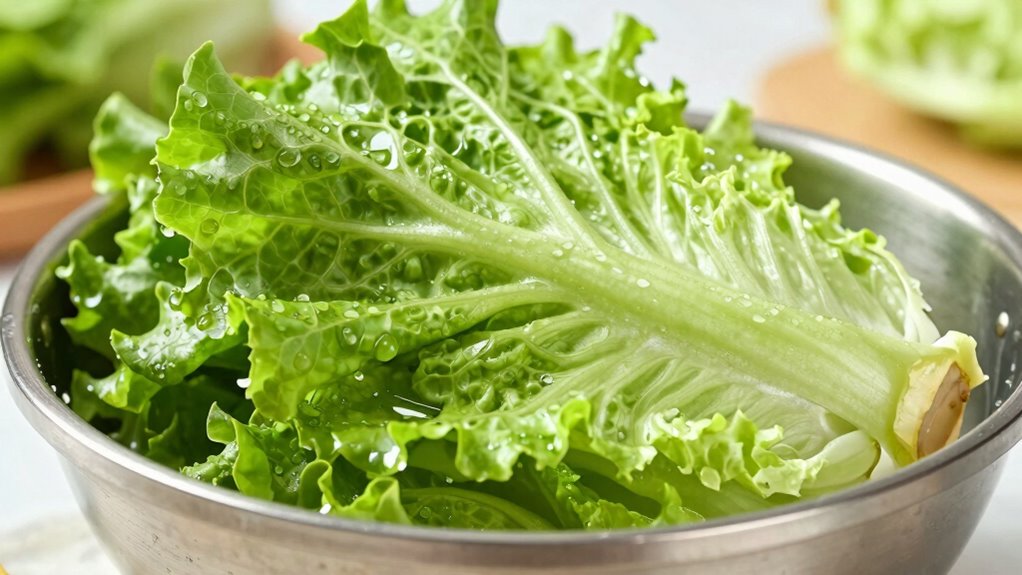
Residual moisture on greens after spinning can negatively impact their flavor and texture. When leaf moisture remains, it dilutes the natural flavors and creates a soggy texture, making greens less appealing. Here are three ways wet greens diminish flavor retention and quality:
- Dilution of flavor: Excess water washes away delicate taste compounds, leaving greens bland.
- Texture degradation: Wet leaves become limp and mushy, losing their crispness.
- Increased spoilage risk: Moisture encourages bacterial growth, shortening freshness.
Tips for Drying Greens Perfectly With Your Salad Spinner
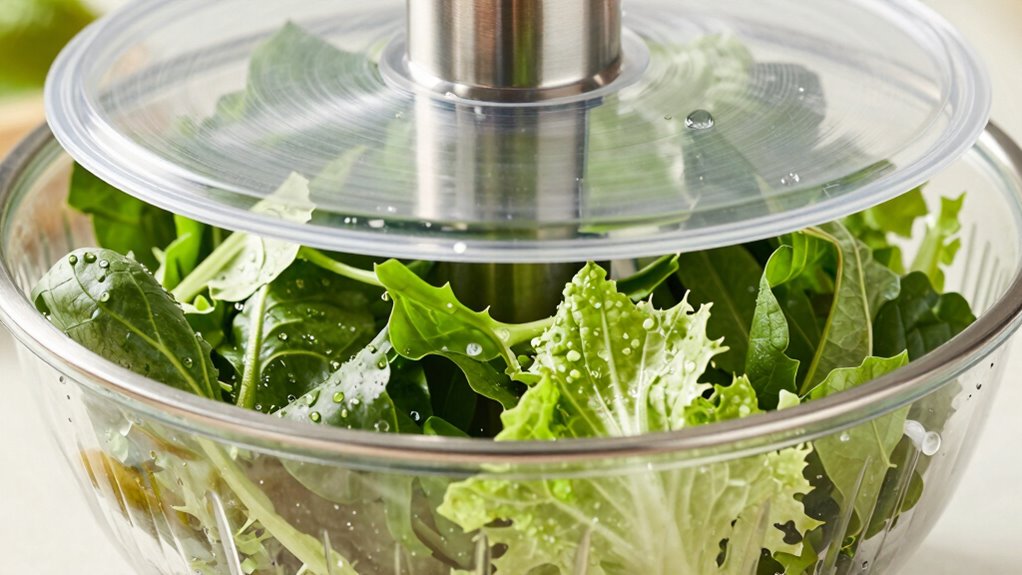
To get your greens perfectly dry, start by loading the salad spinner properly—don’t overcrowd it, so everything spins freely. Use effective spin cycles, applying steady, even pressure to remove excess water efficiently. With the right technique, you’ll enjoy crisp, dry greens every time.
Proper Loading Techniques
Getting your greens properly loaded into the salad spinner is key to achieving perfectly dry leaves. Proper loading guarantees even water removal and maintains leaf texture. First, layer the greens loosely in the basket, avoiding overcrowding, so the spinner can move freely. Second, remove excess moisture by gently patting leaves with a paper towel before loading—this reduces moisture content and speeds up drying. Third, distribute greens evenly, spreading them out in a single layer, so the spinner’s force affects all leaves equally. This technique prevents clumping and promotes uniform drying. Correct loading maximizes the spinner’s efficiency, preserves leaf texture, and ensures that greens come out crisp and not wilted, making your salads taste fresher and more vibrant.
Effective Spin Cycles
Choosing the right spin cycle is essential for drying greens effectively. Longer spins may seem thorough, but they can damage delicate leaf textures and cause unnecessary moisture retention. Shorter, controlled cycles help preserve the integrity of your greens while removing excess water. Many salad spinners have adjustable settings; start with a gentle spin to loosen moisture without bruising your leaves. If your greens are particularly wet, run a second spin, but keep it brief to prevent leaf damage. Pay attention to how the greens feel—aim for leaves that are just dry enough to prevent sogginess but still retain their freshness. Properly timed spin cycles strike the perfect balance between removing moisture and maintaining the leaf texture, resulting in greens that taste crisp and fresh.
Common Mistakes That Leave Greens Soggy
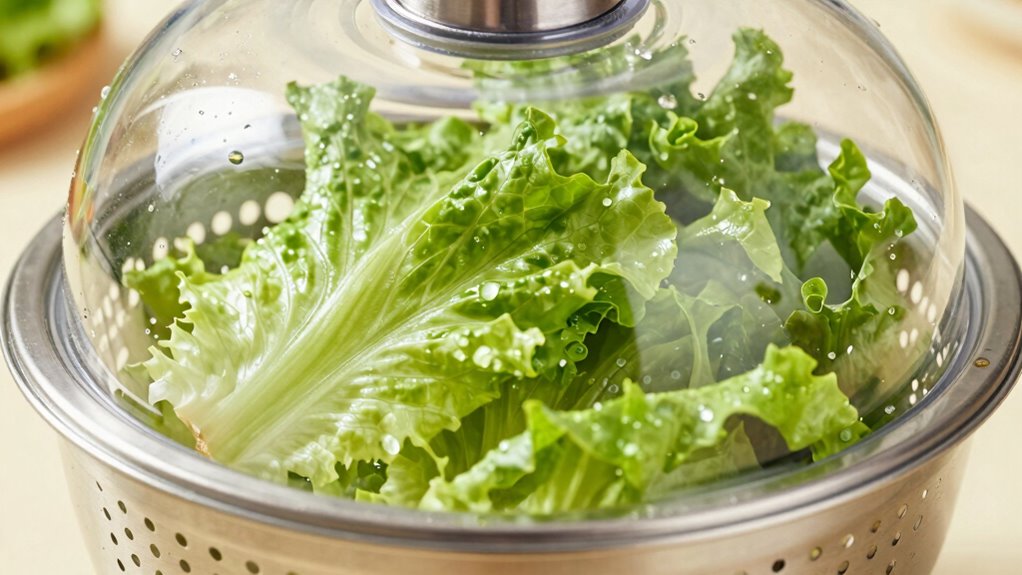
One common mistake that leaves greens soggy is failing to thoroughly dry them after washing. Excess moisture can ruin your salad’s texture and cause wilting. To avoid this, consider these key mistakes:
- Applying dressing too early: Adding dressing to wet greens traps moisture, making them soggy faster.
- Using improper storage methods: Storing greens in airtight containers without proper drying traps humidity, leading to slimy leaves.
- Skipping the spin process: Not spinning greens long enough leaves water on the surface, which hampers crispness and flavor.
Make sure to dry greens completely with your salad spinner before dressing or storing. Proper drying not only improves taste but also helps maintain the texture and prevents sogginess over time.
How Properly Dried Greens Make Your Salad Taste Fresh and Delicious
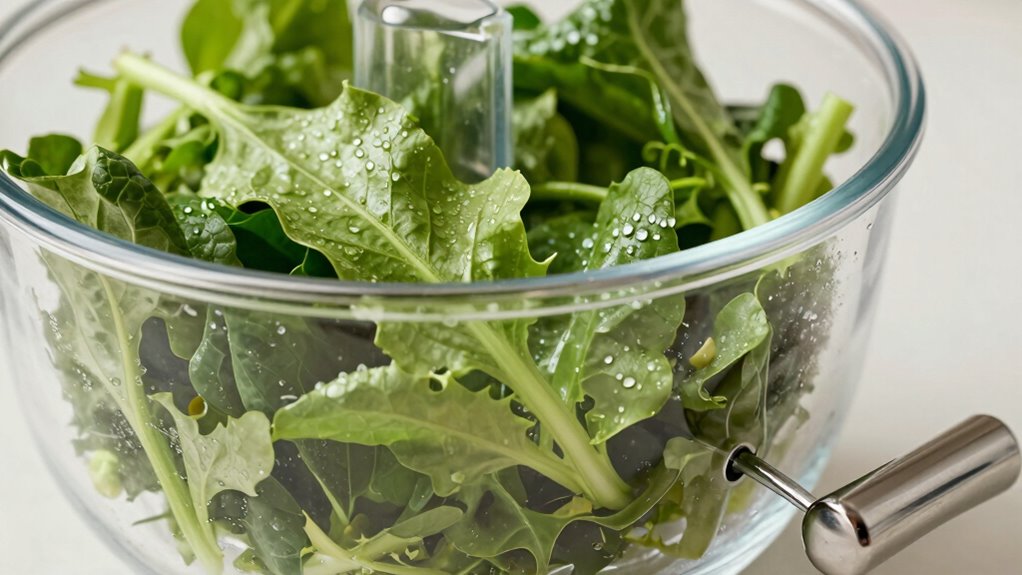
When greens are properly dried, they retain their crispness and vibrant flavor, making your salad taste genuinely fresh and appealing. Proper drying is essential for freshness preservation, preventing excess moisture that can cause greens to wilt or spoil quickly. By removing water thoroughly, you also help preserve nutrients, ensuring your greens stay nutrient-rich with each bite. Excess moisture can dilute flavors and lead to sogginess, but a good spin or pat dry keeps the greens crisp and flavorful. When you dry greens well, your salad becomes more enjoyable, tasting fresher and more vibrant. This simple step enhances both the texture and nutritional quality of your greens, making every salad more satisfying and delicious. Proper drying truly makes a noticeable difference in your salad experience.
Frequently Asked Questions
Can a Salad Spinner Remove Pesticides From Greens?
A salad spinner can’t fully remove pesticide residue from greens, but it does improve washing effectiveness. By spinning greens, you help loosen dirt and some surface pesticides. However, to better reduce pesticide residues, you should soak greens in a vinegar or baking soda solution before spinning. Remember, no method completely eliminates pesticides, so buying organic or thoroughly washing greens remains your best bet for safer, cleaner greens.
Is It Better to Air Dry Greens After Spinning?
Yes, air drying greens after spinning can be beneficial. It allows excess moisture to evaporate gently, reducing sogginess and maintaining crispness. Air drying benefits include better texture and flavor, and it helps prevent wilting. To optimize moisture retention, use gentle airflow and spread greens out evenly. This technique guarantees greens stay dry and fresh, enhancing their taste and overall salad quality.
How Long Should Greens Spin to Maximize Dryness?
You should spin greens for about 10 to 15 seconds to maximize moisture removal. This duration efficiently dries the greens without over-spinning, which can bruise or damage delicate leaves. Keep an eye on the moisture level; if they’re still damp after 10 seconds, give them an extra few seconds. Proper spin time guarantees greens are dry enough for better taste and texture, enhancing your salad experience.
Does Spinning Greens Affect Their Nutritional Content?
Did you know that spinning greens preserves up to 90% of their nutrients? When you use a salad spinner, it gently removes excess water without causing oxidative damage, unlike air drying or vigorous handling. This means your greens retain more vitamin C and antioxidants, keeping them fresh and nutritious. So, spinning greens not only improves taste and texture but also helps preserve their nutritional content effectively.
Can a Salad Spinner Be Used for Other Fruits or Vegetables?
Yes, you can utilize a salad spinner for other fruits and vegetables. Kitchen gadgets like salad spinners are versatile and effective for drying produce after washing. Using proper drying techniques ensures your fruits and veggies are free of excess water, which helps prevent spoilage and improves texture. Just make sure to choose the right spinner size and avoid overloading it to get the best results for all types of produce.
Conclusion
When your greens are thoroughly dried, they’re like a sponge soaking up all the fresh flavors, making your salad taste just right. Using a salad spinner is your secret weapon to achieving that perfect crunch and vibrant taste. Don’t settle for soggy greens—think of the spinner as a gentle tornado that whips away excess water, leaving you with crisp, delicious greens every time. Your taste buds will thank you for the fresh, satisfying crunch!