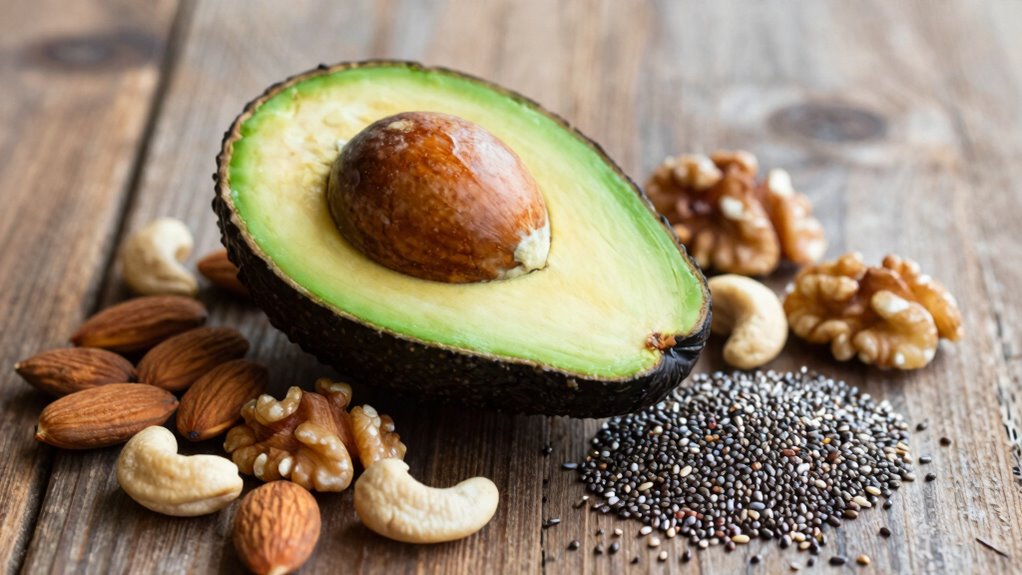

You can enjoy the health benefits of whole-food fats like avocado, nuts, and seeds by eating moderate portions that suit your individual needs. Typically, a handful of nuts or a quarter to half an avocado daily offers beneficial fats without overdoing calories. A tablespoon of seeds like flax or chia is also recommended. Keep in mind, portion sizes should fit your lifestyle and goals. For more personalized tips, exploring further can help you make smarter choices.

Get kitchen staples and gadgets delivered free with Prime
- Fast, free delivery on millions of items
- Prime Video, Amazon Music and more included
- Member-only deals all year
Key Takeaways
- A small handful of nuts (about 1 ounce) daily provides beneficial healthy fats without excessive calories.
- Half an avocado per day offers nutrient-dense fats supporting satiety and heart health.
- One to two tablespoons of seeds like flax or chia daily supply essential omega-3 fatty acids.
- Portion sizes should be adjusted based on individual caloric needs and dietary goals.
- Moderation ensures you gain health benefits from whole-food fats without overconsumption.

You might have heard that saturated fats are bad, but recent research dispels this myth. While excessive consumption of processed or fried foods high in saturated fats can be detrimental, natural sources like coconut oil or full-fat dairy, in moderation, can fit into a healthy diet. The key is balance and understanding that saturated fats from whole-food sources aren’t necessarily harmful when consumed responsibly. Instead, focus on replacing trans fats and refined carbs with whole-food fats, which provide essential nutrients and promote satiety. Incorporating avocados, nuts, and seeds into your meals can help you achieve this balance without feeling deprived. These foods are rich in monounsaturated fats and polyunsaturated fats, which support heart health and can even assist in weight management by keeping you full longer. Additionally, whole-food fats are often more nutrient-dense than processed fats, making them a smarter choice for overall health. Recognizing the importance of nutrient density can guide you toward making healthier choices and maximizing the benefits of your diet. Consuming a variety of these fats ensures you get a broad spectrum of healthy nutrients, which can further enhance your wellness. How much is enough? The answer depends on your individual needs, but a good rule of thumb is to include a handful of nuts or a quarter to half an avocado daily, along with a tablespoon of seeds like flax or chia. These amounts supply beneficial fats without going overboard. Remember, whole-food fats are dense in calories, so moderation is *fundamental*, especially if you’re watching your weight. As research continues to evolve, understanding the role of healthy fats** in a balanced diet can help you make informed choices. Instead of fearing fats, learn to embrace their benefits, making them part of your daily routine. By choosing natural, unprocessed sources, you’re giving your body the nutrients it craves. Fat from whole foods can be a powerful tool to improve your health, as long as you consume them mindfully and within your personalized dietary needs**.
As an affiliate, we earn on qualifying purchases.
Frequently Asked Questions
Are Whole-Food Fats Suitable for Low-Fat Diets?
Whole-food fats are suitable for low-fat diets, but you should consume them in moderation. Many dietary fat myths suggest avoiding fats altogether, but healthy fats from sources like avocados, nuts, and seeds support nutrient absorption and overall health. Instead of eliminating fats, focus on balanced intake, ensuring you get essential fatty acids without exceeding your calorie goals. Incorporate these fats wisely to benefit from their nutritional value without overdoing it.
How Do Whole-Food Fats Impact Weight Loss?
Whole-food fats are like a double-edged sword in weight loss—they can help or hinder your progress. Their caloric density means it’s easy to overconsume, but their satiety effects can keep you full longer, preventing overeating. When eaten in moderation, they support a balanced diet and can aid weight loss. Focus on portion control, and you’ll harness their benefits without tipping the scales.
Can Eating Too Much Lead to Nutrient Imbalances?
Eating too much whole-food fat can lead to nutrient imbalances because of nutrient competition, especially for absorption of fat-soluble vitamins like A, D, E, and K. When you overconsume fats, these vitamins might not get properly absorbed, causing deficiencies. To avoid this, enjoy nuts, seeds, and avocados in moderation, balancing your diet with other nutrient-rich foods, ensuring you get enough vitamins without disrupting nutrient absorption.
Are There Specific Health Conditions Affected by Fat Intake?
Some health conditions, like heart disease, are directly influenced by fat intake. You might think all fats impact heart health equally, but healthy fats from avocados, nuts, and seeds aid fat absorption and support cardiovascular health. However, excessive consumption could worsen conditions like pancreatitis or influence cholesterol levels. Staying mindful of your fat intake helps manage these conditions, ensuring you benefit from healthy fats without risking adverse effects.
How Do Cooking Methods Influence Whole-Food Fats’ Health Benefits?
Cooking techniques profoundly influence fat retention and health benefits of whole-food fats. For example, sautéing with minimal oil helps preserve healthy fats, while high-heat methods like frying can degrade them. Steaming or roasting at moderate temperatures retain more nutrients and fats. By choosing gentle cooking methods, you guarantee you get maximum health benefits from avocados, nuts, and seeds without compromising their nutrient profile.
Conclusion
Incorporating whole-food fats like avocados, nuts, and seeds can boost your health, but moderation is key. Did you know that just a handful of nuts provides about 14 grams of healthy fats? That’s nearly 70% of the daily recommended fat intake for some adults! So, enjoy these nutrient-dense foods, but keep portions in check to reap their benefits without overdoing it. Balance is the secret to making fats work for your well-being.
NFL season / tailgating Picks
team gear
As an affiliate, we earn on qualifying purchases.