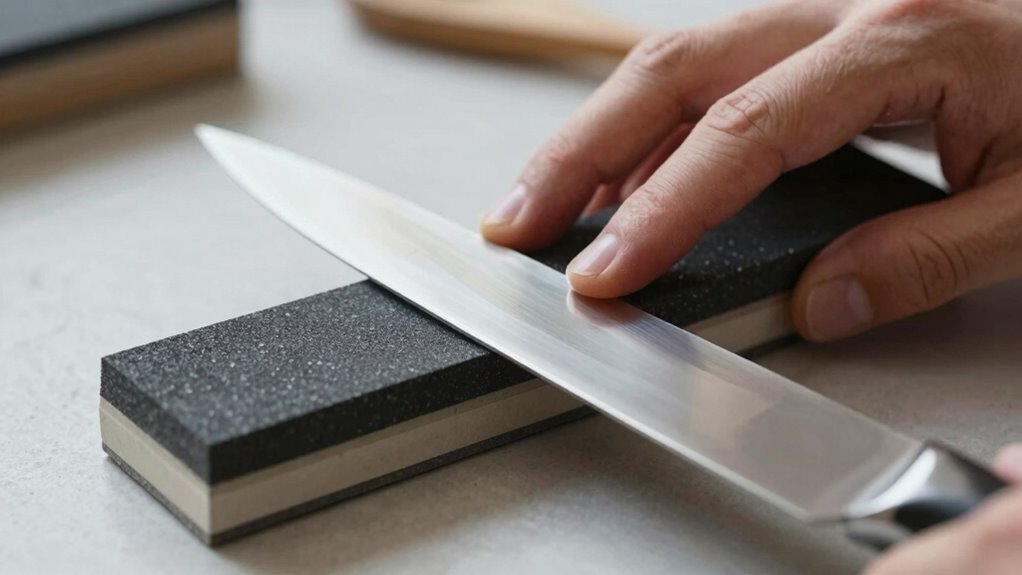

To sharpen your knives with a whetstone as a beginner, focus on choosing the right stone for your needs, set up a stable workspace, and always keep the correct 15-20 degree angle. Use gentle, even strokes on each side, test your sharpness with a slice, and clean your stone afterward. Avoid rushing or inconsistent positioning to prevent damage. If you keep practicing these core steps, you’ll develop confidence and skill—more tips await to perfect your technique.
Key Takeaways
- Choose the right whetstone grit based on your blade’s dullness and steel hardness.
- Prepare a stable workspace with safety gear and proper lighting before sharpening.
- Maintain a consistent 15-20 degree angle and proper hand position during each stroke.
- Test sharpness with paper or tomato slices, stopping once desired edge is achieved.
- Clean and store the whetstone properly to ensure longevity and optimal sharpening results.
Why Whetstone Sharpening Is Perfect for Beginners
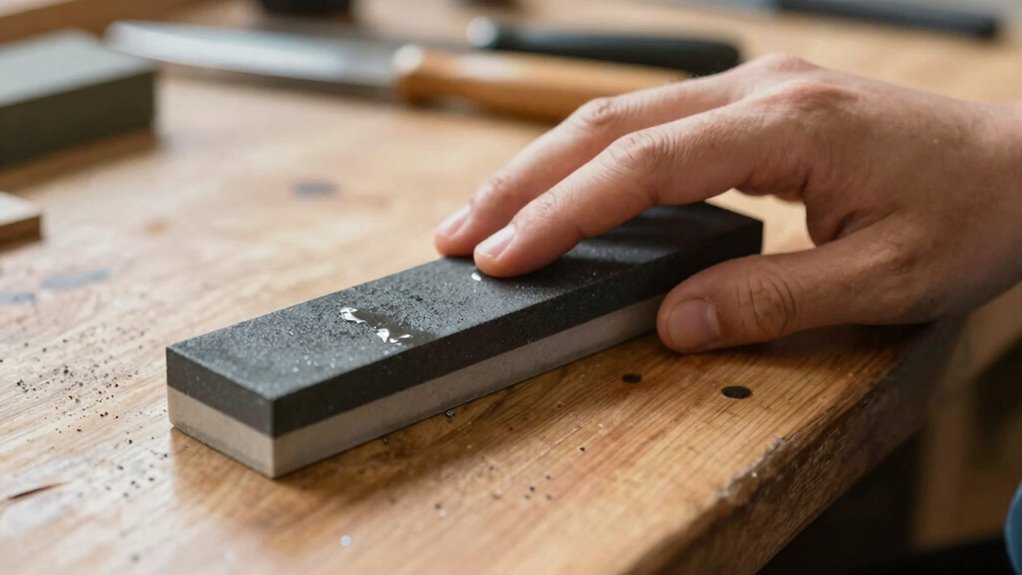
Whetstone sharpening is ideal for beginners because it offers a straightforward and hands-on approach to maintaining your knives. Unlike metal honing, which simply realigns the blade’s edge, whetstones remove small amounts of metal to sharpen thoroughly. This process gives you more control and understanding of your knife’s condition. Many beginners find electric sharpeners tempting but often too aggressive or inconsistent. Whetstones let you develop a feel for the correct angle and pressure, making the process more intuitive. Plus, they’re cost-effective and don’t require frequent replacement. Starting with a whetstone helps you learn the fundamentals of sharpening, providing a satisfying, skill-building experience. It’s a reliable, simple way to keep your knives sharp and in top condition, especially for those new to knife maintenance. Incorporating proper technique from the beginning ensures better results and helps prevent damage to your blades. Additionally, understanding blade geometry can significantly improve your sharpening outcomes and overall knife care. Developing a consistent sharpening method helps maintain your blades’ longevity and performance over time. Gaining familiarity with abrasive grit types can also enhance your ability to select the right stone for different sharpening needs.
How to Choose the Best Whetstone for Your Knives
Choosing the right whetstone depends on your specific sharpening needs and the types of knives you want to maintain. Metal hardness plays a pivotal role in this decision—softer steels require coarser grit, while harder steels benefit from finer grit for a smooth edge. For most beginners, a dual-grit stone with a medium (around 1000 grit) and a fine (3000-8000 grit) side offers a versatile solution. If you’re sharpening very dull or damaged blades, start with a coarser grit to reshape the edge. For routine touch-ups, a finer grit will produce a sharper, more refined edge. Carefully consider your knife’s metal hardness and your sharpening goals to select a whetstone that will make the process easier and more effective, ensuring your knives stay in prime condition. Understanding metal hardness can help you make more informed choices about grit levels and sharpening techniques. Additionally, selecting a proper sharpening angle is essential for achieving optimal edge retention and cutting performance. Knowing the importance of technique can significantly influence your sharpening results, especially as a beginner. Mastering whetstone maintenance will also keep your sharpening tools performing at their best over time. Being aware of the impact of grit size can further refine your approach to sharpening and improve your results.
Preparing Your Whetstone and Workspace Safely
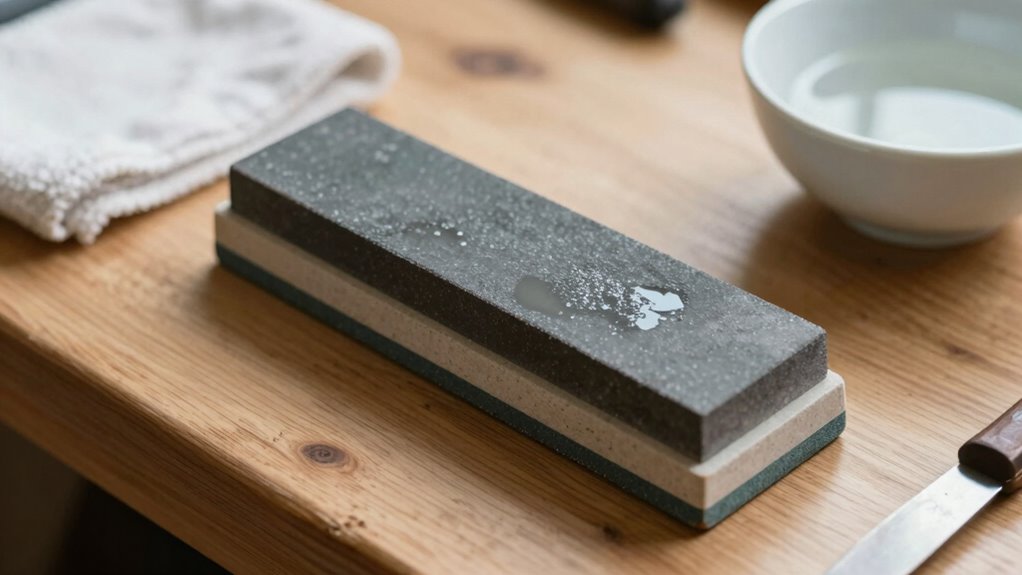
Start by placing your whetstone on a stable, flat surface to guarantee slipping. Wear safety gear like gloves and eye protection to shield yourself from potential accidents. Taking these precautions ensures a safer and more effective sharpening experience. Additionally, ambient‑light playbooks can help you optimize your workspace lighting for better visibility and precision during sharpening. Ensuring proper tool handling techniques can further improve your safety and sharpening results. Remember that understanding proper sharpening angles is crucial for achieving a sharp edge without damaging your blade.
Choose Stable Surface
Before you begin sharpening, make certain your workspace is stable and secure. A stable surface is essential for effective, safe sharpening. Choose a flat, non-slip surface to prevent movement during the process. Avoid cluttered work areas, as workspace clutter can cause accidents or missteps. Clear away any unnecessary items to create a clean, organized space. Using a sturdy, level surface ensures your whetstone stays in place, giving you better control. If the surface is uneven or unstable, your sharpening won’t be precise and could be dangerous. Keep your workspace free of distractions and ensure good footing. Prioritizing surface stability and a clutter-free environment helps you sharpen confidently and safely, producing the best results with less effort. Proper setup contributes significantly to achieving consistent sharpening results and maintaining safety throughout the process. Additionally, ensuring your workspace is ergonomically designed can help reduce fatigue and improve sharpening accuracy. Incorporating workplace safety practices further minimizes potential hazards and enhances precision during sharpening.
Use Proper Safety Gear
To guarantee your safety while sharpening, it’s important to use proper safety gear and prepare your workspace accordingly. Always wear safety glasses to protect your eyes from any splashes or debris that might fly off the stone. Cut resistant gloves are essential to shield your hands from accidental slips and cuts during the sharpening process. Make certain your workspace is clean, well-lit, and stable, minimizing any risk of slipping or accidents. Keep your tools organized and away from clutter. Never rush, and focus on maintaining control. proper ergonomics can help reduce fatigue and improve your overall safety during extended sharpening sessions. Additionally, ensuring your workspace has ergonomic setup can help reduce fatigue and improve your overall safety during extended sharpening sessions. Being mindful of workplace safety practices further enhances your protection and confidence throughout the process. Maintaining a safe environment also helps prevent distractions and accidents, making the sharpening process more efficient and secure. Incorporating proper lighting can also enhance your visibility and precision during sharpening.
How to Hold and Position Your Knife on the Whetstone
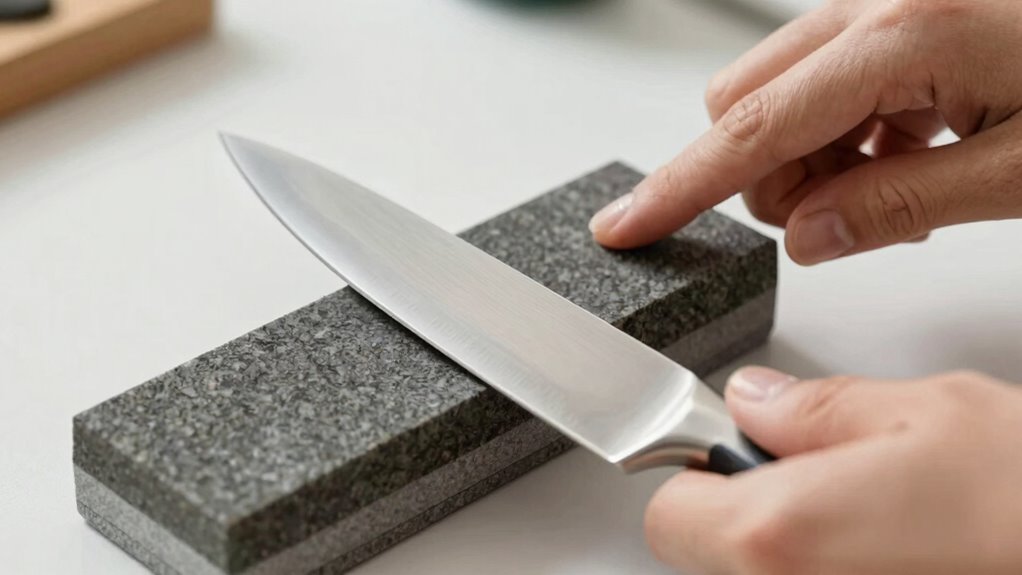
Holding your knife correctly is essential for effective sharpening. You want to maintain the correct blade angle and use a proper grip technique to ensure even, sharp edges. Position the knife so that the edge makes contact with the whetstone at about 15-20 degrees. Use your fingers to grip the handle firmly, while your other hand supports the spine of the blade, keeping it steady. Keep the blade flat and aligned with the stone’s surface, applying gentle pressure. Remember, consistent positioning is key. Here’s a quick guide:
| Step | Action | Tips |
|---|---|---|
| 1 | Find correct blade angle | Use a guide or visual aids |
| 2 | Grip the handle firmly | Avoid slipping |
| 3 | Position blade on stone | Maintain steady angle |
| 4 | Keep spine supported | Prevent wobbling |
| 5 | Adjust grip as needed | Stay comfortable |
A firm grip and proper blade alignment are crucial for effective sharpening and achieving a keen edge. Ensuring your technique is consistent will help you develop confidence and precision with each pass. Paying attention to proper hand positioning can greatly improve your results and safety during sharpening. Additionally, understanding the correct pressure to apply during each stroke will help prevent damaging the blade or the stone.
Step-By-Step: How to Sharpen Your Knife With a Whetstone
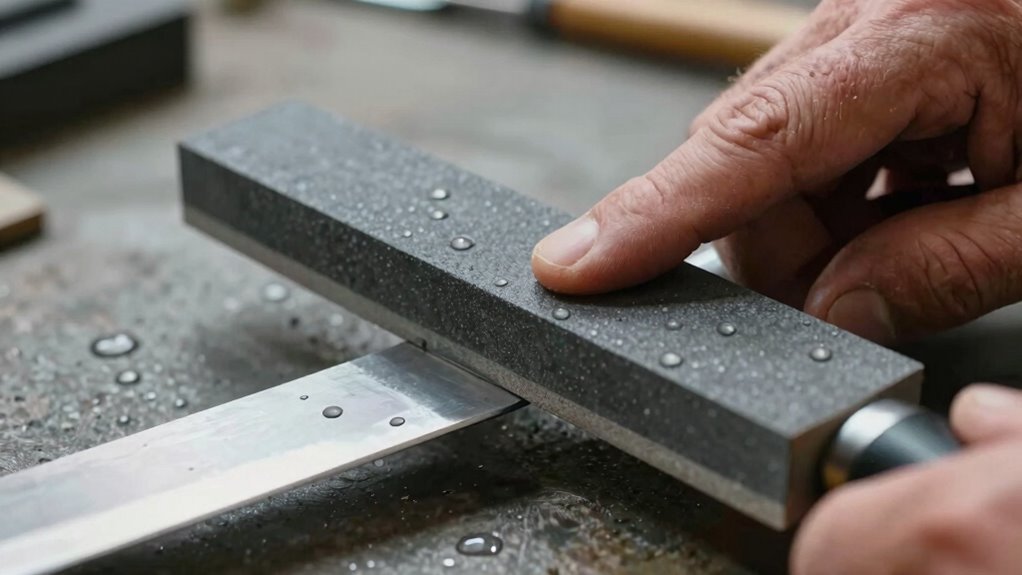
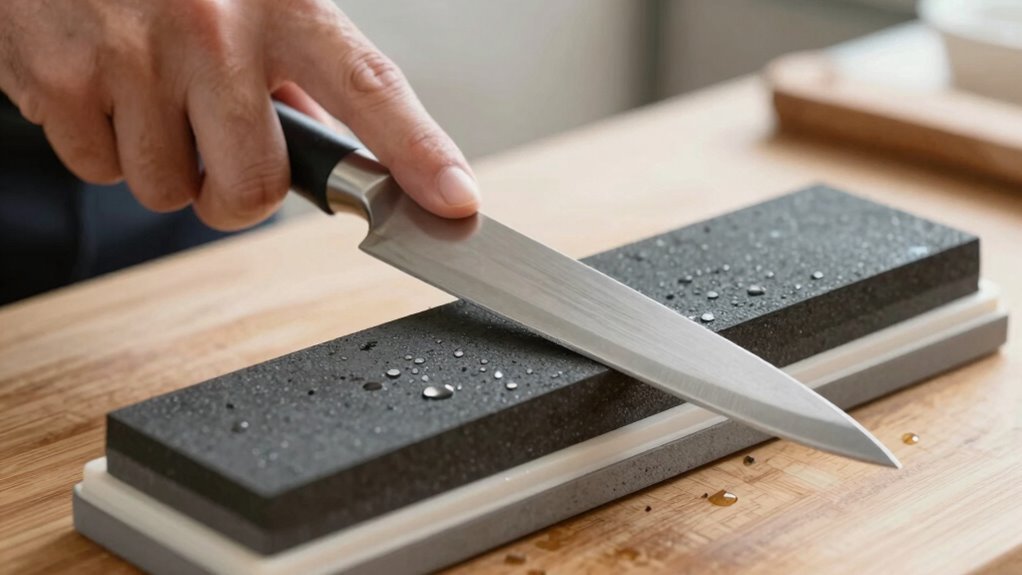
Once you’ve positioned your knife correctly on the whetstone, it’s time to begin the sharpening process. First, decide whether you want to hone or sharpen; honing realigns the edge, while sharpening removes metal to restore a dull blade. Next, choose between an electric or manual whetstone. An electric sharpener offers convenience but less control, while a manual whetstone provides precision. To sharpen:
- Maintain a consistent angle—usually 15-20 degrees—throughout each stroke.
- Use even, gentle pressure as you slide the blade across the stone, covering the entire length.
- Alternate sides regularly to ensure an even edge. Keep the stone damp if required. Follow this methodical process, and you’ll develop a sharp, durable edge with confidence.
How to Test Your Knife’s Sharpness and Know When to Stop
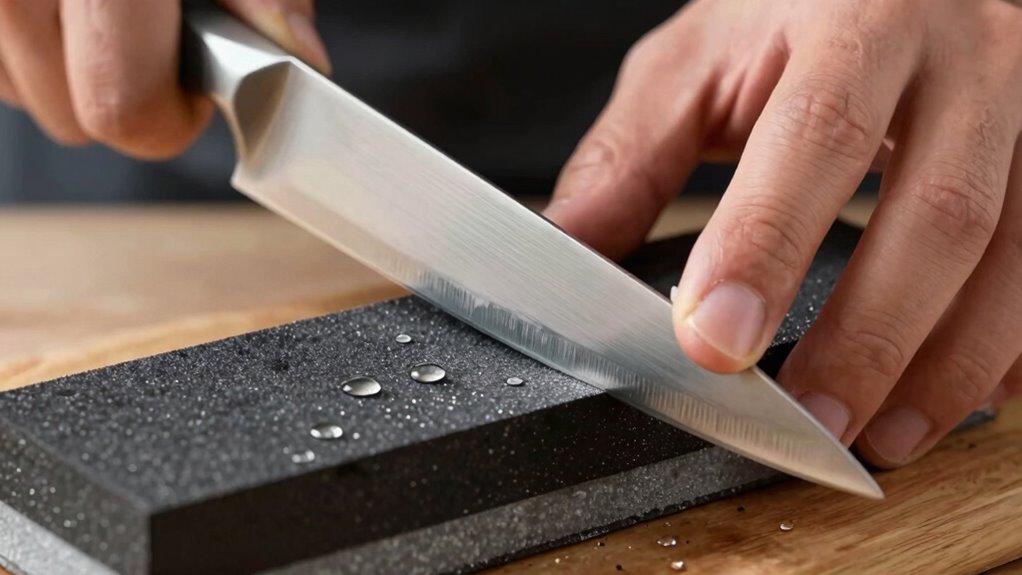
Knowing when your knife is sharp enough is essential to guarantee safe and effective cutting. Many sharpening myths suggest that a razor-like edge is always necessary, but that’s not true—your knife just needs to be sufficiently sharp for your tasks. To test your edge, try slicing through paper or a tomato; if it cuts smoothly without tearing, you’re good. Be cautious of honing techniques that claim to sharpen without proper abrasive contact; they can give false confidence. Instead, focus on consistent testing methods, like feeling the edge for burrs or using a gentle drag test. Stop sharpening once your knife easily slices and maintains the desired sharpness, avoiding over-sharpening that can damage the blade or waste time.
Cleaning and Maintaining Your Whetstone for Long-Term Use
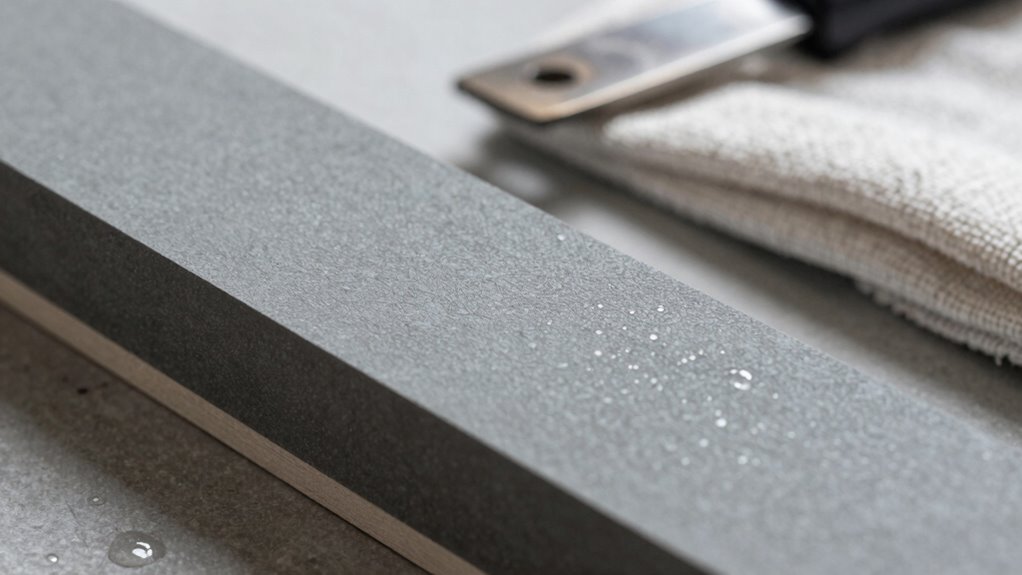
Regularly cleaning and maintaining your whetstone guarantees it stays effective and lasts longer. Proper upkeep ensures your sharpening tools perform ideally over time. To do this, follow these steps:
Keep your whetstone clean and maintained for longer-lasting, sharper knives.
- Rinse the whetstone with water after each use, scrubbing gently with a soft brush to remove debris.
- Store knives properly by avoiding contact with hard surfaces and keeping them dry, which preserves both the blades and your stone.
- Choose the right sharpening oils, applying a few drops to the stone’s surface before use to improve cutting efficiency and reduce wear.
Consistently caring for your whetstone helps maintain its abrasive qualities, ensuring your knives stay sharp longer and your sharpening process remains smooth.
Common Mistakes Beginners Make and How to Avoid Them
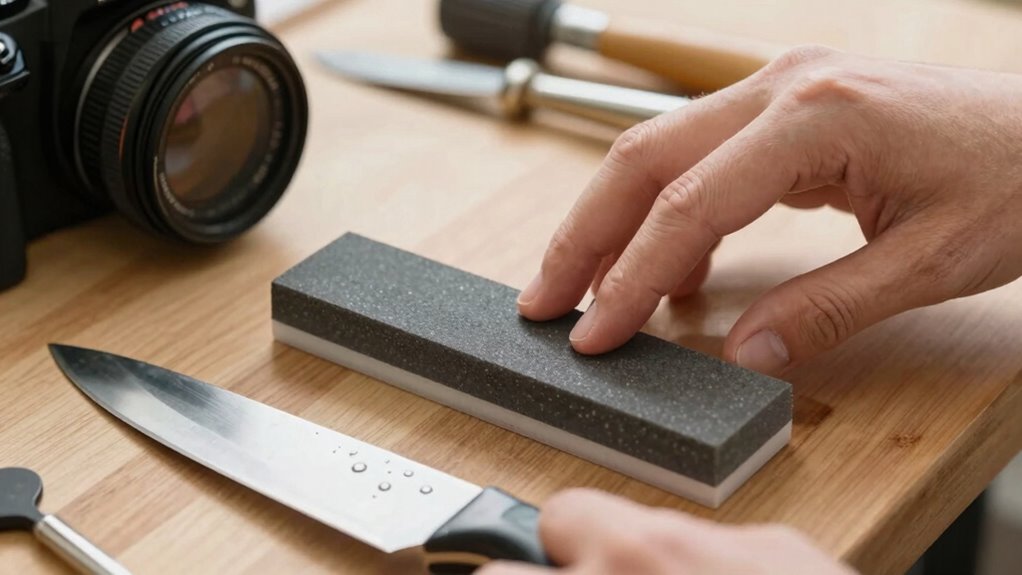
Many beginners overlook the importance of maintaining the correct blade angle, which can lead to uneven or ineffective sharpening. Rushing through the process causes mistakes and damages your blade or stone. To get better results, take your time and focus on consistent angles throughout.
Overlooking Blade Angle
One common mistake beginners make when sharpening with a whetstone is ignoring the blade angle, which can lead to uneven or dull edges. Maintaining the correct blade angle is vital for sharpening precision. Without it, you risk creating a weak edge or damaging the blade. To avoid this, focus on these key points:
- Consistently hold the same blade angle during each stroke.
- Use guides or visual cues to maintain the correct angle.
- Regularly check your progress to guarantee even sharpening.
Rushing the Process
Rushing through the sharpening process is a common mistake that can undermine your efforts and damage your blade. Speeding up or skipping steps might seem like a time-saver, but it often leads to uneven edges and dull results. Take your time to maintain a consistent angle and focus on each stroke. Avoid the temptation to rush, as this can cause you to miss essential stages like proper honing or polishing. Remember, sharpening isn’t about quick results; it’s about precision and technique. If you hurry, you risk damaging the blade or creating an uneven edge that dulls faster. Patience ensures a sharper, longer-lasting edge. Slow down, follow each step carefully, and your efforts will pay off with a clean, professional finish.
Frequently Asked Questions
Can I Use a Whetstone on Serrated Knives?
You can’t effectively use a whetstone on serrated knives because their blade material and sharpening angle differ from plain-edged knives. Serrated edges have small teeth that require specialized sharpening tools or ceramic stones designed for their unique structure. Attempting to sharpen them on a regular whetstone can damage the teeth or misalign the edge. Instead, focus on maintaining the sharpening angle suited for the serrations and use a fine stone or a ceramic rod.
How Often Should I Sharpen My Knives With a Whetstone?
Think of your knives as trusted allies in the kitchen; they need regular care to stay sharp. You should sharpen your knives with a whetstone every 1 to 3 months, depending on use. For frequent cooks, more regular knife maintenance helps maintain ideal cutting performance. Keep an eye on their performance, and don’t wait until they’re dull—routine sharpening ensures your tools stay in top shape and makes cooking a breeze.
What Are the Signs of Over-Sharpening a Knife?
You’ll notice over-sharpening by signs like knife damage, such as chips or cracks, and a dull edge despite frequent sharpening. Sharpening overuse can also cause the blade to become thin or lose its original shape, making it more prone to breakage. If your knife requires constant sharpening or feels less effective, you might be overdoing it. Always stop when your knife starts to show these signs to avoid unnecessary damage.
Is a Water or Oil Whetstone Better for Beginners?
Did you know that 65% of beginners find sharpening with water stones easier? Water stones are better for beginners because they cut faster and require no messy oil. They’re user-friendly, providing quick results, and are easy to clean. Oil stones, while durable, can be messier and take longer to sharpen. For your first attempts, water stones are a smarter choice, helping you develop confidence and skill quickly.
How Do I Store My Whetstone to Prevent Damage?
To prevent damage, store your whetstone in a dry, safe place where it won’t be knocked over or exposed to extreme temperatures. Use storage tips like keeping it in a padded container or wrapping it in a cloth. Make sure it’s completely dry before storing to avoid mold. Proper storage helps guarantee your whetstone stays in good condition, making sharpening safer and more effective over time.
Conclusion
With patience and practice, you’ll master the art of whetstone sharpening, transforming dull blades into razor-sharp tools. Remember, even the greatest swordsmen like Sir Lancelot once started with simple stones. Keep your workspace safe, follow the steps carefully, and don’t rush the process. Before you know it, you’ll wield a keen edge that’s as legendary as Excalibur itself. Sharpen your skills, and let your knives become timeless works of craftsmanship.