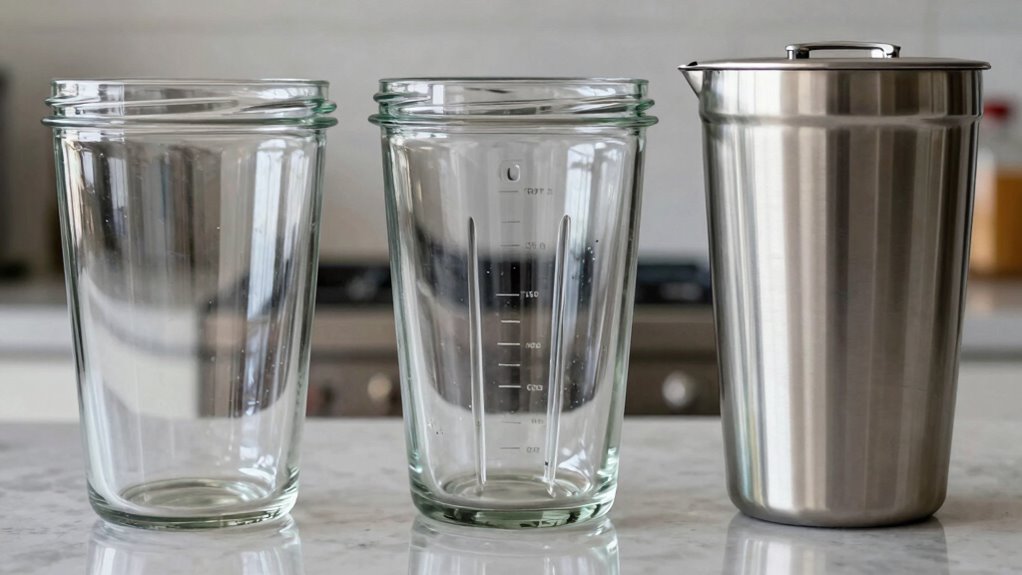

When choosing between Tritan, glass, or stainless steel blender jars, consider durability, safety, and aesthetics. Tritan is lightweight, impact-resistant, and BPA-free, but may stain over time. Glass offers safety, clarity, and an elegant look but can shatter. Steel jars are super durable, modern, and resistant to odors, though opaque. To make the best choice, it’s important to weigh these factors—continue exploring to uncover which material suits your needs best.

Get kitchen staples and gadgets delivered free with Prime
- Fast, free delivery on millions of items
- Prime Video, Amazon Music and more included
- Member-only deals all year
Key Takeaways
- Material safety varies: Tritan is BPA-free but may have chemical leaching concerns; glass and stainless steel are inert and generally safer.
- Durability differs: Tritan is impact-resistant but prone to scratches; glass is scratch-resistant but fragile; steel is highly durable and break-resistant.
- Aesthetic appeal influences choice: Tritan mimics glass clarity; glass offers a classic look; steel provides a sleek, modern appearance.
- Maintenance needs: Tritan and glass are dishwasher safe and easy to clean; steel resists stains but may require extra effort for residues.
- Impact on food and portability: Glass preserves flavor but is heavy; steel offers durability; Tritan is lightweight and ideal for on-the-go use.
Products Worth Considering

Breville Bambino Espresso Machine, Brushed Stainless Steel

Breville Barista Pro Espresso Machine with Grinder, Brushed Stainless Steel

Vitamix Propel Series 750 Professional-Grade Blender, 4 Programs, Black
As an affiliate, we earn on qualifying purchases.
What Are the Main Differences Between Tritan, Glass, and Steel Blender Jars?
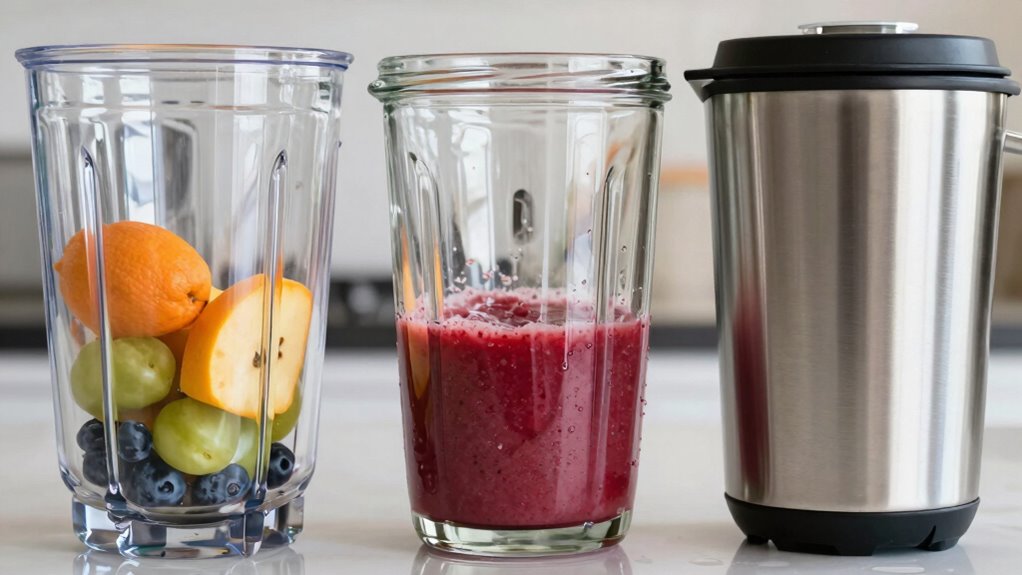
When choosing a blender jar, understanding the key differences between Tritan, glass, and steel options can help you pick the best material for your needs. Material safety is a top concern, and Tritan is BPA-free, making it a safe choice for food contact. Glass jars are inert and free from chemicals, ensuring that no unwanted tastes or odors transfer to your blends. Steel jars are durable and resistant to breakage but may contain traces of metals, so checking for food-grade stainless steel is important. Aesthetic appeal varies; glass offers a classic, transparent look, while Tritan mimics glass’s clarity and is lightweight. Steel jars lend a sleek, modern appearance and are easy to clean. Your choice depends on balancing safety and visual preference. Additionally, considering the European cloud innovation behind manufacturing processes can ensure that your blender jar is produced sustainably and meets high safety standards. Furthermore, advances in material manufacturing techniques contribute to improved durability and safety features in modern blender jars.
How Durable Are Tritan, Glass, and Stainless Steel Jars Over Time?
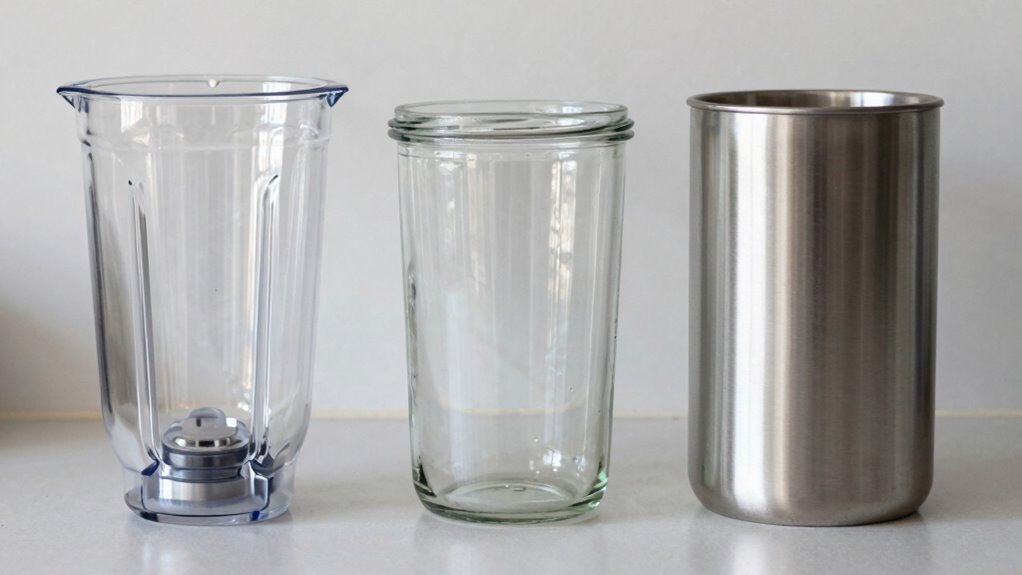
Tritan, glass, and stainless steel jars each have distinct durability profiles that impact their longevity with regular use. In a durability comparison, Tritan is highly resistant to impact and cracking, making it ideal for everyday handling. Glass, while scratch-resistant and non-reactive, can chip or shatter if dropped, limiting its material longevity. Stainless steel jars excel in resisting dents, corrosion, and temperature changes, ensuring they last for years. Over time, Tritan maintains its clarity and strength, but may stain or scratch with heavy use. Glass remains pristine if handled carefully, though it’s more fragile. Stainless steel offers the longest lifespan, especially in demanding environments. Your choice depends on how much wear and tear your blender jar will endure regularly. Additionally, understanding material properties can help you select the most suitable jar for your needs. Durability factors such as impact resistance and resistance to staining are crucial for making an informed decision. Moreover, considering manufacturing quality can significantly influence how well a jar withstands daily use over the years. It’s also important to evaluate long-term wear to ensure your investment remains functional and safe. A thorough understanding of material performance can help extend the lifespan of your blender jar and maintain optimal performance over time.
Are Tritan Plastic Jars Safe? What You Should Know About Their Health Risks?
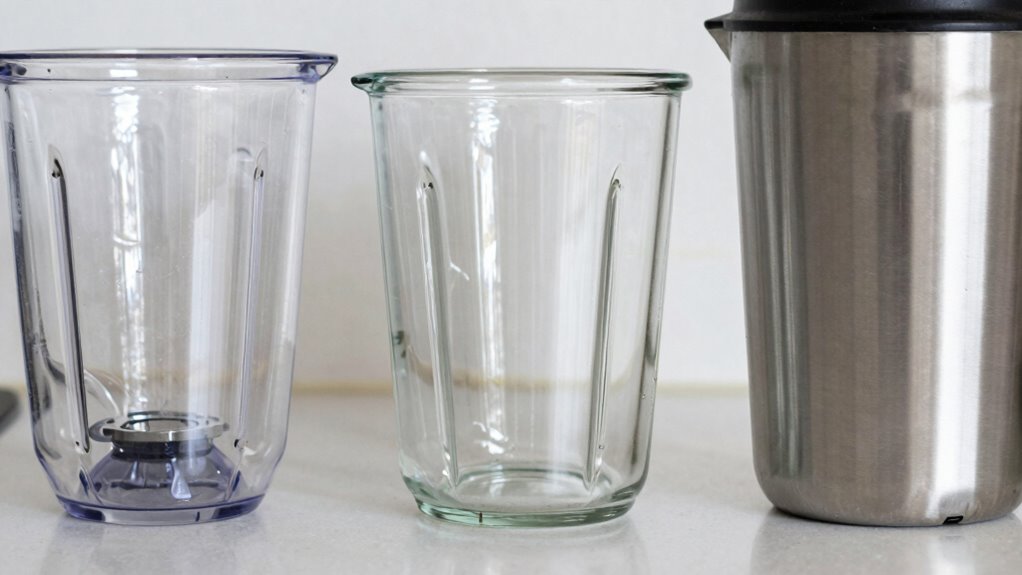
Are Tritan plastic jars truly safe for everyday use? Many people worry about health concerns and chemical safety when choosing plastic options. Here’s what you should know:
- Tritan is marketed as BPA-free, reducing some worries about harmful chemicals.
- It’s resistant to staining and odors, making it a practical choice.
- However, some studies question whether certain chemicals could leach into your food, especially when exposed to heat or sunlight. Chemical leaching can vary depending on usage conditions.
- Always check manufacturer info and avoid microwaving Tritan containers to minimize potential risks.
- Additionally, understanding free floating properties can help you assess the overall safety and longevity of your containers. Being aware of chemical migration is essential when evaluating plastic safety.
- Ongoing research continues to explore the long-term effects of chemical exposure, emphasizing the importance of staying informed about product safety.
- Newer testing methods, like migration testing, provide more detailed insights into how plastics interact with food and liquids over time.
While Tritan is generally considered safe, remaining cautious about chemical safety helps you make informed decisions. If you’re concerned about health risks, you might prefer glass or stainless steel options.
How Easy Is It to Clean Tritan, Glass, and Steel Blender Jars?
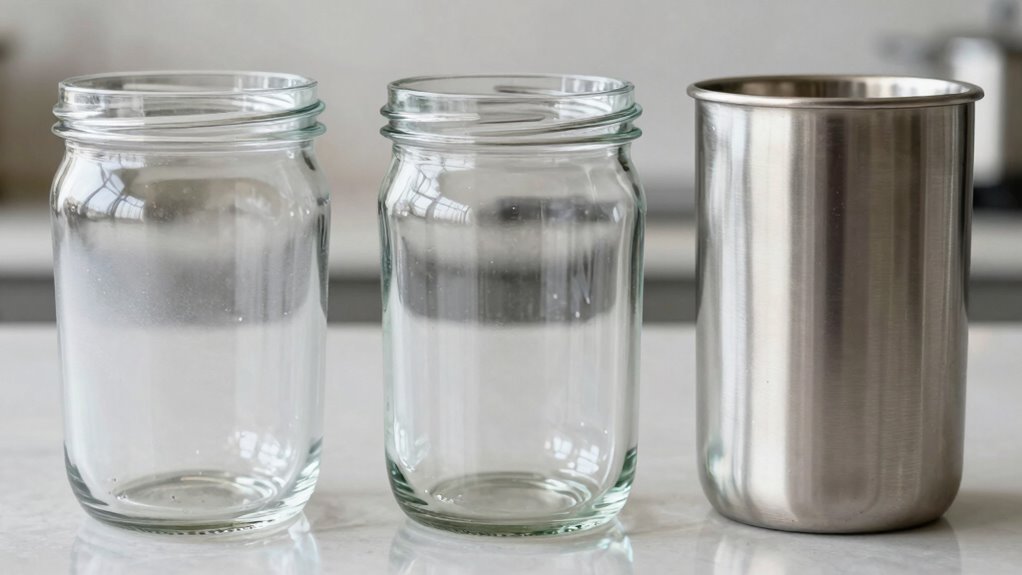
When it comes to cleaning your blender jars, each material offers different advantages and challenges. You’ll want to contemplate how well Tritan, glass, and steel resist stains and odors, as well as how easy they are to maintain over time. Understanding these differences can help you choose a jar that stays clean and durable with minimal effort. Additionally, considering how smart home technology can assist with routine cleaning or monitoring jar condition could enhance maintenance convenience. For instance, some advanced systems can track cleaning schedules or alert you when cleaning is needed, making upkeep even simpler. Moreover, selecting materials that are compatible with easy-to-use cleaning methods can save time and prevent damage during maintenance. Recognizing material durability can also inform your choice, ensuring your blender jar withstands daily use without damage or wear. Incorporating antimicrobial coatings might further reduce the need for frequent cleaning and prolong the jar’s lifespan.
Cleaning Ease Differences
Cleaning ease varies considerably among Tritan, glass, and steel blender jars, making it an important factor to contemplate when choosing a material.
- Tritan jars are dishwasher safe, simplifying cleanup, but may need stain removal techniques like baking soda for stubborn spots.
- Glass jars are generally dishwasher compatible, though their smooth surface makes hand cleaning easier and less prone to scratches.
- Steel jars can be dishwasher friendly, but they might require extra effort to remove stains or residue, especially with thick or stubborn ingredients.
- Overall, glass is easiest to clean due to its non-porous surface, while Tritan offers convenience with dishwasher compatibility, and steel may need more scrubbing. Your choice depends on your cleaning preferences and appliance compatibility.
- Additionally, piercing care and hygiene practices highlight the importance of using gentle cleaning methods, which can be similarly applied to maintaining clean blender jars.
- Being aware of cleaning techniques for different materials can help prolong your blender’s lifespan and improve overall hygiene, especially if you frequently blend sticky or staining ingredients.
Stain and Odor Resistance
Stain and odor resistance considerably impact how easily you can maintain your blender jars over time. Tritan and stainless steel jars excel here, resisting color fading and stubborn odors better than glass. Tritan’s non-porous surface prevents chemical leaching, reducing the risk of lingering smells from strong ingredients like garlic or turmeric. Stainless steel resists stains and odors, making it low-maintenance, but it can sometimes develop a metallic taste if not cleaned properly. Glass jars can stain and retain odors more easily, especially with highly pigmented or aromatic foods. They’re also more prone to scratches, which can trap residues. Overall, if you want minimal upkeep regarding stains and odors, Tritan and stainless steel are your best bets, while glass requires more frequent cleaning to stay fresh. Vetted – Perfect Fit Living
Maintenance and Durability
Maintaining your blender jars is straightforward, but the ease varies depending on the material. Tritan is lightweight and dishwasher safe, making cleanup simple, but scratches may develop over time, affecting durability. Glass jars are heavy but easy to clean and resistant to stains and odors, supporting health considerations. Stainless steel jars are highly durable and resistant to breakage, but cleaning can be tricky if food sticks to the interior. Consider these factors: Additionally, ease of maintenance highlights that ease of maintenance can also influence long-term satisfaction and safety in your home. Furthermore, understanding the material properties can help you choose the best jar for your specific needs and lifestyle, especially when considering cleaning requirements and how they align with your daily routines.
Does Jar Material Affect the Taste and Quality of Blended Food?
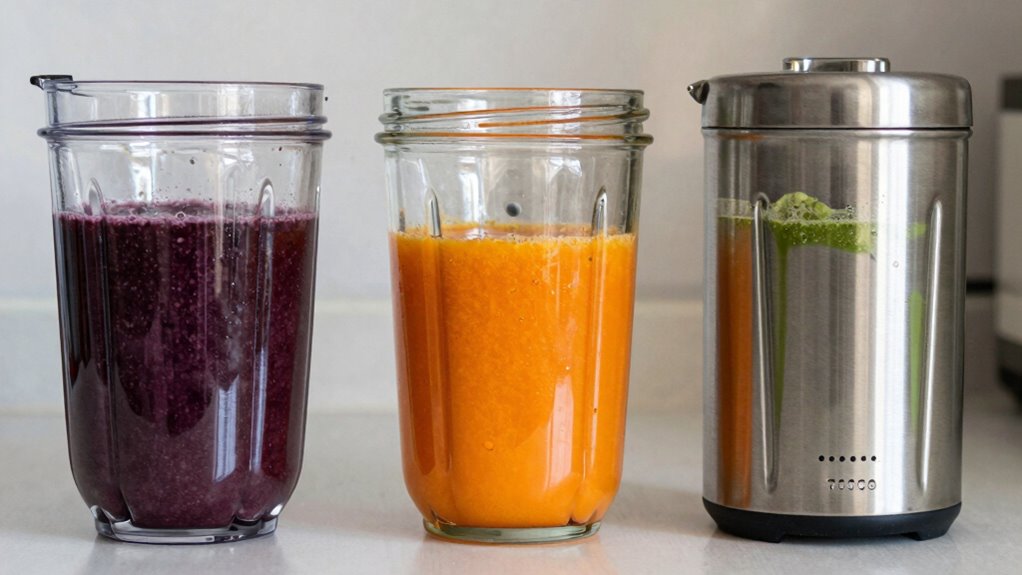
Your choice of jar material can influence the flavor and overall quality of your blended foods. Some materials may transfer subtle tastes or odors, while others help safeguard freshness better. Considering these factors ensures you get the best possible results from your blender.
Material Impact on Flavor
The material of your blender jar can subtly influence the flavor and overall quality of blended foods. Different materials impact flavor preservation and taste influence in unique ways. For example:
- Glass jars tend to preserve natural flavors because they don’t absorb odors, ensuring your food tastes fresh each time.
- Stainless steel jars may slightly alter taste due to metallic impressions, especially with acidic ingredients.
- Tritan plastic offers neutral flavor preservation, but over time, some users report minor taste influence from residual odors.
- The choice of material can affect how well flavors are maintained during blending and storage, so consider your priorities for flavor preservation when selecting your jar. Ultimately, the right material helps retain the purest taste of your ingredients.
Contaminant Transfer Risks
While many people focus on flavor preservation, it’s also important to contemplate how different jar materials might transfer contaminants into your food. Chemical leaching can occur when certain plastics, like Tritan, release trace chemicals over time, especially with heat or prolonged use. Glass jars, on the other hand, are inert and less likely to leach harmful substances, reducing chemical transfer risks. Stainless steel jars generally don’t leach chemicals but can be susceptible to cross contamination if not properly cleaned, leading to potential flavor transfer or residue buildup. Your choice of material influences not only taste but also safety. Being aware of these risks helps you select a jar that minimizes chemical leaching and cross contamination, ensuring your blended foods stay fresh, safe, and free from unwanted chemical or residual flavors.
Preservation of Freshness
Choosing the right jar material can considerably impact the freshness and overall quality of your blended food. Different materials influence food preservation and spoilage prevention. For example:
- Glass jars are non-reactive, helping maintain natural flavors and preventing taste transfer.
- Tritan offers excellent odor resistance, keeping flavors fresh longer.
- Stainless steel doesn’t absorb odors or flavors, which supports food preservation.
- Plastic jars, especially if not BPA-free, may harbor bacteria or odors, risking spoilage.
Your choice affects how well food stays fresh and retains its taste. Glass and stainless steel tend to be better for food preservation, reducing spoilage risks. Tritan’s durability and resistance to odors also help keep blended foods tasting fresh longer.
How Do Weight and Portability Vary Between Blender Jar Materials?
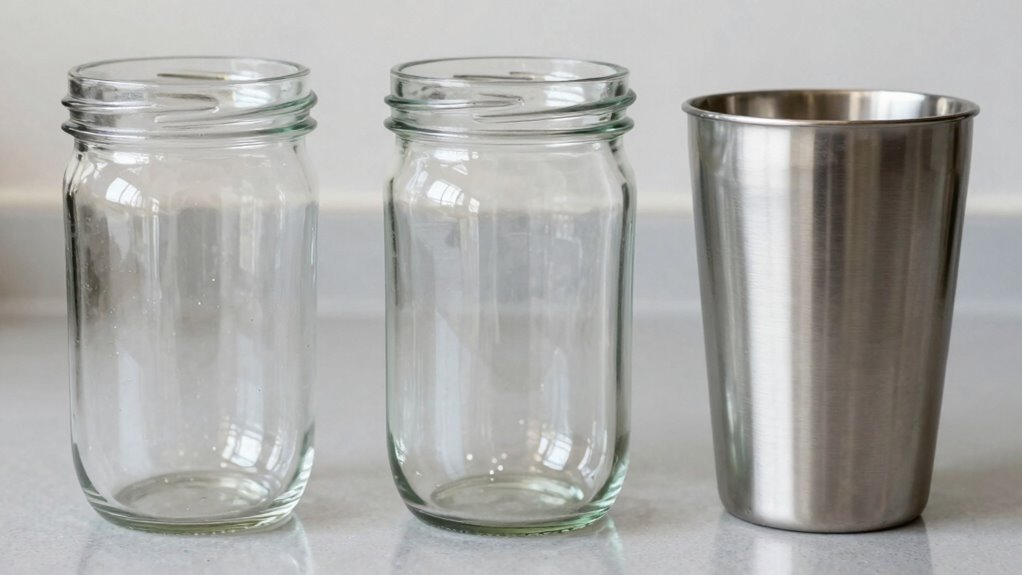
Different blender jar materials substantially influence their weight and portability, which can impact how easily you handle and move your blender. In a weight comparison, glass jars tend to be the heaviest, making them less portable but stable during use. Stainless steel jars are lighter than glass, offering better portability factors without sacrificing durability. Tritan plastic jars generally weigh the least, making them the easiest to carry and maneuver. If you frequently need to move your blender or pour with one hand, lighter materials like Tritan and stainless steel provide a clear advantage. Heavier glass jars may feel more stable but can be cumbersome, especially when filled. Your choice depends on balancing weight and portability to suit your blending needs and lifestyle.
Which Blender Jar Material Offers the Best Value for Your Money?
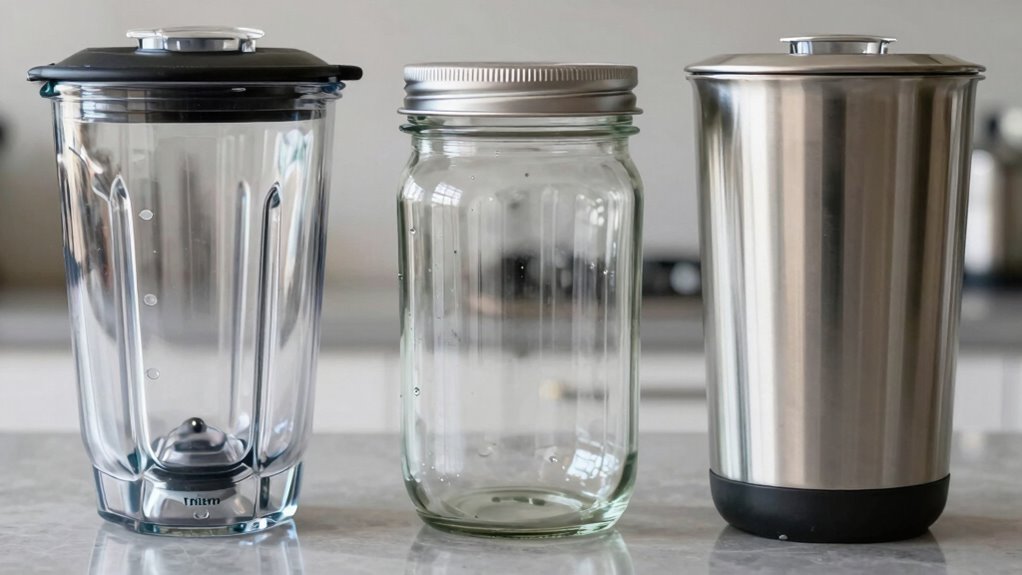
When evaluating which blender jar material offers the best value for your money, consider both durability and cost. Your choice impacts blender safety, noise levels, and long-term investment. Here are some key points:
Choosing the right blender jar balances durability, safety, noise, and cost for long-term value.
- Tritan is affordable, lightweight, and resistant to staining, offering good value with moderate durability.
- Glass may cost more upfront but is highly durable and easy to clean, reducing replacement needs.
- Stainless steel is often pricier but provides exceptional durability, quieter operation, and enhanced blender safety.
- Think about noise levels—steel jars tend to be quieter, making them a better value if noise bothers you. Balancing initial cost with longevity and safety features helps you choose the best material for your budget and needs.
What Is the Environmental Impact of Tritan, Glass, and Steel Blender Jars?
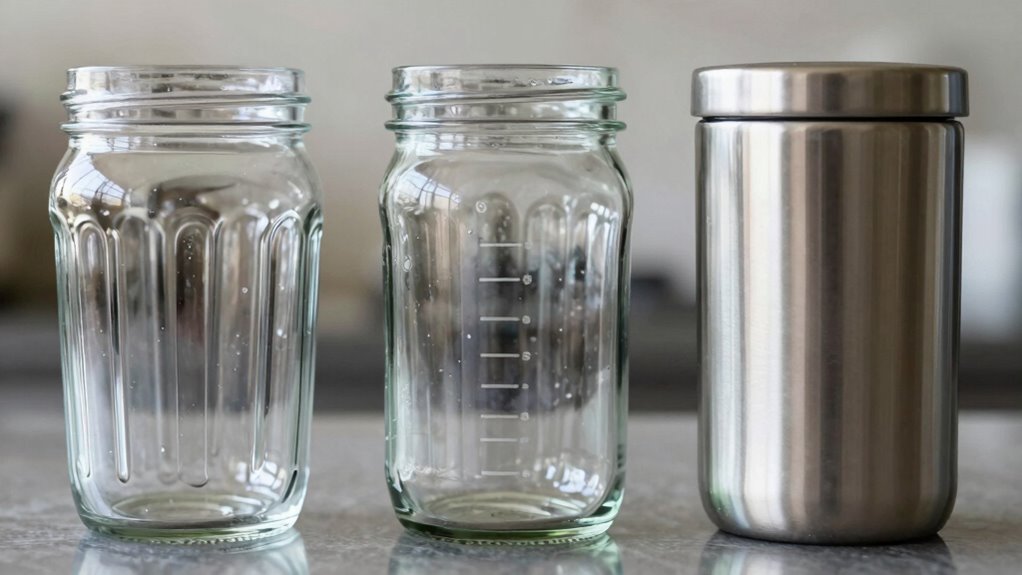
Tritan, glass, and steel blender jars each have distinct environmental footprints, affecting their sustainability and ecological impact. Tritan, often produced through environmentally conscious manufacturing, benefits from durability and lightweight design, reducing waste and energy during transportation. However, its plastic nature means it’s not always easily recyclable, which can contribute to landfill waste. Glass jars are fully recyclable and made from natural materials, making them environmentally friendly in terms of material recycling, but their heavy weight and breakability can lead to higher transportation emissions. Steel jars are durable and recyclable, supporting a circular economy, but their production consumes significant energy. Overall, glass and steel tend to have a lower environmental impact due to their recyclability, while Tritan’s eco friendly manufacturing practices aim to minimize waste but still face recycling challenges.
How Do Aesthetic Styles and Design Options Vary by Jar Material?
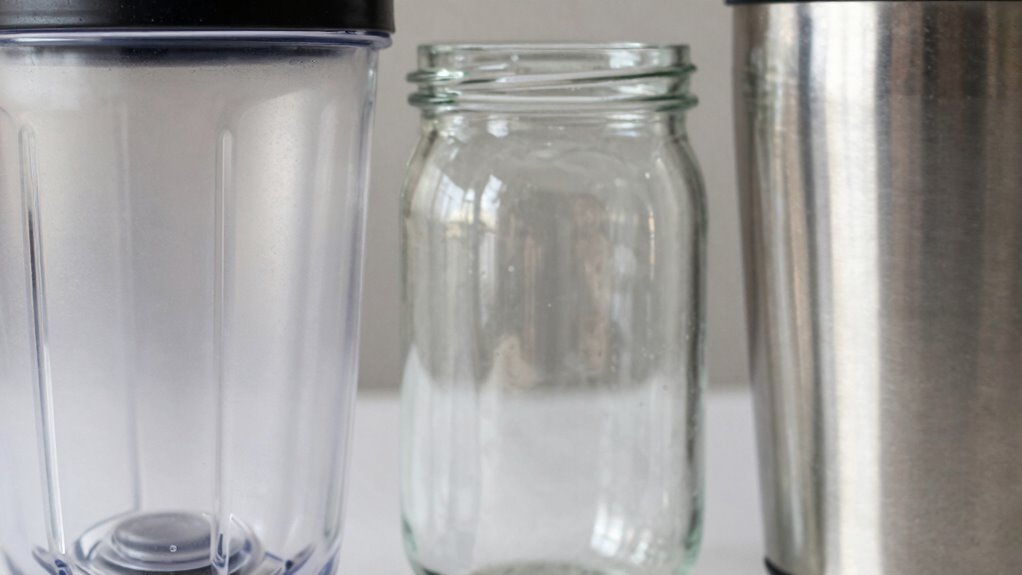
Your choice of jar material greatly influences the aesthetic style and design options available. Transparent materials like glass and Tritan let you see your ingredients clearly, adding visual appeal, while steel jars offer a sleek, modern look. Additionally, different materials provide varying levels of customization, allowing you to match your blender to your kitchen’s style.
Visual Appeal and Transparency
The choice of jar material considerably influences a blender’s aesthetic appeal and transparency, allowing you to showcase your ingredients or achieve a sleek, modern look. With different materials, you can expect varied visual styles:
- Tritan offers high light transmission and a clear, glass-like appearance, letting your ingredients shine.
- Glass jars provide excellent transparency and a timeless, elegant look that highlights color options.
- Stainless steel jars tend to be opaque, emphasizing a sleek, modern design over visibility.
- Each material’s transparency affects how vibrant or muted your ingredients appear, influencing your overall presentation.
Your selection impacts not just functionality but also the visual appeal, making your blender both a practical and stylish addition to your kitchen.
Design Versatility and Customization
Different jar materials offer distinct opportunities for aesthetic expression and customization. With glass, you can choose from a wide range of color options, including clear, tinted, or frosted finishes, and enjoy smooth textures that highlight craftsmanship. Tritan plastic provides versatility with various color options, from transparent to opaque, and offers textured surfaces that enhance grip and style. Stainless steel, while limited in color options, excels in sleek, modern designs with matte or polished finishes that can be customized through engraving or color accents. Texture variety varies by material, with glass and Tritan offering more tactile options, while stainless steel emphasizes a minimalist, industrial look. Your choice of material influences your ability to personalize your blender jar’s aesthetic to match your style.
Which Blender Jar Material Is Best for Your Needs? Key Factors to Consider?
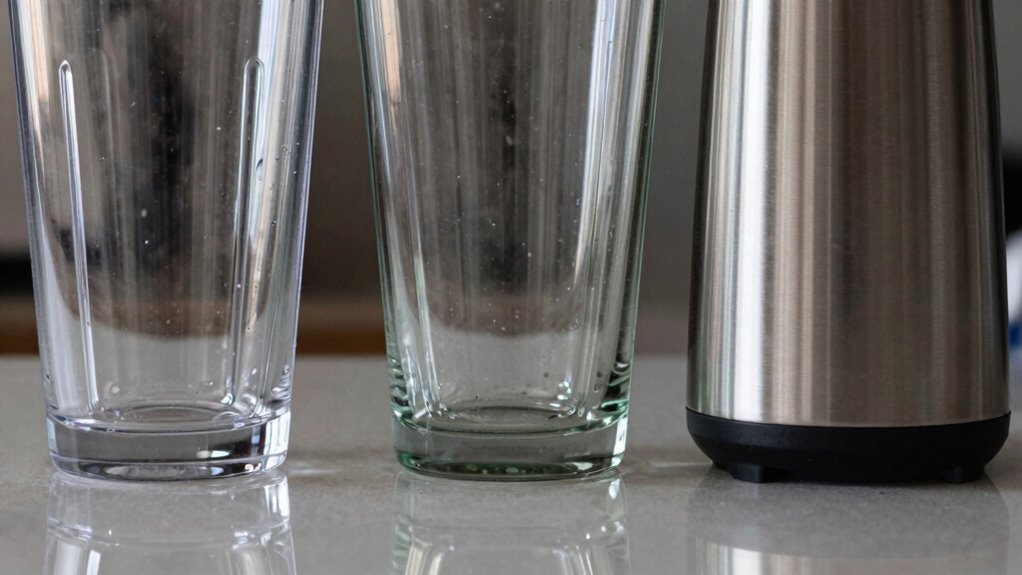
Choosing the right blender jar material depends on several key factors, including durability, safety, and ease of cleaning. Consider these when deciding:
Selecting your blender jar material involves balancing durability, safety, and easy cleaning for the best experience.
- Durability: If you need a jar that resists cracks and shattering, Tritan or stainless steel are great options.
- Blender jar safety: Look for BPA-free materials like Tritan for peace of mind, especially if you blend hot liquids or smoothies frequently.
- Material recycling: Glass is highly recyclable, making it eco-friendly, while Tritan and stainless steel also score well in sustainability.
- Ease of cleaning: Glass and Tritan are dishwasher safe and won’t stain or retain odors, simplifying cleanup.
Frequently Asked Questions
How Do Tritan, Glass, and Stainless Steel Jars Perform in Extreme Temperatures?
You’ll find Tritan jars handle moderate temperature changes well, with minimal thermal expansion and good durability, but they might crack under extreme heat. Glass jars excel in extreme temperatures, resisting thermal expansion and maintaining integrity, though they can break if dropped. Stainless steel jars are highly durable and withstand extreme heat without warping, but they don’t offer transparency. Choose based on your need for thermal resilience and material durability.
Can Tritan Jars Withstand Microwave or Dishwasher Use Safely?
Think of Tritan as a dependable armor, shielding your blender jar from daily battles. It’s microwave safe, so you can heat ingredients directly in the jar without worries. Plus, it’s dishwasher durable, handling the rinse cycle like a champion. You can confidently toss Tritan jars into the microwave and dishwasher, knowing they won’t crack or warp, making your blending routine safer and more convenient every day.
Are There Any Allergy Concerns Related to Tritan or Other Jar Materials?
You might have allergy concerns with Tritan or other jar materials if you’re sensitive to chemicals or plastics. Tritan is generally considered BPA-free, reducing chemical sensitivities, but some individuals could still experience allergy risks or skin reactions. Glass and stainless steel are typically hypoallergenic options, making them better choices if you have chemical sensitivities. Always check labels and consult with a healthcare professional if you’re unsure about specific materials.
How Do Scratch Resistance and Stain Resistance Compare Among the Materials?
You’ll find that glass jars excel in surface durability, resisting scratches and stains better than Tritan or stainless steel. Tritan offers good chemical resistance and is less prone to scratching than stainless steel, but it can stain over time with certain ingredients. Stainless steel is highly durable and scratch-resistant but may stain or develop surface marks with harsh chemicals. Overall, glass provides the best combination of scratch and stain resistance.
What Are the Long-Term Maintenance and Replacement Costs for Each Jar Type?
You’ll find that Tritan jars typically cost less over time, thanks to their durability, reducing replacement needs. Glass jars, though more expensive initially, resist staining and scratching, lowering maintenance costs. Stainless steel jars are highly durable but may require occasional replacements if dents occur. Considering durability factors and cost comparison, Tritan offers a balanced, cost-effective choice with longer-lasting performance, minimizing long-term expenses.
Conclusion
Choosing between Tritan, glass, and stainless steel blender jars is like picking the right tool for a craftsman—each has its own strengths and quirks. Think about durability, safety, ease of cleaning, and style to find your perfect match. By weighing these factors, you’ll equip your kitchen with a jar that suits your needs like a loyal companion—ready to blend your favorites into a smooth masterpiece every time.