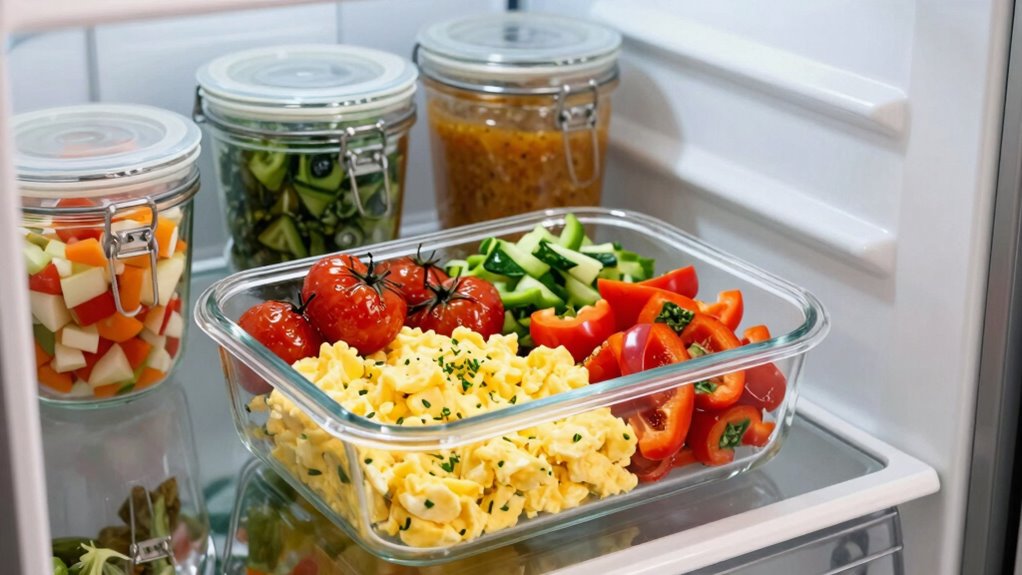

To make the most of eggs in your vegetarian meal prep, store cooked eggs in airtight containers in the fridge for up to four days, labeling them with dates for freshness. Reheat thoroughly to steaming hot, and always practice good hygiene by washing hands and utensils. Keep eggs at proper temperatures and avoid leaving them out for too long to prevent bacteria growth. Interested in more tips? Keep exploring for even more ways to keep your eggs safe and delicious.

Get kitchen staples and gadgets delivered free with Prime
- Fast, free delivery on millions of items
- Prime Video, Amazon Music and more included
- Member-only deals all year
Key Takeaways
- Store cooked eggs in airtight containers in the refrigerator for up to four days to maintain freshness and safety.
- Label containers with the cooking date to track freshness and prevent consuming expired eggs.
- Reheat eggs thoroughly until steaming hot before eating to ensure food safety.
- Practice good hygiene by washing hands and utensils to prevent cross-contamination during meal prep.
- Incorporate eggs into various vegetarian dishes like salads, frittatas, or wraps for nutritious meal options.
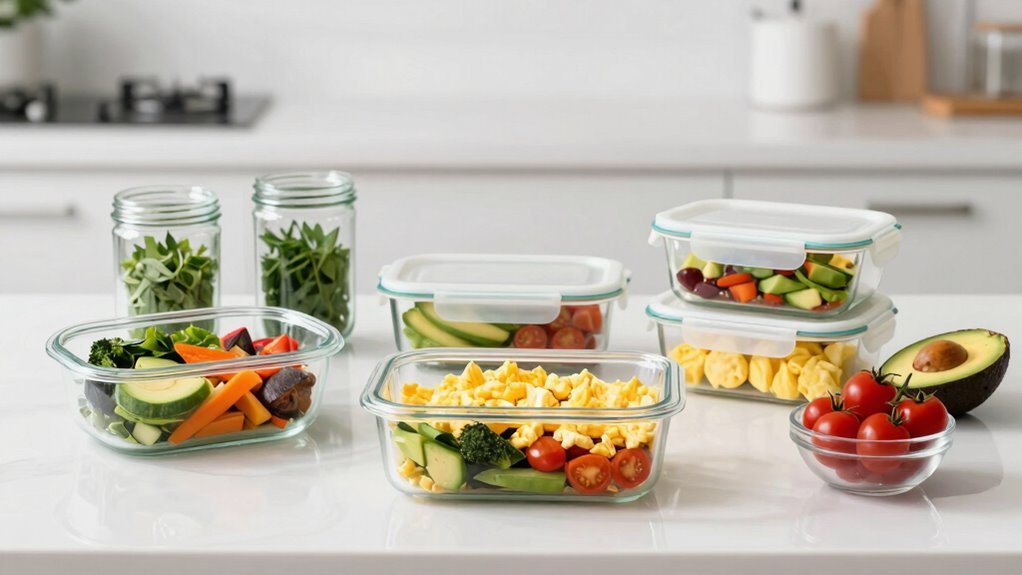
Preparing vegetarian meals with eggs is an easy and versatile way to fuel your week. Eggs are packed with essential nutrients, making them an excellent addition to your meal prep routine. They’re rich in high-quality protein, vitamins, and minerals, which support your overall health. When considering egg nutrition, it’s clear that eggs are a complete protein source, meaning they contain all nine essential amino acids your body needs. This makes eggs a top choice among vegetarian protein sources, especially when you’re aiming to meet your daily protein goals without relying on meat. Incorporating eggs into your meal prep not only boosts the nutritional value of your dishes but also keeps your meals satisfying and filling.
When storing cooked eggs, safety is key to maintaining their quality and preventing foodborne illnesses. Once you’ve cooked eggs, let them cool to room temperature before transferring them to airtight containers. Proper storage helps prevent bacteria growth and keeps the eggs fresh longer. In the refrigerator, cooked eggs can last up to four days if stored in a sealed container. For added safety, label your containers with the date you cooked the eggs, so you know exactly how long they’ve been stored. If you’re preparing egg dishes like quiches or frittatas, make sure to cover them tightly before refrigerating. When reheating, do so thoroughly until steaming hot, and avoid leaving cooked eggs at room temperature for more than two hours to prevent bacterial growth. Additionally, understanding food safety guidelines can help ensure your meal prep remains safe and nutritious. Following proper storage techniques is essential to maintaining the quality and safety of your prepared eggs. Remember that maintaining proper hygiene practices during handling can further reduce health risks associated with foodborne illnesses. Incorporating food safety measures such as proper handwashing and clean utensils is crucial for preventing cross-contamination in your kitchen. Being aware of temperature control is also important to keep your eggs safe during storage and reheating.
airtight food storage containers for eggs
As an affiliate, we earn on qualifying purchases.
As an affiliate, we earn on qualifying purchases.
Frequently Asked Questions
How Long Can Cooked Eggs Be Stored Safely in the Fridge?
Cooked eggs stay safe in the fridge for up to four days. For egg safety, make certain to store them in an airtight container or wrapped tightly in plastic wrap. Use storage tips like labeling the date you cooked them, and keep the fridge at or below 40°F (4°C). Always check for off smells or slimy textures before eating, and reheat thoroughly to guarantee safety.
Can I Freeze Egg-Based Vegetarian Meal Prep Dishes?
Yes, you can freeze egg-based vegetarian meal prep dishes. For proper egg preservation, use airtight containers or freezer bags to prevent freezer burn. When freezing, consider using freezing techniques like portioning into individual servings, which makes thawing easier. Label your containers with dates. Keep in mind that eggs can change texture after freezing, so dishes like quiches or baked egg casseroles typically freeze well, while scrambled eggs may become watery.
Are There Any Safety Concerns With Reheating Eggs?
Reheating eggs can cause safety concerns, especially if not done properly. For example, if you reheat scrambled eggs too quickly, the egg texture may become rubbery and unevenly heated, risking bacterial growth. To avoid this, use gentle reheating techniques like microwave in short intervals or warm in a skillet over low heat, stirring frequently. Always guarantee eggs reach an internal temperature of 165°F to keep them safe.
What Are the Best Containers for Storing Egg Meals?
The best containers for storing egg meals are airtight, leak-proof options like glass or BPA-free plastic containers. Egg container types that work well include divided meal prep containers to keep ingredients separate or stackable containers for easy storage. For meal prep tips, always let eggs cool before sealing and label containers with dates. This guarantees freshness and safety, keeping your egg dishes tasty and ready for reheating.
How Can I Tell if Stored Eggs Have Spoiled?
To tell if stored eggs have spoiled, check their freshness first. Fresh eggs typically have a firm yolk and clear whites, while spoiled ones may have a foul odor, a slimy texture, or discolored whites. Spoilage indicators also include eggs that float in water—indicating air pockets from aging. Trust your senses; if anything smells or looks off, discard them to avoid foodborne illness.
Conclusion
So, next time you meticulously prep those egg-filled vegetarian meals, remember: all that effort might just be wasted if you ignore proper storage. After all, who knew that something as simple as a fridge could turn your culinary masterpiece into a science experiment? Irony strikes—your perfectly planned, healthy meals could become a breeding ground for bacteria, all because you overlooked the basics. So, enjoy your prep, but don’t forget, good storage keeps your eggs safe and your efforts worthwhile.
NFL season / tailgating Picks
team gear
As an affiliate, we earn on qualifying purchases.