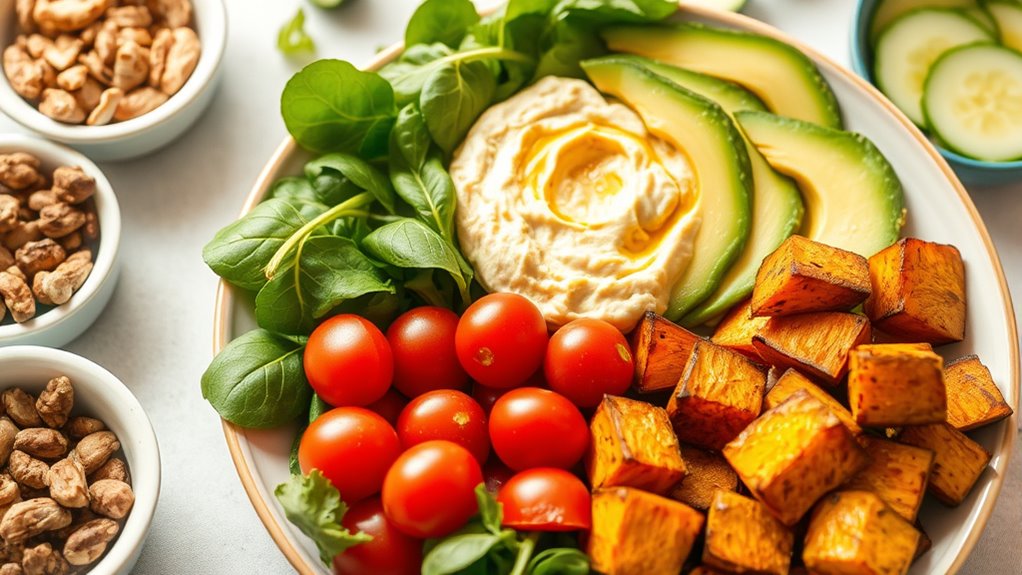

A well-designed vegetarian meal plan can help you manage weight while improving your health. Focus on incorporating nutrient-dense plant foods like beans, lentils, tofu, and plenty of colorful vegetables. Planning and prepping meals ahead of time guarantees balanced portions, variety, and satisfaction. Using strategies like batch cooking and including healthy fats helps keep you full and prevent overeating. Keep your meals flavorful and interesting, and you’ll stay motivated on your journey—more tips to come.
Key Takeaways
- Incorporate nutrient-dense plant proteins like beans and tofu to promote satiety and muscle health.
- Plan balanced meals with colorful vegetables, whole grains, and healthy fats to control calorie intake.
- Batch cook staples such as quinoa and roasted vegetables to ensure variety and portion control.
- Use mindful serving sizes and portioning strategies to maintain a calorie deficit for weight management.
- Experiment with herbs, spices, and new recipes to keep meals appealing and prevent dietary boredom.

Switching to a vegetarian meal plan can be a rewarding way to improve your health, reduce your environmental impact, and enjoy a variety of flavorful dishes. One of the key challenges in adopting this lifestyle is maintaining balanced nutrition while managing your weight. To do this effectively, meal prep tips become essential. Planning your meals ahead of time allows you to control portion sizes, ensure variety, and avoid impulsive choices that might lead to overeating or unhealthy options. When preparing vegetarian meals, focus on incorporating a range of colorful vegetables, whole grains, and plant-based proteins. This approach not only keeps your meals satisfying but also guarantees you get necessary nutrients without excess calories.
Plant-based protein sources are pivotal in feeling full and maintaining muscle mass, especially when you’re aiming to manage your weight. Items like beans, lentils, tofu, tempeh, and edamame are excellent options. They’re nutrient-dense, versatile, and can be incorporated into many dishes. For example, adding beans to salads or blending lentils into soups increases protein content while keeping calories in check. When planning your meals, aim to include a good source of plant-based protein in every dish to promote satiety and prevent cravings. This strategy helps you stay on track and reduces the temptation to snack on less healthy options.
Incorporate plant-based proteins like beans, lentils, tofu, and edamame into every meal to boost satiety and support weight management.
Meal prep tips also involve batch cooking and portioning your food. Cooking large quantities of staples like quinoa, roasted vegetables, or chickpea stews allows you to grab ready-made meals throughout the week. Using airtight containers, portion out servings that align with your daily caloric goals. Not only does this save time, but it also keeps you mindful of serving sizes, which is essential for weight management. Keep in mind that a balanced vegetarian diet should include healthy fats, such as avocados, nuts, and seeds, to support overall health and satiety. Additionally, utilizing fraud detection techniques can help ensure the authenticity and safety of your food sources, especially when sourcing ingredients from new suppliers.
Staying consistent with your vegetarian meal plan means experimenting with different flavors and textures to prevent boredom. Incorporate herbs, spices, and new recipes to keep things interesting. Remember, successful weight management isn’t just about what you eat but also about creating sustainable habits. By focusing on meal prep tips and emphasizing plant-based proteins, you can enjoy a nutritious, satisfying diet that helps you reach your weight goals without sacrificing taste or variety.
Frequently Asked Questions
Can Vegetarians Get Enough Protein on Weight Loss Plans?
Yes, vegetarians can get enough protein on weight loss plans. You just need to include a variety of plant-based proteins like beans, lentils, tofu, and quinoa, which are rich in amino acid sources. Combining different plant proteins throughout the day guarantees you get all essential amino acids. By focusing on diverse, nutrient-dense options, you can meet your protein needs while successfully managing your weight.
Are Vegetarian Meal Plans Suitable for Vegetarians With Food Allergies?
Like a carefully woven tapestry, vegetarian meal plans can suit those with food allergies. If you have gluten allergies or nut sensitivities, you just need to choose ingredients wisely. Focus on fresh vegetables, fruits, and allergy-friendly protein sources. With attention to labels and substitutions, you can create a vibrant, inclusive plan that respects your allergies while supporting your health and weight management goals.
How Do Vegetarian Diets Compare to Omnivorous Diets for Weight Management?
You’ll find that vegetarian diets often have lower calorie density and less meat consumption, which helps with weight management. Compared to omnivorous diets, they tend to be more nutrient-dense and easier to control portion sizes. By choosing plant-based foods, you can naturally reduce calorie intake while still feeling full. This balance makes vegetarian diets effective for weight control, especially if you focus on whole, minimally processed foods.
What Are Quick Vegetarian Meals for Busy Weekdays?
You’re in a rush, but quick vegetarian meals are within reach. Start with simple, nutritious options like veggie wraps, a hearty quinoa salad, or stir-fried tofu with frozen veggies. Keep quick snacks like nuts, fruit, or yogurt handy. Meal prep tips, like pre-chopping vegetables and batch-cooking grains, save time on busy weekdays, letting you enjoy healthy, satisfying vegetarian meals without the stress.
Do Vegetarian Meal Plans Require Supplements for Complete Nutrition?
You may not need supplements for complete nutrition on a vegetarian meal plan if you include a variety of foods. Focus on incorporating sources of protein, iron, B12, and omega-3s to meet nutritional completeness naturally. However, supplement necessity varies depending on your diet’s diversity. If you’re concerned about potential gaps, consult a healthcare professional to determine if you need targeted supplements to guarantee ideal health.
Conclusion
Switching to a vegetarian meal plan can be a game-changer for weight management. Imagine Lisa, who swapped out her usual lunches for plant-based options and lost 10 pounds in two months without feeling deprived. By choosing nutrient-dense foods and controlling portions, you’ll feel energized and achieve your goals. Remember, small, consistent changes make a big difference—so start today, and watch your progress unfold!