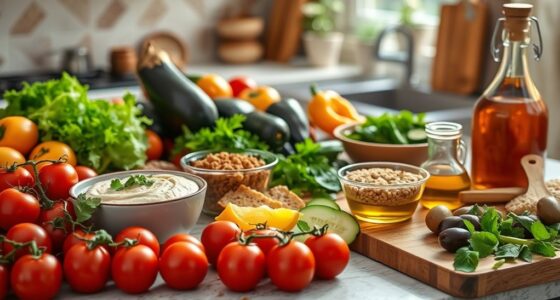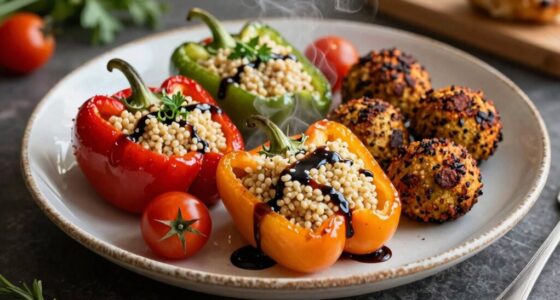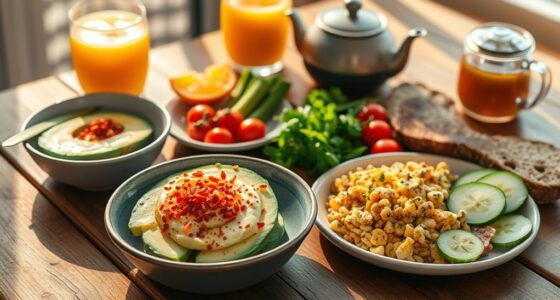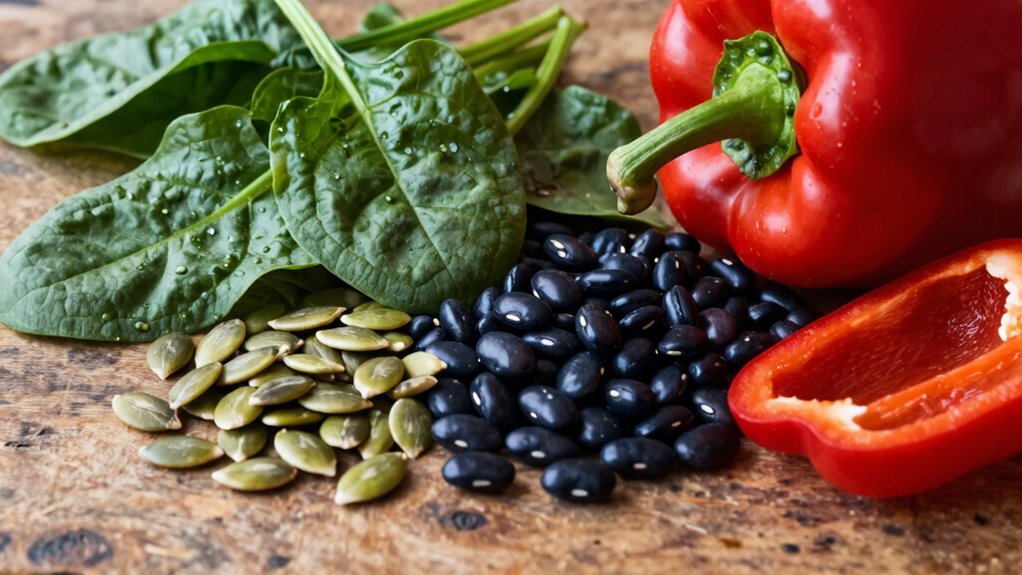
Many people forget about lesser-known vegetarian iron sources like blackstrap molasses, pumpkin, sesame, and hemp seeds, which can greatly boost your intake. Fortified foods such as cereals and plant-based milks also provide convenient options. Don’t overlook nutrient-dense foods like dark leafy greens, though they contain non-heme iron that’s less easily absorbed. Pair these with vitamin C foods to maximize absorption. Keep exploring to discover more overlooked iron-rich foods and tips to prevent deficiencies.

Get kitchen staples and gadgets delivered free — and shop member deals
- Fast, free delivery on millions of items
- Access to Prime Big Deal Days deals on October 6–7
- Prime Video, Amazon Music and more included
Key Takeaways
- Blackstrap molasses is a potent, often overlooked, plant-based iron source.
- Seeds like pumpkin, sesame, and hemp provide significant iron and healthy fats.
- Fortified foods such as cereals and plant milks are convenient iron sources.
- Vitamin C-rich foods enhance absorption of plant-based non-heme iron.
- Incorporating lesser-known foods diversifies iron intake and prevents deficiencies.
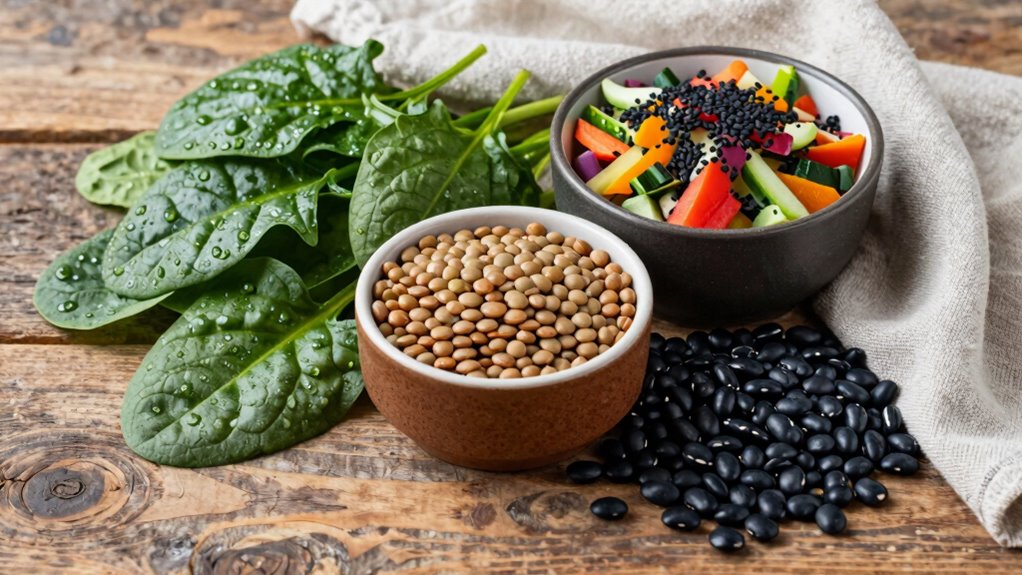
If you’re following a vegetarian diet, ensuring you get enough iron is essential for maintaining energy and overall health. Iron is critical for transporting oxygen in your blood and supporting overall vitality. While many people focus on iron-rich foods like spinach, lentils, and beans, some plant-based sources and strategies for optimizing iron absorption often go overlooked. Understanding these can make a significant difference in meeting your daily needs.
One key aspect is iron absorption. Plant-based iron, or non-heme iron, doesn’t absorb as efficiently as the heme iron found in animal products. To improve absorption, you should combine iron-rich plant foods with vitamin C sources, such as bell peppers, citrus fruits, or tomatoes. This pairing enhances non-heme iron uptake, making your meals more effective. Avoiding inhibitors like tea, coffee, and calcium-rich foods during iron-heavy meals also boosts absorption.
Enhance non-heme iron absorption by pairing plant foods with vitamin C and avoiding inhibitors like tea and calcium during meals.
Many forget about plant-based supplements designed specifically to support vegetarian iron intake. These supplements often contain ferrous gluconate or ferrous sulfate, which are more bioavailable forms of non-heme iron, and are tailored to improve iron absorption without relying on animal products. Incorporating these supplements, especially during periods of increased need—like pregnancy or heavy exercise—can help fill nutritional gaps that diet alone might not cover.
Beyond the usual sources, there are lesser-known but potent vegetarian options that can boost your iron intake. For instance, blackstrap molasses is a surprisingly rich source of iron, and a spoonful can provide a significant portion of your daily needs. Pumpkin seeds, sesame seeds, and hemp seeds also pack a decent amount of iron, along with healthy fats and other nutrients. Incorporating these into your diet can diversify your intake and prevent nutritional deficiencies. Exploring plant-based nutrient sources can help you discover a wider variety of plant foods that support your nutritional needs. Additionally, paying attention to bioavailability factors can optimize how your body absorbs and utilizes plant-based iron.
Don’t overlook fortified foods, which are often enriched with iron and other essential nutrients. Many breakfast cereals, plant-based milks, and snack bars now come fortified, offering an easy way to increase your iron intake. Always check labels to find options with higher iron content and minimal added sugars or preservatives.
Ultimately, maintaining adequate iron levels on a vegetarian diet involves understanding not just what to eat, but how to eat it. Prioritize combining iron-rich foods with vitamin C, consider plant-based supplements if needed, and explore diverse sources like seeds and fortified products. By being mindful of iron absorption and leveraging these often-forgotten sources, you’ll support your energy levels and overall health without relying on animal products.
blackstrap molasses iron supplement
As an affiliate, we earn on qualifying purchases.
As an affiliate, we earn on qualifying purchases.
Frequently Asked Questions
Can Vegetarians Absorb Iron as Effectively as Non-Vegetarians?
You can absorb iron effectively as a vegetarian, but iron bioavailability is generally lower from plant-based sources compared to animal products. To boost absorption, include vitamin C-rich foods with your meals and consider plant-based supplementation if needed. While non-vegetarians might naturally absorb more iron, you can optimize your intake by combining iron-rich plant foods and practicing good dietary habits. This way, your body can utilize iron efficiently.
Are There Any Side Effects of Consuming Too Much Plant-Based Iron?
Consuming too much plant-based iron can turn your body into a crowded highway, leading to side effects like constipation or stomach upset. Overloading on iron might also block absorption, especially if inhibitors like tea or coffee are present. This excess can cause iron overload, risking organ damage. So, balance is key—aim for enough to fight deficiency, but avoid going overboard to keep your body running smoothly.
How Do Cooking Methods Affect Iron Content in Vegetarian Foods?
Cooking techniques profoundly affect iron bioavailability in vegetarian foods. For instance, soaking, sprouting, or fermenting legumes and grains reduces phytates that block iron absorption. Using cast iron cookware can increase iron content in your dishes, boosting bioavailability. Additionally, steaming or boiling vegetables preserves more iron than overcooking. By choosing the right cooking methods, you optimize iron absorption, making your plant-based meals more nutritious and effective in meeting your iron needs.
Is Vitamin C Necessary to Maximize Iron Absorption From Plant Sources?
Yes, vitamin C is essential to maximize iron absorption from plant sources. It creates a vitamin C synergy that helps your body absorb non-heme iron more efficiently. Without it, iron absorption can be hindered by inhibitors like phytates and tannins found in some plant foods. To boost absorption, pair iron-rich plant foods with vitamin C-rich options like citrus, peppers, or tomatoes, ensuring you get the most out of your vegetarian iron sources.
Which Vegetarian Iron Sources Are Best for Vegans Specifically?
As a vegan, the best plant-based iron sources include lentils, chickpeas, tofu, spinach, and fortified cereals. These foods supply non-heme iron, which benefits from improved absorption when paired with vitamin C-rich foods like citrus or bell peppers. To maximize iron absorption, consume these sources with vitamin C and avoid inhibitors like tea or coffee during meals. Incorporating these strategies helps boost your iron levels naturally.
Conclusion
Think of your body as a garden, craving rich, nourishing soil to flourish. The forgotten iron sources are like hidden seeds waiting to sprout, giving your garden strength and vibrancy. By discovering these lesser-known treasures, you become the diligent gardener, ensuring every plant—your health—thrives. Don’t overlook the quiet, humble roots; they’re essential for growth. Embrace these iron-rich delights, and watch your wellness bloom in ways you never imagined.
NFL season / tailgating Picks
team gear
As an affiliate, we earn on qualifying purchases.