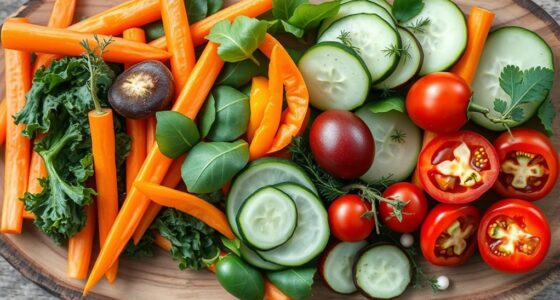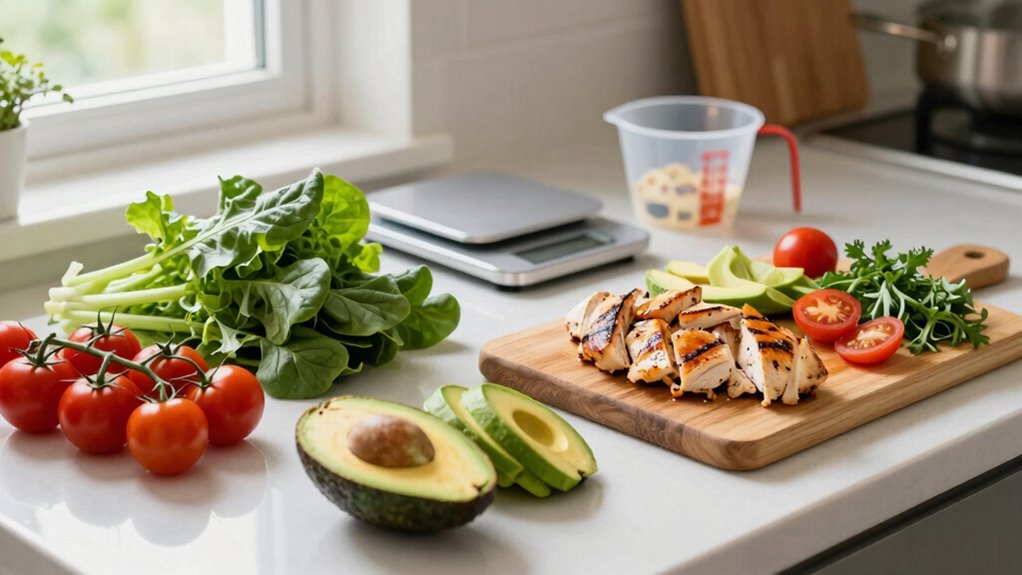

To avoid under-eating on a raw meal plan, focus on balancing calorie-dense foods like nuts, seeds, and avocados with lighter options such as fruits and vegetables. Use portion control tools and visual cues to guarantee you’re consuming enough. Incorporate smoothies or bowls with added proteins to increase calories without bulk. Pay attention to your hunger and energy levels to adjust intake as needed. If you’re curious, there’s more to discover about maintaining proper nutrition on raw diets.

Get kitchen staples and gadgets delivered free with Prime
- Fast, free delivery on millions of items
- Prime Video, Amazon Music and more included
- Member-only deals all year
Key Takeaways
- Incorporate calorie-dense ingredients like nuts, seeds, and avocado to increase energy intake without excessive volume.
- Use portion control tools and visual cues to ensure adequate food intake aligns with energy needs.
- Plan balanced meals with a mix of raw, nutrient-dense, and calorie-rich foods to meet daily requirements.
- Include smoothies or raw bowls with added protein sources to boost calorie content easily.
- Regularly monitor hunger and energy levels to adjust portion sizes and prevent under-eating.

Planning raw meals can seem intimidating at first, but with a clear approach, it becomes much easier to maintain a healthy and balanced diet. One of the biggest challenges is guaranteeing you’re eating enough to meet your energy needs without overdoing it. To avoid under-eating, you need solid meal prep strategies that focus on variety, portion control, and nutrient density. Start by understanding your daily caloric requirements based on your age, activity level, and goals. Once you have a target, you can plan meals that fill that quota without feeling overwhelmed.
Effective raw meal planning balances energy needs with variety, portion control, and nutrient-dense foods for sustained health and vitality.
Meal prep strategies play a key role here. Prepare a variety of raw ingredients ahead of time—cut fruits, vegetables, nuts, seeds, and sprouted grains—and store them properly. This saves time during busy days and helps you stick to your nutritional goals. When assembling meals, aim for a balance of macronutrients: include enough fruits for natural sugars, vegetables for fiber and vitamins, nuts and seeds for healthy fats, and sprouted grains for carbs and protein. This guarantees you’re not just eating raw foods, but eating enough to sustain your energy levels throughout the day. Understanding nutritional balance is crucial to ensuring your raw diet meets all your dietary needs. Incorporating calorie-dense foods can also help you meet your energy requirements more effectively. Being mindful of food volume is equally important, as raw foods tend to be high in volume but low in calories, which can sometimes lead to under-eating if not carefully planned. Additionally, paying attention to food preparation techniques can maximize nutrient retention and make raw meals more satisfying, especially when combined with a variety of textures and flavors.
Nutritional balance tips also involve paying attention to portion sizes. It’s easy to underestimate how much food you need when eating raw, especially since raw foods tend to be low in calories but high in volume. Use measuring tools or visual cues to gauge whether your portions are adequate. Include a mix of dense, calorie-rich foods like nuts and avocados, along with lighter options like leafy greens and berries. Incorporate smoothies or raw bowls with added protein sources, such as hemp seeds or nut butters, to boost caloric intake without feeling overly full. Remember that food variety plays a significant role in preventing nutrient deficiencies and keeping your meals interesting.
Listening to your body’s hunger cues is essential. If you find yourself constantly hungry or fatigued, it’s a sign you might need to increase your intake. Keep track of your meals and note how you feel afterward; this helps you adjust portion sizes and food choices over time. Remember that under-eating can lead to decreased energy, poor recovery, and nutrient deficiencies, so prioritizing consistent, balanced intake is key.
Finally, don’t forget that flexibility is important. While consistency helps, allowing yourself to adapt your meal plan based on how you feel and your evolving needs prevents frustration and promotes long-term success. With these meal prep strategies and nutritional balance tips in mind, you’ll find it easier to sustain a raw eating routine that keeps you energized and healthy without the worry of under-eating.
raw food portion control containers
As an affiliate, we earn on qualifying purchases.
As an affiliate, we earn on qualifying purchases.
Frequently Asked Questions
How Can I Ensure Balanced Nutrient Intake in Raw Meals?
To guarantee balanced nutrient intake in raw meals, focus on nutrient diversity by including a variety of fruits, vegetables, nuts, and seeds. Pay attention to meal timing, eating at regular intervals to maintain energy levels and prevent under-eating. Incorporate protein-rich raw foods like sprouted legumes and seeds. This strategy helps you get all essential nutrients, supports digestion, and keeps your raw meal plan both wholesome and satisfying.
What Are Common Signs of Under-Eating in Raw Meal Plans?
Under-eating in raw meal plans is like running on empty. You may notice persistent hunger cues, feeling tired, or experiencing dizziness, which are signs of calorie deficiency. You might also struggle to focus or feel irritable. If you ignore these signs, your body isn’t getting enough nutrients, risking further energy loss. Listen to your hunger cues, and guarantee your raw meals include enough calorie-dense, nutrient-rich foods to meet your needs.
How Do I Adjust Raw Meals for Increased Activity Levels?
To adjust raw meals for increased activity levels, you should focus on meal timing and portion sizing. Eat more frequent, balanced meals to fuel your body throughout the day, especially before and after workouts. Increase portion sizes gradually, adding more nuts, seeds, or fruit to your raw meals. This guarantees you’re providing enough energy and nutrients to support your activity level without risking under-eating.
Are There Specific Foods to Avoid for Proper Raw Meal Planning?
You should avoid processed sugars and fried foods when planning raw meals, as they can hinder your health goals. These foods often lack essential nutrients and can cause energy crashes, making it harder to maintain a balanced diet. Stick to fresh fruits, vegetables, nuts, and seeds to guarantee you’re getting crucial nutrients. Avoiding these unhealthy options helps you stay energized and supports your raw meal plan effectively.
How Often Should I Reassess My Raw Meal Plan?
Picture your plate as a vibrant mosaic, constantly evolving. You should reassess your raw meal plan every few weeks to guarantee it fits your changing needs. During meal prep, pay close attention to portion control, adjusting quantities if you notice hunger or fatigue. Regular check-ins help you stay balanced, preventing under-eating and keeping your energy levels steady. Listening to your body’s signals is key for a healthy, sustainable raw eating routine.
Conclusion
So, next time you’re tempted to skip that extra snack or ignore your hunger signals, remember: under-eating isn’t just a misguided choice—it’s a daring act of culinary rebellion. Who needs energy or nutrients anyway? Embrace the minimalist approach to nourishment, because nothing says “I’ve got my life together” quite like running on empty. Just don’t be surprised when your body starts staging a mutiny. Stay fueled, stay fabulous, and avoid the starving artist look.
Halloween Picks
halloween
As an affiliate, we earn on qualifying purchases.