Many beliefs about vegan protein are myths that overlook the diverse and high-quality plant sources available. You might think you can’t get enough protein or that plant proteins are incomplete, but that’s not true. By including foods like beans, tofu, nuts, and grains, you can easily meet your needs. Understanding these facts can help you enjoy a flexible, nutritious vegan diet—there’s plenty more to uncover if you keep exploring.
Key Takeaways
- Vegan diets can easily provide sufficient protein through diverse plant sources like legumes, tofu, and seeds.
- Combining plant foods throughout the day ensures complete amino acid profiles without perfect timing.
- Body efficiently stores and utilizes plant-based nutrients, making strict protein pairing unnecessary.
- Active individuals can meet their protein needs with foods like lentils, hemp seeds, and spirulina, without relying on supplements.
- Common myths about vegan protein are based on outdated misconceptions; a well-planned vegan diet supports optimal health.
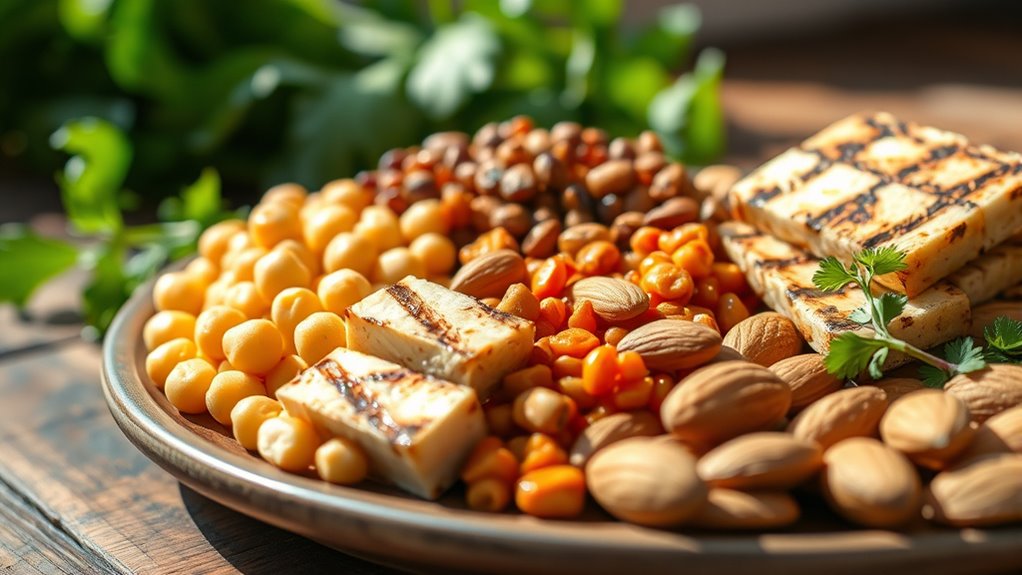
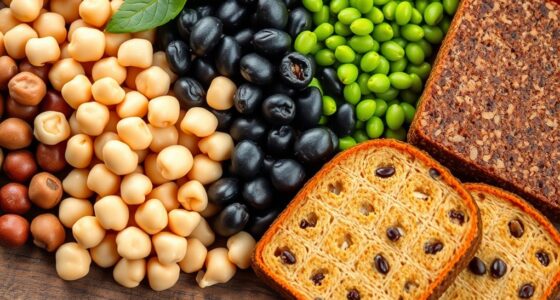
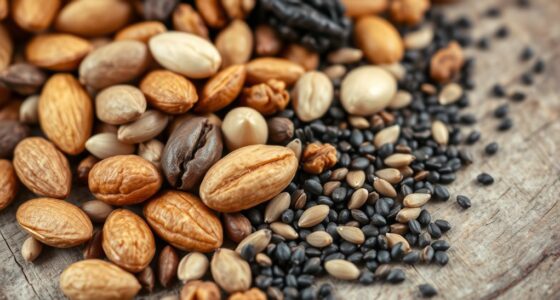
Many people believe that you can’t get enough protein on a vegan diet, but this myth couldn’t be further from the truth. When it comes to plant-based nutrition, there’s a lot of misinformation floating around, often fueled by misconceptions and outdated ideas. The key to debunking these myths is understanding how to approach vegan protein sources intelligently and knowing how to combine foods for ideal nutrition. Myth busting strategies involve educating yourself on the variety and quality of plant proteins available, so you realize that you’re not limited in any way. Legumes, tofu, tempeh, seitan, quinoa, nuts, and seeds are all rich sources of protein, and incorporating a diverse range of these foods ensures you meet your daily needs. Many assume that plant proteins are incomplete or less effective, but this is simply untrue. Most plant-based proteins can be combined over the course of the day to provide all essential amino acids, making your diet well-rounded and complete.
You might think you need to obsess over perfect protein combinations at every meal, but myth busting strategies show that as long as your daily intake includes a variety of plant proteins, you’re covered. For example, pairing beans with rice or hummus with whole-grain bread provides a complete amino acid profile without requiring meticulous planning. It’s also helpful to understand that you don’t need to consume large amounts of protein in each meal; your body can store and utilize nutrients efficiently throughout the day. This flexibility allows you to enjoy a range of plant-based foods without feeling restricted or overwhelmed. Additionally, understanding your protein requirements can help you tailor your diet to meet your individual needs more effectively.
Another misconception is that vegan diets lack sufficient protein for athletes or highly active individuals. This is false, as many athletes thrive on plant-based nutrition, consuming adequate protein from sources like lentils, chickpeas, hemp seeds, and spirulina. Myth busting strategies emphasize listening to your body’s signals and adjusting your intake based on activity levels, not outdated stereotypes. You don’t have to rely on protein powders or supplements exclusively; whole foods can satisfy your nutritional needs and contribute to overall health.
Frequently Asked Questions
Can Vegans Get Enough Protein Without Supplements?
Yes, you can get enough protein without supplements. By including soy milk and protein bars made from plant-based ingredients in your diet, you’ll meet your daily protein needs. Incorporate a variety of legumes, grains, nuts, and seeds to guarantee you’re getting complete amino acids. With a balanced vegan diet, you don’t need supplements to stay healthy and energized. Just focus on whole foods and fortified options like soy milk and protein bars.
Are Plant-Based Proteins Less Bioavailable Than Animal Proteins?
Plant-based proteins are generally less bioavailable than animal proteins due to differences in protein absorption and amino acid profiles. However, you can optimize your intake by eating a variety of plant sources, which helps guarantee you get all essential amino acids. Combining grains, legumes, and seeds throughout the day improves protein absorption and balances amino acid profiles, making it easier for you to meet your nutritional needs on a vegan diet.
Do Vegan Diets Lack Essential Amino Acids?
You might wonder if vegan diets lack essential amino acids. The truth is, they don’t—if you know what to include. Plant vs animal amino acid profiles might differ, but by eating a variety of plant proteins, you guarantee all essential amino acids are covered. So, with mindful choices, your vegan diet provides complete protein, fueling your body without missing a beat. It’s all about diversity and balance.
How Do Vegan Proteins Compare Nutritionally to Dairy-Based Proteins?
You’ll find that vegan proteins often have comparable nutritional profiles to dairy-based proteins, especially when you combine different plant sources. The nutritional comparison shows that vegan options can provide high-quality protein with essential amino acids, though some may have slightly lower digestibility. By diversifying your plant intake, you guarantee ideal protein quality, making vegan proteins a healthy and effective alternative to dairy-based options.
Is It Harder for Athletes to Meet Protein Needs on a Vegan Diet?
No, it’s not harder for you to meet your protein needs on a vegan diet. Plant-based protein sources like beans, lentils, tofu, and quinoa provide ample protein to support athletic performance. By planning your meals well and including a variety of these foods, you can easily fuel your training and recovery. Many athletes thrive on vegan diets, demonstrating that plant-based protein can be just as effective for athletic performance.
Conclusion
Now that you’ve seen the facts, do you still believe vegan diets lack enough protein? With so many plant-based sources available, it’s clear you can meet your protein needs without animal products. Don’t let myths hold you back from exploring a healthier, more sustainable lifestyle. Are you ready to embrace the truth and enjoy all the benefits a well-planned vegan diet can offer? The choice is yours—what will you do next?

Ilana has been a vegan for over 10 years. She originally made the switch for health reasons, but soon found herself becoming more and more passionate about the ethical and environmental implications of a vegan lifestyle. Ilana is the author of The Graceful Kitchen, a blog all about veganism. She loves to cook up delicious and nutritious vegan meals, and share her recipes with others who are interested in leading a cruelty-free life. Ilana is also a strong advocate for using whole foods as the foundation of a healthy diet, and believes that going vegan is one of the best ways to achieve this.