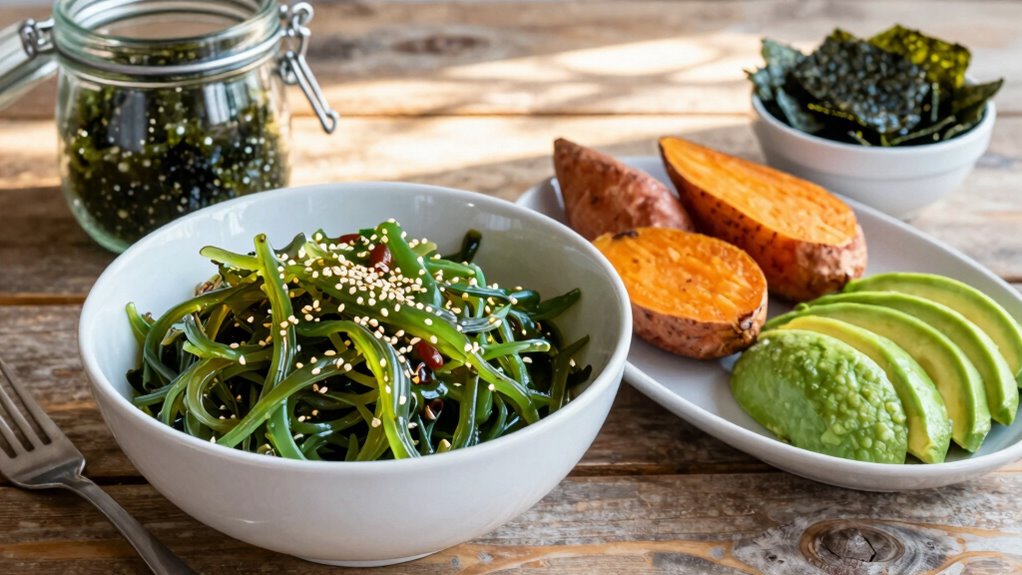

To safely meet your iodine needs on a vegan diet, include plant-based sources like seaweed, such as nori, kelp, or wakame, which are high in iodine. Incorporate these into meals like sushi or soups, and consider fortified foods or iodized salt to boost intake. Be cautious with seaweed portions to avoid excess, which can affect thyroid health. Staying balanced and informed will help you maintain ideal iodine levels—keep exploring to discover more helpful tips.

Get kitchen staples and gadgets delivered free with Prime
- Fast, free delivery on millions of items
- Prime Video, Amazon Music and more included
- Member-only deals all year
Key Takeaways
- Incorporate small servings of iodine-rich seaweeds like nori, kelp, and wakame into your meals regularly.
- Use iodized salt and fortified plant-based foods to boost iodine intake safely.
- Consult healthcare professionals before taking iodine supplements to determine appropriate dosage.
- Avoid excessive seaweed consumption to prevent thyroid issues caused by iodine overload.
- Choose high-quality, reputable sources for seaweed to ensure safety and optimal nutrient content.
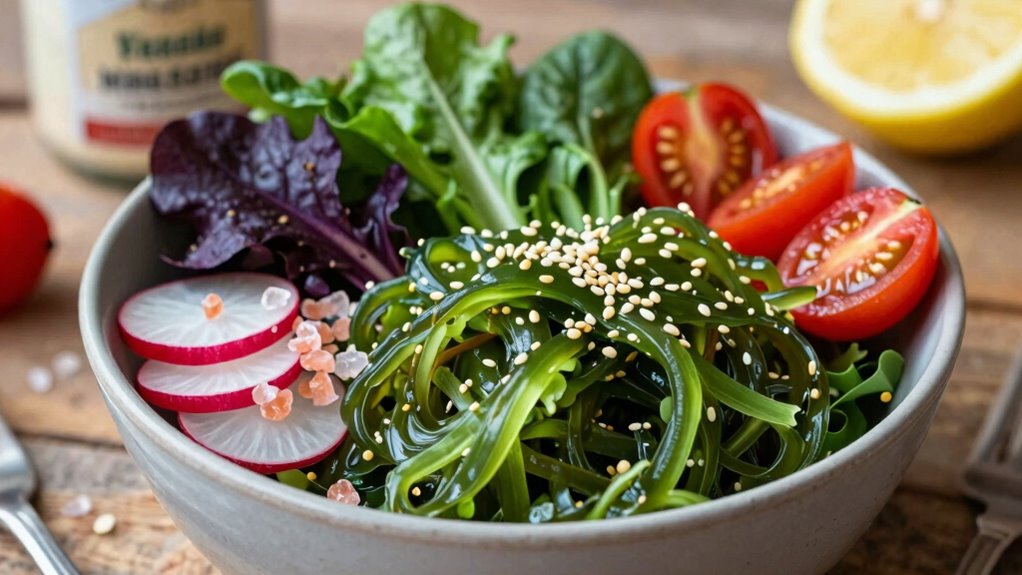
If you’re following a vegan diet, ensuring you get enough iodine can seem challenging, but it’s entirely possible with the right choices. Iodine is essential for healthy thyroid function and overall metabolic health, yet many vegans worry about iodine deficiency. Fortunately, nature provides plant-based options that can help you meet your iodine needs without relying on animal products. One of the most effective sources is seaweed, which boasts numerous seaweed benefits, making it a top choice for vegans seeking iodine. Different types of seaweed like nori, kelp, wakame, and dulse are rich in iodine, often containing levels that surpass daily recommended amounts in just a small serving. Incorporating seaweed into your diet can be straightforward—try adding nori sheets to sushi, blending wakame into soups, or sprinkling dulse flakes over salads. These simple additions not only boost your iodine intake but also enhance flavor and nutritional diversity.
It’s important to note, however, that while seaweed benefits are numerous, consuming it in moderation is crucial. Excessive iodine intake can lead to thyroid problems, including hyperthyroidism or hypothyroidism. The key is to find a balance—regularly eating seaweed can help prevent iodine deficiency, especially if you avoid other iodine-rich animal products. Beyond seaweed, other plant-based sources like iodized salt can contribute to your iodine intake, but be mindful of sodium levels. Fortified foods and iodine supplements are also options, but consult with a healthcare professional before adding supplements to your routine. Additionally, soil depletion and environmental factors can influence the iodine content in plant foods, making sources like seaweed even more vital for vegans, as soil depletion can significantly impact the nutritional content of terrestrial crops. Consuming a variety of foods and nutritional awareness can help you better manage your iodine levels and overall health. Eating a diverse range of foods and being mindful of nutritional gaps can help maintain overall health. Relying solely on fruits, vegetables, grains, and legumes might not provide sufficient iodine, so strategic inclusion of seaweed can fill this nutritional gap. When buying seaweed, opt for reputable sources to avoid contamination and ensure you’re getting safe, quality products. Properly prepared seaweed is not only a potent source of iodine but also packed with other nutrients like fiber, antioxidants, and minerals, giving you multiple health benefits. Additionally, staying informed about iodine intake levels can help you manage your consumption and avoid potential health issues.
Products Worth Considering

Instant Pot InstantChill Ice Cream Maker with Rolled Ice Cream Cold Plate, 2-Pint

KitchenAid Go Cordless Citrus Juicer with Battery, KCJR161BM

De’Longhi Classic Matte Black Espresso Machine with Milk Frother
As an affiliate, we earn on qualifying purchases.
Frequently Asked Questions
Can Vegans Get Enough Iodine Without Supplements?
Yes, you can get enough iodine from plant-based sources, but it requires careful selection. Incorporate sea vegetables like nori, kelp, or wakame, which are rich in iodine. Keep in mind that iodine absorption varies, so consuming a variety of these foods helps guarantee adequate intake. Be cautious not to overdo it, as excessive iodine can be harmful. Monitoring your intake and consulting a healthcare professional can help maintain balanced iodine levels without supplements.
Are There Natural Iodine-Rich Foods Suitable for Vegans?
Yes, you can find natural iodine-rich foods suitable for vegans. Seaweed varieties like nori, kelp, and wakame are excellent sources, providing high iodine content. Additionally, iodine-rich vegetables such as potatoes, spinach, and carrots contribute to your intake. Incorporating these foods into your diet helps guarantee you get enough iodine naturally, supporting your thyroid health without relying solely on supplements. Just be mindful of portion sizes to avoid excess intake.
How Does Iodine Deficiency Affect Vegan Health?
Imagine your thyroid throwing a tantrum because it’s starved for iodine—no wonder you feel sluggish or notice a goiter’s unwelcome debut. Iodine deficiency hampers iodine absorption, leading to hormonal chaos, fatigue, and cognitive fog. As a vegan, strict dietary restrictions might make it tricky to get enough, so you need to find plant-based sources or supplements. Otherwise, your body’s “hormonal orchestra” risks falling out of tune.
Is Iodine Deficiency Common Among Vegans?
Yes, iodine deficiency can be common among vegans, especially if you don’t regularly consume seaweed varieties or fortified foods. Since plant-based diets lack naturally rich iodine sources, incorporating seaweed like nori or kelp and choosing fortified plant milks or cereals can help you meet your iodine needs. Monitoring your intake guarantees you avoid deficiency, keeping your thyroid health and metabolism in good shape.
Can Iodine Deficiency Be Diagnosed Through Home Testing?
Home testing can give you a rough idea of your iodine levels, but it’s not always entirely accurate. You can buy iodine test kits online, which typically involve collecting a sample and sending it to a lab. Keep in mind, these tests might not detect subtle deficiencies. For precise diagnosis, it’s best to consult a healthcare professional who can perform more thorough tests and interpret your iodine levels accurately.
Conclusion
Ensuring you get enough iodine on a vegan diet is easier than you might think. Incorporate iodine-rich foods like seaweed, fortified foods, and supplements to keep your levels in check. Did you know that the global average iodine intake is about 50% below the recommended levels, leading to potential health issues? By staying mindful and choosing diverse sources, you can confidently meet your iodine needs and support overall health without compromising your vegan lifestyle.