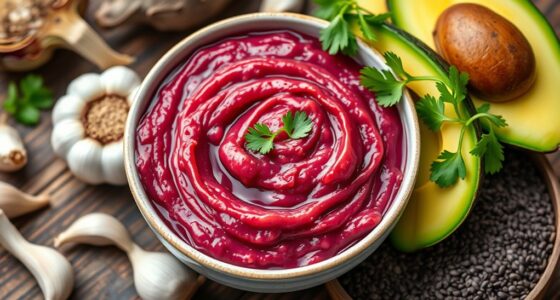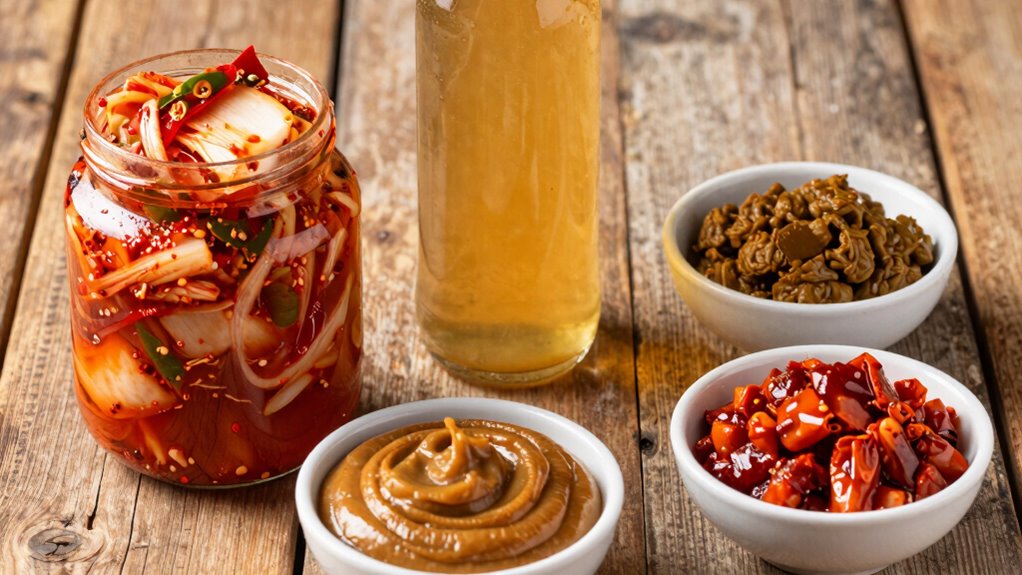

Vegan fermented condiments like kimchi, sauerkraut, and vinegar sauces are great for boosting flavor and enhancing gut health. They add tangy, umami, and sour notes that can elevate your dishes, from salads to marinades. Making them is simple—just use fresh vegetables or fruits, salt, and patience. Fermentation not only preserves produce but also introduces beneficial probiotics. Keep exploring further, and you’ll discover how to incorporate these versatile condiments into your vegan cooking essential for flavor and wellness.

Get kitchen staples and gadgets delivered free — and shop member deals
- Fast, free delivery on millions of items
- Access to Prime Big Deal Days deals on October 6–7
- Prime Video, Amazon Music and more included
Key Takeaways
- Vegan fermented condiments include kimchi, sauerkraut, and vinegar-based sauces, offering diverse flavors and uses.
- They enhance dishes with tangy, umami, and sour notes while promoting gut health and microbial diversity.
- Making these condiments involves fermenting fresh vegetables or fruits with salt or water for flavor and preservation.
- Proper fermentation techniques ensure safety, flavor development, and customization of tartness and intensity.
- Incorporating these condiments enriches vegan meals with natural flavor, probiotics, and preservative qualities.

Vegan fermented condiments like kimchi, sauerkraut, and vinegar-based sauces are fantastic for flavor enhancement. These condiments bring a tangy, complex profile that elevates your dishes without overpowering them. For example, homemade kimchi adds a spicy, sour kick to rice bowls or noodle dishes, while sauerkraut can brighten up sandwiches or serve as a side. Vinegar sauces—such as apple cider vinegar or balsamic reductions—offer acidity that balances rich or fatty ingredients, sharpening the overall taste. The fermentation process develops umami and sour notes naturally, giving your meals a savory depth that’s hard to replicate with artificial flavors. Incorporating fermentation techniques can also improve digestibility by breaking down fiber and other complex compounds, making your meals easier to digest. Additionally, understanding the benefits of microbial diversity can help you select ingredients that promote a healthy gut flora. Proper fermentation practices also support biodiversity by encouraging the growth of beneficial microbes rather than harmful bacteria.
Creating your own vegan fermented condiments is straightforward once you understand the basics. Start with fresh, organic vegetables or fruits, and add salt or water to create the right environment for fermentation. The salt not only enhances flavor but also inhibits spoilage bacteria, guaranteeing safety. As the microbes do their work, they transform simple ingredients into complex, tangy condiments. Over time, these ferments deepen in flavor, becoming more satisfying with each passing day. You’ll find that experimenting with different ingredients and fermentation times permits you to customize the intensity and tartness to match your palate.
Incorporating fermented condiments into your vegan cooking is a simple way to reveal vibrant flavors naturally. They’re versatile, adding zest to salads, dips, marinades, and more. Plus, they’re a cost-effective way to preserve seasonal produce while enriching your diet with beneficial probiotics. Just remember, proper fermentation safety practices are essential to enjoy these flavorful additions without worry. With patience and care, you’ll discover that vegan fermented condiments aren’t just condiments—they’re a flavorful tradition that elevates every meal.
As an affiliate, we earn on qualifying purchases.
Frequently Asked Questions
How Long Do Vegan Fermented Condiments Last in the Fridge?
Vegan fermented condiments typically last about 1 to 3 months in your fridge, depending on their fermentation timeline and storage conditions. You should regularly check for signs of spoilage, like mold or foul odors. Properly stored in airtight containers, they stay fresh longer. Keep in mind, the fermentation timeline influences their shelf life; the longer they ferment, the more complex flavors develop, but always prioritize safety and freshness.
Can Vegan Fermented Condiments Be Homemade Without Special Equipment?
Sure, you can make vegan fermented condiments at home without fancy equipment—no need for a fermentation lab! Just follow basic fermentation safety tips: keep everything clean, use a simple jar, and guarantee your veggies stay submerged. Alternatives like weight tools or even a clean plate can work as equipment substitutes. With patience and care, you’ll craft delicious, safe condiments, proving that fancy gear isn’t a must for fabulous fermentation.
Are Vegan Fermented Condiments Safe for All Dietary Restrictions?
Vegan fermented condiments are generally safe for most dietary restrictions, but you should consider allergen considerations like soy, gluten, or nuts, which some recipes may include. Keep in mind, these condiments offer a wide range of flavor variations, so check labels or recipes to guarantee they fit your needs. If you prepare them at home, you can control ingredients to avoid common allergens, making them more suitable for your diet.
What Are Common Mistakes to Avoid When Fermenting Vegan Condiments?
You should avoid improper fermentation temperature and contamination. For example, if you ferment kimchi at too high a temperature, it can spoil or develop off-flavors. Always keep your condiments at a suitable temperature, around 65-75°F, to promote good bacteria growth. Additionally, prevent contamination by thoroughly cleaning utensils and containers. Cover your fermenting jars loosely to allow gases to escape while keeping out unwanted bacteria. This guarantees safe, flavorful results.
How Do Vegan Fermented Condiments Compare Nutritionally to Non-Vegan Options?
Vegan fermented condiments often have comparable or even higher levels of plant-based probiotics than non-vegan options, supporting gut health. They typically contain fewer saturated fats and cholesterol, making them a healthier choice. To guarantee fermentation safety, follow proper procedures, and avoid contamination. While nutritional content varies, vegan options usually offer rich vitamins, minerals, and beneficial bacteria, making them a nutritious addition to your diet.
Conclusion
Embracing vegan fermented condiments is like opening a treasure chest of flavors, each jar holding a burst of health and zest. These lively additions turn ordinary dishes into vibrant celebrations, transforming your meals into a symphony of taste. So, immerse yourself in the world of kimchi, vinegar sauces, and beyond—let your culinary journey be a delicious adventure. With every spoonful, you’re revealing nature’s secret to flavorful, nourishing eating.
Halloween Picks
halloween
As an affiliate, we earn on qualifying purchases.