Vegan desserts with ancient grains like quinoa, millet, amaranth, and spelt offer nutritious, flavorful, and textured options that elevate your sweet creations. These grains provide natural sweetness, nuttiness, and a variety of textures, making your desserts more wholesome and appealing. They are versatile, fitting well into puddings, cakes, parfaits, and more. If you keep exploring, you’ll discover ways to incorporate these grains creatively for delicious, healthful treats.
Key Takeaways
- Incorporate ancient grains like quinoa, millet, and amaranth to boost nutritional value in vegan desserts.
- Use grains to add unique textures and flavors, such as nuttiness from quinoa or sweetness from millet.
- Prepare gluten-free options with grains like millet and amaranth for dietary-sensitive consumers.
- Layer grains with fruits and toppings for visually appealing vegan dessert presentations.
- Experiment with grains in puddings, cakes, and parfaits to create diverse, healthful vegan sweet treats.
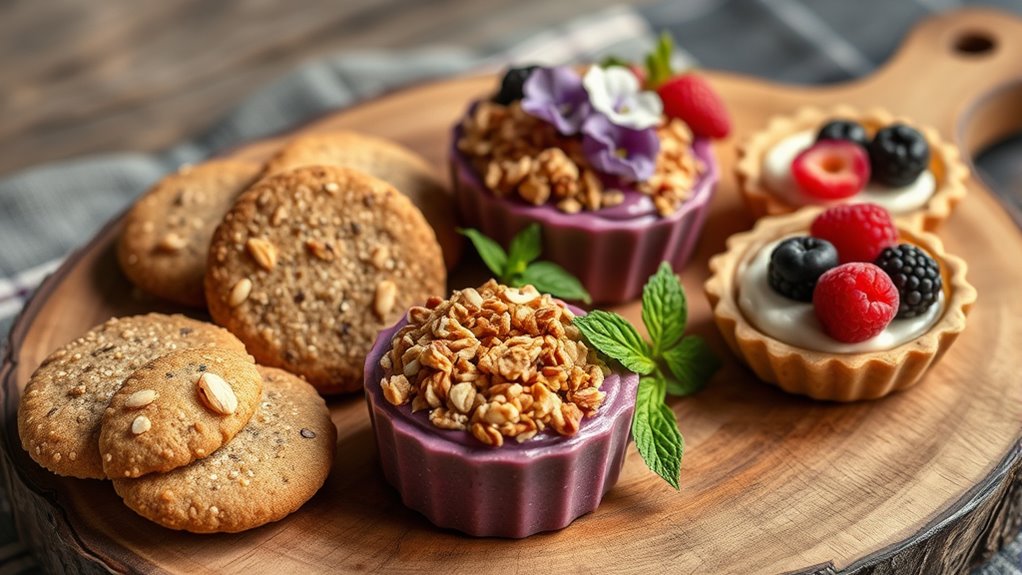
Ancient grains are making a delightful comeback in vegan desserts, offering both nutrition and unique flavors. As you explore incorporating these grains into your sweet creations, you’ll notice how their rich grain nutrition elevates the overall health benefits of your desserts. Unlike highly processed ingredients, ancient grains like quinoa, amaranth, millet, and spelt pack a punch of fiber, protein, vitamins, and minerals that support a well-rounded diet. When you use them thoughtfully, you’re not only satisfying sweet cravings but also boosting your dessert’s nutritional profile. Whether you’re creating a layered parfait or a decadent pudding, understanding how these grains contribute to grain nutrition helps you craft desserts that are both indulgent and nourishing.
In addition to their health benefits, ancient grains lend a distinctive texture and flavor that can set your desserts apart. For example, quinoa adds a subtle nuttiness and a light, fluffy texture, while millet offers a mild sweetness that pairs beautifully with fruit-based components. Incorporating these grains into your recipes allows you to experiment with flavors and textures that appeal to a broad range of palates. Plus, they’re naturally gluten-free (in the case of millet and amaranth), making them a versatile choice for many dietary needs.
As you develop your dessert plating techniques, consider how the presentation enhances the appeal of your ancient grain-based creations. A well-plated dessert not only looks inviting but also accentuates the natural colors and textures of the ingredients. You might layer a millet pudding with fresh berries and sprinkle toasted quinoa on top for added crunch. Drizzle a fruit compote over a spelt flour cake, using contrasting colors and textures to create visual interest. Using different heights, shapes, and garnishes can make your desserts more engaging, highlighting the unique qualities of each grain.
Frequently Asked Questions
Are Ancient Grains Gluten-Free?
Not all ancient grain varieties are gluten-free; some, like spelt and kamut, contain gluten and can affect those with gluten sensitivity. However, grains such as quinoa, millet, and amaranth are naturally gluten-free, making them safe options if you’re avoiding gluten. Always check labels and verify the specific ancient grain variety, so you can enjoy delicious vegan desserts without worry, especially if you have gluten sensitivity.
Can I Substitute Ancient Grains in Any Dessert Recipe?
Yes, you can substitute ancient grains in many dessert recipes. Consider their grain texture and flavor pairing to guarantee the substitution works well. For example, quinoa adds a nutty flavor and light texture, while amaranth offers a slightly chewy bite. Adjust liquids and cooking times as needed, and taste test to balance flavors. With a little experimentation, ancient grains can bring unique textures and flavors to your favorite desserts.
How Do Ancient Grains Affect Dessert Shelf Life?
Ancient grains like quinoa can extend your dessert shelf life by enhancing moisture retention. In a case study, a vegan apple crisp with quinoa stayed fresh longer due to its natural moisture-locking properties. These grains also influence fermentation rates, which can either preserve or spoil your dessert. By controlling moisture and fermentation, you can naturally prolong freshness, making your vegan desserts with ancient grains more durable and delicious over time.
Are Ancient Grains More Nutritious Than Traditional Grains?
Yes, ancient grains are more nutritious than traditional grains because they retain more nutrients through minimal processing. They offer richer flavor profiles, adding depth to your desserts. When you choose these grains, you’re getting higher fiber, antioxidants, and essential minerals. Their unique processing methods preserve these benefits, making your vegan desserts not only tastier but also more healthful, supporting your overall well-being.
What Are Popular Ancient Grains for Vegan Baking?
You should try using ancient grain varieties like quinoa, amaranth, buckwheat, and millet for vegan baking. These grains add unique textures and flavors that elevate your desserts. To enhance their taste, consider flavor pairing tips such as combining quinoa with chocolate or amaranth with berries. Experimenting with these ancient grains can lead to delicious, nutritious vegan desserts that stand out in both flavor and health benefits.
Conclusion
Now that you’ve explored how ancient grains add texture and nutrition to vegan desserts, aren’t you enthusiastic to try them in your own kitchen? These wholesome ingredients not only elevate flavor but also boost health benefits, making your treats more satisfying. So, why settle for ordinary when you can create delicious, nourishing desserts that honor tradition and support your well-being? Give these recipes a shot—you might just discover your new favorite sweet!