When you vacuum seal your meal prep, focus on foods like meats, seafood, cheeses, and cooked dishes, as they benefit from extended freshness and freezer burn prevention. Avoid sealing soft or high-moisture items such as soft cheeses, bread, or cooked pasta, since they can be damaged or develop condensation. For best results, follow proper sealing techniques and tips for tricky foods—more guidance will help you maximize your storage and safety.
Key Takeaways
- Seal cooked meals, meats, seafood, cheeses, and baked goods to preserve freshness and prevent freezer burn.
- Skip sealing soft, high-moisture, or delicate foods like bread, soft cheeses, and cooked pasta to avoid damage and spoilage.
- Remove excess air and ensure foods are cooled and dry before sealing for optimal preservation.
- Use specialized bags and proper sealing techniques for sensitive items, especially liquids or high-moisture foods.
- Label all packages with dates to monitor freshness and prevent storing damaged or overripe produce.
How Vacuum Sealing Works for Your Meal Prep
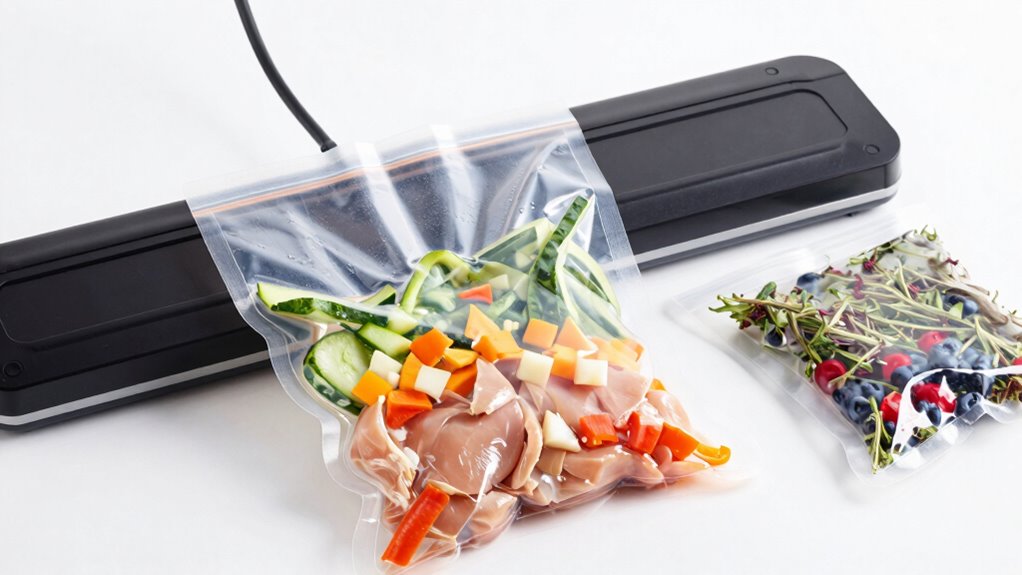
Vacuum sealing works by removing air from specially designed bags or containers, which helps preserve your meals and extend their freshness. The process relies on high seal quality to prevent air from re-entering, ensuring your food stays fresh longer. Vacuum efficiency is key; a strong vacuum removes as much air as possible quickly, reducing oxidation and freezer burn. When you seal effectively, you minimize moisture loss and spoilage, making your meal prep more reliable. Good seal quality means the bag or container maintains its integrity, even during freezing or storage. Ensuring proper seal integrity is essential to prevent leaks and maintain freshness over time. You’ll notice that with efficient vacuum sealing, your food retains flavor, texture, and nutrients better over time, saving you money and reducing waste. Proper sealing is fundamental to maximizing the benefits of your meal prep routine. Optimal vacuum performance ensures your food stays fresh and minimizes waste over time. Additionally, choosing the right sealing method can impact the overall effectiveness of your preservation, especially when dealing with delicate or high-moisture foods. An understanding of vacuum strength can help you select the best equipment for your specific needs.
Which Foods Benefit Most From Vacuum Sealing?
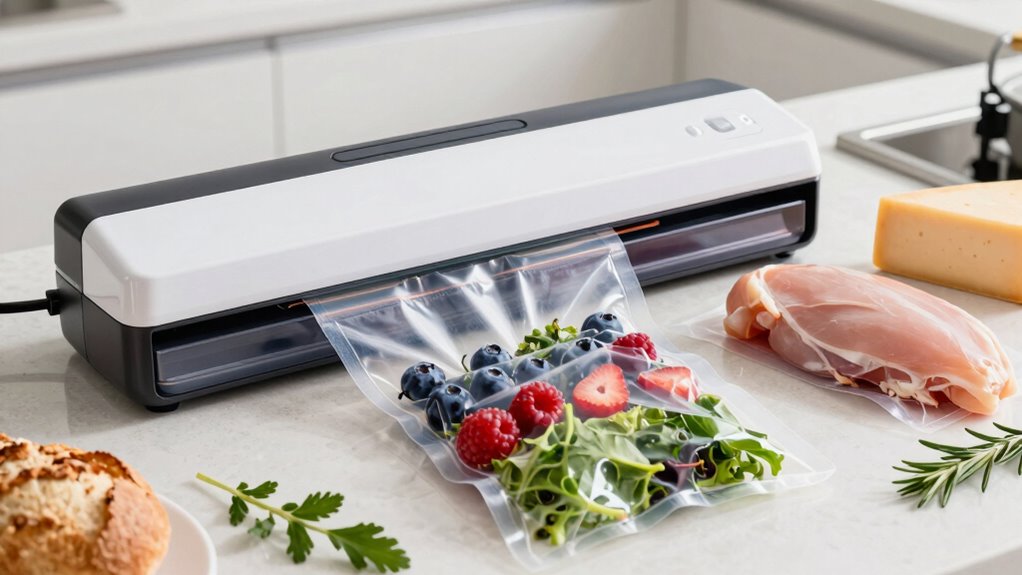
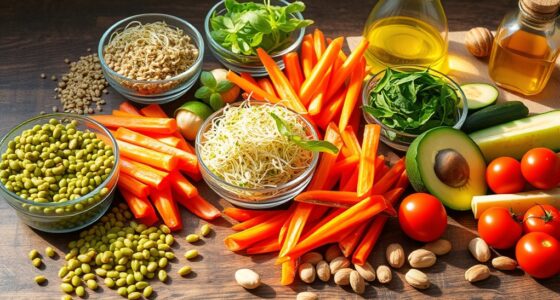
Certain foods benefit profoundly from vacuum sealing because it helps preserve their freshness and quality for longer periods. Fruits like berries and sliced vegetables stay fresher, maintaining texture and flavor with effective food preservation. Meats and seafood also see significant benefits, as vacuum sealing prevents freezer burn and slows microbial growth. Cheeses and baked goods stay mold-free longer, reducing waste. When using sealing techniques, guarantee all air is removed to maximize freshness and prevent spoilage. Leafy greens, herbs, and delicate produce particularly benefit, as vacuum sealing minimizes oxidation. Additionally, using specialized vacuum bags can further enhance the preservation process. Proper sealing techniques are essential to avoid liquid leakage, especially with high-moisture foods, which can compromise the seal and reduce effectiveness. To prevent spoilage and maintain food safety, it is crucial to follow proper sealing procedures. Ensuring proper storage conditions alongside vacuum sealing further extends the shelf life of perishable items. However, vacuum sealing is especially beneficial for pinball machine preservation, helping collectors maintain the condition of their valuable machines over time. Overall, vacuum sealing is a powerful tool for extending the shelf life of many perishable items.
Foods to Skip or Seal With Caution
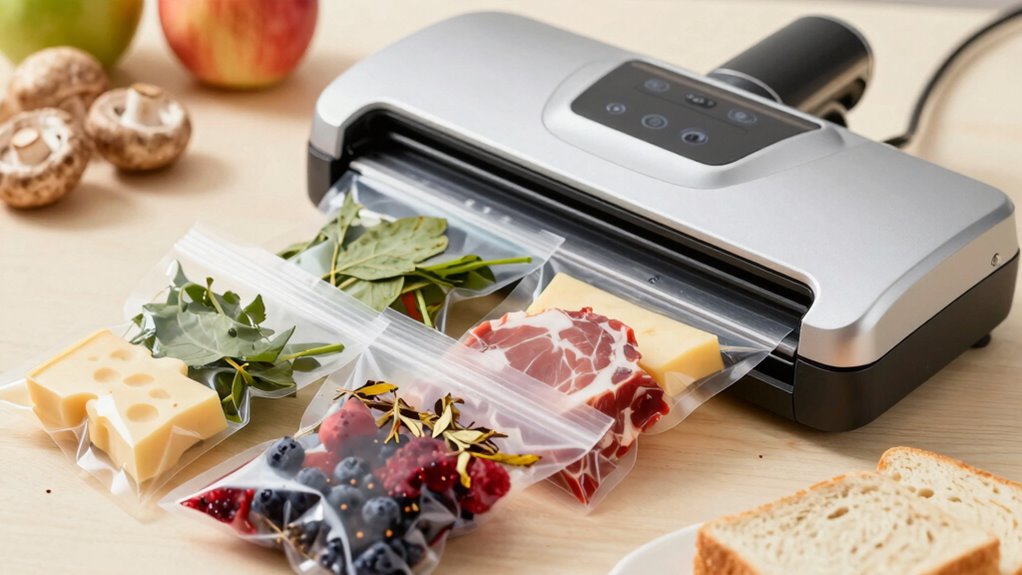
While vacuum sealing offers many benefits, some foods are best avoided or sealed with caution to prevent spoilage or damage. High-moisture or delicate items, like soft cheeses or fresh bread, can be negatively affected by the sealing process, risking freezer burn or mold growth. Additionally, foods with a high risk of bacterial growth, such as raw meats or seafood, require strict food safety practices; improper sealing can create an environment for bacteria to thrive. Be cautious with sealing equipment when handling these items—ensure it’s properly cleaned and used correctly. Some foods, like soft fruits or cooked pasta, may not seal well or could be damaged during the process. Knowing what to skip helps maintain food safety and preserves the quality of your meal prep. It’s also important to consider free floating issues that may affect the sealing process, such as air pockets or leaks, which can compromise the vacuum and food safety. Incorporating water displacement techniques can help achieve a better seal with certain delicate foods. Properly managing air removal during sealing is essential for maintaining freshness and preventing spoilage. Being aware of food safety guidelines ensures you avoid contamination risks during vacuum sealing. Additionally, understanding food preservation principles can help you optimize your storage practices and extend the shelf life of your foods.
When to Vacuum Seal Fruits and Vegetables

Before vacuum sealing fruits and vegetables, make sure to wash them properly to remove dirt and bacteria. Follow best storage practices by drying produce thoroughly to prevent mold and spoilage. Proper handling guarantees your vacuum-sealed items stay fresh longer and maintain quality. Additionally, consider using air quality improvement tools to ensure that your storage environment supports optimal freshness and minimizes airborne contaminants. Using proper storage techniques can further extend the shelf life of your produce and prevent spoilage during storage. Incorporating temperature control into your storage routine can also play a vital role in preserving the quality of your vacuum-sealed items. Understanding the importance of environmental conditions can help optimize storage and maintain produce quality over time, especially when combined with preventing moisture buildup to avoid spoilage.
Proper Washing Techniques
To make certain your fruits and vegetables stay fresh and safe to eat, it’s vital to wash them thoroughly before vacuum sealing. Proper cleaning removes dirt, bacteria, and pesticides that can spoil your produce. Use gentle cleaning methods like rinsing under cold water or soaking in a vinegar solution. After washing, dry produce completely to prevent moisture from compromising the vacuum seal. Store cleaned items in clean storage containers, guaranteeing they’re dry and ready for sealing. Here’s a visual to guide you:
| Produce Type | Recommended Cleaning Method |
|---|---|
| Leafy greens | Rinse and spin dry |
| Root vegetables | Scrub with a brush and rinse |
| Berries and soft fruits | Gentle rinse, pat dry |
This guarantees your produce stays fresh longer. Additionally, ensuring your produce has adequate horsepower can help in maintaining freshness by enabling better preservation techniques. Proper washing techniques are especially important for food safety and preventing spoilage during storage. Regularly inspecting your produce for signs of spoilage and proper storage methods further enhance freshness and safety. Using the right filtration methods can also protect your equipment from debris and ensure optimal vacuum performance.
Best Storage Practices
Vacuum sealing fruits and vegetables at the right time can considerably extend their freshness and prevent spoilage. To maximize food safety and maintain quality, seal produce when it’s ripe or just before it spoils. Proper timing helps prevent mold growth and freezer burn. Use high-quality packaging materials designed for vacuum sealing to guarantee an airtight seal and preserve nutrients. Incorporating energy-efficient cloud servers into your storage solutions can also support sustainable practices in food management. Consider these best storage practices:
- Seal produce when it’s fresh but ripe, not overripe or underripe
- Avoid sealing bruised or damaged fruits and vegetables
- Remove excess air to prevent freezer burn
- Label packages with date and contents for better organization
- Keep in mind that AI tools can assist in tracking storage times and optimizing inventory management, ensuring your produce remains fresh longer.
Following these tips helps you optimize storage, ensure food safety, and keep your produce fresh longer.
Sealing Proteins and Dairy Safely
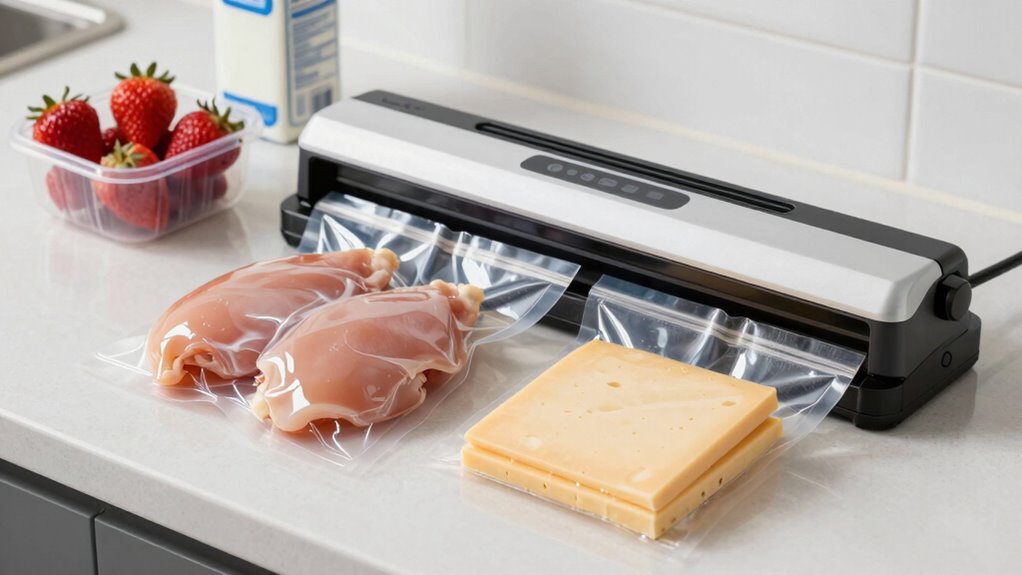
When sealing proteins and dairy, you need to follow proper packaging techniques to prevent spoilage and contamination. Make sure you remove as much air as possible and use secure seals to keep these items fresh. Additionally, store them at the right temperatures and label everything clearly to stay safe and organized.
Proper Packaging Techniques
Ensuring that proteins and dairy are sealed properly is crucial for maintaining freshness and preventing spoilage. To achieve this, focus on seal integrity and choosing the right packaging. Use airtight containers or vacuum bags designed for food storage. Before sealing, remove as much air as possible to prevent freezer burn. Make sure the seal is secure and free of leaks. Avoid overfilling bags, which can compromise the seal. Check for any punctures or tears that could let air in. Proper sealing techniques help preserve flavor, texture, and safety. Keep these tips in mind:
- Use high-quality, food-grade vacuum bags
- Remove excess air before sealing
- Check the seal for any gaps or weak spots
- Store in a consistent, cold temperature
This guarantees your proteins and dairy stay fresh longer.
Storage and Safety Tips
To keep your proteins and dairy safe and fresh, proper storage and sealing are essential. Always confirm you’re using vacuum sealers compatible with your containers to maintain food safety and prevent leaks. When sealing proteins like chicken or beef, remove as much air as possible to inhibit bacteria growth. For dairy, such as cheese or yogurt, use appropriate bags or containers designed for food storage to avoid spoilage. Label your packages with dates to track freshness and rotate stock regularly. Keep sealed items refrigerated or frozen according to recommended storage times. Avoid overfilling bags to prevent punctures and ensure a tight seal. Proper container compatibility and careful sealing help maintain food safety, extend shelf life, and keep your meal prep fresh and delicious.
Do’s and Don’ts for Sealing Cooked Meals and Leftovers
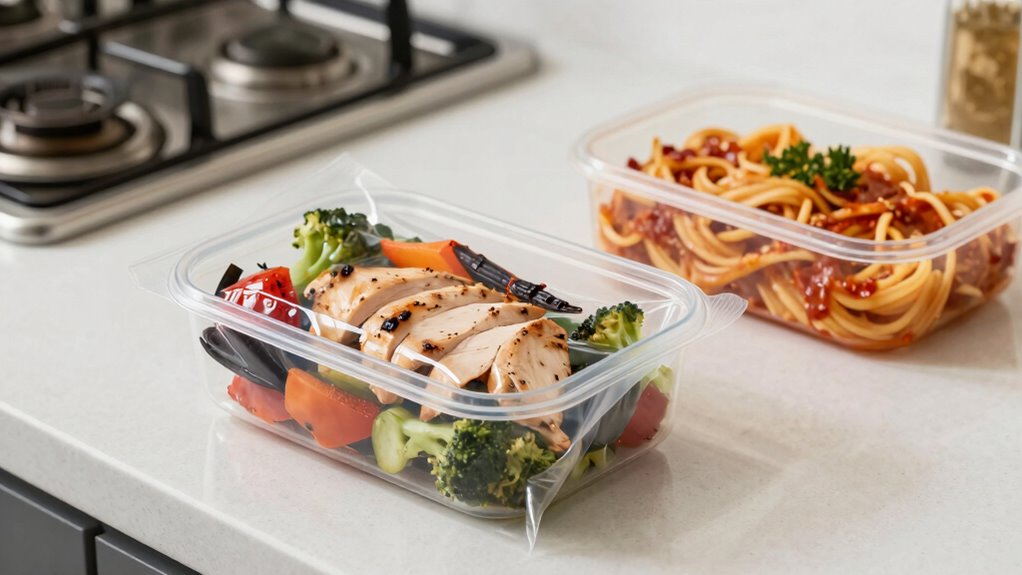
Sealing cooked meals and leftovers properly is essential to maintain freshness and prevent spoilage, but there are some key do’s and don’ts to keep in mind. Good food safety starts with proper sealing techniques to avoid contamination.
Proper sealing of leftovers is key to freshness, safety, and preventing spoilage.
- Do let hot foods cool before sealing to prevent condensation and bacterial growth.
- Don’t overfill bags; leave enough space for a tight seal.
- Do ensure all food is dry before sealing to prevent seal failure.
- Don’t forget to label bags with dates to track freshness.
Following these tips helps preserve flavor and texture while minimizing food safety risks. Proper sealing techniques also reduce oxygen exposure, extending shelf life. Remember, the goal is to keep leftovers safe and tasty for future meals.
Vacuum Sealing Baked Goods and Breads
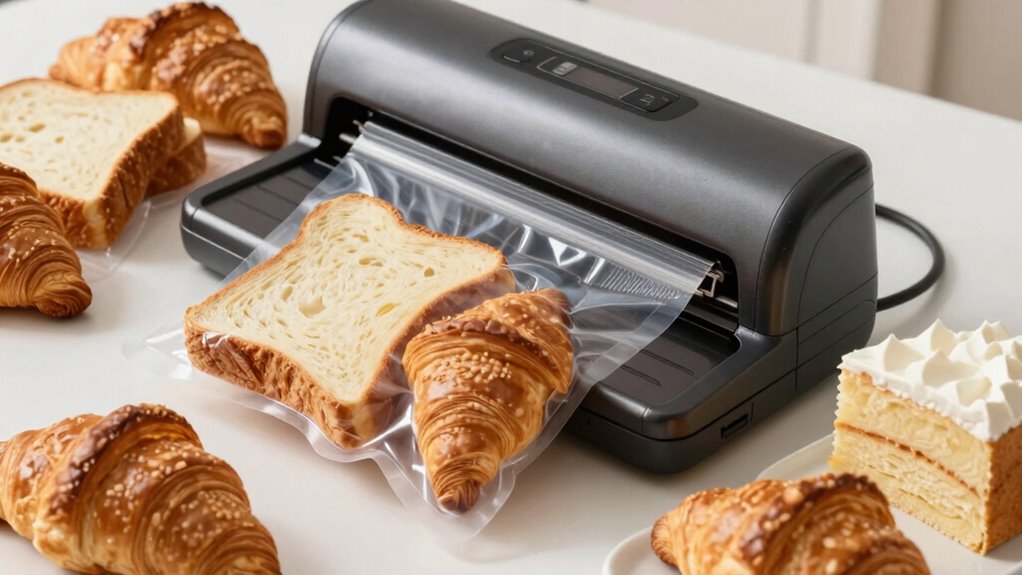
Vacuum sealing baked goods and breads helps prevent freezer burn and keeps them tasting fresh for longer. It also protects delicate textures from being crushed during storage. Using the right technique guarantees your baked treats stay perfect until you’re ready to enjoy them.
Prevents Freezer Burn
Freezer burn is a common threat to baked goods and breads, causing them to become dry, tough, and less flavorful over time. Vacuum sealing helps prevent this by creating a tight barrier that enhances freshness preservation and moisture control. To maximize this benefit, make certain the packaging is airtight and remove excess air. Here are some tips:
- Use proper vacuum sealers designed for baked items
- Wrap breads in plastic wrap before vacuum sealing for extra moisture retention
- Seal baked goods while they’re completely cooled
- Label packages with dates to monitor storage time
Maintains Freshness Longer
Ever wonder how to keep baked goods and breads tasting fresh for longer periods? Vacuum sealing helps maintain their freshness by limiting exposure to air circulation, which causes staleness and mold. When you remove the air from the packaging, you slow down the oxidation process and preserve moisture, keeping your baked items soft and flavorful. Additionally, vacuum sealing minimizes light exposure, which can accelerate spoilage and degrade quality. By sealing baked goods tightly, you prevent them from drying out or becoming stale quickly. This method extends shelf life without the need for preservatives. Just make sure you store the sealed items in a cool, dark place to maximize freshness. Overall, vacuum sealing is an effective way to keep your baked goods tasting as fresh as when you first baked them.
Avoids Crushing Breads
When sealing baked goods and breads, you want to preserve their shape and texture without causing damage. Proper crush prevention guarantees your bread stays intact and fresh. To achieve this, consider these tips:
- Use a soft or stretchy vacuum bag designed for delicate items.
- Avoid over-tightening the vacuum seal; it can cause crushing.
- Freeze breads first to make them more resistant during sealing.
- Wrap breads in a paper towel or tissue before sealing for extra protection.
Tips for Sealing Spicy or Acidic Foods Without Problems
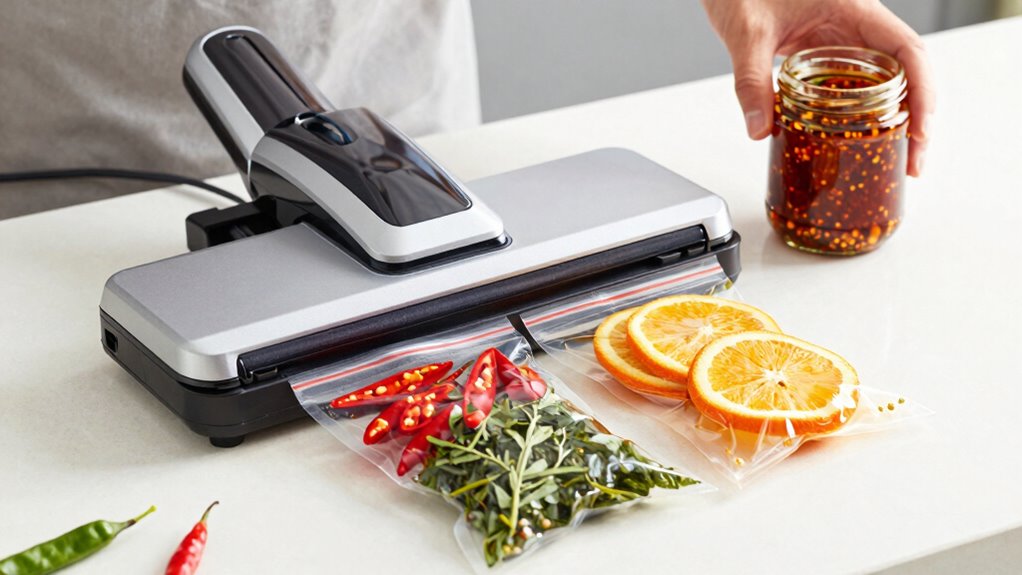
Sealing spicy or acidic foods can be tricky because their strong flavors and moisture can interfere with the vacuum process. To prevent leaks, try freezing these foods briefly before sealing; this solidifies moisture and reduces vapor. Using a damp paper towel over the food before sealing can also absorb excess moisture and block strong odors from escaping. Consider adding an extra layer of protection, like a bag within a bag, especially for highly acidic ingredients that might degrade the bag over time. Make sure your vacuum sealers are clean and well-maintained so they can handle the moisture and pungent flavors effectively. By taking these steps, you’ll ensure a secure seal without compromising the quality of your spicy foods or acidic ingredients.
Troubleshooting Common Vacuum Sealing Challenges
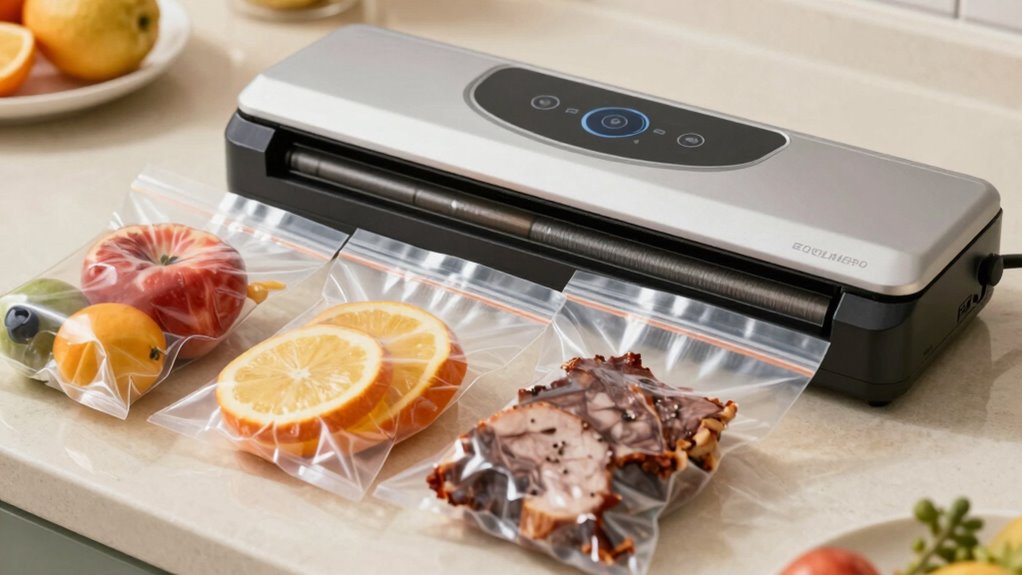
Vacuum sealing can sometimes present unexpected challenges, but most issues have straightforward solutions. If your seal isn’t holding or you notice air still inside, check the air pressure inside the bag. A weak seal often results from insufficient vacuum pressure. Make sure your vacuum pump is functioning properly and creating a strong pull.
Check your vacuum pressure and ensure the pump is working properly for a secure seal.
To troubleshoot common problems, consider these tips:
- Ensure the bag is properly aligned in the sealing chamber
- Remove excess liquids or moisture that can interfere with sealing
- Check for punctures or tears in the bag
- Confirm the vacuum pump is operating at full capacity
How to Maximize Freshness and Storage Life With Proper Sealing

Proper sealing is the key to maintaining your food’s freshness and extending its storage life. To maximize results, follow essential storage tips like removing as much air as possible and using the correct sealing techniques. Confirm your bags are dry and properly aligned before sealing to prevent leaks. Use the right vacuum setting for different foods—soft items may need a gentler seal, while hard items require a stronger one. Label your packages with dates to track freshness. Keep sealed foods in a consistent temperature environment, ideally in the refrigerator or freezer. Proper sealing reduces exposure to oxygen, slowing spoilage and freezer burn. With these storage tips and sealing techniques, your prepped meals stay fresher longer, saving you time and reducing waste.
Frequently Asked Questions
Can Vacuum Sealing Be Used for Liquids or Soups Safely?
Yes, you can use vacuum sealing for liquids and soups safely if you use proper liquid sealing techniques. To do this, freeze your soup first, then vacuum seal it, preventing liquid from being drawn into the machine. This method ensures safe soup storage and prevents messes. Always leave some headspace and use a suitable bag to avoid leaks, making your liquid sealing effective and convenient.
How Long Can Vacuum-Sealed Meals Be Stored in the Freezer?
You can typically store vacuum-sealed meals in the freezer for 2 to 3 years if you want to play it safe. Proper storage duration and freezer safety are key to keeping your food fresh. Keep in mind, the quality might decline over time, so it’s best to use them within a year for ideal taste and texture. Don’t let your food go to waste; plan accordingly!
Is It Safe to Vacuum Seal Raw Meats for Extended Periods?
Yes, it’s safe to vacuum seal raw meat for extended durations if you follow proper raw meat safety guidelines. Make sure to remove as much air as possible to prevent spoilage and freezer burn. Label the packages with dates and consume within recommended timeframes—usually 6 to 12 months for most meats. Proper sealing and storage help maintain meat quality and safety over extended sealing durations.
Do Different Vacuum Sealers Require Specific Bags or Accessories?
Ever wonder if your vacuum sealer needs specific bags? Most vacuum sealers require compatible bags and accessories for ideal sealing and preservation. You should check the vacuum sealer compatibility to guarantee the bags and accessories fit properly and work effectively. Different models often have accessory compatibility considerations, so using the recommended bags prevents leaks and preserves freshness. Always read your vacuum sealer’s manual for compatibility details to avoid issues.
Can Vacuum Sealing Help Prevent Freezer Burn Effectively?
Yes, vacuum sealing helps prevent freezer burn effectively by controlling moisture and reducing air exposure. Use proper sealing techniques, ensuring the bag is tight and free of wrinkles, to maximize moisture control. This creates an airtight seal that slows oxidation and dehydration. By sealing food properly, you keep it fresher longer, maintaining flavor and texture, and cut down on freezer burn damage markedly.
Conclusion
Mastering the art of vacuum sealing maximizes meal prep magic. By carefully choosing what to seal and skipping sensitive foods, you safeguard freshness and stave off spoilage. Stay savvy with spongy breads, spicy sauces, and delicate dairy, and troubleshoot troubles promptly. With mindful methods, your meals remain flavorful, firm, and fabulous, fostering freshness and food freedom. Embrace the essentials, avoid the pitfalls, and enjoy the benefits of beautifully sealed, stress-free storage.