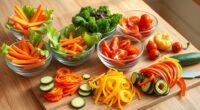
To elevate your vegetarian dishes, focus on combining herbs and spices thoughtfully to create balanced, vibrant flavors. Understand each herb’s unique profile—like basil’s sweet notes or thyme’s earthy tones—and select spices that complement or contrast ingredients for depth. Use fresh herbs for finishing touches and dried ones during cooking to maximize flavor. Building layers of seasoning and exploring traditional pairings helps make your meals memorable. Keep exploring, and you’ll discover even more ways to craft irresistible vegetarian flavors.
Key Takeaways
- Understand each herb and spice’s flavor profile to create balanced, complementary seasoning combinations.
- Use fresh herbs for finishing dishes and dried herbs during cooking to maximize flavor extraction.
- Pair herbs and spices according to cuisine style, such as oregano and thyme for Mediterranean or cumin and turmeric for Indian.
- Add spices gradually and taste frequently to avoid overpowering the dish and achieve harmony.
- Build layered flavors by combining herbs and spices thoughtfully, enhancing the overall depth and complexity of vegetarian meals.

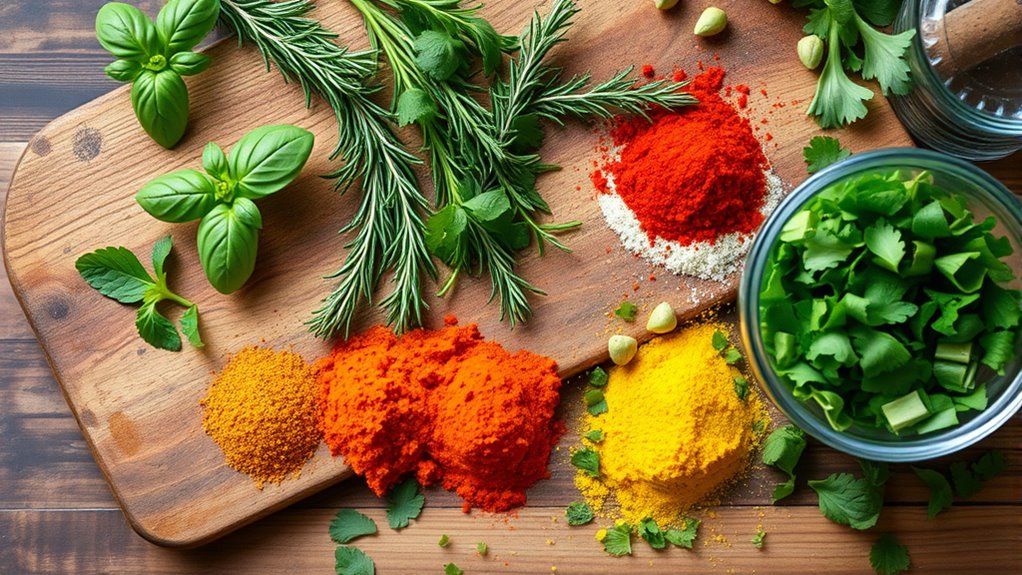
Have you ever wondered how herbs and spices can transform a simple vegetarian dish into something truly flavorful? The secret lies in understanding herb flavor profiles and spice pairing techniques. Herbs and spices are like musical notes; when used skillfully, they create harmony that enhances the dish’s natural ingredients. Knowing the distinct qualities of each herb and spice helps you build layers of flavor that make your vegetarian meals memorable. For example, basil offers sweet, peppery notes that brighten tomato-based dishes, while thyme provides earthy, minty undertones that add depth. By exploring these herb flavor profiles, you can tailor your seasonings to match the ingredients and desired mood of your dish. Additionally, understanding how aura colors reflect personality traits can inspire you to experiment with flavor combinations that match the mood or theme of your meal.
Herbs and spices create harmony and depth in vegetarian dishes through distinct flavor profiles and skillful pairing.
Spice pairing techniques go beyond simply sprinkling spices randomly. Instead, you want to think about how different spices complement or contrast with each other and the main ingredients. For instance, cumin pairs beautifully with chili powder in a smoky bean stew, while coriander adds citrusy brightness to roasted vegetables. When combining herbs and spices, consider their individual flavor profiles and how they can work together to create a balanced, dynamic flavor. A good rule of thumb is to start with small amounts and taste as you go, adjusting until the flavor feels just right. This approach helps you avoid overpowering the dish and ensures each herb and spice contributes its unique character.
Another key to mastering spice pairing techniques is understanding the role of herbs and spices in different cuisines. For example, Mediterranean dishes often feature oregano, rosemary, and thyme, which lend a fragrant, savory quality. Indian cuisine relies heavily on cumin, coriander, turmeric, and garam masala to create complex, warming flavors. Mexican dishes frequently incorporate cumin, chili powder, and oregano for a bold, smoky profile. Recognizing these traditional combinations can guide you in experimenting with new flavor pairings, helping you build confidence and creativity in your vegetarian cooking.
In addition, fresh herbs can be added at different stages of cooking to maximize their flavor, while dried herbs and spices often work best when toasted or simmered to release their essential oils. Using herbs and spices thoughtfully, based on their flavor profiles and pairing techniques, transforms ordinary vegetarian ingredients into vibrant, satisfying dishes. As you become more familiar with these principles, you’ll develop your own style of seasoning that elevates every meal, making vegetarian cooking an exciting journey of flavor exploration.
Frequently Asked Questions
How Do Herbs and Spices Affect the Nutritional Value of Vegetarian Dishes?
Herbs and spices boost the nutritional value of your vegetarian dishes by providing herb nutrient content and spice antioxidant properties. They add essential vitamins and minerals, supporting your overall health. The antioxidant properties of spices help combat free radicals, reducing oxidative stress. By including a variety of herbs and spices, you enhance flavor while also gaining health benefits, making your meals more nutritious and delicious without extra calories.
What Are the Best Herbs for Balancing Flavors in Plant-Based Recipes?
You should try herbs like basil, thyme, and cilantro for balancing flavors in plant-based recipes. These herbs work well with spice combinations like cumin and paprika, creating harmonious herb flavor pairings. You’ll find that using a mix of fresh herbs and carefully selected spices enhances the overall taste, adds depth, and keeps your dishes vibrant. Experiment with different herb and spice combinations to find what best complements your vegetarian creations.
Can Herbs and Spices Replace Salt for Seasoning in Vegetarian Cooking?
Yes, herbs and spices can replace salt for seasoning in vegetarian cooking. You can create herb flavor combinations like basil, thyme, and oregano to enhance your dishes naturally. Spice blends for variety, such as curry powder or Italian seasoning, add depth without extra salt. Experimenting with these options allows you to boost flavor while keeping your meals healthy and flavorful.
How Should Herbs and Spices Be Stored to Maintain Freshness?
You should store herbs and spices in airtight containers, ideally away from direct sunlight, heat, and moisture to keep them fresh. Use proper herb storage techniques like sealing herbs in glass jars or plastic containers. Organize your spice shelf by grouping similar spices together, which helps you find what you need quickly and prevents exposure to light and air. Regularly check for freshness and replace any spices that lose their aroma.
Are There Any Herbs or Spices That Should Be Avoided in Vegetarian Dishes?
You should avoid herbs and spices that cause allergic reactions or interfere with medications. For example, turmeric can thin blood and might not be suitable for some. Also, herbs like ginseng can interact with medications, so check with your healthcare provider. Always read labels and listen to your body to prevent allergic reactions or adverse effects, especially if you have known sensitivities or health conditions.
Conclusion
So, next time you’re tempted to drown your veggie dish in salt or blandness, remember: herbs and spices are your secret weapons. Who needs fancy sauces when you’ve got thyme, cumin, or paprika? With a sprinkle here and a dash there, you’ll fool even the most skeptical meat lovers. So go ahead, get creative—your taste buds (and dinner guests) will thank you for not turning your meal into a flavorless disaster. Happy spicing!