You can maximize small spaces by adopting vertical gardening for microgreens and herbs, using wall-mounted planters or tiered shelves. Incorporate simple drip irrigation for consistent watering and start composting kitchen scraps to create nutrient-rich soil naturally. These eco-friendly practices support year-round growth, improve air quality, and reduce waste. With some setup and a little effort, you’ll enjoy fresh, home-grown greens and learn how to create a sustainable urban farm tailored to your space.
Key Takeaways
- Vertical gardening maximizes limited space for growing microgreens and herbs indoors or on small balconies.
- Drip irrigation and simple watering schedules ensure consistent moisture for healthy microgreen growth.
- Composting kitchen scraps creates nutrient-rich soil, supporting sustainable urban farming practices.
- Combining vertical gardens with composting reduces waste and promotes eco-friendly, organic microgreens production.
- Small-scale urban farms enhance air quality, aesthetics, and provide fresh, home-grown microgreens year-round.
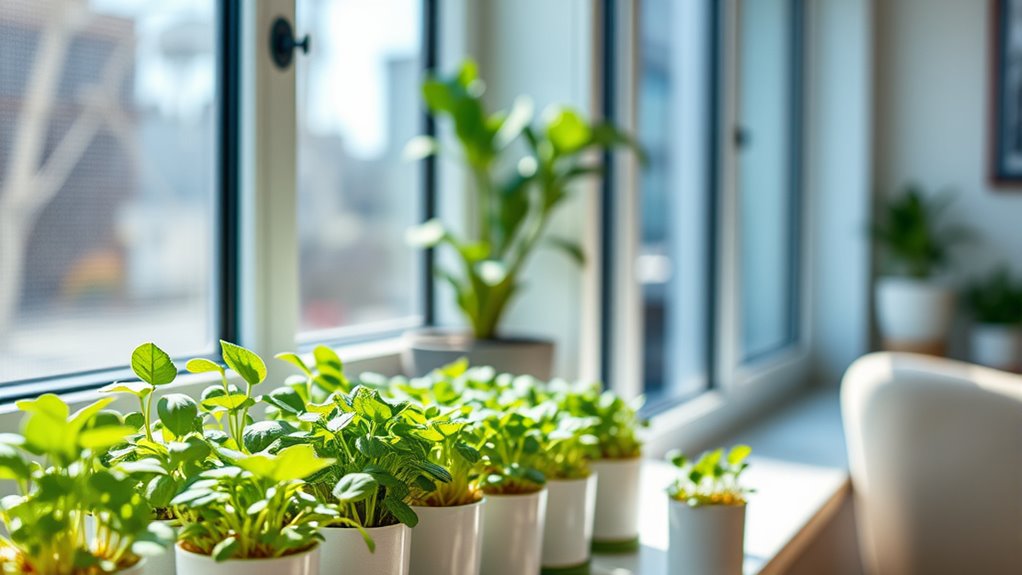
Urban farming has become an increasingly popular way to grow fresh, healthy food right at home, even in small spaces. If you’re looking to maximize your limited area, vertical gardening offers an excellent solution. Instead of spreading out across your yard, you can stack plants upwards using wall-mounted planters or tiered shelves. This approach not only conserves space but also creates a visually appealing green wall. With vertical gardening, you can cultivate a variety of microgreens, herbs, and small vegetables, all within arm’s reach. Plus, it allows you to make the most of natural light, which is vital for healthy plant growth. To keep your plants thriving, consider installing a drip irrigation system or simple watering schedule to guarantee consistent moisture.
Another key to successful urban farming is understanding and implementing effective composting methods. Composting transforms kitchen scraps and yard waste into nutrient-rich soil, which is essential for growing microgreens and other greens at home. You don’t need a large backyard to compost; even small containers on a balcony or countertop can work. Vermicomposting, which uses worms to break down organic material, is particularly efficient and produces high-quality compost quickly. It’s easy to set up and maintain, and you’ll be surprised at how much waste you can divert from the trash. Using homemade compost in your containers or vertical gardens improves soil quality naturally, reducing the need for synthetic fertilizers. This creates a healthier environment for your microgreens and enhances their flavor and nutrient density. Additionally, incorporating space-saving techniques can help optimize your limited area even further.
Integrating vertical gardening with composting methods gives you a sustainable, eco-friendly system for growing food at home. As you harvest your microgreens, you’ll appreciate the cycle of recycling kitchen waste into nourishing soil, which in turn supports vigorous plant growth. These practices also empower you to control your food sources, guaranteeing you’re eating fresh, organic produce. Whether you’re growing basil on a balcony or sprouting radish microgreens in a windowsill, the combination of vertical gardening and composting makes urban farming accessible and manageable. Not only will you enjoy the satisfaction of cultivating your own food, but you’ll also contribute to reducing your carbon footprint. It’s a simple, effective way to turn small spaces into productive, green havens.
Frequently Asked Questions
Can Microgreens Be Grown Indoors Without Sunlight?
You can grow microgreens indoors without direct sunlight by using proper indoor lighting like LED or fluorescent grow lights. These lights provide the necessary spectrum for healthy growth. Instead of traditional soil, consider soil alternatives like coconut coir, hydroponic mats, or grow pads for easier maintenance and cleaner setup. Keep the lights close to the microgreens and guarantee they get 12-16 hours of light daily for ideal growth.
How Much Space Do I Need for Urban Farming?
You’ll need about 1 to 2 square feet of space per person for urban farming, depending on what you want to grow. Container options vary from small pots to large raised beds, so choose based on your space and crop needs. Make sure your area gets enough light and air circulation. Even a balcony or a corner can be transformed into a productive urban farm with the right containers.
Are Urban Farms Environmentally Sustainable Long-Term?
Yes, urban farms can be environmentally sustainable long-term if you manage urban waste effectively and prioritize soil health. By composting organic waste, you reduce landfill contributions and enrich your soil naturally. Healthy soil supports resilient plants and minimizes the need for chemical inputs. With careful planning, urban farming becomes a sustainable practice that benefits your community and the environment over time.
What Are the Common Pests for Microgreens?
Pests can sneak into your microgreens garden like uninvited guests at a party. Common pests include aphids, fungus gnats, and spider mites. To keep them at bay, practice pest prevention by maintaining proper airflow and cleanliness. Use organic pest control methods such as neem oil or insecticidal soap, which are effective yet gentle. Staying vigilant helps safeguard your microgreens and ensures a healthy, thriving harvest.
How Do I Harvest Microgreens Without Damaging Them?
To harvest microgreens without damaging them, use clean, sharp scissors or a knife to cut just above the soil line, ensuring you don’t crush the delicate stems. Employ gentle harvesting techniques to preserve their structure, which helps extend their microgreen longevity. Always handle them carefully, avoiding unnecessary pulling or squeezing, so your microgreens stay fresh and vibrant for longer. Proper tools and gentle methods make a big difference in quality and longevity.
Conclusion
By growing microgreens at home, you can enjoy fresh, nutritious produce year-round while reducing your ecological footprint. Did you know that microgreens can contain up to 40 times more nutrients than mature vegetables? This makes them a powerful addition to your urban farming efforts. So, start small, experiment, and watch your green space flourish—bringing health, sustainability, and freshness right into your apartment or balcony. It’s easier than you think to make a big impact!