Upcycling juice pulp is a smart way to reduce waste and enhance your cooking. You can dry it into fruit leather or add it to smoothies for extra fiber, flavor, and nutrition. Incorporate pulp into broths for natural sweetness and depth, or use it in baking to boost moisture and nutrients in muffins, bread, and energy bars. Want to discover even more creative ideas? Keep exploring to reveal the full potential of your juice pulp.
Open a free Amazon Business account
Business pricing, bulk buying and tax-exempt orders.
As an affiliate, we earn on qualifying purchases.
Key Takeaways
- Juice pulp can be dried into snacks like fruit leather or crisps for healthy, eco-friendly treats.
- Incorporate pulp into broths for added flavor, nutrients, and natural sweetness in soups and stews.
- Use pulp in baking to boost fiber, moisture, and flavor in muffins, bread, and energy bars.
- Upcycling pulp reduces food waste, supports sustainability, and promotes cost-effective cooking practices.
- Pulp adds nutritional value and enhances various dishes, making meals healthier and more resource-efficient.
Every year, tons of juice pulp go to waste, but you can turn this overlooked byproduct into something valuable. Instead of tossing it out, you can embrace sustainable practices by upcycling juice pulp into delicious snacks, flavorful broths, and baking boosters. This approach not only helps reduce food waste but also adds nutritious ingredients to your kitchen, making your cooking more eco-friendly and resource-efficient.
Turn juice pulp into tasty snacks, broths, and baked goods—reduce waste and boost nutrition sustainably.
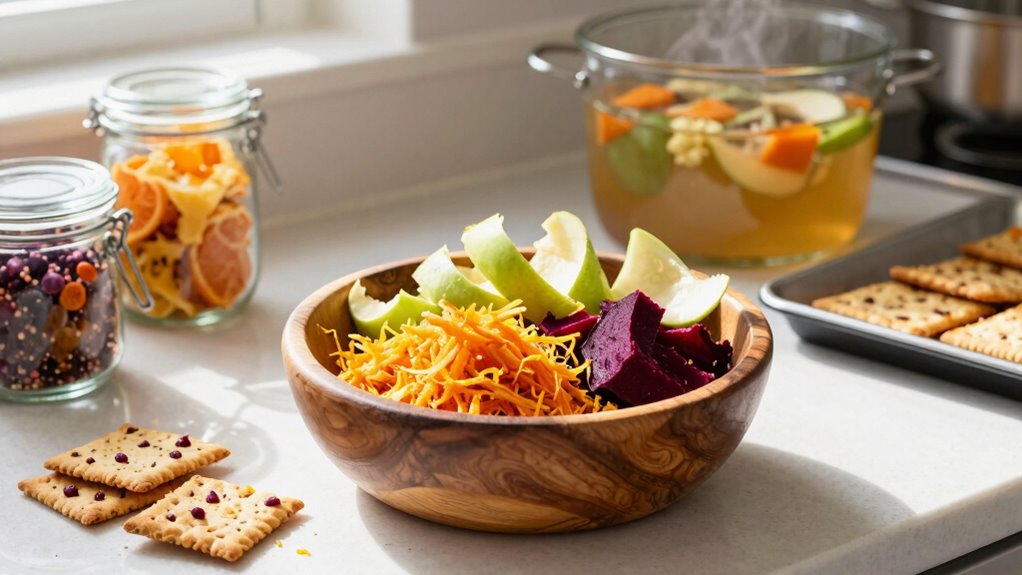
When you repurpose juice pulp, you’re actively participating in food waste reduction, which benefits the environment and your wallet. Juice pulp is rich in fiber, vitamins, and natural sugars, so it’s a versatile ingredient waiting to be utilized. You can dry the pulp to create a chewy snack, like fruit leather or fruit crisps, or blend it into smoothies for added fiber and flavor. These snacks are not only tasty but also satisfy your sweet tooth in a healthier way, keeping waste out of landfills.
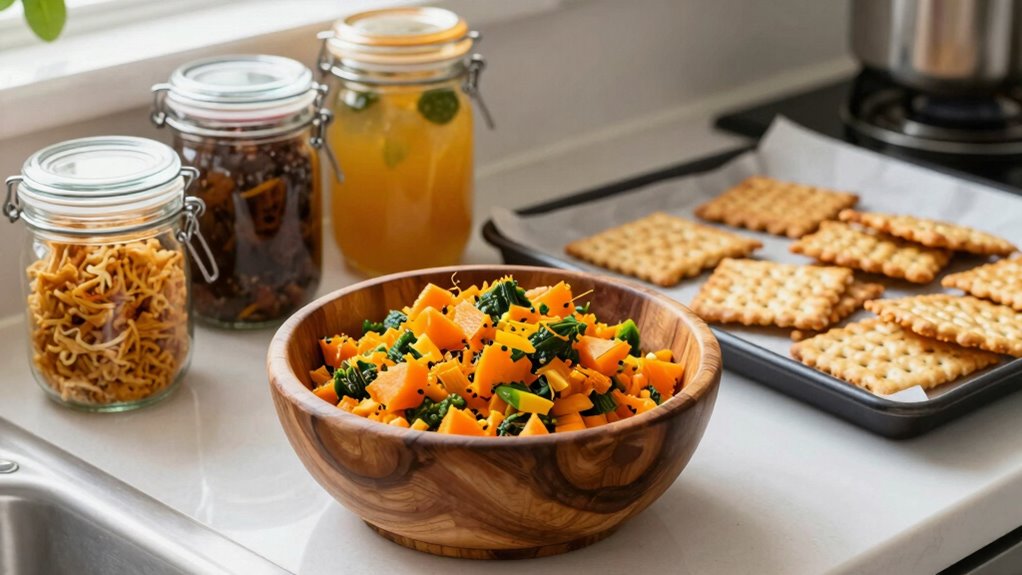
Using juice pulp in broths is another smart move. Add the pulp to water along with herbs and spices to make a nutrient-packed base for soups and stews. The pulp infuses the broth with natural sweetness and depth, reducing the need for extra seasoning or artificial flavorings. This method maximizes the pulp’s potential and allows you to craft wholesome, flavorful dishes with minimal waste. Plus, it’s an excellent way to stretch your ingredients and save money while practicing sustainable habits.
In baking, juice pulp can serve as a nutritious substitute for traditional ingredients. Mix it into muffins, bread, or energy bars to boost fiber content and add subtle fruit flavors. Because the pulp retains some moisture, you might need to adjust your recipes slightly, but the result is a moist, flavorful baked good that’s kinder to the planet. Incorporating pulp into baked goods is a simple step toward reducing waste and enhancing the nutritional profile of your homemade treats.
As an affiliate, we earn on qualifying purchases.
Frequently Asked Questions
How Long Can Juice Pulp Be Stored Safely?
You can store juice pulp safely for up to 3-5 days in the refrigerator, but it’s best to use it sooner to prevent spoilage. To maximize shelf life and spoilage prevention, keep your pulp in an airtight container and make sure your fridge stays cold. If you want longer storage, consider freezing the pulp, which can preserve it for several months without compromising quality.
Are There Any Allergens in Upcycled Juice Pulp?
There can be allergens in upcycled juice pulp, especially if it contains fruit skins or seeds that trigger pulp sensitivity. You should conduct allergen detection before using it in recipes, particularly if you have food allergies. Keep in mind, pulp sensitivity varies among individuals, so always start with small amounts and observe any reactions. When in doubt, consult allergen information or avoid using pulp if you’re unsure.
Can Pulp Be Used in Savory Dishes?
Pulp perfectly plays into savory recipes, adding texture and tender taste. You can incorporate pulp into soups, stews, or veggie-based dishes to boost flavor and fiber. Its versatility makes it a valuable ingredient for flavor enhancement, turning simple ingredients into sensational savory meals. So, get creative with your culinary craft, and let pulp transform your dishes into delicious, nutritious delights that delight your taste buds and reduce waste.
What Are the Best Preservation Methods for Pulp?
To preserve pulp effectively, you should freeze, dehydrate, or can it, ensuring maximum flavor enhancement and nutrient retention. Freezing is quick and maintains freshness, while dehydration removes moisture for long-term storage. Canning, using proper sterilization, preserves pulp’s nutrients and flavor. Store your preserved pulp in airtight containers in a cool, dark place to prevent spoilage. These methods help you enjoy pulp’s benefits in your recipes over time.
Is Upcycling Juice Pulp Cost-Effective?
Upcycling juice pulp can be cost-effective, especially when you use it to make snacks or broths, which reduces waste and adds flavor enhancement and nutritional benefits. For example, a small café saved money by incorporating pulp into baked goods, cutting costs and boosting product value. You’ll find that repurposing pulp minimizes waste, saves money, and enriches your offerings with extra nutrients and flavors, making it a smart, economical choice.
Conclusion
By transforming juice pulp into snacks, broths, and baking boosters, you’re not just reducing waste—you’re turning everyday scraps into culinary treasures. Imagine giving new life to what once seemed discarded, like phoenixes rising from the ashes of your compost bin. So, next time you finish a juice, remember: with a little creativity, you hold the power to make delicious, eco-friendly choices that nourish both your body and the planet. The question is—are you ready to upcycle?
Flea & tick season Picks
flea and tick prevention
As an affiliate, we earn on qualifying purchases.