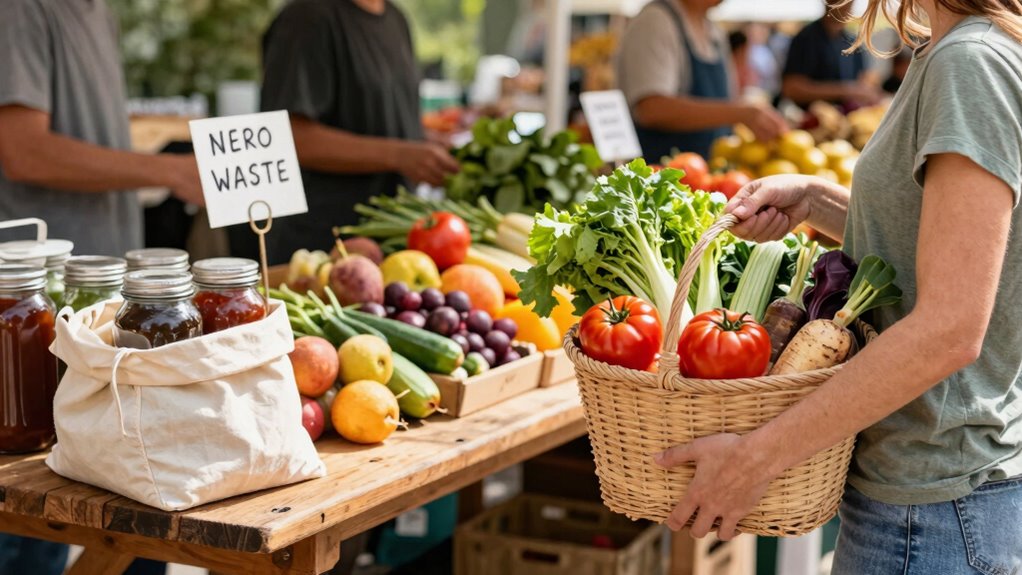

To shop CSAs and farmers markets with zero waste in mind, bring your own reusable bags, containers, and produce bags to avoid plastic packaging. Ask vendors if they offer bulk refills or loose items, and opt for seasonal, local produce to cut transportation impacts. Plan your shopping to prevent impulse buys and store items properly to reduce waste. By making mindful choices and supporting sustainable practices, you can considerably lower your environmental footprint—keep exploring to learn more.

Get kitchen staples and gadgets delivered free with Prime
- Fast, free delivery on millions of items
- Prime Video, Amazon Music and more included
- Member-only deals all year
Key Takeaways
- Bring reusable produce bags, containers, and cloth bags to avoid single-use packaging.
- Ask vendors for bulk options or container refills to minimize packaging waste.
- Choose loose, unpackaged, or seasonal local produce for eco-friendly shopping.
- Create a shopping list to prevent impulse buys and reduce food waste.
- Support vendors committed to sustainable packaging and environmentally conscious practices.
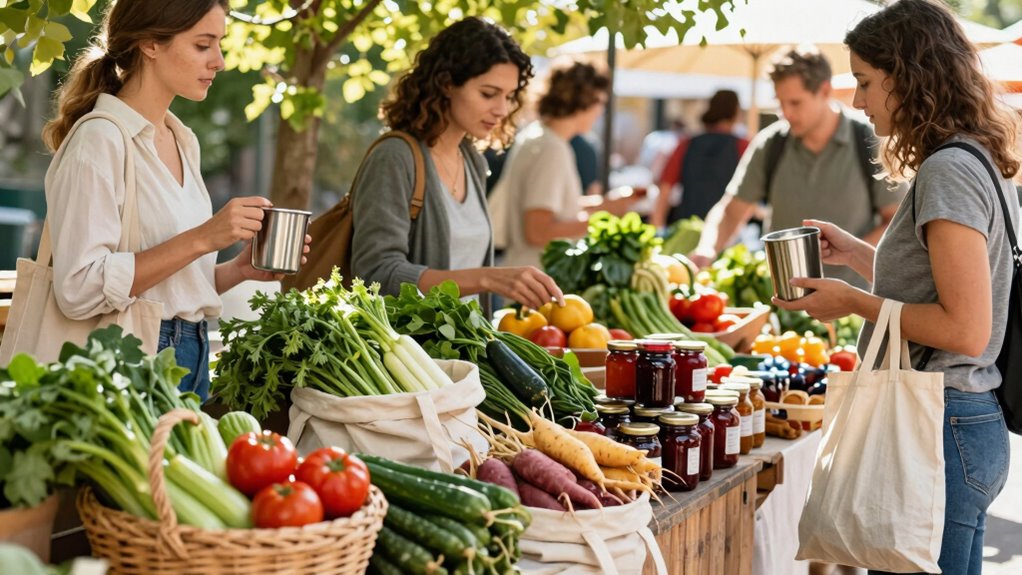
Shopping at CSAs and farmers markets offers a fresh, local food experience, but it often comes with excess packaging and waste. To shop more sustainably, you can start by bringing your own reusable packaging. Instead of accepting plastic bags or containers from vendors, carry cloth produce bags, glass jars, or sturdy containers that you can fill directly. This way, you reduce single-use plastics and keep your waste to a minimum. Many vendors are happy to accommodate these requests if you ask politely. Reusable packaging not only cuts down on waste but also helps you avoid unnecessary packaging that often ends up in the trash or recycling bins.
Bring reusable bags and containers to reduce waste and support sustainable shopping at farmers markets and CSAs.
Bulk buying is another effective strategy to minimize waste. Many farmers and vendors offer larger quantities of produce or products that you can purchase without the excess packaging typically associated with pre-portioned items. Instead of buying small, individually wrapped items, ask if you can purchase in bulk or bring your own containers for items like grains, nuts, or dried fruits. This approach allows you to buy only what you need, reducing food waste and packaging waste simultaneously. Plus, buying in bulk often saves money, making it a win-win for both your wallet and the environment. Being aware of packaging waste can help you make more informed choices during your shopping, especially when considering the environmental footprint of your purchases. Additionally, supporting vendors who prioritize sustainable packaging practices can further enhance your eco-friendly shopping efforts.
When shopping, be mindful of your packaging choices. Bring your own reusable produce bags and containers for fruits and vegetables, and avoid pre-packaged items whenever possible. If certain items are only available pre-packaged, see if vendors will refill your containers or if you can buy loose produce. Many farmers markets and CSAs are becoming more receptive to customers who bring their own containers, recognizing the importance of reducing waste. You can also bring small cloth bags for herbs, flowers, or baked goods, avoiding unnecessary plastic wraps. Additionally, choosing local, seasonal produce can further reduce the environmental impact associated with transportation and packaging.
Another key tip is to plan your shopping trips carefully. Make a list based on what you truly need, which helps prevent impulse buys and reduces leftover food that might go to waste. When you get home, store your produce properly to extend its freshness, so it doesn’t spoil quickly. If you have leftovers, be creative with repurposing or consider sharing with friends or neighbors. Being aware of sustainable shopping practices can help you make more eco-friendly choices across your entire shopping routine. Incorporating zero waste shopping principles into your routine can also inspire others in your community to adopt more environmentally conscious habits.
As an affiliate, we earn on qualifying purchases.
Frequently Asked Questions
How Do I Find Local CSAS and Farmers Markets Near Me?
To find local CSAs and farmers markets near you, start by exploring community engagement platforms like local Facebook groups or neighborhood forums. Check out websites dedicated to sustainable farming and local food initiatives, such as LocalHarvest or USDA’s farmers market directory. These resources connect you with nearby options, encouraging community involvement and supporting sustainable farming practices. Visiting these markets in person also helps you learn more about local producers and their commitment to eco-friendly practices.
What Are the Best Reusable Containers for Produce?
Think of your produce as treasures waiting to be stored. You’ll want sturdy, breathable reusable bags that cradle your fruits and veggies gently, preventing bruises and spoilage. Pair them with compostable wraps to keep things fresh without plastic cling. These containers are like a second skin—light, durable, and eco-friendly—making your shopping trip seamless and sustainable. Choose wisely, and your zero-waste journey becomes a rhythmic dance of mindful choices.
How Can I Avoid Packaging Waste at Markets?
To avoid packaging waste at markets, bring your own reusable bags, containers, and produce wraps. Engage with vendors about plastic reduction options and ask if they offer bulk or unpackaged items. Opt for loose produce and skip pre-packaged goods whenever possible. Sustainable shopping involves conscious choices, so prioritize vendors who support zero waste practices, helping you reduce packaging waste while supporting eco-friendly initiatives.
Are There Specific Seasons for Certain Produce?
Did you know that many fruits and vegetables are only available seasonally, with some crops having a 4-6 month window? You should focus on seasonal availability to reduce waste and support crop rotation, which keeps soil healthy and produces fresher produce. By shopping at the right time, you enjoy peak flavor and nutrition, while minimizing packaging waste. Plan your shopping around these seasons for a zero-waste, sustainable experience.
How Do I Store Fresh Produce to Minimize Waste?
To store fresh produce and minimize waste, keep items like leafy greens in reusable containers with a damp cloth for produce preservation, and store root vegetables in a cool, dark place. Use composting tips for scraps like peels and stems to reduce waste. Proper storage extends freshness, so you waste less and make your shopping more sustainable. Regularly check your produce and use or preserve it promptly to avoid spoilage.
Conclusion
By embracing mindful shopping at CSAs and farmers markets, you gently steer your groceries toward a more sustainable future. Picture your cart as a vessel of change, filled with fresh, vibrant produce that whispers tales of the earth’s bounty. Every mindful choice you make helps nurture the delicate balance of nature’s garden, turning your weekly visit into a quiet act of kindness. With each step, you’re weaving hope into the fabric of a greener tomorrow.
NFL season / tailgating Picks
team gear
As an affiliate, we earn on qualifying purchases.