
Turning juice pulp into snacks is a smart way to cut waste and boost nutrition in your diet. You can dry and blend the pulp with oats, nuts, or dried fruits to make energy bars, cookies, or crackers. Using eco-friendly packaging, such as reusable containers or biodegradable wraps, supports sustainability. Incorporating different flavors and textures keeps your snacks exciting. If you want to discover simple steps and creative ideas for upcycling pulp, keep exploring this eco-friendly approach.
Key Takeaways
- Dry and process juice pulp to create a base for homemade snacks like bars or cookies.
- Incorporate pulp into recipes with ingredients like oats, nuts, or dried fruits for flavor and texture.
- Use sustainable packaging to store and present upcycled pulp snacks, reducing environmental impact.
- Combine different fruit pulps to develop unique flavors and enhance nutritional value in snack formulations.
- Promote eco-friendly practices by repurposing pulp, minimizing waste, and supporting circular economy principles.

Every year, tons of juice pulp go to waste, but smart consumers are discovering how to turn this byproduct into tasty, nutritious snacks. Instead of letting pulp end up in landfills or compost, you can repurpose it into energy bites, bars, or crackers, reducing waste and adding value to what was once considered trash. When you do this, you’re not only embracing a sustainable approach but also making smarter choices for the environment. Sustainable packaging plays a key role here, too—by opting for eco-friendly wrappers or reusable containers, you minimize environmental impact and promote a circular economy. This conscious packaging aligns perfectly with upcycling, ensuring that your snack consumption advocates for less waste overall.
Flavor pairing becomes an essential skill when transforming juice pulp into snacks. Different fruit and vegetable pulps carry unique flavors and textures, so understanding how to combine them enhances your culinary creations. For example, apple pulp pairs beautifully with cinnamon or ginger, creating warm, inviting flavors. Mango pulp works well with coconut or lime, giving your snacks a tropical twist. When you experiment with flavor pairing, you’re tailoring snacks to your taste preferences while also boosting their nutritional profile. Combining pulp with nuts, seeds, or dried fruits can add crunch, protein, and natural sweetness, making your homemade snacks more satisfying and balanced. Additionally, incorporating high-fiber ingredients like chia seeds can further improve the texture and nutritional value of your creation.
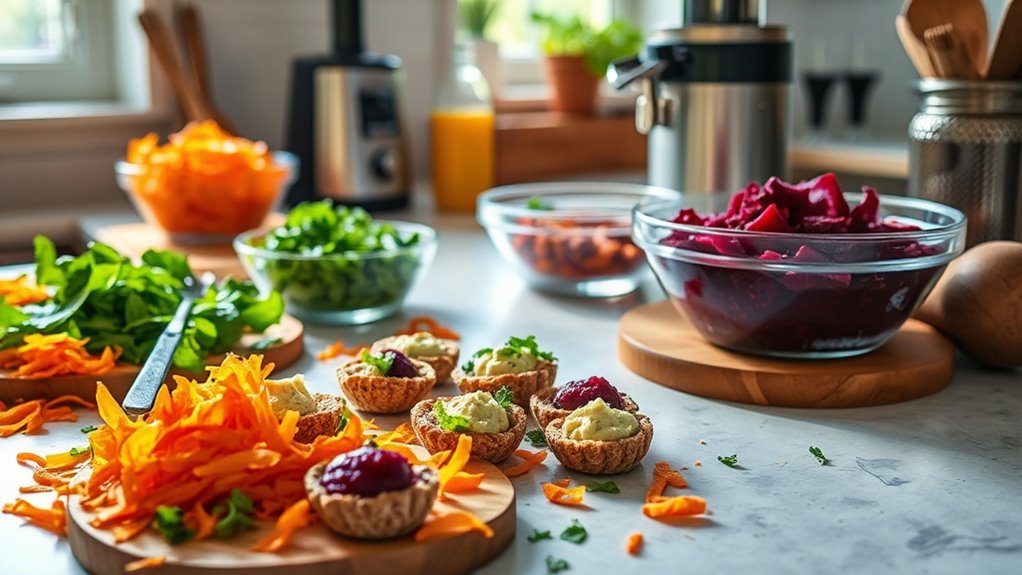
Making these snacks involves a simple process: dry the pulp until moisture is minimal, then blend it with other ingredients like oats, honey, or nut butter to form a dough. From there, you can shape it into bars or cookies and bake until golden. Proper handling of pulp ensures it stays fresh and maintains its flavor. Using sustainable packaging to store your snacks keeps your efforts eco-friendly, preventing unnecessary waste and supporting your commitment to environmental responsibility. Not only do you cut down on packaging waste by choosing biodegradable or reusable options, but you also inspire others to think creatively about food waste and sustainability.
Frequently Asked Questions
What Are the Best Fruits for Upcycling Juice Pulp Into Snacks?
You should choose fruits with versatile pulp flavoring, like berries, apples, or mangoes, for upcycling into snacks. These fruits offer rich flavors and moist pulp, making them ideal for creating tasty treats. When selecting ingredients, focus on fruit selection that enhances the texture and taste of your snacks. This way, your upcycled snacks will be flavorful and appealing, maximizing the potential of your juice pulp.
How Long Do Upcycled Snacks Typically Last?
Your upcycled snacks usually last about 3 to 7 days when stored properly. Keep their shelf life in mind by storing them in airtight containers in the refrigerator. For longer storage, consider freezing them, which can extend their freshness for up to a month. Always check for any signs of spoilage before eating, and follow storage tips like avoiding moisture and heat to maintain quality.
Are There Any Health Risks With Consuming Juice Pulp Snacks?
You won’t face health risks from juice pulp snacks unless you have allergies or sensitivities. The pulp texture can sometimes be tough or fibrous, but it’s generally safe and nutritious. Just watch out for allergy concerns, especially if you’re allergic to certain fruits or nuts included in the snack. Always check ingredients and consult your doctor if you’re unsure. Properly prepared, these snacks are a healthy, eco-friendly choice.
Can Upcycled Juice Pulp Be Used in Baking Recipes?
Yes, you can definitely use upcycled juice pulp in baking recipes. Its pulp texture adds moisture and fiber, making your baked goods more wholesome. Plus, it enhances flavor, giving your treats a subtle fruitiness. Just adjust your recipe to account for the added moisture, and you’ll enjoy delicious, eco-friendly snacks that maximize flavor enhancement while reducing waste. It’s a smart way to boost nutrition and creativity in your baking!
What Are Creative Flavor Combinations for Pulp-Based Snacks?
Think of your pulp as a blank canvas waiting for a splash of flavor. You can create delightful combinations like tropical pineapple with ginger spice infusions or berry with a hint of mint. Experiment with flavor pairing by adding cinnamon or cardamom to apple pulp, or chili and lime to citrus pulp. These creative twists make your snacks exciting, unique, and packed with flavor, turning ordinary ingredients into culinary masterpieces.
Conclusion
By choosing to upcycle juice pulp into snacks, you’re gently steering away from waste and embracing a more thoughtful way of enjoying your favorites. It’s like giving those leftover bits a second chance to shine, turning what might seem like mere scraps into delightful treats. So, next time you squeeze juice, remember—you’re not just making a snack; you’re subtly shaping a more sustainable and flavorful future, one bite at a time.