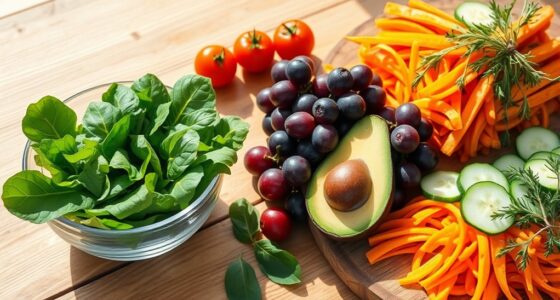
To shift safely to a raw diet, start by making gradual changes rather than overhauling your usual routine all at once. Incorporate small amounts of raw foods, balancing nutrients carefully and monitoring how your body responds. Increase raw elements slowly over several weeks, paying attention to any signs of discomfort, and consult professionals if needed. If you keep these steps in mind, you’ll create a smoother adaptation; exploring further tips can help you navigate this process confidently.
Key Takeaways
- Gradually increase raw food portions over several weeks to allow your digestive system to adapt effectively.
- Balance meals with adequate nutrients, including proteins, healthy fats, and carbs, to prevent deficiencies.
- Monitor your body’s responses and adjust the diet plan if you experience discomfort or digestive issues.
- Remove processed and cooked foods slowly, replacing them with safe, nutrient-rich raw alternatives.
- Consult a nutritionist or dietitian experienced in raw diets for personalized guidance and safety.

Switching to a raw diet can be a rewarding but challenging process, especially if you’re new to this way of eating. To make the shift smoother and safer, it’s essential to follow proper feeding guidelines and adopt a gradual changeover. Jumping straight into a fully raw diet can be overwhelming for your digestive system and might increase the risk of nutrient deficiencies or gastrointestinal discomfort. Instead, start by incorporating small, manageable changes into your current diet, such as adding raw fruits or vegetables to your meals. This approach allows your body to adjust slowly and helps you identify what works best for you.
Creating a plan based on feeding guidelines is vital. For example, make sure you’re still consuming enough calories and a variety of nutrients, including proteins, healthy fats, and carbohydrates. Focus on balancing your intake with a mix of raw nuts, seeds, fruits, vegetables, and lean meats if you eat animal products. Keep in mind that some foods, like certain grains or legumes, may require specific preparation, so know which items are safe to eat raw and which need cooking. Incorporate more raw foods gradually, increasing their proportion over several weeks, so your digestive system can adapt comfortably. This slow progression minimizes potential issues such as bloating, gas, or nutrient gaps.
Ensure proper nutrition by gradually increasing raw foods, balancing proteins, fats, and carbs, while knowing which foods need cooking.
During the transition, listen to your body’s signals. If you experience fatigue, digestive upset, or other symptoms, consider slowing down or adjusting your food choices. Consulting with a nutritionist or dietitian experienced in raw diets can provide tailored advice and help establish a safe plan. Remember, a gradual shift isn’t just about adding raw foods; it also involves reducing your intake of cooked and processed foods gradually. This phased approach helps your body become accustomed to the increased enzymatic activity and different digestion patterns that come with raw eating. Additionally, maintaining proper pet hair management practices can help keep your environment cleaner and reduce any potential health issues that may arise during dietary transitions.
Sticking to a consistent schedule can also help your body adapt more easily. Incorporate raw foods into your meals at regular intervals, and don’t rush the process. It’s better to take small, steady steps than to make drastic changes that could backfire. Over time, you’ll find your appetite and digestion stabilize as your body adjusts to the new diet. Patience is key here. Transitioning safely to a raw diet isn’t just about what you eat but how you adapt to the changes, making sure you’re nourishing yourself properly without overwhelming your system. By following these guidelines, you set yourself up for a healthier, more sustainable raw diet journey.
Frequently Asked Questions
How Long Does the Transition Process Typically Take?
The changeover timeline varies, but a gradual adjustment usually takes about 2 to 3 weeks. You should start by slowly replacing some cooked foods with raw options, monitoring your pet’s reactions and energy levels. This approach helps prevent digestive upset. Keep an eye on their stool and behavior, and adjust the pace if needed. Patience guarantees a smooth transition, leading to a healthier, happier diet for your pet.
Are There Specific Signs of a Successful Transition?
You’ll notice signs of acceptance, like your pet eagerly eating raw food and showing increased energy. Improved digestion is another key indicator, with fewer stomach issues and better stool quality. If your pet’s coat becomes shinier and they seem more active and vibrant, it’s a strong sign the changeover is working well. Keep monitoring these signs closely to guarantee a smooth, successful switch to a raw diet.
Can I Mix Raw and Cooked Foods During Transition?
Think of shifting as blending colors on a palette—you don’t want to mix too much at once. Yes, you can combine raw and cooked foods during this time, but do it gradually to maintain balanced nutrition and avoid digestive upset. Stick to consistent feeding schedules, and observe your pet’s reactions. This gentle approach ensures a smooth changeover, helping your pet adapt without stress or nutritional gaps.
What Should I Do if My Pet Refuses Raw Food?
If your pet refuses raw food, don’t force it. Instead, handle picky eaters gently by offering small portions at regular intervals and maintaining a consistent feeding schedule. You might try warming the raw food slightly or mixing it with a familiar treat to entice your pet. Be patient, and avoid sudden changes. Over time, positive reinforcement and routine help your pet accept raw food more readily.
Are There Any Supplements Needed During Transition?
Think of your pet’s diet as a finely tuned orchestra; every component matters. During shift, you might need nutritional supplements to fill gaps, especially if feeding guidelines aren’t fully met. Consult your vet to determine if supplements like omega-3s, vitamins, or minerals are necessary. They’ll help make certain your pet stays balanced and healthy, making the switch smoother and more harmonious for your furry friend.
Conclusion
Switching to a raw diet is like planting a seed—you’ll need patience and care to see it flourish. When I first started, I worried about my pet’s health, but gradual changes proved rewarding. Over time, I watched their energy soar, like a flower blooming after a long wait. Remember, steady steps and attentive observation turn this journey into a nourishing adventure. Trust the process, and your pet will thrive just like that beautiful bloom.