To prevent cracking, choose a sturdy tortilla press with even pressure, and line it with plastic for easy handling. Keep your dough moist and knead it thoroughly to develop flexibility. Divide and flatten the dough evenly, pressing lightly for a few seconds. Handle tortillas gently when transferring and keep them warm and covered to stay soft. If you keep these tips in mind, you’ll be closer to making tortillas that stay perfect every time.
Key Takeaways
- Choose a sturdy press with even pressure distribution for consistent tortilla thickness.
- Ensure dough has proper moisture and is thoroughly kneaded to prevent cracking.
- Line the press with plastic and press gently for a few seconds to avoid over-toughening.
- Rest dough before pressing and handle tortillas carefully to maintain flexibility.
- Store cooked tortillas in a damp cloth or covered container to keep them soft and pliable.
Choose the Best Tortilla Press for Easy, Consistent Results
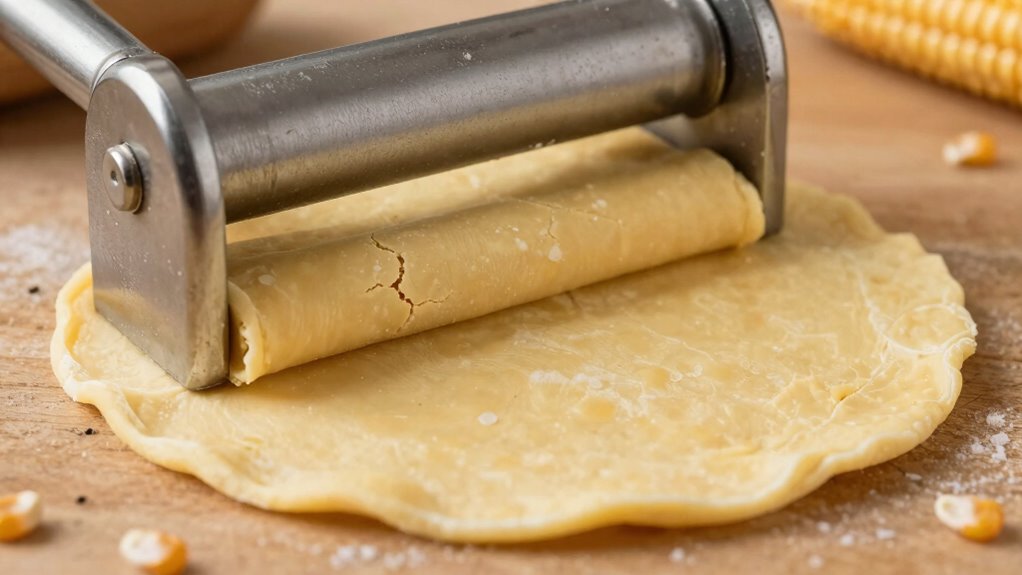
To achieve easy and consistent tortillas, selecting the right tortilla press is essential. The best press helps you apply even pressure, which is vital for uniform thickness and dough hydration. A sturdy, well-designed press allows you to control the pressure you exert, preventing cracks caused by uneven force. Consider a press with a smooth surface and comfortable handles to ensure you can apply consistent press pressure each time. Proper dough hydration makes a difference too; well-hydrated dough responds more predictably under pressure, reducing cracks. Avoid presses that are too flimsy or overly tight, as they can make it difficult to get even results. Understanding pressure distribution is key to mastering tortilla making. Incorporating techniques for even pressure application can further enhance your results. Additionally, using a quality tortilla press designed for consistent results can greatly improve your success rate. Paying attention to proper dough consistency can also help prevent cracking and ensure tender, evenly cooked tortillas. Using a consistent technique ensures that each tortilla is uniform in size and texture, further reducing the chances of cracks.
Prepare Your Dough So It Doesn’t Crack
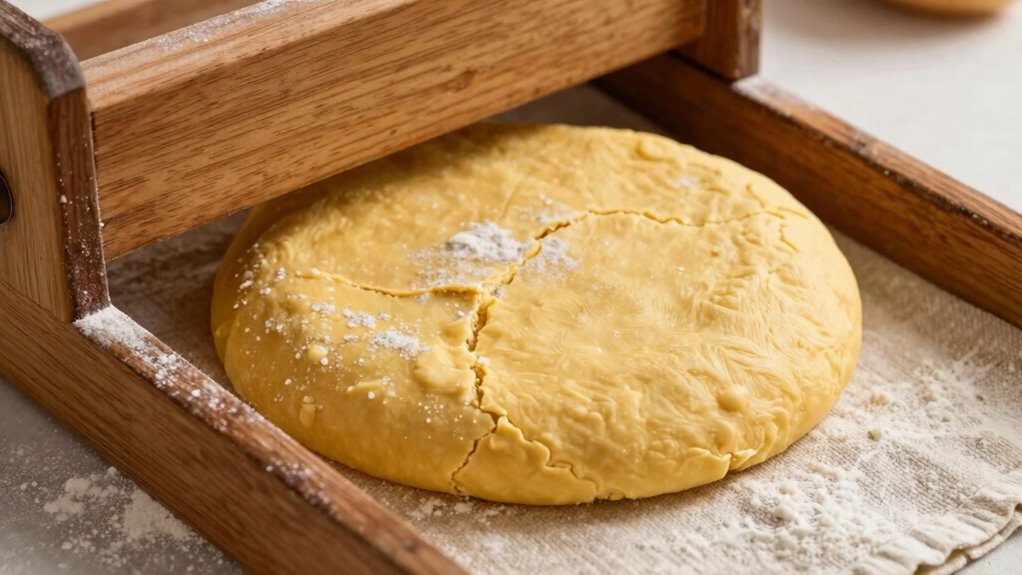
To prevent your tortillas from cracking, make sure your dough has the right moisture level. If it’s too dry, it’ll break when pressed; if it’s too wet, it’ll be sticky and difficult to work with. Kneading the dough properly helps distribute moisture evenly, resulting in smooth, pliable tortillas that hold together. Ensuring consistent dough moisture is key to achieving the perfect texture. Additionally, using professional services or consulting with experienced bakers can provide valuable tips for perfecting your tortilla technique. Proper piercing care and maintaining cleanliness during preparation can also help ensure your dough remains in optimal condition. Paying attention to vetted equipment like quality tortilla presses can also make a significant difference in your results.
Moisture Content Matters
Have you ever struggled with your tortilla cracking during pressing? The key is the moisture content in your dough. Maintaining the right moisture balance guarantees your tortillas stay flexible and easy to work with. Too little moisture makes the dough dry and brittle, leading to cracks, while too much causes sticking and tearing. Focus on proper dough hydration, adding water gradually and kneading until it’s smooth and pliable. If your dough feels dry or crumbly, sprinkle in a little water and knead again. Conversely, if it’s too sticky, add a small amount of masa harina or flour. Adjusting the moisture content helps you achieve tortillas that are resilient, tender, and perfect for pressing without cracking. Moisture truly makes the difference between a good and a great tortilla.
Knead Dough Properly
Proper kneading is essential for developing a cohesive, pliable dough that won’t crack during pressing. To improve dough elasticity, focus on kneading techniques that evenly distribute moisture and gluten. Use your hands to press and fold the dough repeatedly, working it until it feels smooth and slightly tacky but not sticky. Avoid overworking the dough, which can make it tough, or under-kneading, which results in poor elasticity. Consistent kneading helps develop the gluten structure needed for a flexible, resilient dough. If the dough feels resistant or cracks when pressed, it may need more kneading or moisture adjustment. Proper kneading ensures your tortillas will be easy to shape and less prone to cracking, giving you perfect, evenly textured tortillas every time.
Portion and Flatten Dough Correctly for Perfect Tortillas

Getting the perfect tortillas starts with dividing your dough into equal portions. Use a scale for accuracy, guaranteeing each ball is uniform for even cooking. Proper dough consistency is key—if it’s too sticky, it won’t flatten well; if it’s too dry, it’ll crack. Before flattening, let the dough rest briefly to relax gluten, which helps with shaping. When flattening, apply gentle, even pressure to avoid overworking the dough, which can cause cracking. Keep in mind that heat distribution during cooking affects how well the tortillas hold together; a hot, evenly heated griddle ensures consistent results. Ensuring your equipment is energy-efficient can also contribute to more sustainable cooking practices. Proper portioning and gentle flattening set the foundation for tortillas that are tender, evenly cooked, and crack-free. Additionally, using consistent heat throughout cooking helps prevent cracking and promotes even doneness. To further improve your tortillas, consider understanding dough relaxation, which can help achieve a smoother, more pliable dough for easier flattening. Recognizing the importance of temperature control during cooking can make a significant difference in the final texture.
Press With the Right Amount of Pressure and Timing
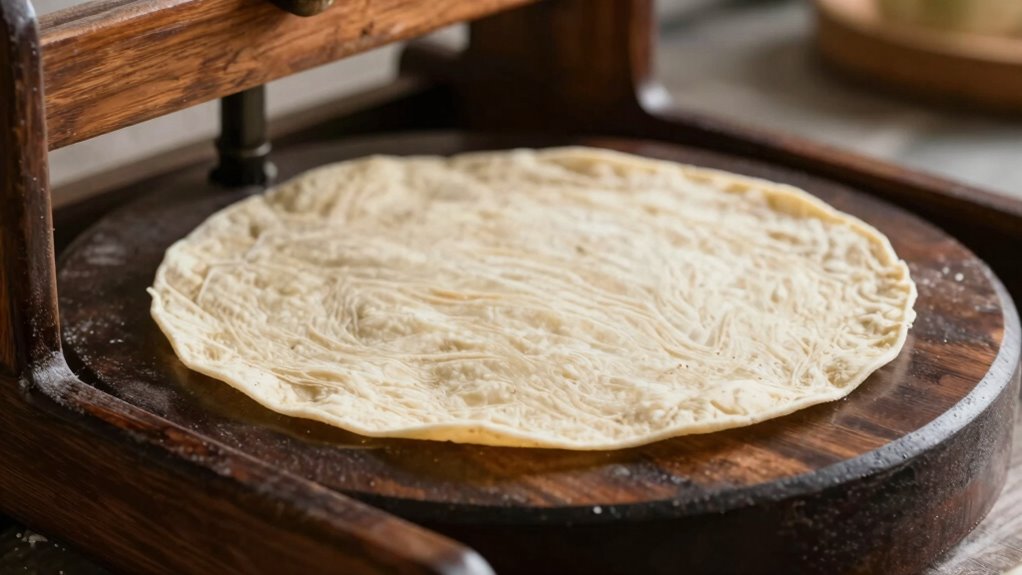
Applying the right amount of pressure and timing when pressing your tortillas guarantees they are evenly flattened without tearing or becoming too thin. Your pressing technique should be firm but gentle, ensuring consistent pressure throughout. Timing control is vital; pressing too long can make tortillas tough, while pressing too briefly can leave them uneven. To master this, focus on smooth, steady pressure and avoid rushing. Use these tips for best results:
- Apply even pressure across the entire press surface to prevent thin or thick spots
- Press for just a few seconds, then check the tortilla’s consistency
- Adjust pressure based on dough moisture and tortilla thickness preferences
- Incorporating precision and automation into your pressing process can help achieve consistently perfect tortillas every time.
- Consider using a quality tortilla press to ensure uniform pressure distribution for optimal results.
- Paying attention to pressing technique can significantly impact the final texture and appearance of your tortillas.
- Maintaining proper pressing pressure can help prevent cracking and ensure a uniform thickness.
- Using a consistent pressing method can also improve overall tortilla quality and ease of preparation.
Gently Handle and Transfer Tortillas to Keep Them Intact
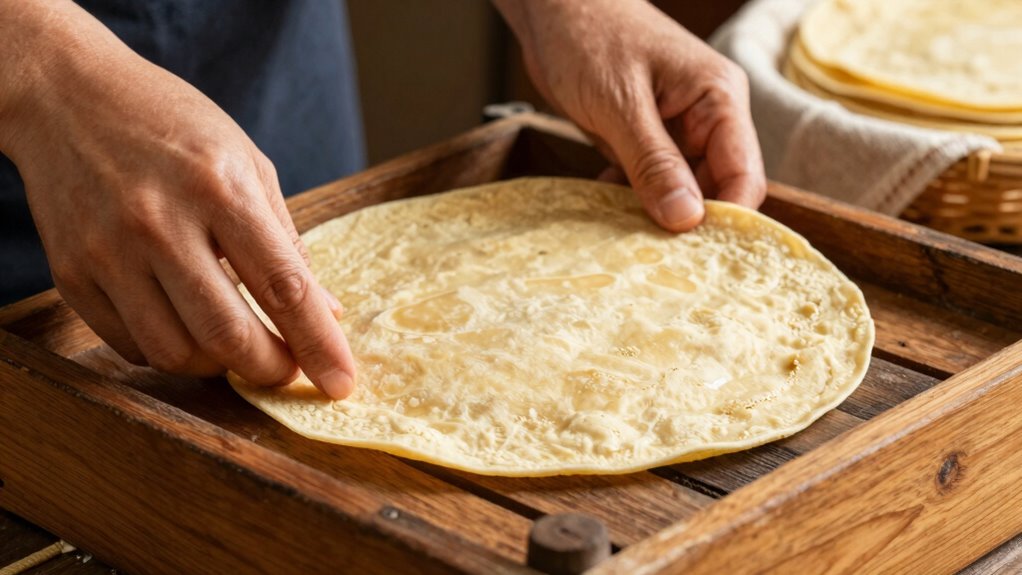
Handling and transferring tortillas with caution guarantees they stay intact and look appealing. When you’re moving them, avoid rushing or forcing the tortilla, which can cause cracking. Instead, gently lift the tortilla using your hands or a spatula, supporting its edges to prevent tearing. For tortilla folding, fold carefully along its natural lines, avoiding unnecessary pressure. When stacking tortillas, layer them gently, separating each with a clean cloth or parchment paper to prevent sticking or cracking. Use a flat, wide surface for transfer to maintain their shape. Remember, patience is key—smooth, slow movements protect the delicate surface. Proper handling ensures your tortillas remain soft, flexible, and perfect for serving. Understanding proper handling techniques helps preserve their quality during prep and serving.
Keep Tortillas Warm and Soft for Better Flexibility
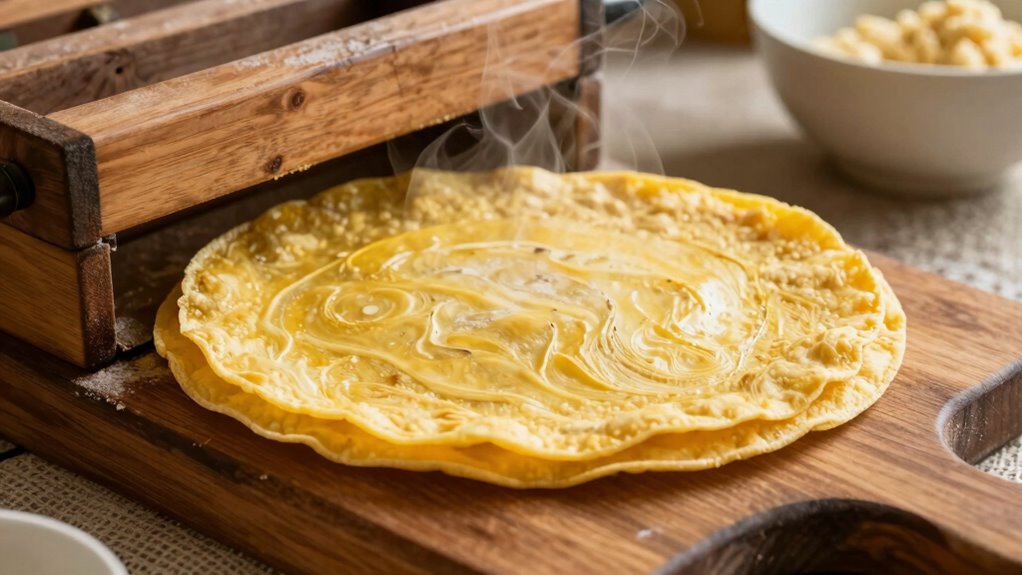
To keep your tortillas warm and soft, cover them with a clean towel or cloth immediately after cooking. Storing them in a covered container traps steam and prevents them from drying out. This simple step guarantees your tortillas stay flexible and easy to work with. Using a kitchen towel or cloth helps retain moisture and keeps the tortillas at an ideal temperature for handling. Additionally, maintaining a proper storage environment reduces the risk of cracking and preserves their pliability. Ensuring the right storage conditions can also prevent unwanted odors from affecting their flavor and texture. Being mindful of humidity levels in your storage area further helps maintain their softness and flexibility over time. Proper temperature regulation is equally important to prevent the tortillas from becoming too dry or soggy during storage.
Use a Towel or Cloth
Keeping tortillas warm and soft is essential for easy folding and filling, and wrapping them in a towel or cloth helps achieve this. Using a damp cloth or a clean kitchen towel traps heat and moisture, preventing the tortillas from drying out and cracking. This method keeps them pliable, making them easier to work with. To optimize this technique:
- Cover tortillas with a damp cloth immediately after cooking.
- Wrap a clean kitchen towel around the stack for insulation.
- Reheat wrapped tortillas briefly in the microwave if they cool down.
- Proper storage methods can also extend the softness and freshness of your tortillas.
These simple steps ensure your tortillas stay fresh, soft, and flexible, reducing the risk of cracking when filling or folding. Wrapping in a towel is a quick, effective way to maintain the perfect texture for your homemade tortillas.
Keep in a Covered Container
Ever wonder how to maintain that perfect softness in your tortillas? Keeping them in a covered container is key. Storage tips suggest using the right container type—preferably a plastic or ceramic container with a tight-fitting lid—to trap steam and retain moisture. Avoid open bowls or flimsy wraps, which let the tortillas dry out quickly. Once cooked, place your tortillas in the container immediately, layering them with a clean towel if needed to prevent sticking. Sealing them tightly keeps the heat in, helping tortillas stay warm and flexible for longer. This method prevents cracking and makes them easier to handle. Proper storage in a covered container guarantees your tortillas stay soft, fresh, and ready to serve without losing their delicate texture.
Troubleshoot Cracking and Tearing in Your Tortillas
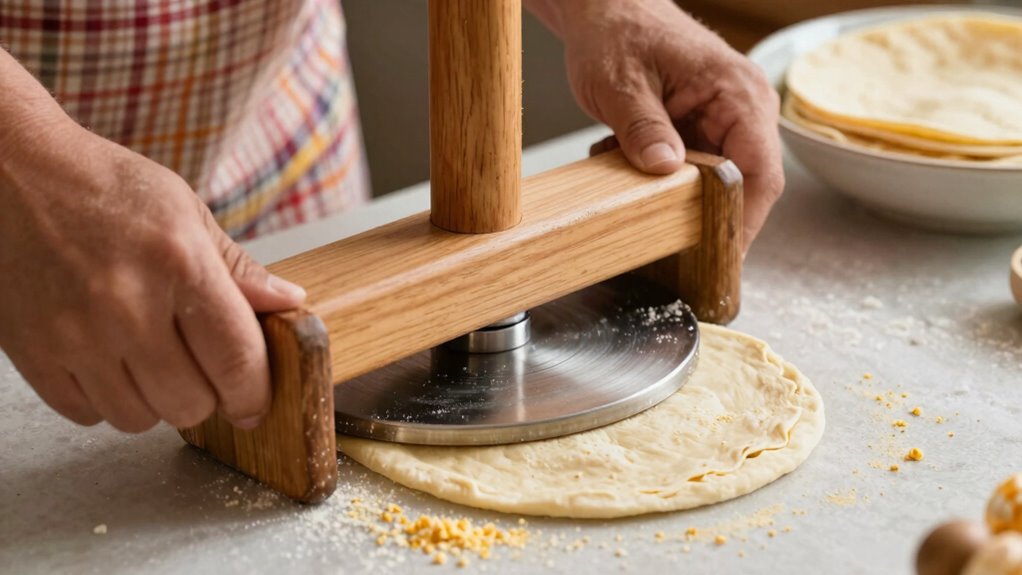
Cracking and tearing in your tortillas often stem from dough that’s too dry or unevenly rolled. To prevent this, ensure your dough has proper dough fermentation—allow it enough time to rest, which improves elasticity. Also, check your tortilla storage; keeping dough covered prevents it from drying out. If your tortillas crack, try lightly spritzing the dough with water before rolling to add moisture.
- Use a slightly wetter dough for better flexibility
- Rest the dough adequately to improve elasticity
- Store dough properly to maintain moisture and prevent dryness
Tips for Shaping Perfectly Round Tortillas Every Time
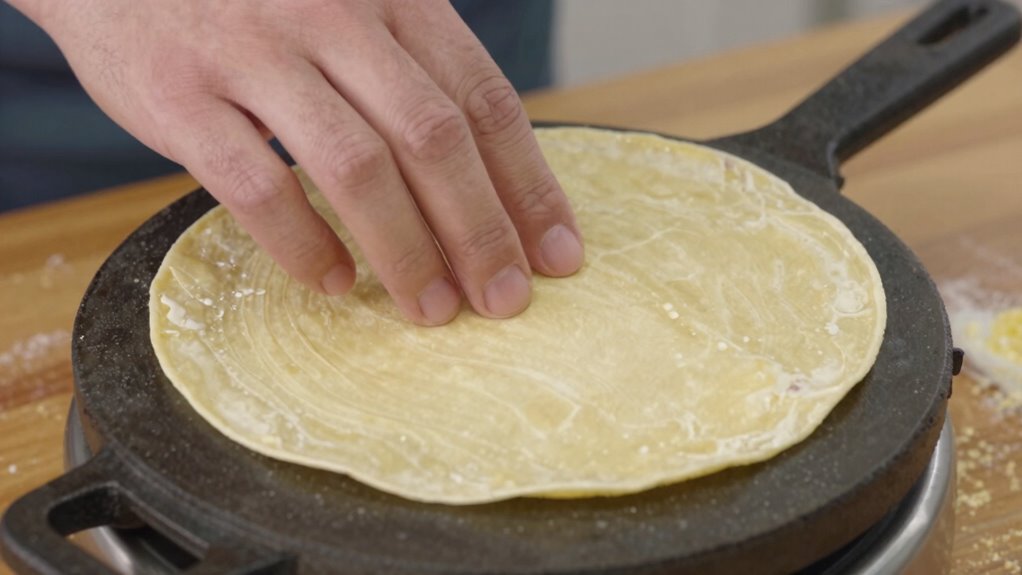
Achieving perfectly round tortillas starts with proper shaping techniques and a steady hand. To guarantee consistent results, use a tortilla press lined with plastic to prevent sticking, and apply even pressure. Focus on shaping techniques that promote uniform thickness, which helps maintain the tortilla’s round shape. Remember, filling variations influence how much dough you use; too much can distort the shape. The cultural significance of round tortillas reflects tradition and craftsmanship, so take pride in your technique. Enhance your shaping process with this simple table:
| Filling Variations | Shaping Tips |
|---|---|
| Less filling | Keep dough even and firm |
| Spicy or moist fillings | Use lighter pressure |
| Multiple fillings | Adjust dough thickness |
Mastering this process connects tradition with your kitchen.
Practice and Adjust Your Technique for Flawless Results
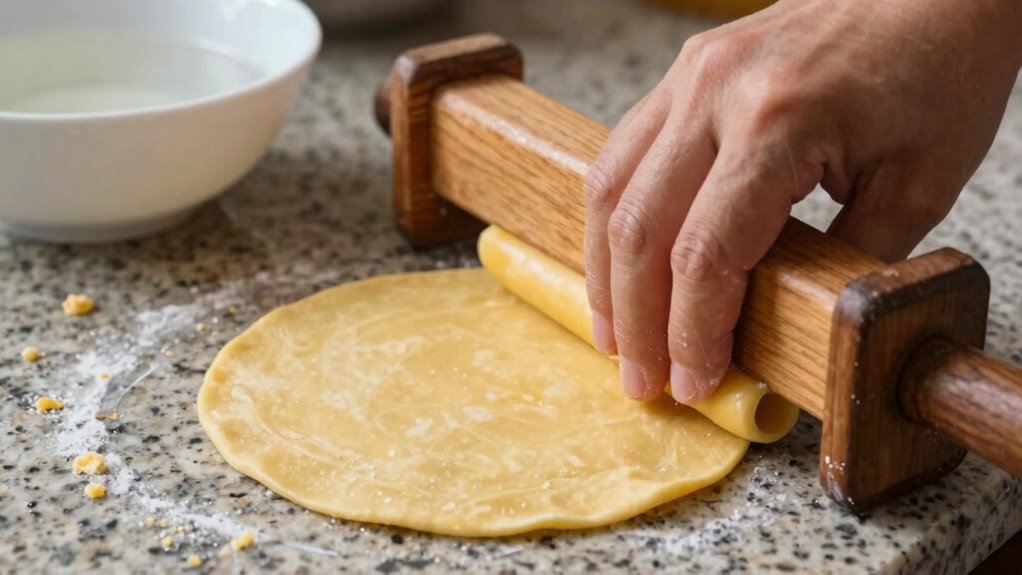
Practicing your shaping techniques and making adjustments along the way are key to producing flawless tortillas. Pay attention to dough hydration; if the dough is too dry, it cracks easily, so add a little water until it’s slightly tacky. When pressing, experiment with different pressures—too much can cause tearing, too little results in thick tortillas. Consistent pressing pressure helps achieve uniform thickness and shape. To improve, try these tips:
Practice shaping, adjust dough hydration, and find consistent pressing pressure for perfect tortillas.
- Adjust dough hydration for better flexibility
- Find the right pressing pressure for a smooth, even tortilla
- Practice shaping to maintain roundness and minimize cracks
Frequently Asked Questions
Can I Use Flour Instead of Corn for Tortillas?
Yes, you can use flour instead of corn for tortillas. Flour alternatives like wheat or gluten-free options such as rice or almond flour work well, especially if you’re avoiding gluten. Keep in mind, the texture and flavor will change slightly, but with proper kneading and pressing, you’ll get soft, pliable tortillas. Experiment with different flour types to find the best gluten-free options that suit your taste and dietary needs.
How Do Humidity Levels Affect Tortilla Cracking?
Humidity impact is significant when it comes to avoiding tortilla cracking. If the air is too dry, the moisture in your dough decreases, making tortillas more prone to cracking. To prevent this, you should focus on moisture control by covering dough or tortillas with a damp cloth and storing them properly. Maintaining consistent humidity levels helps keep your tortillas flexible and prevents cracks, ensuring a perfect, soft texture every time.
What Type of Corn Flour Is Best for Soft Tortillas?
You might think any corn flour works, but for soft tortillas, go for finely ground, fresh masa harina. It’s the secret to a tender, pliable tortilla with the perfect texture. Freshness matters more than you’d expect—stale flour turns your dream into a crackling nightmare. Skip the coarse or old stuff, and you’ll enjoy beautifully soft tortillas that don’t crack, no matter how much you fold or roll.
How Long Should Tortillas Be Cooked to Prevent Cracking?
You should cook your tortillas for about 30 to 45 seconds on each side to prevent cracking. Make sure your dough has the right consistency—neither too dry nor too sticky—and let it rest for at least 15-20 minutes before pressing. Resting helps relax the gluten, making the dough more pliable. Keep an eye on the cooking time, and you’ll end up with soft, crack-free tortillas every time.
Are There Specific Cleaning Tips for Maintaining the Press?
Think of your tortilla press as a trusty partner that needs regular care. To keep it in top shape, follow a simple cleaning routine: wipe it with a damp cloth after each use, avoiding harsh cleaners. For maintenance tips, periodically oil the hinges and check for any debris lodged in the pressing surfaces. This way, your press stays smooth and crack-free, ready to make perfect tortillas every time.
Conclusion
Don’t let cracking hold you back from perfect tortillas. With the right press, proper dough prep, and gentle handling, you’ll create soft, flexible corn tortillas every time. It might seem tricky at first, but practice makes perfect—so keep experimenting and adjusting your technique. Remember, even seasoned cooks face setbacks; patience and persistence are key. Soon, you’ll enjoy homemade tortillas that are as delicious and beautiful as the ones from your favorite taqueria.