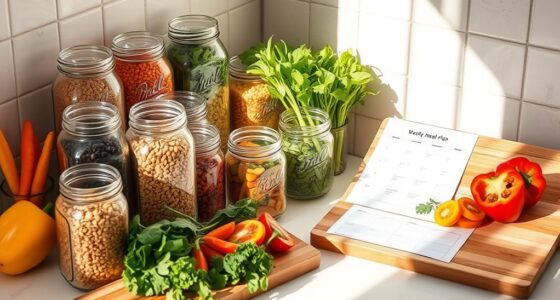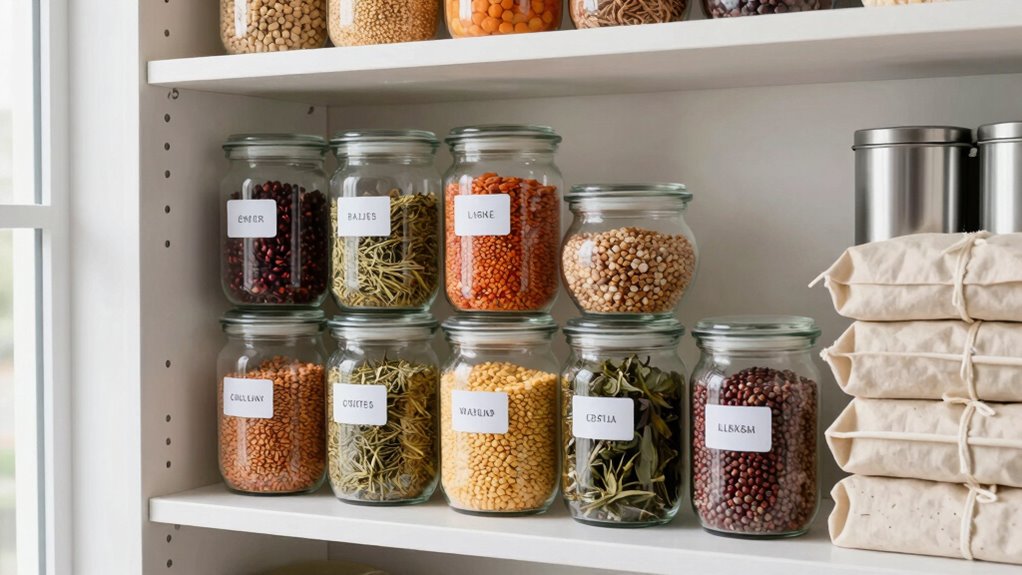

To prevent expired food in your pantry, use clear, airtight containers and label everything for easy identification. Plan your grocery trips based on current inventory, and store older items in front to use first. Regularly check for expired supplies and discard them promptly. By organizing your pantry, practicing routine maintenance, and shopping thoughtfully, you reduce waste and save money. Keep going, and you’ll discover simple yet effective ways to keep your pantry low-waste and eco-friendly.

Get kitchen staples and gadgets delivered free — and shop member deals
- Fast, free delivery on millions of items
- Access to Prime Big Deal Days deals on October 6–7
- Prime Video, Amazon Music and more included
Key Takeaways
- Use clear labels and airtight containers to monitor expiration dates and maintain freshness.
- Organize pantry items with older products at the front to ensure timely usage.
- Regularly check for expired or spoiled items and discard them promptly.
- Plan meals and shop based on current inventory to prevent overbuying and spoilage.
- Implement routine pantry maintenance to sustain an organized, low-waste system.
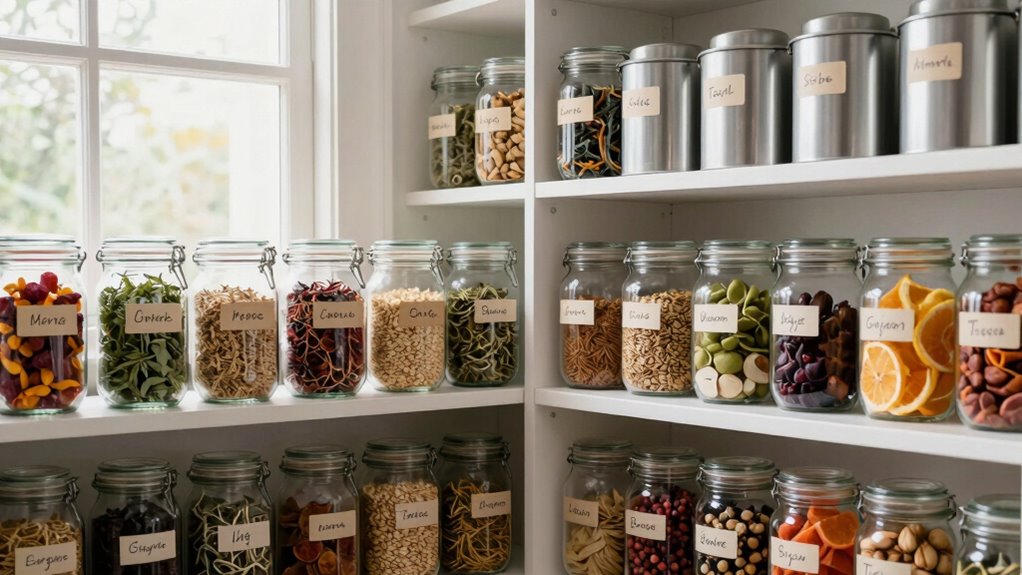
Creating a low-waste pantry is a simple yet impactful way to reduce your environmental footprint. When you focus on sustainable storage, you not only extend the life of your food but also cut down on packaging waste and avoid the need for excess shopping. Using glass jars, reusable containers, and airtight bins helps keep your pantry organized and prevents food from spoiling prematurely. Label everything clearly with permanent markers or labels, so you always know what’s inside and when you bought or stored it. This way, you’re less likely to forget about items, which reduces the chances of them going bad and becoming waste.
Organize with sustainable containers and clear labels to reduce waste and keep your pantry fresh longer.
To prevent expired food, plan your grocery shopping carefully. Make a list based on what you already have and what you truly need, avoiding impulse buys that might sit unused. When you bring new groceries home, store them in designated places, and organize your pantry so that older items are at the front, encouraging you to use them first. This system minimizes food waste and helps you keep track of expiration dates. Regularly check your pantry for expired or spoiled items, and make a habit of discarding or composting them promptly. Practicing food waste reduction is essential for sustainable living. Incorporating a meal planning routine can also help you buy only what you need, further decreasing the chance of food spoilage. Additionally, being mindful of proper storage techniques can significantly extend the freshness of your pantry items and reduce waste. Developing a consistent inventory system can help you monitor your supplies more effectively and prevent overbuying.
airtight food storage containers
As an affiliate, we earn on qualifying purchases.
As an affiliate, we earn on qualifying purchases.
Frequently Asked Questions
How Do I Start a Low-Waste Pantry With Limited Space?
Start your low-waste pantry by focusing on meal planning to avoid overbuying and waste. Use small, organized containers to maximize limited space, and keep track of expiration dates. Incorporate community sharing by exchanging surplus items with neighbors or friends, reducing clutter and waste. This approach keeps your pantry efficient, sustainable, and clutter-free, even in small spaces, while fostering a sense of community and reducing food waste.
What Are the Best Storage Containers for Preserving Food?
Think of your pantry like Pandora’s box—only better, because you control what’s inside. Reusable jars and airtight containers are your best bets, sealing in freshness and preventing spoilage. Choose clear, stackable options for easy organization and monitor expiration dates. These containers keep your food fresh longer, reduce waste, and give your pantry a neat, efficient look—turning your space into a treasure chest of sustainable storage.
How Can I Track Expiration Dates Effectively?
To track expiration dates effectively, use clear expiration labels on all your storage containers. Regularly review your inventory management system, updating labels as you use items and restock. Set reminders or create a calendar to check for nearing expiration dates weekly. This proactive approach helps you prevent waste, stay organized, and guarantee food stays fresh longer. Consistent labeling and routine checks are key to maintaining an efficient, low-waste pantry.
Are There Specific Foods That Are Easier to Store Long-Term?
Think of some foods as the marathon runners of your pantry—they’re built for endurance. Dried beans, rice, canned goods, and pasta have impressive shelf lives, making them easier to store long-term. Their food durability is high, and they resist spoilage over time. With proper storage, these items stay fresh longer, reducing waste. Focus on these durable options to keep your pantry stocked and prevent expiration surprises.
How Do I Dispose of Expired Food Sustainably?
To dispose of expired food sustainably, consider donating non-perishable items to local food banks, helping reduce waste and support others. For perishable items, explore composting methods if suitable, turning organic waste into valuable soil. Avoid throwing food in the trash, which contributes to landfill waste. By combining food donation and composting, you minimize environmental impact while responsibly managing expired food.
Conclusion
By adopting the low-waste pantry system, you can cut down food waste markedly—did you know that nearly 40% of food in the U.S. goes uneaten? Imagine saving enough food to fill an entire football field each year. With mindful storage and rotation, you prevent expired items from piling up, saving money and helping the planet. Start small today, and watch your waste shrink while your pantry stays fresher longer.
NFL season / tailgating Picks
team gear
As an affiliate, we earn on qualifying purchases.