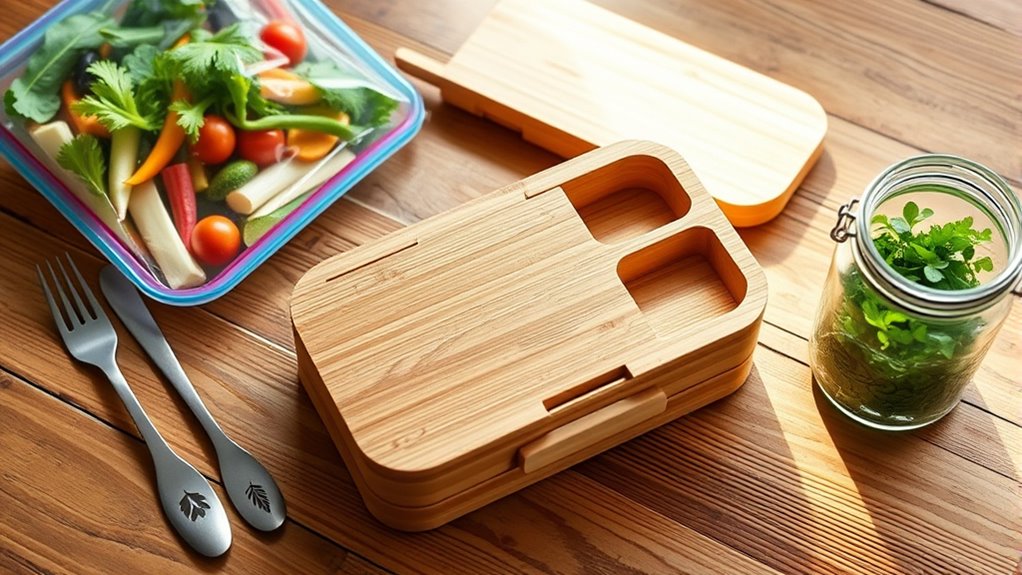

Switching to sustainable meal prep tools and utensils means choosing reusable options like glass containers, silicone bags, and stainless steel tins to cut down on waste. Opt for beeswax wraps instead of plastic wrap, and select bamboo or stainless steel utensils for durability and eco-friendliness. These choices help reduce pollution and landfill contributions, making your routine more environmentally responsible. If you want to explore more eco-friendly solutions, there’s plenty to discover below.
Key Takeaways
- Use reusable containers like glass, silicone bags, or stainless steel tins for storing meals and ingredients.
- Opt for eco-friendly packaging such as beeswax wraps or biodegradable materials to reduce plastic waste.
- Choose utensils made from sustainable materials like bamboo or stainless steel for long-term use.
- Incorporate reusable, washable storage options to minimize reliance on disposable plastic bags and wraps.
- Support eco-conscious brands and products that prioritize recyclable, compostable, or biodegradable packaging solutions.

As more people prioritize eco-friendly choices, shifting to sustainable meal prep tools and utensils has become a practical way to reduce waste and lessen your environmental impact. One of the most effective steps you can take is investing in reusable storage options. Instead of single-use plastic bags or containers that end up in landfills, reusable storage solutions like glass containers, silicone bags, or stainless steel tins allow you to store leftovers, prepped ingredients, or snacks without creating waste. These options are durable, easy to clean, and can be used repeatedly, making them a smart choice for both your wallet and the environment. Plus, they help eliminate the need for disposable packaging, which often contributes to pollution and waste accumulation. When you opt for reusable storage, you also reduce your reliance on eco friendly packaging that’s designed for the landfill. Instead of throwing away countless plastic wraps, foil, or single-use pouches, you can simply wash and reuse your containers or bags. This shift not only minimizes waste but also encourages more mindful consumption habits.
Moving away from disposable packaging also involves choosing products made from sustainable or biodegradable materials. For example, beeswax wraps are a fantastic alternative to plastic wrap, allowing you to cover bowls or wrap sandwiches without contributing to plastic pollution. These wraps are reusable, breathable, and environmentally friendly, helping you maintain freshness while reducing plastic waste. When shopping for meal prep supplies, look for brands that prioritize eco friendly packaging—such as compostable or recyclable materials—and avoid overly packaged products. This conscious choice ensures that your efforts towards sustainability extend beyond just the utensils and into the entire packaging lifecycle.
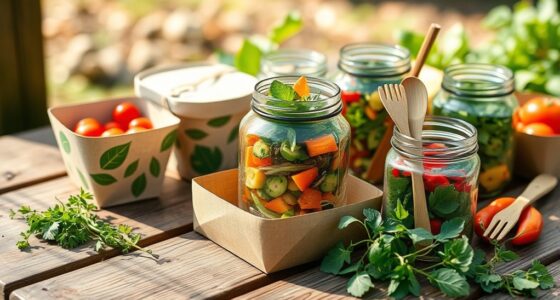
Using eco-friendly utensils is another essential aspect of sustainable meal prep. Opt for utensils made from bamboo, stainless steel, or other renewable resources rather than plastic. These materials are durable, often dishwasher safe, and can last for years, cutting down on the need for frequent replacements. Bamboo utensils, in particular, are lightweight, naturally antibacterial, and biodegradable, making them an excellent eco-conscious choice. Incorporating these into your daily routine reduces plastic waste and helps support sustainable harvesting practices.
Frequently Asked Questions
Are Sustainable Utensils Safe for Microwave Use?
Yes, sustainable utensils can be safe for microwave use if they’re designed for microwave safety and heat resistance. Always check the manufacturer’s labels or instructions to make certain they won’t melt or release harmful chemicals when heated. Look for utensils made from materials like silicone or certain plastics labeled microwave-safe. If you’re unsure, avoid microwaving them to prevent damage or potential health risks. Properly selected utensils ensure your meals stay safe and eco-friendly.
How Long Do Eco-Friendly Meal Prep Containers Last?
Eco-friendly meal prep containers typically last between 1 to 3 years, depending on usage and care. Plastic degradation over time can weaken the container, reducing its lifespan. To maximize their durability, avoid exposing them to high heat or harsh chemicals. With proper handling, you can enjoy these containers longer, making them a sustainable choice that balances eco-friendliness with practicality.
Can Sustainable Tools Be Dishwasher Safe?
Think of sustainable tools like your trusty Excalibur—they’re built to last. Most biodegradable plastics and metal utensils are dishwasher safe, making cleanup a breeze. Just check the manufacturer’s instructions, as some biodegradable plastics might need gentle cycles to prevent damage. Using durable, dishwasher-safe utensils not only cuts waste but keeps your eco-friendly routine smooth—like a well-choreographed dance with nature.
What Materials Are Best for Reusable Meal Prep Utensils?
You should choose reusable meal prep utensils made from stainless steel or biodegradable plastics. Stainless steel offers durability, making it perfect for everyday use and easy to clean. Biodegradable plastics are eco-friendly and break down naturally, reducing waste. Both materials support sustainability goals; stainless steel is long-lasting, while biodegradable plastics help lessen environmental impact. So, pick utensils based on your preferences for durability and eco-friendliness.
Are Biodegradable Utensils Suitable for Hot Foods?
Biodegradable utensils can be suitable for hot foods if they’re made from heat-resistant materials. Studies show that around 60% of consumers prefer eco-friendly options. You should check if your biodegradable utensils specify hot food compatibility, as some may deform or weaken under high temperatures. Look for utensils made from cornstarch, bamboo, or other heat-tolerant natural materials for safe use with hot foods, ensuring both sustainability and durability.
Conclusion
By choosing sustainable tools and utensils, you reduce waste, protect the environment, and create healthier habits. By making eco-friendly swaps, you save resources, support ethical brands, and inspire others to do the same. By committing to sustainability, you transform your meal prep routine into a conscious, impactful act. Embrace eco-friendly choices, prioritize durability, and enjoy the benefits of a greener lifestyle—because every small step counts towards a more sustainable future.

Ilana has been a vegan for over 10 years. She originally made the switch for health reasons, but soon found herself becoming more and more passionate about the ethical and environmental implications of a vegan lifestyle. Ilana is the author of The Graceful Kitchen, a blog all about veganism. She loves to cook up delicious and nutritious vegan meals, and share her recipes with others who are interested in leading a cruelty-free life. Ilana is also a strong advocate for using whole foods as the foundation of a healthy diet, and believes that going vegan is one of the best ways to achieve this.