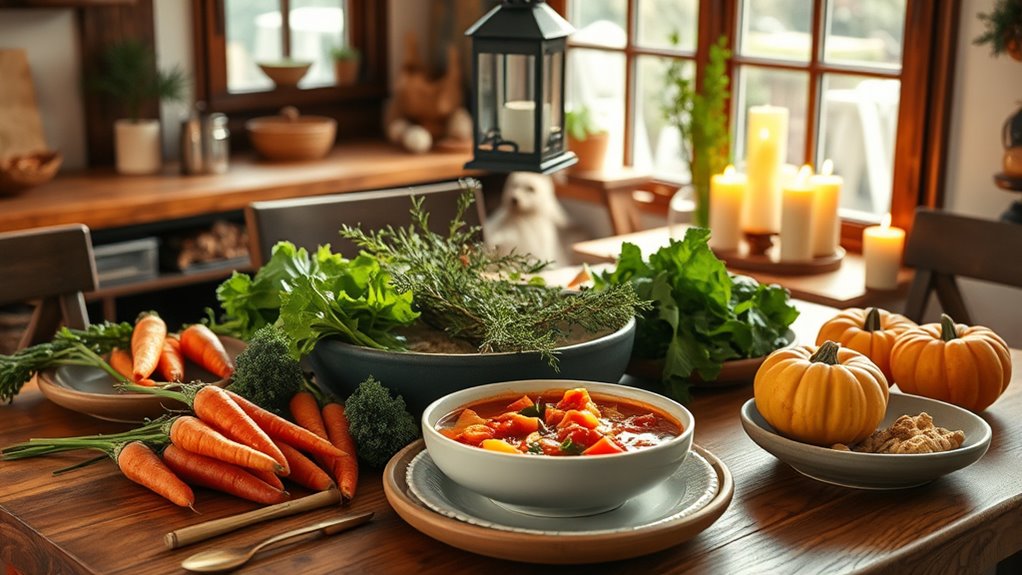

To make your holiday cooking and entertaining more sustainable, focus on plant-based menus that highlight vegetables, grains, and legumes for vibrant flavor and eco-friendliness. Source local, seasonal ingredients to reduce transportation emissions and support regional farmers. Plan carefully to minimize waste by using all parts of ingredients and repurposing leftovers. Choose eco-friendly packaging and dishware, and serve meals in ways that limit excess food. Keep these tips in mind to celebrate joyfully while caring for the planet.
Key Takeaways
- Embrace plant-based menus with seasonal, locally sourced ingredients to reduce environmental impact and enhance flavor.
- Plan meals carefully, use all parts of ingredients, and minimize waste through composting and repurposing leftovers.
- Choose eco-friendly packaging, reusable dishware, and utensils to reduce waste during shopping and serving.
- Support local farmers and seasonal produce to lower transportation emissions and promote regional sustainability.
- Serve appropriately portioned dishes to prevent excess waste and encourage mindful, eco-conscious holiday entertaining.

The holiday season is the perfect opportunity to enjoy festive meals while making environmentally conscious choices. This year, consider embracing plant-based menus that highlight vegetables, grains, legumes, and plant-based proteins. Not only do these dishes reduce your carbon footprint compared to traditional meat-heavy fare, but they also bring vibrant flavors and textures to your table. You can prepare hearty mushroom gravies, roasted vegetable platters, or lentil loaves that satisfy every guest’s palate. Incorporating plant-based options guarantees you’re offering delicious, sustainable meals that align with eco-friendly values.
Another key aspect to making your holiday cooking more sustainable is local ingredient sourcing. When you buy produce, dairy, and other staples from nearby farms or markets, you minimize the environmental costs associated with transporting food over long distances. Local sourcing also supports regional farmers and fosters community resilience. Before shopping, research local farmers’ markets or farm shops in your area, and plan your menu around what’s in season. Seasonal ingredients tend to be fresher, tastier, and more affordable, making your dishes not only more sustainable but also more flavorful. For instance, in winter, root vegetables, winter greens, and squash are plentiful and perfect for hearty holiday meals.
Supporting local farms and seasonal produce enhances sustainability and flavor in holiday meals.
To further reduce waste, plan your shopping and cooking carefully. Make a detailed grocery list based on your menu to avoid impulse buys and leftover excess. When preparing dishes, use every part of your ingredients—roasted vegetable scraps can be composted or used to make vegetable stock. Opt for reusable or biodegradable dishware and utensils to cut down on single-use plastics. If you have leftovers, get creative by transforming them into new meals or donating excess food to local shelters.
Also, consider the packaging of your ingredients. Choose unpackaged or minimally packaged products whenever possible. Bringing your own bags and containers to the market helps limit waste and supports sustainable shopping practices. When it’s time to serve, focus on presentation and portion control to avoid unnecessary leftovers and food waste. Remember, a sustainable holiday meal isn’t just about what’s on the plate but also how you source, prepare, and serve it.
Frequently Asked Questions
How Can I Reduce Food Waste During Holiday Meals?
To reduce food waste during holiday meals, focus on portion control by serving smaller amounts to avoid leftovers. Implement leftover management by planning how to use any leftovers creatively in future meals or donating excess to those in need. You can also store leftovers properly and get creative with recipes to prevent waste. This approach helps you enjoy your festivities while minimizing environmental impact and saving money.
What Eco-Friendly Tableware Options Are Best for Parties?
You should opt for reusable dishware or biodegradable plates for your parties. Reusable dishware, like ceramic or glass, reduces waste and adds a touch of elegance. Biodegradable plates, made from materials like bamboo or palm leaves, are perfect for eco-friendly celebrations and can be composted afterward. Both options help you minimize your environmental impact while keeping your table stylish and sustainable.
How to Choose Sustainable Ingredients for Holiday Recipes?
Imagine your holiday table as a garden, thriving with choice. To choose sustainable ingredients, prioritize local sourcing—visit farmers’ markets or join community-supported agriculture. Opt for plant-based options, like seasonal vegetables and legumes, which reduce your carbon footprint. By doing so, you support local farmers and minimize environmental impact. Your thoughtful selections can make your holiday feast both delicious and eco-friendly, creating a meaningful celebration rooted in sustainability.
Are Energy-Efficient Appliances Important for Holiday Cooking?
Yes, energy-efficient appliances are important for holiday cooking. They help you save energy and reduce your carbon footprint. Using energy-saving tools, like smart ovens or induction stoves, boosts appliance efficiency and cuts down on electricity use. You’ll enjoy your holiday meals while being eco-friendly. Plus, efficient appliances often cook faster and more evenly, making your cooking experience smoother and more sustainable.
How Can I Compost Holiday Scraps Effectively?
Don’t let your holiday scraps go to waste—turn them into gold with proper composting! Start by setting up a composting bin in your yard or use a kitchen compost bin for convenience. Regularly add kitchen scraps like vegetable peels and coffee grounds, and turn the pile to aerate it. Keep it moist, avoid meat or dairy, and you’ll have rich compost in no time, nourishing your garden and reducing waste.
Conclusion
As you embrace sustainable holiday cooking and entertaining, you’re gently guiding your celebrations toward a more mindful and eco-friendly path. Every small choice, like using seasonal ingredients or reducing waste, softly contributes to a healthier planet. Remember, your efforts, no matter how subtle, make a meaningful difference. So, enjoy the season’s warmth and joy, knowing that your thoughtful actions help nurture both your loved ones and the world around you.