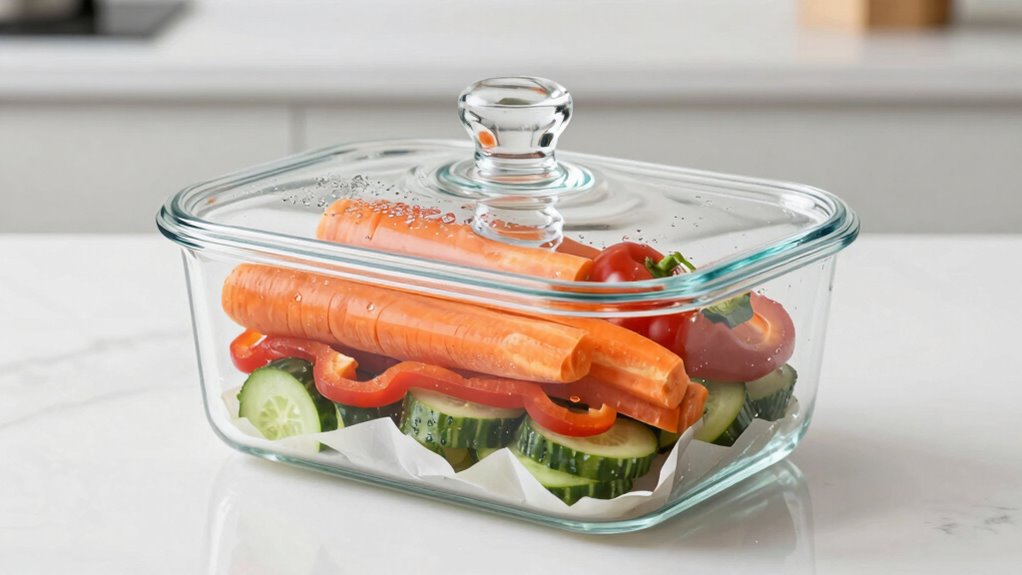

To keep cut veggies crisp all week, wash and thoroughly dry them before storing. Use airtight containers or resealable bags with paper towels inside to absorb excess moisture. Keep them in the crisper drawer of your fridge, maintaining a temperature of 35-40°F. Regularly check for spoilage, and remove any wilted pieces immediately. For extra freshness, consider quick blanching or replacing moisture-absorbing materials—continue exploring for more tips to extend their crunch.
Key Takeaways
- Dry vegetables thoroughly after washing to prevent moisture buildup that causes spoilage and wilting.
- Store in airtight, breathable containers with paper towels to absorb excess moisture and maintain crispness.
- Keep cut veggies in the crisper drawer at 35-40°F to preserve freshness and optimal humidity.
- Use shallow, wide containers for easy access and gentle handling, reducing damage and maintaining texture.
- Regularly check for spoilage or wilting, removing compromised pieces promptly and refreshing storage as needed.
Why Keeping Cut Veggies Fresh Is So Important

Keeping cut veggies fresh is essential because it preserves their texture, flavor, and nutritional value. When you store vegetables properly, you prevent nutrient loss, ensuring you get the maximum health benefits from each bite. Freshly cut veggies tend to lose flavor and crispness quickly if left exposed to air or improper moisture levels. Proper storage techniques help lock in flavor and prevent spoilage, saving you money and reducing waste. When your vegetables stay crisp and fresh, you’re more likely to eat them regularly, supporting a healthier diet. Additionally, using the right storage containers can help maintain optimal moisture levels and air circulation, further extending their freshness. temperature control is also key to slowing down spoilage and preserving quality over the week. In short, keeping your cut veggies fresh is key to enjoying their full flavor, texture, and nutritional benefits throughout the week. Incorporating food preservation methods like vacuum sealing or using breathable wraps can also significantly enhance freshness and shelf life.
Moreover, selecting storage solutions that minimize exposure to oxygen can further prolong freshness and prevent spoilage.
How to Prepare and Pack Your Veggies for Maximum Crispness

To guarantee your veggies stay crisp and fresh, start by washing them thoroughly to remove dirt and bacteria. Use fresh cut techniques that minimize damage, such as cutting along natural lines and avoiding crushing or tearing. Properly prepared vegetables resist moisture loss and prevent spoilage. Moisture control is essential—pat veggies dry with a clean towel or use a salad spinner to remove excess water, which can cause sogginess. For leafy greens, remove excess moisture and layer them with paper towels before packing. For other vegetables, pack them loosely to allow airflow and prevent crushing. Incorporate a layer of paper towels or a clean cloth to absorb any residual moisture during storage. These steps will help keep your veggies crisp and fresh throughout the week.
Choosing the Best Containers for Fresh Veggies
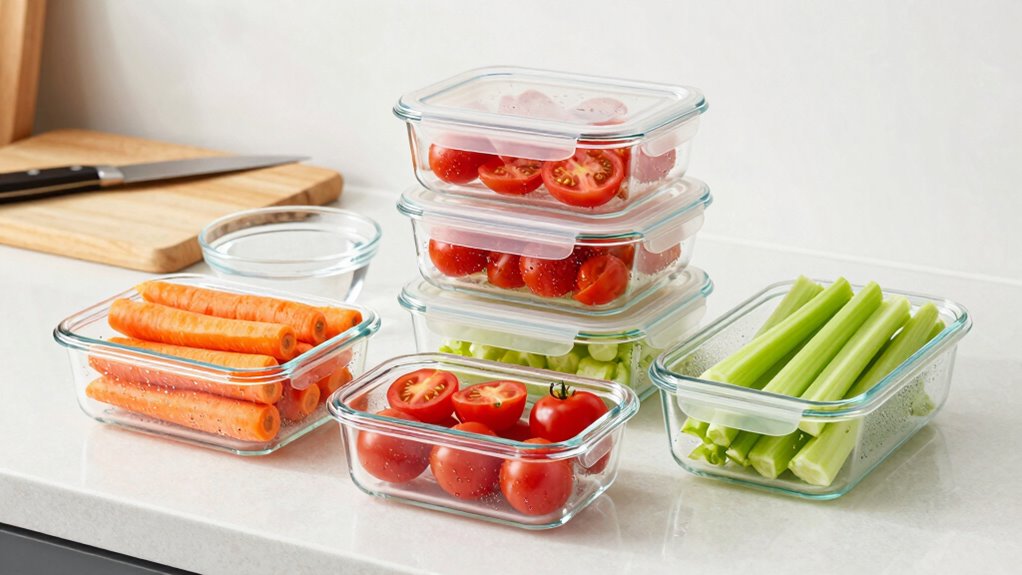
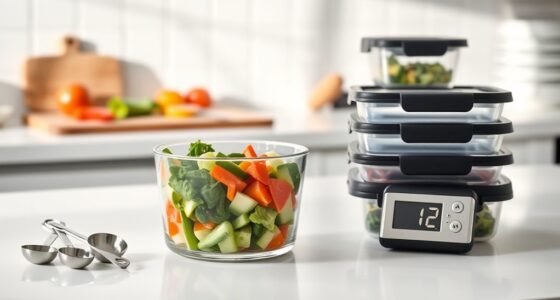
The containers you choose can make a big difference in keeping your veggies fresh and crisp. Material matters most—opt for breathable options like glass or BPA-free plastic to prevent moisture buildup. Also, consider the size and shape to make certain of proper airflow and easy stacking in your fridge. Selecting containers with adequate ventilation can further enhance freshness by reducing excess humidity. Additionally, choosing containers designed with ventilation features can help regulate humidity levels more effectively, ensuring your vegetables stay crisp longer. Incorporating European cloud innovation principles, such as smart, breathable storage solutions, can further optimize freshness and minimize spoilage. Embracing advanced storage technology can also provide real-time humidity monitoring, giving you even better control over your produce’s freshness.
Material Matters Most
Choosing the right container is essential for maintaining the crispness of your cut veggies all week. The material you select impacts freshness and prevents spoilage. Plastic containers with ventilation help regulate moisture, while glass keeps veggies crisp longer. Avoid using reusable bags or paper towels as primary storage, since they don’t offer beneficial moisture control. Instead, choose containers made from food-grade plastic or glass, which are non-porous and easy to clean. These materials prevent odors and bacteria buildup, helping your veggies stay fresh. Using the right containers also reduces waste and keeps produce safe. Always wash containers thoroughly before use, and consider layering with paper towels inside to absorb excess moisture. Proper material selection is your best defense against sogginess and spoilage. Incorporating moisture regulation techniques can further enhance freshness and extend storage life. Additionally, selecting containers with airtight seals can help preserve the texture and flavor of your vegetables for longer periods. To maximize freshness, consider using containers with ventilation features that allow for proper airflow and moisture control. Employing containers with temperature regulation can also help slow down spoilage processes.
Size and Shape
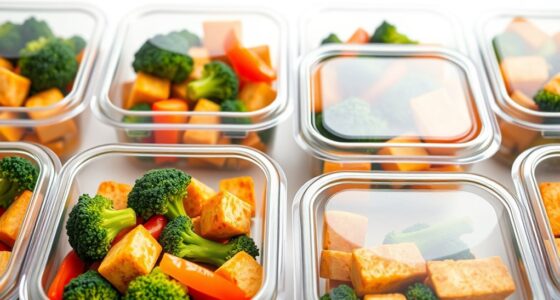
Selecting the right size and shape of containers makes a noticeable difference in keeping your vegetables fresh and crisp. Opt for smaller containers that match the portion size you typically use, which helps prevent excess air and moisture from spoiling your produce. Clear containers allow you to see what’s inside without opening them, reducing unnecessary handling. Color coding your containers by vegetable type streamlines your prep process and encourages portion control, minimizing waste. Choose shallow, wide containers for easy access and to prevent crushing delicate veggies. Avoid overly large containers that trap excess moisture or small ones that crowd your produce. Properly sized and shaped containers help maintain ideal humidity and airflow, keeping your veggies crisp longer and making your weekly storage more efficient. Understanding airflow and humidity in storage containers can further optimize freshness. Additionally, ensuring proper ventilation allows excess moisture to escape, which is crucial for preventing spoilage. Incorporating containers with vented lids can also help regulate humidity levels and extend freshness. Being aware of proper storage techniques can significantly enhance the longevity of your vegetables. Furthermore, selecting containers with breathable materials can aid in controlling moisture buildup and prolong shelf life.
Proper Storage Techniques to Keep Veggies Crisp and Delicious

Proper storage techniques are essential for keeping cut veggies fresh and crisp throughout the week. To maximize flavor enhancement, store your veggies in airtight containers or resealable bags to lock in moisture and prevent odors from other foods. Using paper towels inside containers helps absorb excess moisture, which preserves texture and prevents sogginess. Keep your veggies in the crisper drawer, where humidity levels support their freshness. Proper storage also aids in nutritional preservation by limiting exposure to air and light, which can degrade nutrients. Before sealing, confirm veggies are dry to avoid spoilage. Regularly check for any signs of spoilage and remove affected pieces immediately. Incorporating ergonomics principles into your storage setup—such as organizing containers for easy access—can make the process more efficient and reduce strain. Additionally, arranging your storage in a way that minimizes unnecessary reaching or bending can improve ergonomic efficiency during routine handling. Ensuring your storage space is well-organized and accessible helps maintain food safety by reducing the risk of cross-contamination and spoilage. Following these methods ensures your veggies stay crisp, flavorful, and nutritious all week long.
How to Monitor and Refresh Your Veggies Throughout the Week
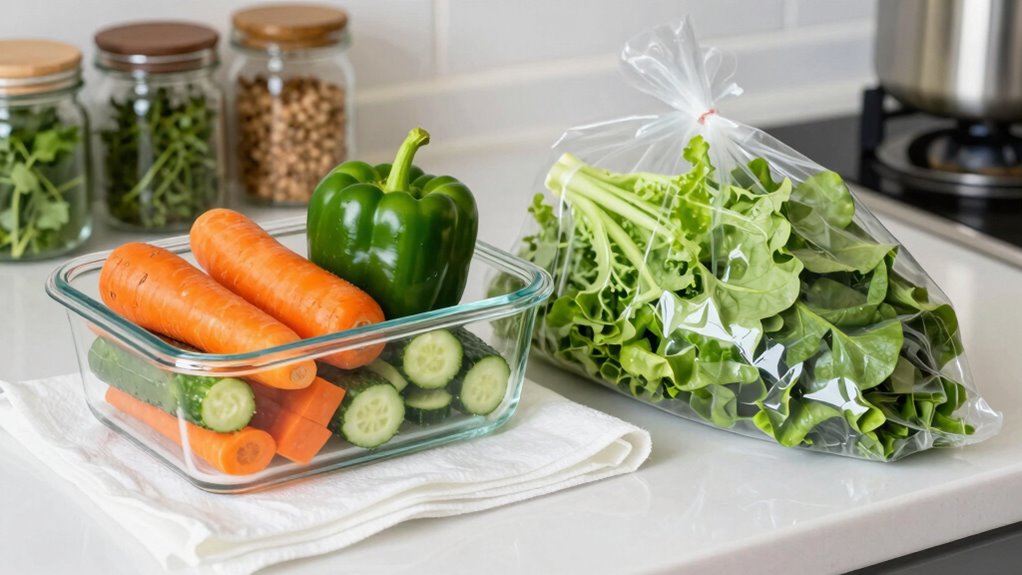
To keep your veggies crisp and fresh throughout the week, it’s important to regularly monitor them for signs of spoilage or wilting. Check your storage containers daily, and use color coded labels to track when you stored each batch. This helps you prioritize older veggies first. Also, make sure your fridge temperature stays between 35-40°F to slow spoilage. If you notice any veggies starting to wilt or develop slimy spots, refresh them immediately. Here are some simple steps:
Regularly check veggies, use labels, and keep fridge at 35-40°F to stay fresh all week.
- Use color coded labels to mark the storage date and monitor freshness.
- Keep an eye on fridge temperature, adjusting if necessary.
- Remove any compromised pieces to prevent spoilage from spreading.
- Regularly inspect your veggies for signs of spoilage and take prompt action to extend their freshness. Additionally, maintaining proper storage conditions can help minimize waste and spoilage, ensuring your veggies stay fresh longer. Proper refrigeration can also prevent infection risks from developing, which is essential for maintaining optimal freshness.
Consistent monitoring ensures your veggies stay crisp and tasty all week.
Troubleshooting Common Veggie Storage Problems to Keep Them Longer
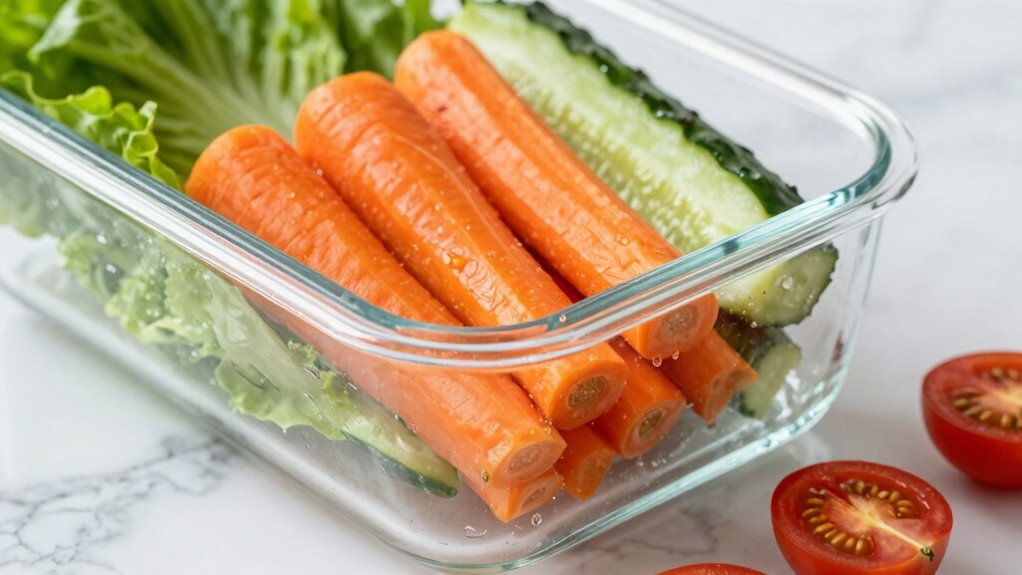
Even with the best storage methods, you might still encounter common problems that shorten the lifespan of your veggies. One issue is wilting or mushiness, which can often be tackled with proper blanching techniques before storage. Blanching halts enzyme activity, helping preserve texture and flavor. If your veggies lose flavor or become limp, check your storage environment—sometimes, moisture buildup causes spoilage. To prevent this, guarantee veggies are thoroughly dried and stored in airtight containers. Additionally, if veggies turn brown or develop off-odors, it’s a sign they’re not being kept at the right temperature or humidity. Adjust your storage conditions accordingly, and consider quick blanching to boost flavor preservation and extend freshness. Proper troubleshooting helps keep your veggies crisp and tasty all week.
Frequently Asked Questions
Can You Store Cut Veggies at Room Temperature Safely?
You shouldn’t store cut veggies at room temperature because it risks spoilage and compromises freshness preservation. Keep them in an airtight container or resealable bag in the refrigerator to prevent bacteria growth and maintain their crispness. Storing at room temperature can lead to faster spoilage, so always refrigerate cut veggies promptly. Proper storage guarantees they stay fresh longer and reduces waste, keeping your snacks safe and delicious throughout the week.
Which Veggies Last Longest After Being Cut?
Imagine crunching into a fresh cucumber or a crisp bell pepper—these veggies last longer after being cut. You’ll find that carrots, cucumbers, and bell peppers stay freshest with proper storage. To preserve their crunch, use airtight containers and keep them cool. For best freshness preservation, cut veggie tips include wrapping them tightly or storing in water. These simple steps help your veggies stay crisp and delicious for days.
How Does Humidity Affect Veggie Freshness?
Humidity plays a vital role in veggie freshness. Too much moisture causes veggies to spoil faster, while low humidity helps keep them crisp. Using humidity control techniques like a dehumidifier benefits your storage space by reducing excess moisture. It prevents mold and keeps cut veggies fresh longer. Be sure to monitor humidity levels regularly, and consider using breathable containers or paper towels to maintain ideal conditions for veggie preservation.
Is It Better to Store Cut Veggies With or Without Water?
Storing cut veggies with water can keep them crisp, but it’s not always the best choice. For ideal freshness, dry your cut veggie prep thoroughly and store in an airtight container with a damp paper towel. This prevents excess moisture, which can cause spoilage. Use these storage tips to maintain crunch and freshness all week, ensuring your veggies stay crisp and ready to enjoy.
How Do Different Containers Impact Veggie Shelf Life?
Using airtight containers helps extend the shelf life of your cut veggies by maintaining freshness and preventing moisture loss. Vented containers, on the other hand, allow airflow, which can reduce moisture buildup and mold growth but might cause veggies to dry out faster. Choose airtight containers for longer storage, especially if you’re not planning to eat the veggies quickly. Vented containers work well for shorter periods or when you want to keep vegetables crisp.
Conclusion
Storing your cut veggies properly can turn your week into a crisp, colorful paradise—no more soggy disappointments or wilted regrets. With the right techniques, you’ll keep them fresh and vibrant long past their expected lifespan, transforming your fridge into a fortress of freshness. Say goodbye to wasted produce and hello to culinary perfection in every crunchy bite. Master these tips, and you’ll reign supreme over soggy vegetables forever—your snack game will never be the same!