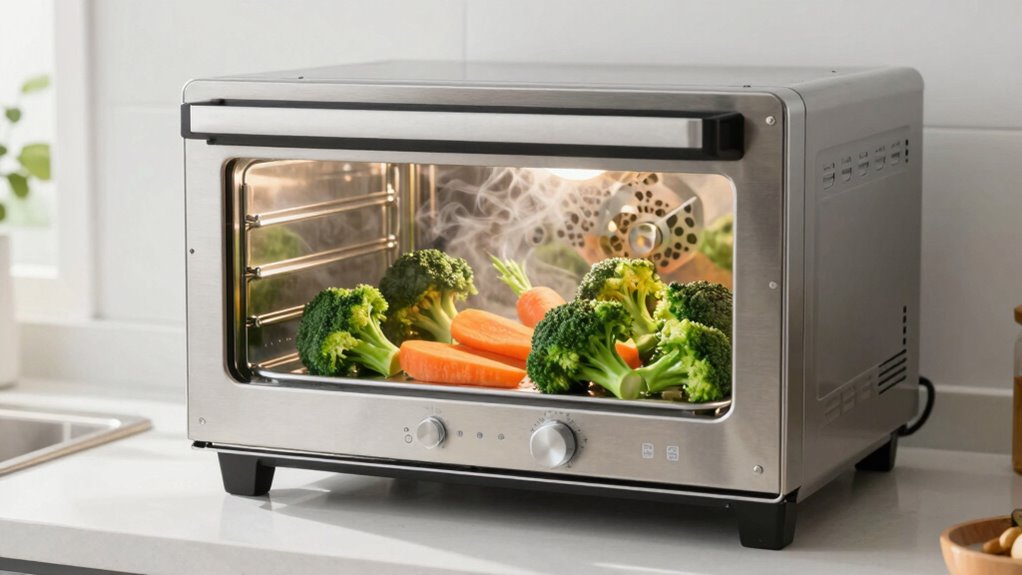

To make certain your veggies turn out great in a countertop steam oven, start by cleaning and assembling it properly, then fill the water reservoir with filtered water. Cut your vegetables into uniform pieces for even steaming and preheat the oven to around 212°F. Adjust cooking times based on vegetable type, and add flavor with seasonings or herbs after steaming. For more tips on getting perfect veggies every time, keep exploring how to optimize your steaming process.
Key Takeaways
- Ensure the water reservoir is clean, filled with filtered water, and vents are unblocked before each use.
- Select the appropriate steaming setting and preheat for 3-5 minutes for even cooking.
- Cut vegetables into uniform pieces and arrange them in a single layer for consistent steaming.
- Adjust cooking times based on vegetable type and thickness to prevent over- or undercooking.
- Season and garnish vegetables after steaming with herbs, oils, or spices to enhance flavor and presentation.
Why Proper Steaming Enhances Veggie Flavor and Texture
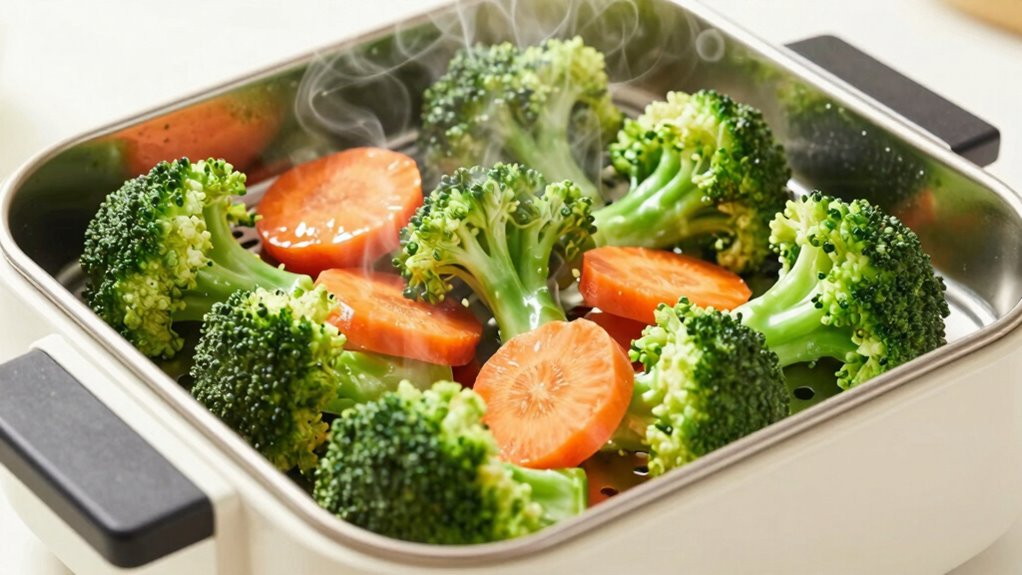
Proper steaming is key to bringing out the best in your vegetables because it preserves their natural flavors and textures. When you choose the right veggie selection, you ensure each piece is fresh and suited for steaming, enhancing overall taste. Proper steaming also helps retain nutrients, making your veggies healthier and more vibrant. To boost flavor, incorporate seasoning techniques like adding herbs or spices during cooking, which infuse the veggies without overpowering their natural taste. Avoid overcooking, as it can lead to mushy textures and flavor loss. Steaming at the right temperature and time locks in moisture and crispness. Paying attention to precise timing and temperature is crucial for optimal results, as it ensures your vegetables are tender yet crisp. Additionally, selecting veggies with optimal moisture content helps maintain their texture and flavor during steaming. Being aware of safe food handling practices ensures your vegetables are not only delicious but also safe to eat. Proper vegetable selection and seasoning techniques can make a significant difference in achieving flavorful, tender, and perfectly textured steamed vegetables every time. Using a countertop steam oven can make this process even more convenient and consistent.
How to Set Up and Preheat Your Countertop Steam Oven
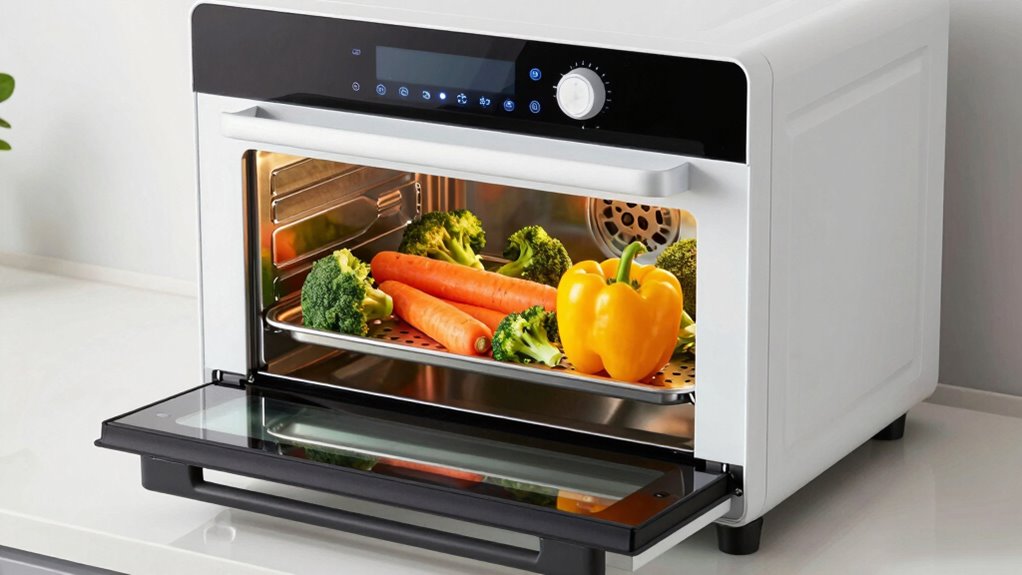
Before you start steaming your vegetables, it’s important to set up and preheat your countertop steam oven properly. First, verify the appliance is clean for kitchen safety and peak performance. Follow the manufacturer’s instructions to assemble any removable parts, like the water reservoir or steaming tray. Fill the water tank with fresh, filtered water, but avoid overfilling to prevent spills. Turn on the oven and select the appropriate steaming setting, then preheat for about 3-5 minutes until it reaches the desired temperature. Proper preheating helps maintain even steam distribution and prevents overcooking. Regular appliance maintenance, such as cleaning after each use, keeps your steam oven functioning safely and efficiently for years to come. Additionally, understanding appliance maintenance dos and don’ts can help you troubleshoot issues and optimize your cooking process. Keep in mind that some models may require specific preheating times to achieve optimal results, so always refer to your appliance’s guidelines. Proper water management is also essential to ensure consistent steaming performance and avoid potential damage. Being attentive to steam oven safety precautions ensures safe operation and prolongs your appliance’s lifespan.
Selecting and Cutting Vegetables for Even Steaming
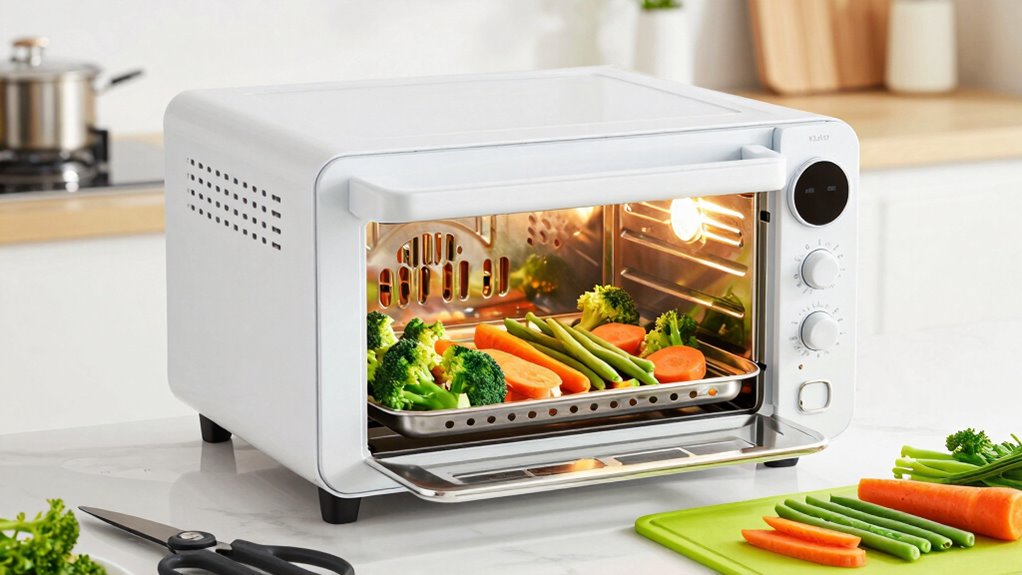
Choosing the right vegetables and cutting them into uniform pieces guarantees they cook evenly in your steam oven. Start by selecting fresh, firm produce for the best results. When vegetable peeling, do so carefully to remove tough skins without damaging the flesh. Use a sharp knife to ensure clean cuts and reduce the risk of slips. Always practice knife safety: keep your fingers tucked and cut away from your body. Aim to cut vegetables into similar-sized pieces, such as sticks or slices, so they steam at the same rate. This prevents some from overcooking while others remain underdone. Proper preparation helps you achieve perfectly steamed veggies with vibrant color and tender texture, making your meal both delicious and visually appealing. Incorporating consistent sizing is essential for even cooking and optimal texture. Additionally, paying attention to food safety ensures your vegetables are prepared hygienically and safely before steaming.
How to Time and Temperature Your Steamed Vegetables Perfectly
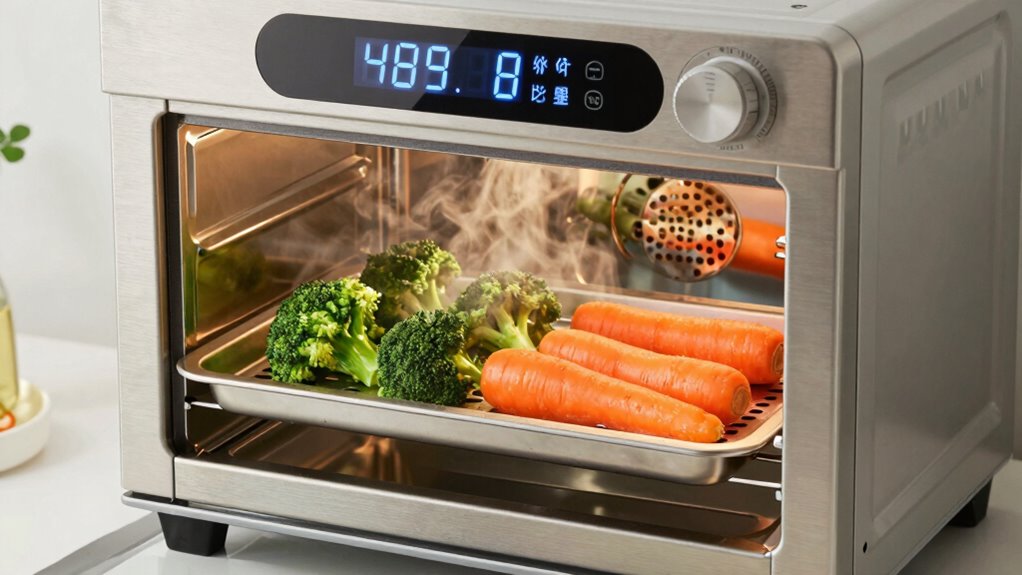
Achieving perfectly steamed vegetables depends on mastering both timing and temperature. To do this, set your steam oven to the right heat level—usually around 212°F (100°C). Keep in mind that different vegetables require varying cooking times; for example, broccoli takes about 3-4 minutes, while carrots need 6-8 minutes. Use a timer to avoid overcooking, which can lead to mushy textures and nutrient loss. Proper steam oven maintenance guarantees consistent heat and steam performance. Also, store vegetables correctly—preferably in the fridge in airtight containers—to preserve freshness and flavor. This way, you’ll always start with quality ingredients, making it easier to hit perfect timing and temperature, resulting in vibrant, tender veggies every time. Consistent heat from your oven is essential for achieving evenly cooked vegetables. Regularly checking and calibrating your oven’s temperature controls can help maintain accurate cooking conditions and ensure reliable results. Additionally, understanding how timing and temperature impact nutrient retention can help you optimize your steaming process for maximum health benefits. To further improve your results, consider using a steaming basket that allows for better steam circulation and even cooking. Incorporating a preheating step can also help stabilize the temperature and improve overall cooking consistency.
Simple Ways to Add Flavor to Steamed Veggies

Adding flavor to your steamed veggies is easier than you think. Simple seasonings like herbs, lemon juice, or a splash of soy sauce can make a big difference. Experimenting with different spice blends and toppings lets you customize every bite.
Flavor Boosters for Veggies
To elevate the natural flavor of your steamed vegetables, simple flavor boosters can make a big difference. Start with these ideas:
- Drizzle a tangy lemon vinaigrette or balsamic glaze for a bright, fresh taste.
- Toss them in a splash of soy sauce or tahini for umami richness.
- Sprinkle toasted nuts or seeds for crunch and depth, adding texture that complements the vegetables.
- Garnish with fresh herbs like basil or parsley to add color and aroma.
- Consider using precious metals as a metaphor for adding valuable accents to your dish, enhancing both presentation and flavor complexity. Incorporating seasoning techniques can also deepen the flavor profile, making your vegetables more enticing. Additionally, understanding flavor pairing principles can help you choose the most complementary seasonings and toppings. Exploring cultural flavor profiles can further inspire creative combinations that elevate your dish.
These additions enhance flavor and provide excellent sauce pairings. For presentation tips, serve veggies on a colorful platter or in a clear bowl to showcase their vibrancy. Keep it simple but intentional—well-chosen boosters make your steamed veggies irresistible without overpowering their natural sweetness.
Creative Seasoning Ideas
Creative seasoning ideas can instantly elevate your steamed veggies without much fuss. Start by experimenting with different seasoning blends like lemon herb, smoked paprika, or garlic parmesan to add depth and variety. A drizzle of high-quality olive oil or flavored vinegar can also enhance flavor and presentation. For a fresh touch, sprinkle chopped herbs such as basil, parsley, or cilantro after steaming. You can also toss your veggies with a squeeze of citrus or a splash of soy sauce for an umami boost. Presentation tips matter too—serve your veggies in colorful bowls or garnish with toasted nuts for visual appeal. These simple techniques make your steamed veggies more exciting, flavorful, and appealing, transforming a basic side into a delicious, eye-catching dish. Incorporating diversity and representation into your seasoning choices—like choosing global spices—can further elevate your culinary experience. Understanding culinary techniques can help you craft more balanced and flavorful dishes that suit your taste.
Troubleshooting Common Steaming Issues for Perfect Results

Even with a countertop steam oven, you might encounter issues like uneven cooking or undercooked veggies. To fix this, focus on proper steam oven maintenance and veggie storage tips. First, ensure your water reservoir is full and clean, as mineral buildup can hinder steam quality. Second, arrange your veggies in a single layer for even heat distribution. Third, check that the steam vents aren’t blocked, which can cause inconsistent steaming. Fourth, adjust cooking times based on vegetable thickness; thicker cuts need more time. If veggies still turn out lacking, revisit your veggie storage tips to prevent spoilage that affects texture. Regular maintenance and mindful prep help you achieve perfectly steamed veggies every time.
Frequently Asked Questions
Can I Steam Frozen Vegetables in a Countertop Steam Oven?
Yes, you can steam frozen vegetables in a countertop steam oven. Just place the frozen veggies directly into the steaming basket, add a bit of water, and use the right steaming techniques. Keep the oven at the recommended temperature, usually around 212°F, and steam for a few extra minutes compared to fresh veggies. This way, you preserve nutrients and get tender, flavorful vegetables without thawing first.
How Do I Prevent Overcooking Delicate Vegetables Like Spinach?
To prevent overcooking delicate vegetables like spinach, you should monitor the steaming vegetable textures closely. Select ideal steaming times—usually just 1-2 minutes for spinach—to keep them tender yet vibrant. Keep an eye on the process, and remove the spinach promptly when it reaches your desired texture. This way, you preserve flavor, nutrients, and the perfect consistency, ensuring your veggies don’t turn soggy or mushy.
Is It Necessary to Peel or Trim Vegetables Before Steaming?
Peeling isn’t always necessary when steaming vegetables; it depends on your preference and the veggie. For example, carrots and potatoes usually benefit from peeling, but you can leave skins on for added nutrients and texture. Trimming tips help improve texture and remove any tough or damaged parts. Trim ends, stems, or leaves, especially on broccoli or green beans, to guarantee even cooking and a more appealing presentation.
Can I Use Herbs or Spices During the Steaming Process?
Yes, you can use herbs or spices during steaming. Herb infusions add fresh, aromatic flavors, while spice enhancements deepen the taste profile. Place herbs or spices directly on the veggies or in the steaming water for subtle infusion, or sprinkle them afterward for a more pronounced flavor. Experiment with combinations to elevate your veggie dishes, making each bite more exciting and personalized.
How Do I Store Leftover Steamed Vegetables Without Losing Quality?
You should store leftover steamed vegetables in an airtight container in the refrigerator to maintain freshness. For reheating, avoid microwave methods that can make them mushy; instead, use a stovetop or oven to gently reheat, preserving texture and flavor. Proper food storage prevents spoilage, and reheating with the right methods guarantees your veggies stay tasty and nutritious, making leftovers just as enjoyable as fresh steamed ones.
Conclusion
Mastering your countertop steam oven transforms humble vegetables into culinary gems. With proper setup, timing, and a touch of creativity, you’ll find that steamed veggies aren’t just nutritious—they’re irresistibly flavorful and perfectly textured. Think of your oven as a silent conductor, guiding each vegetable to its ideal harmony. So, embrace the steam, and let your kitchen become a stage where every bite sings with freshness and finesse. After all, isn’t that what great cooking is all about?