
TL;DR

Get kitchen staples and gadgets delivered free with Prime
- Fast, free delivery on millions of items
- Prime Video, Amazon Music and more included
- Member-only deals all year
Todd’s Seeds LLC is recalling 37,481 units of sprouting seeds that may contain Salmonella and/or E. coli because they include alfalfa seed recalled by a supplier. The products were sold through Amazon and directly to consumers, and the listed packages carry expiration dates of Dec. 31, 2029. The available report does not identify affected lot numbers or say whether illnesses have been reported.
Todd’s Seeds LLC is recalling 37,481 units of sprouting seeds because they may be contaminated with Salmonella and/or E. coli, according to an October 2 report by Food Safety News. The products, sold through Amazon and directly to consumers, contain alfalfa seed that the company’s supplier recalled, according to the recall notice cited in the report.
The recall covers six Todd’s Seeds products: Alfalfa Sprouting Seeds; Broccoli & Friends Sprouting Seed Mix; Sprouting Seed Mix; Salad Sprouting Mixture; Alfalfa & Mung Bundle; and Variety Pack. The products were offered in a range of package weights. The report identifies Dec. 31, 2029 expiration dates for implicated packages and says lot numbers are listed in the recall materials, but it does not reproduce those numbers.
According to Food Safety News, the recall notice links the potential hazard to alfalfa seed recalled by the supplier. The report says the seed products may be contaminated with Salmonella and/or E. coli; it does not establish that every recalled package is contaminated. The company is based in Cookeville, Tennessee, and the affected products reached consumers through Amazon and direct sales.
Consumers who bought one of the named products should compare the package and its lot information with the recall notice before using it. Until they can determine whether a package is affected, they should not eat or sprout its contents. The source report does not state what remedy is being offered, such as a refund or replacement, or provide contact details for the company.
Risk in Home-Sprouted Seeds
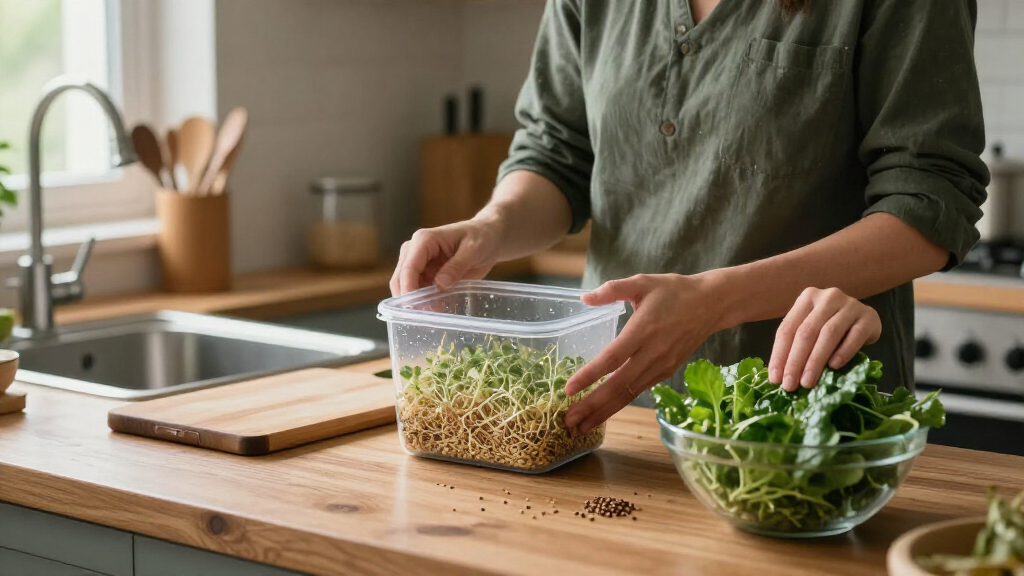
The recall matters because the affected products are sold for sprouting and eating, often without a cooking step that would kill harmful bacteria. A contaminated seed can therefore create a food-safety risk in a home kitchen, even when the package looks normal. The recall identifies a potential hazard, not proof that all packages or any particular consumer’s seeds are contaminated.
Salmonella and E. coli can cause foodborne illness. The supplied report does not detail symptoms, identify a specific E. coli strain, or report confirmed illnesses connected to these products. Consumers should follow the recall instructions and contact a health professional if they become ill after eating a recalled product; they should tell the provider what they ate and when.
As an affiliate, we earn on qualifying purchases.
Supplier Seed Recall Triggers Action
The reported recall concerns finished Todd’s Seeds products that contain alfalfa seed recalled by a supplier. That connection is the stated reason for the company’s action. Food Safety News published its report on October 2, 2026, at 11:11 p.m. The source material does not give the supplier’s name, the date of the supplier recall, or details about how the possible contamination was detected.
The product list spans single-seed products, mixes and bundles, so shoppers should not assume a package is outside the recall simply because its label does not say only “alfalfa.” The report names each product line but refers readers to separate recall materials for lot numbers. Those identifiers are needed to determine which specific packages are included.
“The products contain alfalfa seed recalled by the supplier and may be contaminated with E. coli and/or Salmonella.”
— Recall notice, as described by Food Safety News
Lot Numbers and Illness Reports
The available source does not include the affected lot numbers, so the full scope cannot be verified from the report alone. It also does not say whether any illnesses have been reported, how the potential contamination was identified, or whether testing confirmed Salmonella or E. coli in any product. The phrase “and/or” does not specify which organism may be associated with which seed or package.
Other details remain unreported, including the supplier’s identity, the quantity of each product recalled, the date sales began, and what consumers should do to obtain a refund or replacement. The listed expiration date does not by itself establish that every package with that date is affected; consumers need to check lot information against the official recall notice.
Check Packages Against Recall Notice
Consumers should review the official recall notice for the complete lot-number list and compare it with the product name, package and lot information on any seeds they have. They should not consume or sprout a package confirmed to be included. The source report does not specify disposal or return instructions, so consumers should follow the directions in the recall notice or contact Todd’s Seeds for guidance.
Further information could clarify the supplier, the results of any testing, the number of affected lots and whether illnesses have been reported. Until those details are available, the confirmed information is limited to the 37,481-unit recall, the six named product lines, the sales channels and the stated possibility of contamination.
Key Questions
Which Todd’s Seeds products are included in the recall?
The listed products are Alfalfa Sprouting Seeds, Broccoli & Friends Sprouting Seed Mix, Sprouting Seed Mix, Salad Sprouting Mixture, Alfalfa & Mung Bundle, and Variety Pack. Check the recall notice for affected lot numbers.
What is the possible contamination?
The products may be contaminated with Salmonella and/or E. coli, according to the recall notice cited by Food Safety News. The report does not say that contamination was confirmed in every package.
Where were the recalled seeds sold?
The products were sold through Amazon and directly to consumers, according to the report. They were offered in different package weights.
What should I do if I have one of these products?
Do not use a package that is confirmed to match an affected lot. Compare its lot information with the official recall notice and follow the notice’s directions. The source report does not specify a refund or disposal process.
Have illnesses been linked to the recalled seeds?
The supplied report does not say whether illnesses have been reported or whether contamination was confirmed through testing. Check for updates from the company or relevant food-safety authorities.
Source: rss
NFL season / tailgating Picks
team gear
As an affiliate, we earn on qualifying purchases.