Sea moss can support your thyroid health because it’s rich in iodine, which is essential for hormone production. Its anti-inflammatory and antioxidant properties may help reduce thyroid-related inflammation and support immune balance. However, too much iodine can negatively affect autoimmune conditions like Hashimoto’s or Graves’ disease. Using sea moss wisely and in moderation is key. If you’d like to understand how to incorporate it safely and effectively, there’s more to explore.
Key Takeaways
- Sea moss is rich in iodine, supporting thyroid hormone production and overall thyroid health.
- Excess iodine from sea moss may trigger autoimmune responses and worsen thyroid conditions.
- Its antioxidants and anti-inflammatory compounds may help reduce inflammation in autoimmune thyroid diseases.
- Moderation and medical consultation are essential before adding sea moss to your thyroid health routine.
- Sea moss should complement a balanced diet and not replace medical treatment for thyroid issues.
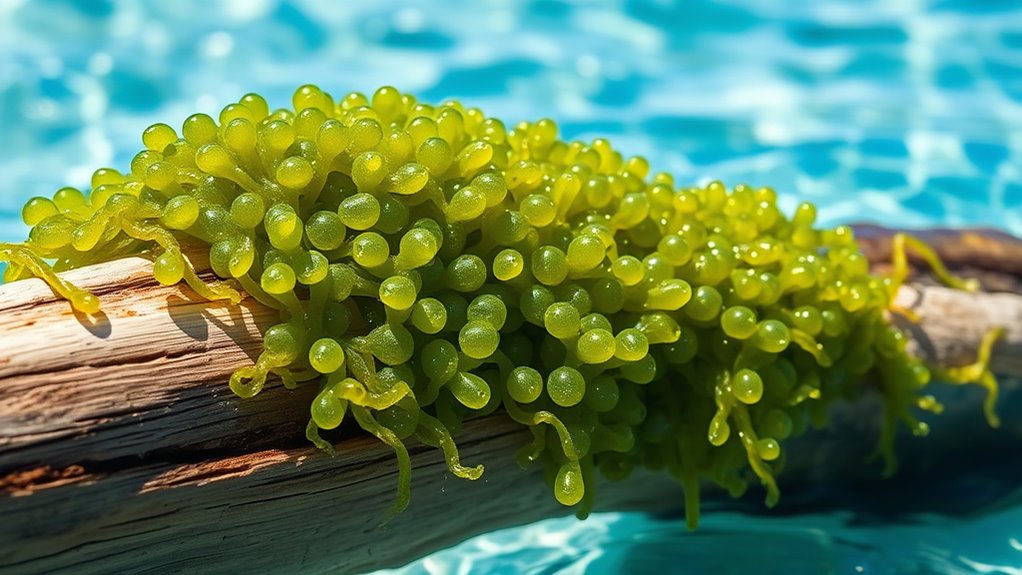
Sea moss has gained popularity as a natural supplement for supporting thyroid health, thanks to its rich nutrient profile. One of its most significant benefits lies in its high iodine content, which plays an essential role in iodine absorption—a fundamental process for proper thyroid function. Your thyroid gland relies on iodine to produce hormones like thyroxine (T4) and triiodothyronine (T3). Without sufficient iodine intake, your thyroid may struggle to generate these hormones, leading to issues like hypothyroidism or goiter. By including sea moss in your diet, you can help guarantee your body has enough iodine to support hormone synthesis, keeping your thyroid functioning at its best.
However, it’s important to recognize that while iodine is necessary, excess intake can sometimes trigger an autoimmune response. If you have an existing thyroid condition such as Hashimoto’s thyroiditis or Graves’ disease, consuming too much iodine could potentially worsen your condition. An autoimmune response occurs when your immune system mistakenly attacks your thyroid tissue, causing inflammation and disrupting hormone production. As a result, moderation is key. You want to support your thyroid with enough iodine, but not so much that it exacerbates autoimmune activity. Consulting your healthcare provider before adding sea moss to your routine is a wise step, especially if you have a history of thyroid issues.
In addition to iodine, sea moss contains other nutrients that may influence autoimmune responses. For example, its antioxidants and anti-inflammatory compounds can help reduce inflammation in the thyroid gland, which is often a feature of autoimmune thyroid diseases. By combating oxidative stress, sea moss might support your immune system in maintaining a balanced response, preventing unnecessary immune attacks on your thyroid. Still, scientific research is ongoing, and individual responses can vary. Some people may find that sea moss alleviates symptoms, while others may not notice a significant difference.
Furthermore, understanding how sea moss influences your immune system and hormone production helps you make informed choices. If you’re considering using it for thyroid health, focus on integrating it as part of a balanced diet. Remember, it’s not a cure-all, but rather a supplement that can support your overall health when used wisely. Keeping track of your symptoms and working with a healthcare professional ensures you’re on the right path. With proper guidance, sea moss can be a beneficial addition to your efforts in maintaining a healthy thyroid, especially when paired with other supportive lifestyle habits.
Frequently Asked Questions
Can Sea Moss Replace Thyroid Medication?
Sea moss can’t replace thyroid medication because it doesn’t provide the same level of support for your thyroid function. While some see sea moss as a natural supplement alternative due to its iodine content, it is crucial to follow your doctor’s advice. Relying solely on sea moss can be risky if you have thyroid issues. Always consult a healthcare professional before making any changes to your treatment plan.
Are There Any Side Effects of Sea Moss?
You should be aware that sea moss can cause potential allergy risks, especially if you’re sensitive to iodine or shellfish. While it offers health benefits, consuming too much might lead to iodine overdose, which can disrupt your thyroid function. Always start with small amounts and consult your healthcare provider to avoid side effects like nausea, stomach upset, or thyroid issues. Moderation is key to safely enjoying sea moss.
How Much Sea Moss Should I Consume Daily?
Think of your daily intake of sea moss like watering a plant—moderation is key. Experts recommend a sea moss dosage of about 1 to 2 tablespoons (roughly 4 to 8 grams) daily. This amount provides essential nutrients without risking excess iodine, which can harm your thyroid. Start with a smaller dose, observe how your body responds, and adjust accordingly to keep your thyroid healthy and balanced.
Is Sea Moss Safe for Pregnant or Breastfeeding Women?
Sea moss can be safe for pregnant or breastfeeding women if used with caution. However, you should consider pregnancy safety and breastfeeding considerations, as its iodine content may influence thyroid function. Always consult your healthcare provider before adding sea moss to your diet during pregnancy or breastfeeding. They can advise you on safe amounts and ensure it won’t interfere with your health or your baby’s development.
Can Sea Moss Help With Both Hypothyroidism and Hyperthyroidism?
Did you know that about 200 million people worldwide suffer from thyroid disorders? Sea moss may help regulate iodine levels, supporting overall thyroid function. While it can assist with hypothyroidism by providing essential iodine, it might worsen hyperthyroidism if iodine intake becomes excessive. You should consult your healthcare provider to determine if sea moss suits your specific thyroid condition, as proper iodine regulation is vital for balance.
Conclusion
Understanding sea moss’s role in thyroid health is vital, especially since iodine deficiency affects about 1 in 10 people worldwide. While sea moss offers essential nutrients, it’s important to consume it in moderation to avoid excess iodine, which can harm your thyroid. By staying informed and balanced, you can support your thyroid function naturally. Remember, making mindful choices is key to maintaining overall health and well-being with sea moss as part of your diet.