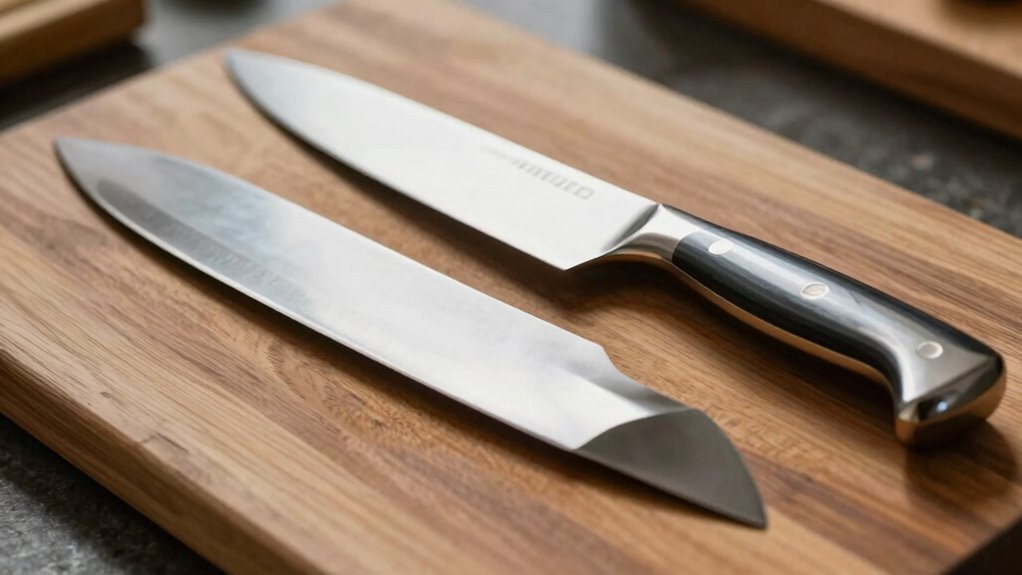

Choosing between a santoku and a chef’s knife depends on your cooking style and preferences. A santoku offers precise, straight cuts ideal for vegetables, herbs, and softer ingredients, while a chef’s knife is versatile, great for chopping tough items and larger produce. Comfort, handle design, and budget also matter. Keep exploring to discover which knife fits your kitchen needs perfectly and enhances your culinary experience.

Get kitchen staples and gadgets delivered free with Prime
- Fast, free delivery on millions of items
- Prime Video, Amazon Music and more included
- Member-only deals all year
Key Takeaways
- Santoku knives excel for precision slicing of vegetables and herbs, while chef’s knives handle tougher ingredients and larger cuts.
- Handle design, weight, and balance significantly influence comfort, control, and fatigue during extended use.
- Santoku are typically more affordable and suited for everyday home cooking, whereas chef’s knives often offer superior craftsmanship and durability.
- Proper maintenance, sharpening, and storage extend knife lifespan and enhance performance for both types.
- The choice depends on your cooking style, kitchen aesthetic, and the types of recipes you frequently prepare.
As an affiliate, we earn on qualifying purchases.
What Are the Key Differences Between a Santoku and a Chef’s Knife?
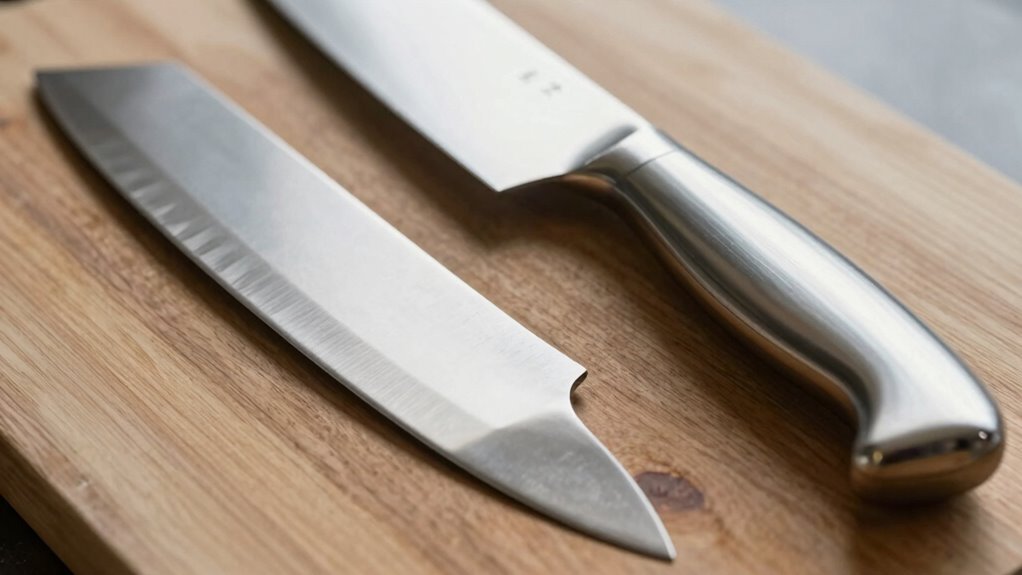
The main differences between a Santoku and a chef’s knife lie in their design and intended use. A Santoku typically has a shorter, wider blade with a flatter edge, making it ideal for slicing, dicing, and chopping. Its design enhances kitchen aesthetics by providing a sleek, modern look that complements contemporary kitchens. In contrast, a chef’s knife features a longer, curved blade that allows for rocking motions, making it versatile for various tasks. When considering knife storage, a Santoku’s compact size fits well into knife blocks or magnetic strips, keeping your kitchen organized. The chef’s knife, being larger, often requires dedicated space. Understanding these differences helps you choose the right knife for your cooking style while maintaining an attractive and efficient kitchen setup. Additionally, selecting a knife with proper blade materials can ensure durability and ease of maintenance over time. Being aware of blade construction can also influence how well your knife performs and how long it lasts. A good understanding of the material quality can help you select knives that stay sharp longer and require less frequent sharpening. Moreover, considering blade edge geometry can significantly impact cutting performance and precision.
Design and Build: Shapes, Materials, and Construction Details
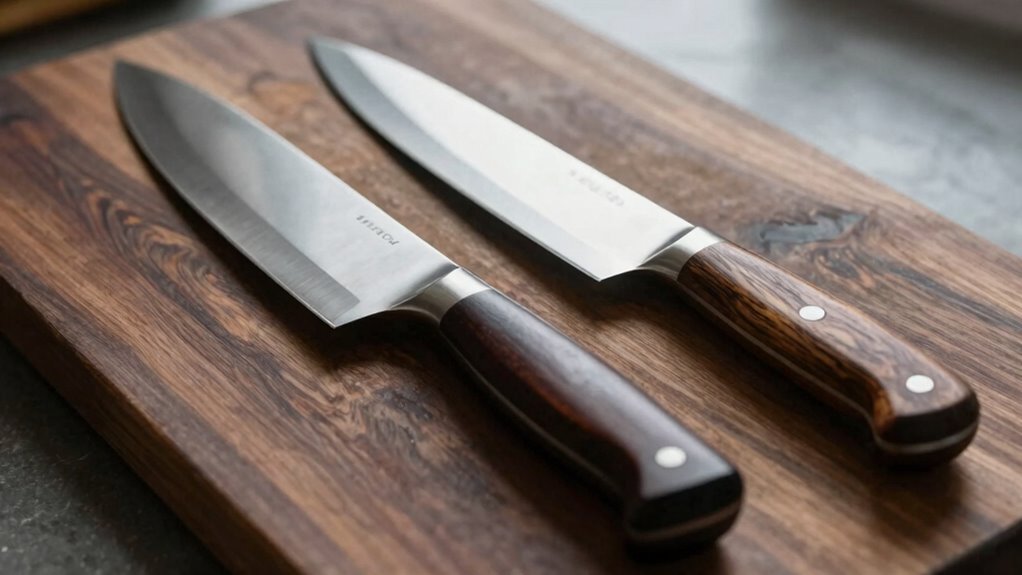
When comparing the design and build of a Santoku and a chef’s knife, you’ll notice that their shapes and materials influence how they perform and feel in your hand. The Santoku typically has a shorter, flatter blade with a straight edge, emphasizing precision and ease of chopping, while the chef’s knife features a longer, curved blade designed for rocking cuts. Knife aesthetics vary, with Santokus often boasting minimalistic, modern looks, and chef’s knives showcasing more traditional craftsmanship. Material sustainability also plays a role; high-quality knives often use sustainably sourced steel or alternative eco-friendly materials, affecting durability and environmental impact. Additionally, the choice of blade materials can influence the longevity and maintenance requirements of your knives. The blade shape further impacts how comfortably and efficiently you can perform different cutting techniques, making both form and function essential considerations. Proper handle design can also significantly improve grip and reduce fatigue during extended use. Overall, these design details impact not just performance but also the visual appeal and eco-friendliness of your kitchen tools.
How Do Cutting Techniques Differ for Santoku and Chef’s Knives?
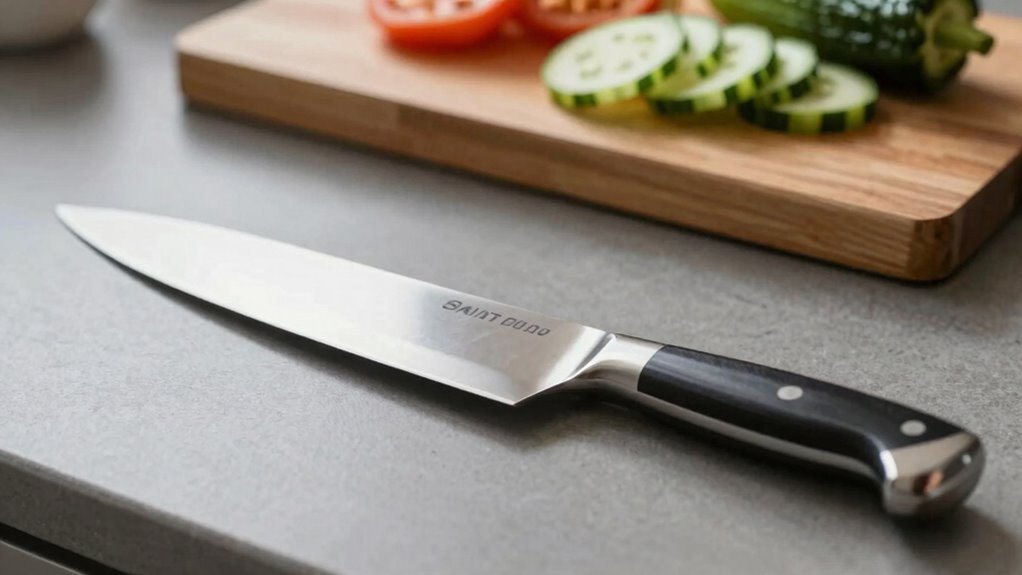
Your cutting technique changes depending on whether you’re using a Santoku or a chef’s knife, mainly because of their different blade shapes. With a Santoku’s flat edge, you’ll use a straight, chopping motion, ideal for precision slicing, while a chef’s knife allows for a rocking motion suited for chopping and mincing. Additionally, each knife excels with specific food types—Santoku works well for vegetables and small ingredients, while a chef’s knife handles larger cuts of meat and tougher produce more comfortably.
Blade Shape Impact
Because blade shape directly influences how you handle cutting tasks, understanding the differences between a santoku and a chef’s knife is essential. The santoku’s shorter, flatter blade with a rounded tip excels at precise, rocking cuts, making it ideal for slicing vegetables and herbs. In contrast, the chef’s knife’s curved, longer blade allows for a more fluid, rocking motion suited for chopping larger ingredients. This shape impacts your technique and how you approach different foods. Additionally, proper knife storage helps maintain blade longevity, preventing damage that could alter cutting performance. Keep in mind that the santoku’s thinner blade may require more careful handling to avoid dulling, while the chef’s knife’s robust shape often offers more durability. Your choice influences not only cutting style but also how you care for your knives.
Cutting Motion Differences
The shape of each knife influences how you perform cutting motions. With a Santoku, you’ll often use a gentle rocking or chopping motion, thanks to its flatter blade and shorter curve, making it ideal for precise, straight cuts. The chef’s knife, with its curved blade, encourages a more fluid rocking motion that’s effective for slicing and dicing larger quantities quickly. Your choice of knife also impacts knife storage; a wider, heavier chef’s knife needs a sturdy block or a secure sheath, while a Santoku fits easily into compact storage options. Additionally, cutting board compatibility matters—both knives work well on most surfaces, but a stable, non-slip board enhances safety and control during different cutting motions.
Food Types Suited
Santoku knives excel at handling vegetables, herbs, and boneless proteins due to their shorter, flatter blades that allow for precise, straight cuts. Their cultural origins in Japan influence their design, making them ideal for slicing, dicing, and chopping delicate ingredients. Material variations, like stainless steel or Damascus, affect durability and edge retention, shaping how you approach different foods. Chef’s knives, with their longer, curved blades, suit a wider range of foods, including tougher meats and large vegetables, where rocking cuts are beneficial. Their versatility stems from their design, suitable for various cutting motions.
- Vegetables like cucumbers and carrots
- Herbs such as parsley and cilantro
- Boneless chicken breasts
- Soft fruits like tomatoes
- Thinly sliced sashimi
Best Uses for Santoku and Chef’s Knives in Home Cooking
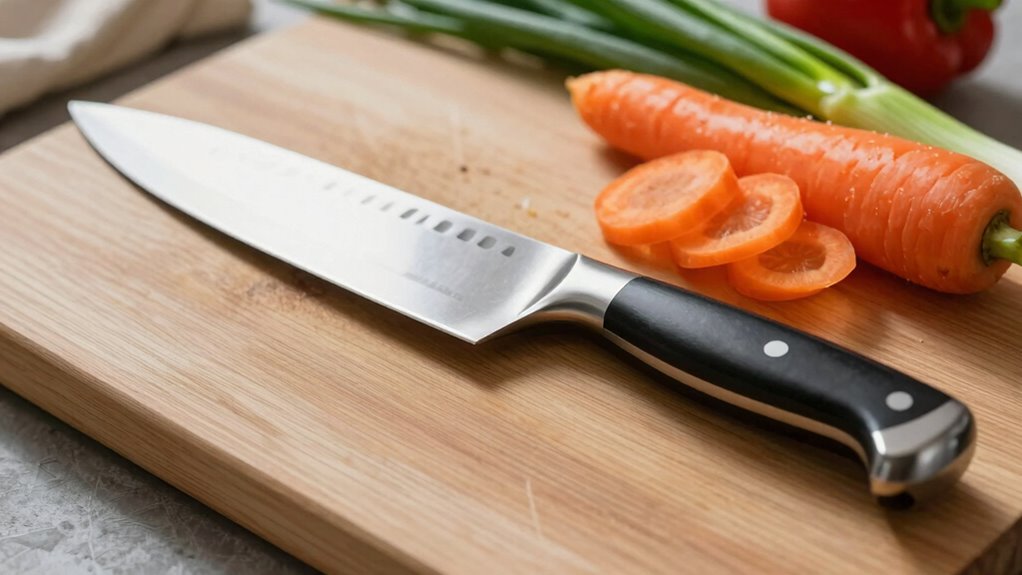
When it comes to home cooking, choosing the right knife can make a significant difference in your efficiency and results. The Santoku excels for precise slicing and dicing, thanks to its straight edge and versatile design. It’s perfect for vegetables, herbs, and even thin meats, offering excellent cutting precision. The chef’s knife, with its curved edge, handles a wider range of tasks—chopping, slicing, and mincing—making it a true all-rounder. Your choice depends on what you cook most often. Use the table below to see how each knife can elevate your kitchen experience:
| Use Case | Best Knife |
|---|---|
| Precision slicing | Santoku |
| Chopping large items | Chef’s knife |
| Vegetables & herbs | Santoku |
| Heavy-duty cutting | Chef’s knife |
| Fine mincing | Santoku |
Ergonomics and Comfort: Which Knife Fits Your Hand Better?
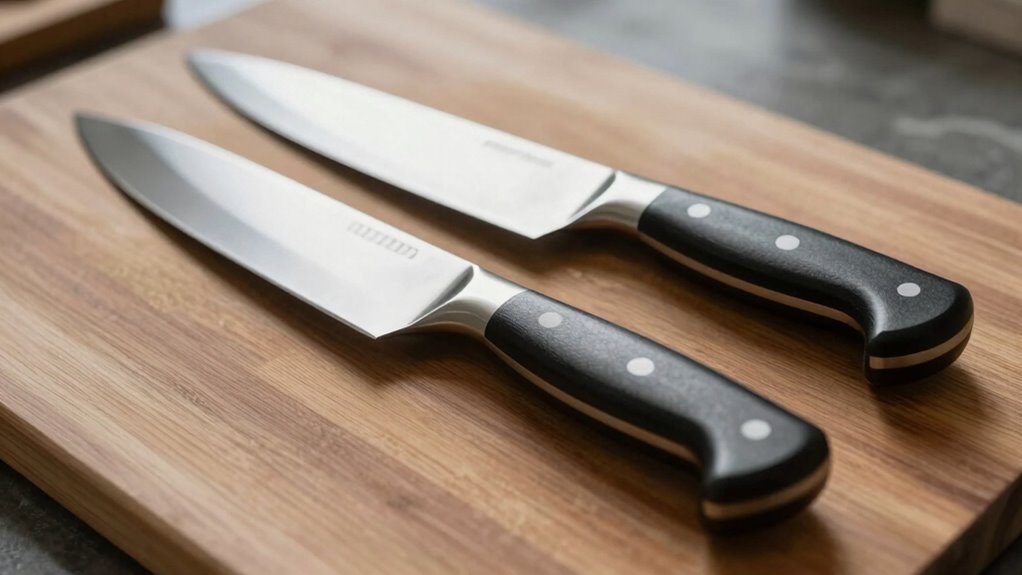
The handle design and grip are key to how comfortable a knife feels in your hand, so consider what feels natural and secure. The weight and balance also play a big role in reducing fatigue during extended use. Trying out different knives can help you find the one that fits your hand best. Additionally, understanding the cybersecurity tactics behind different knife designs can help you choose a tool that offers both safety and efficiency in your kitchen. Recognizing ergonomic features in knife construction can further enhance your comfort and control during detailed prep work. Being aware of ergonomic principles in knife design can guide you toward tools that minimize strain and improve precision. Incorporating ergonomic research into your selection process can ensure you choose a knife that promotes both safety and performance. Paying attention to handle materials can also make a significant difference in grip comfort and durability.
Handle Design and Grip
Choosing a knife that feels comfortable in your hand is vital for safe and efficient cooking. Handle design and grip play an essential role in this comfort, affecting control and fatigue. You’ll find handles made from various handle materials, such as wood, plastic, or composite, each offering different textures and durability. Color options can also personalize your knife and help prevent cross-contamination. Look for a handle that fits your hand size and offers a secure grip, whether through textured surfaces or ergonomic shapes.
- Handle materials like wood, plastic, or composite
- Color options for personalization
- Ergonomic shapes for comfort
- Textured surfaces for slip resistance
- Balance between weight and grip strength
Weight and Balance Feel
Weight and balance are essential factors that influence how comfortable and precise a knife feels in your hand. A well-balanced knife feels natural, reducing fatigue during extended prep, while a poorly balanced one can cause strain and reduce control. When choosing between a santoku and a chef knife, consider how their weight distribution affects your cutting motion. The weight impacts your ability to rock or lift the blade easily, especially during tasks like knife sharpening or managing kitchen storage space for your tools. A heavier knife may feel more stable but less nimble, while a lighter one offers agility. Test both to see which feels better in your grip, ensuring your choice enhances comfort and efficiency in everyday cooking.
Blade Sharpness and Maintenance Tips for Both Knives
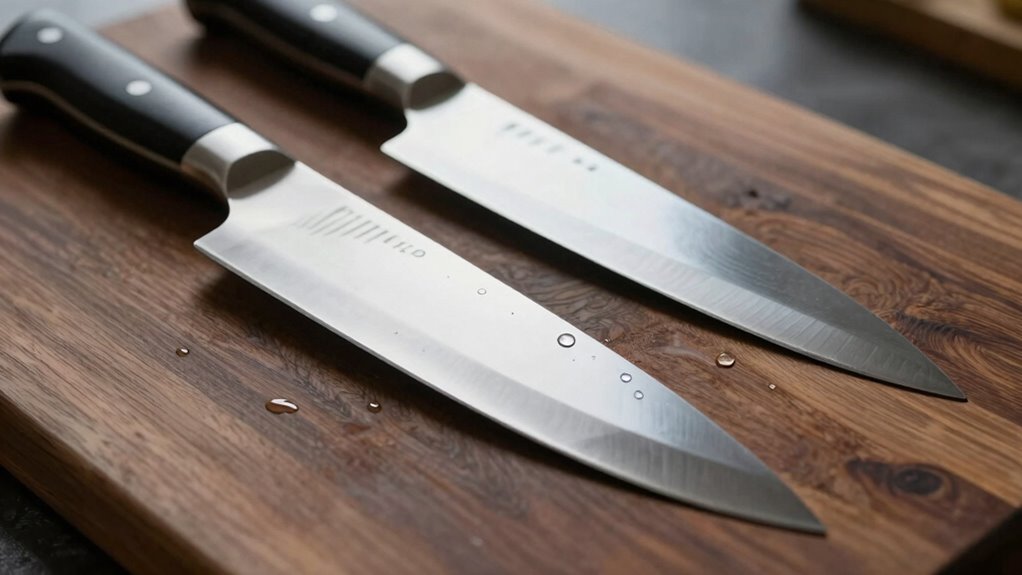
Maintaining the sharpness of your Santoku or chef’s knife is essential for safe and efficient cooking. Regular honing and proper sharpening keep the blade effective and extend its blade longevity. To maintain sharpness, store your knives correctly—using a knife block, magnetic strip, or blade guard—to prevent dulling from contact with other utensils. Sharpen your knife when it starts to feel less precise, either with a whetstone, sharpening system, or professional service. Avoid putting your knives in the dishwasher, as harsh detergents and high heat can dull blades faster. Keep your knives dry and clean after each use to prevent corrosion. Proper knife storage and regular maintenance ensure your blades stay sharp, safe, and reliable for years to come.
Pricing and Value: Which Knife Offers the Best Bang for Your Buck?
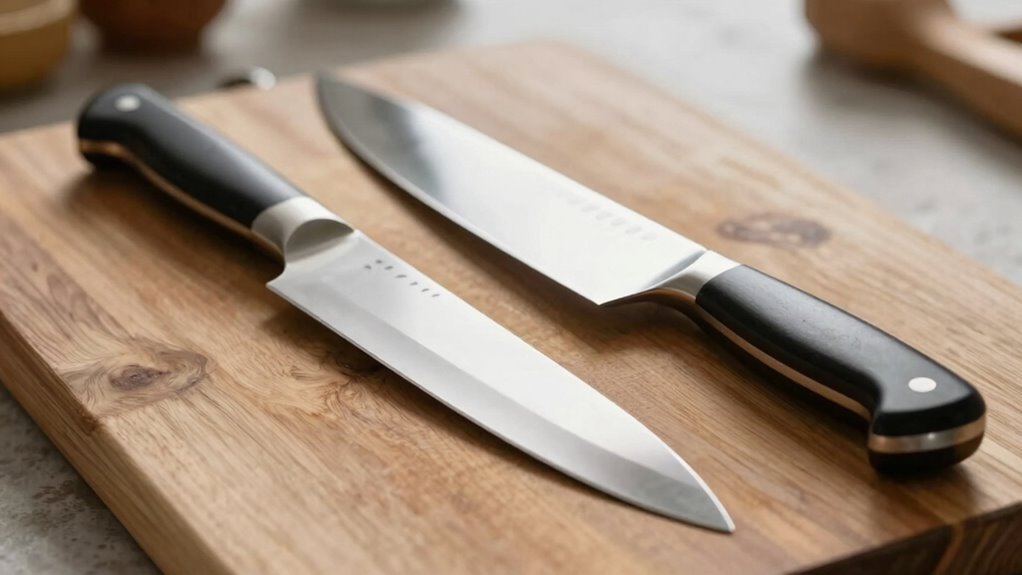
When comparing the pricing of Santoku and chef knives, it’s clear that your budget influences which offers the best value. Generally, Santoku knives tend to be more affordable, making them a great choice if you’re starting out or want a versatile, budget-friendly option. Chef knives, especially from reputable brands, can cost more but often come with superior craftsmanship, sharper edges, and better knife storage options for long-term use. To help you decide, here’s a quick comparison:
| Feature | Santoku Knife | Chef Knife |
|---|---|---|
| Price Range | $20 – $80 | $50 – $200+ |
| Brand Reputation | Varies, often budget-friendly | Well-known, trusted brands |
| Overall Value | Great for beginners & daily use | Superior durability & performance |
Additionally, considering the overall value and long-term durability can be crucial when choosing between these two types of knives. Understanding the different styles and their specific uses can help you select the best knife for your culinary needs.
How to Choose the Right Knife Based on Your Kitchen Style and Recipes

Choosing the right knife depends largely on your kitchen style and the types of recipes you frequently prepare. Your choice influences not just cooking efficiency but also your kitchen’s overall look, so consider how the knife complements your kitchen decor. Think about how you’ll store it—whether in a knife block, on a magnetic strip, or in a drawer—since accessibility and safety matter. If your kitchen has a minimalist vibe, a sleek Santoku might fit better, while a traditional chef’s knife suits classic decor. Also, consider your typical recipes: delicate slicing calls for a sharp, precise knife, while chopping hearty ingredients needs a sturdy blade. Keep these tips in mind to select a knife that enhances your cooking style and complements your space. Additionally, understanding knife design and functionality can help you choose a blade that aligns with your culinary needs.
Common Mistakes to Avoid When Picking Between a Santoku and a Chef’s Knife
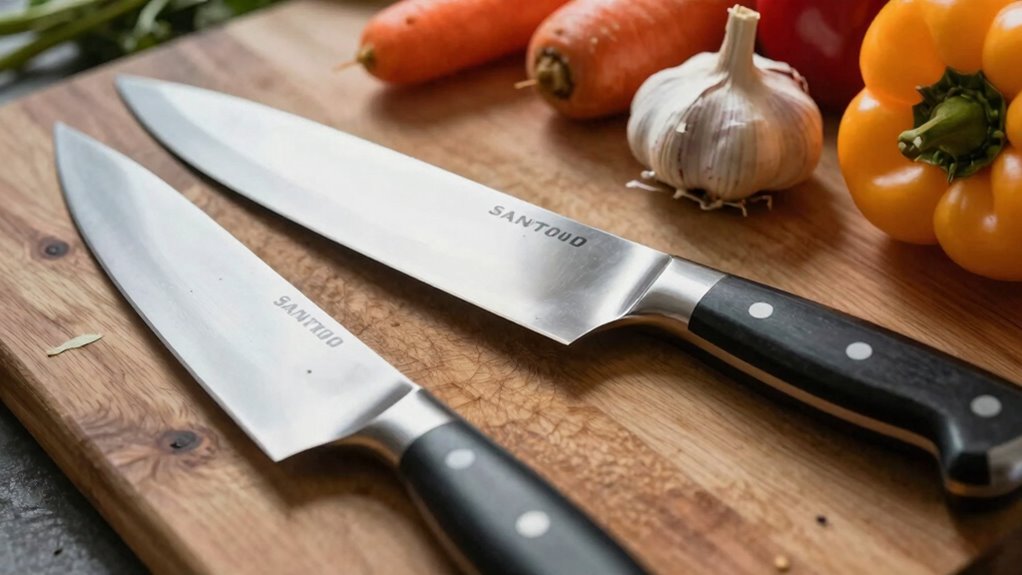
Many beginners make the mistake of selecting a knife based solely on popularity or appearance, neglecting how well it suits their specific cooking needs. One common error is overlooking proper knife storage, which can damage blades and reduce their lifespan. Instead of tossing your knives loosely in a drawer, invest in a knife block or magnetic strip to protect the edges. Another mistake is neglecting regular knife sharpening; dull blades require more force and increase the risk of accidents. A sharp knife ensures cleaner cuts and safer handling. When choosing between a Santoku and a chef’s knife, consider how you’ll store and maintain it for longevity. Avoid rushing these decisions—proper storage and sharpening habits are vital to keep your knives performing at their best.
When Do Chefs Prefer One Over the Other? Expert Recommendations
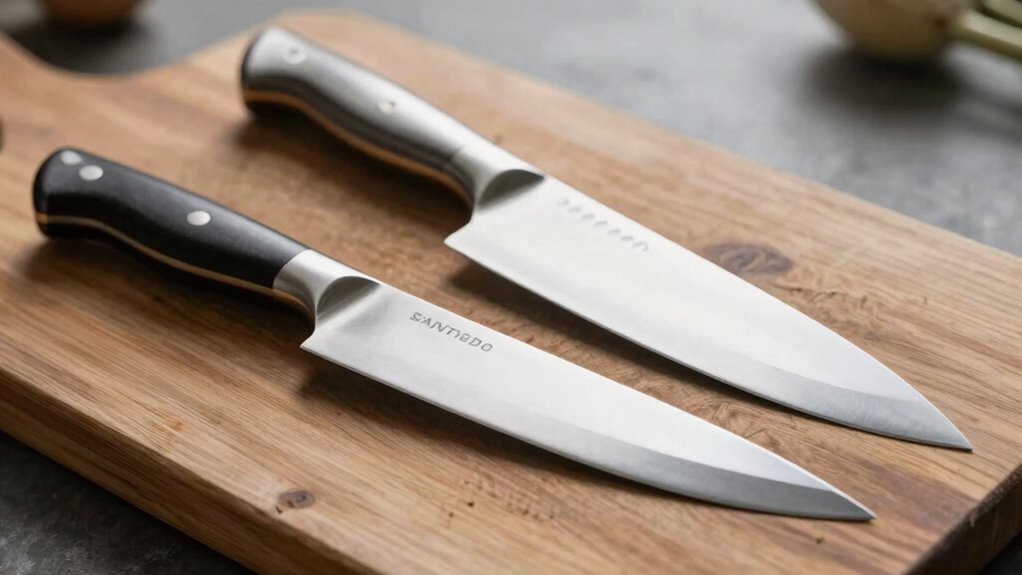
Professional chefs often prefer a Santoku for its versatility and lightweight design when preparing vegetables, fish, or thin slices, especially in fast-paced kitchen environments. They tend to choose it when efficiency and precision matter, and when space for knife storage options is limited. Chefs recommend a chef’s knife for tasks requiring more power, heavier cutting, or larger ingredients. When considering kitchen aesthetics, a well-balanced knife can elevate your setup, making it look professional. Additionally, selecting a knife that suits your knife storage options can help maintain its condition and ensure easy access during busy cooking sessions. Proper knife care and maintenance also plays a crucial role in prolonging the lifespan of your blades.
Chefs favor lightweight Santokus for precise, fast prep; sturdy chef’s knives excel for heavy-duty tasks and larger ingredients.
- Use a Santoku for delicate slicing and dicing in tight spaces
- Opt for a chef’s knife for heavy-duty chopping and mincing
- Choose based on the knife’s feel and balance for your hand
- Consider storage options that protect the blades
- Match the knife style with your kitchen’s overall look and organization
Frequently Asked Questions
Can a Santoku Replace a Chef’s Knife Entirely?
A santoku can replace a chef’s knife in many situations, but it might not be perfect for every task. Its excellent knife balance and lighter weight make it versatile for slicing, dicing, and chopping. However, if you need a longer blade for large cuts or a heavier feel for heavy-duty tasks, a chef’s knife might be better. Overall, a santoku offers impressive blade versatility but isn’t a complete substitute for all chef’s knife functions.
Which Knife Is Better for Cutting Meat or Poultry?
For cutting meat or poultry, a chef’s knife is generally better because of its versatility and longer, curved blade that handles slicing and chopping efficiently. It offers greater knife durability and easier blade maintenance, especially when dealing with tougher cuts. A santoku can work, but its shorter, straighter edge might not be as effective for large meat portions. Choose a chef’s knife for smoother, more precise cuts.
Are There Specific Cuisines Where One Knife Outperforms the Other?
You’ll find the santoku excels in Japanese cuisine, where its precision and versatility handle delicate fish and vegetables effortlessly. Conversely, a chef’s knife shines across a variety of cuisines, from chopping herbs to slicing roasts, thanks to its large blade and versatility. While the santoku offers exceptional control for specific tasks, the chef’s knife adapts seamlessly, making it the go-to for diverse cooking styles and ingredients worldwide.
How Does the Weight of Each Knife Affect Cooking Precision?
The weight of each knife influences your cooking precision by affecting knife balance and control. A heavier knife offers more stability and effortless chopping, especially with durable blade materials like high-carbon steel or stainless steel. Lighter knives provide agility, making delicate tasks easier. Your choice depends on your hand strength and technique, but generally, a well-balanced knife that feels comfortable enhances accuracy and reduces fatigue during extended prep work.
Can a Beginner Effectively Use Both Knives Without Prior Experience?
Yes, as a beginner, you can effectively use both knives with practice. Focus on proper knife maintenance and sharpening techniques to keep them in top shape, which makes cutting easier and safer. Start with basic techniques, and gradually build your skills. Using both knives helps you learn different cutting styles, improving your overall cooking precision. Just be patient, and you’ll develop confidence and proficiency over time.
Conclusion
Choosing between a santoku and a chef’s knife ultimately comes down to your cooking style and comfort. Think of them as two sides of the same coin—each with its own strengths, waiting to elevate your culinary game. By understanding their differences, you’ll find the perfect match that feels like an extension of your hand, transforming simple ingredients into masterpieces. After all, the right knife isn’t just a tool; it’s the key to revealing your kitchen’s full potential.
Halloween Picks
halloween
As an affiliate, we earn on qualifying purchases.