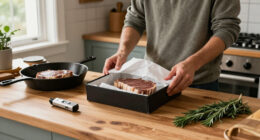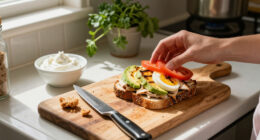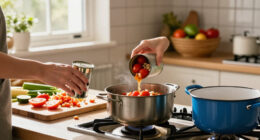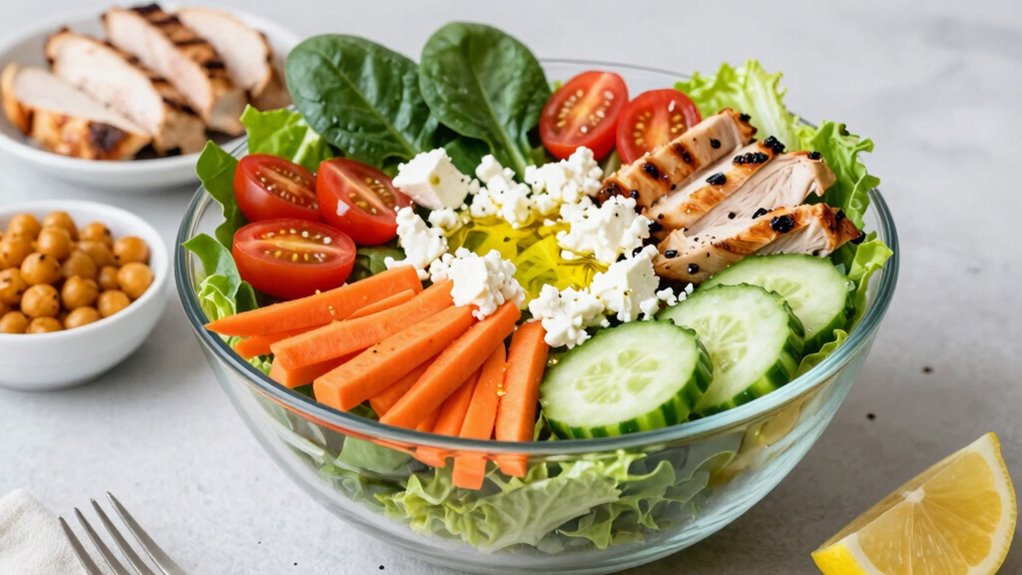
You can save time and stay healthy by prepping big salads in advance. Wash and chop vegetables, cook proteins, and store everything separately in airtight containers. Keep dressings separate until mealtime to prevent sogginess. Add fresh greens and toppings just before eating for the best texture. Reheat proteins quickly if needed, and organize your ingredients for easy assembly. By following these tips, you’ll enjoy satisfying, light dinners with minimal effort and waste—stay tuned for more helpful ideas.

Get kitchen staples and gadgets delivered free with Prime
- Fast, free delivery on millions of items
- Prime Video, Amazon Music and more included
- Member-only deals all year
Key Takeaways
- Prepare and store chopped vegetables and cooked proteins separately for quick assembly at mealtime.
- Keep dressings in separate, airtight containers to prevent sogginess and maintain freshness.
- Assemble salads just before eating, adding fresh greens and toppings for optimal texture.
- Use airtight containers to store ingredients, extending shelf life and reducing waste.
- Reheat cooked proteins briefly and add fresh greens at serving for a satisfying, lightweight dinner.
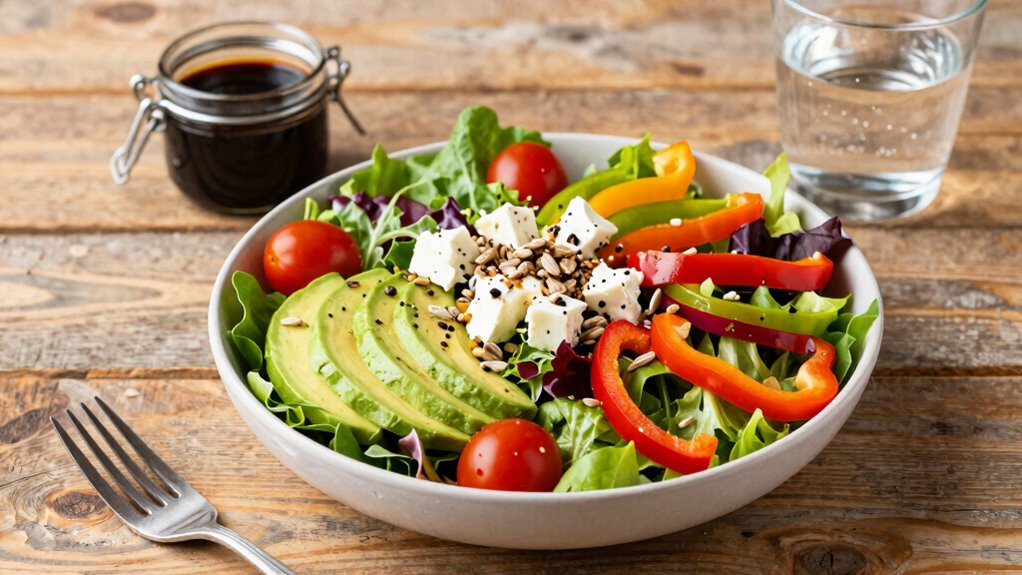
Preparing light dinners in advance can make weeknights easier and healthier. When you plan ahead, you eliminate the stress of figuring out what to eat after a busy day, and you’re more likely to stick with nutritious choices. Big salads are perfect for this because they’re filling, versatile, and quick to assemble. The key is to prepare ingredients in a way that keeps them fresh and flavorful until you’re ready to eat. Start by washing and chopping your vegetables — think crisp greens, crunchy cucumbers, and colorful bell peppers. Store these separately in airtight containers so they stay crisp. Protein options like grilled chicken, boiled eggs, or chickpeas can be cooked in advance and added later for an extra satisfying meal.
When it comes to healthy dressing options, it’s best to prepare or choose dressings that don’t contain preservatives or excess sugar. A simple vinaigrette made from olive oil, lemon juice, Dijon mustard, salt, and pepper is easy to make and keeps well in the fridge. For variety, try balsamic vinegar or Greek yogurt-based dressings. To prevent sogginess, keep dressings separate from the salad until you’re ready to eat. Pouring just enough dressing and tossing the salad right before serving ensures you get a fresh, crisp bite every time. If you prefer to make bigger batches of dressing, store them in small, airtight containers and shake before use. Always check the labels if you buy pre-made dressings, opting for options with healthier ingredients. Proper storage techniques help maintain freshness and prevent spoilage, making your meal prep more effective. Learning about food preservation methods can further extend the shelf life of your prepped ingredients. Additionally, choosing the right storage containers can help keep ingredients organized and fresh longer. Incorporating airtight containers is especially beneficial for maintaining the quality of your prepped ingredients over several days.
Storage and reheating tips are essential to keep your prepped salads fresh and flavorful. Use airtight containers to prevent moisture loss and keep ingredients from spoiling. If you’re adding cooked proteins, store them separately from the greens to avoid wilting. When it’s time to eat, assemble your salad quickly, adding the toppings and dressing last. Reheating cooked components like grilled chicken or roasted vegetables is simple—just use a microwave or warm them briefly in a skillet. Be cautious with reheating greens, as they tend to become soggy; it’s better to add fresh greens when you’re ready to eat. Additionally, proper storage techniques can help reduce food waste by extending the usability of your ingredients. Keeping your ingredients organized in clear containers helps you see what you have and makes assembling the salad effortless. With these storage and reheating tips, you can enjoy a fresh, satisfying dinner without spending much time in the kitchen after a long day. Preparing big salads in advance makes healthy eating both manageable and enjoyable, helping you stay on track with your nutrition goals.
airtight food storage containers for salads
As an affiliate, we earn on qualifying purchases.
As an affiliate, we earn on qualifying purchases.
Frequently Asked Questions
How Long Can Prepped Salads Stay Fresh in the Fridge?
Prepped salads typically stay fresh in the fridge for 3 to 4 days if you follow proper salad storage tips. To maximize freshness preservation, store salad greens separately from wetter ingredients like dressings or tomatoes, and use airtight containers. Keep the salad chilled at or below 40°F. By doing this, you guarantee your salads stay crisp and delicious, reducing waste and making your meal prep more convenient.
What Are Some Protein Options for Light Salads?
Think of your salad as a stage, and protein as the star performer. You can add vegetarian proteins like chickpeas, tofu, or edamame, which pack a punch without beefing up the calorie count. For vegan options, try seitan or tempeh for texture and flavor. These choices keep your salad satisfying and plant-based, making every bite a nourishing act that keeps you energized without weighing you down.
Can I Customize Salads for Different Dietary Needs?
Yes, you can customize salads for different dietary needs easily. You just need to choose suitable salad toppings, like nuts or seeds for added protein or fiber, and adjust your dressing variations to suit your preferences or restrictions—like using vinaigrettes instead of creamy dressings. This way, you create a flavorful, satisfying meal tailored to your diet, whether you’re reducing carbs, increasing protein, or avoiding certain ingredients.
How Do I Prevent Salads From Becoming Soggy?
Did you know salads with fruit pairings stay fresh longer? To prevent sogginess, keep dressings separate until you’re ready to eat. Use dressing techniques like drizzling lightly or choosing thicker dressings that won’t soak into greens. Add fruit just before serving for a crunch and freshness. You can also layer ingredients with sturdy greens at the bottom and delicate toppings on top to maintain crispness.
What Are Quick Dressing Ideas for Salads?
You can whip up quick salad dressings with vinaigrette variations like lemon Dijon or honey balsamic, which are easy and flavorful. To add a fresh twist, try herb infusions using basil, dill, or parsley mixed into your dressing. Simply whisk together your chosen ingredients, and you’re set. These dressings are quick, customizable, and perfect for keeping your salads light yet satisfying.
Conclusion
So, next time you’re craving a satisfying yet light dinner, give these big salads a try. Not only do they save time and effort, but they also prove that healthy, filling meals don’t have to be complicated. Some say salads lack substance, but with the right ingredients, they’re a complete meal. Believe it or not, embracing salad as your main dinner can boost your energy and keep you feeling full longer—proof that simplicity can be powerful.
Fall Picks
fall essentials
As an affiliate, we earn on qualifying purchases.