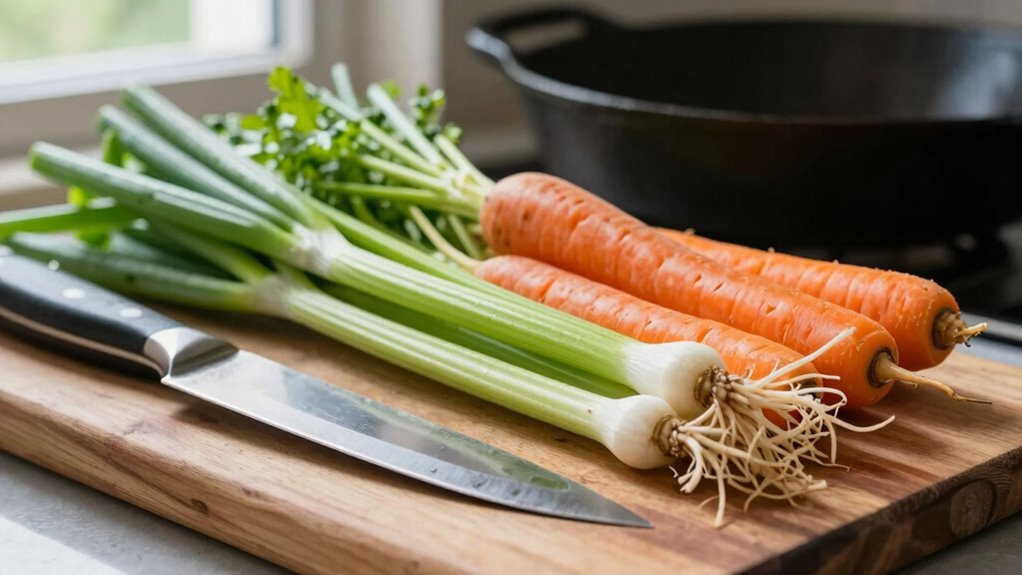

To use vegetable scraps like a pro, start by thoroughly rinsing and storing them in airtight containers or bags in your freezer. Get creative with tools such as sharp knives or strainers to make the most out of peels, stems, and tops. Incorporate these parts into stocks, salads, or snacks to maximize flavor and reduce waste. Keep practicing and exploring new ideas—there’s plenty more to discover in root-to-stem cooking.
Key Takeaways
- Store vegetable scraps properly in airtight containers or resealable bags to maintain freshness and prevent spoilage.
- Incorporate scraps into stocks, broths, salads, or roasted dishes to maximize flavor and reduce waste.
- Use sharp tools and gentle techniques when peeling or trimming to minimize unusable waste.
- Explore creative uses like making pesto, smoothies, or pickles with vegetable greens and peels.
- Establish kitchen routines to save, organize, and utilize scraps regularly, promoting sustainable cooking practices.
What Is Root-To-Stem Cooking: and Why It Matters
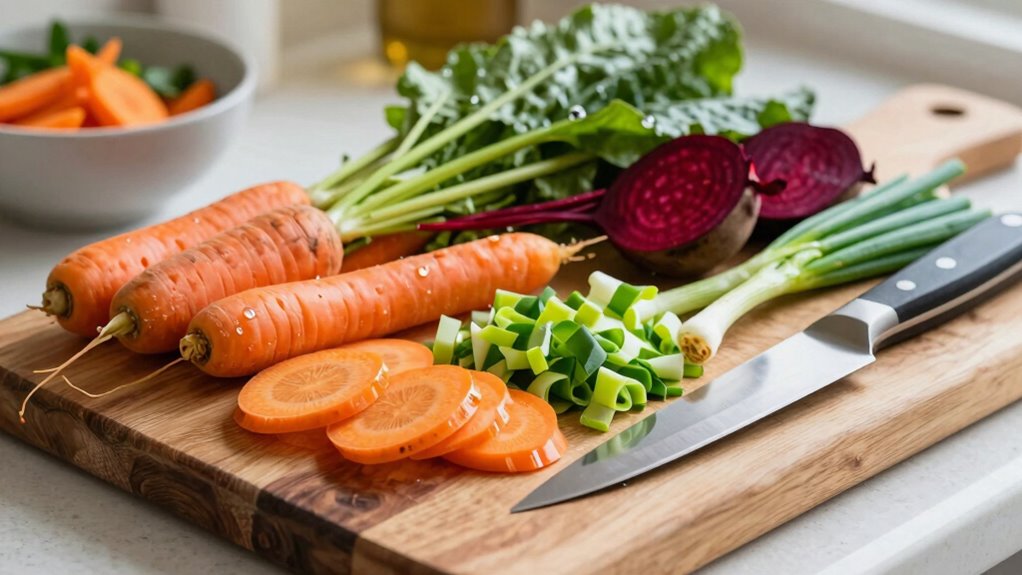
Root-to-stem cooking is a sustainable approach that involves using the entire plant, from root to leaf, to reduce waste and maximize flavor. By doing so, you liberate more flavor extraction from every part of the vegetable, enriching your dishes with deeper, more complex tastes. This method minimizes waste because you’re not discarding scraps that can still be flavorful and nutritious. Instead, you embrace a mindful cooking style that values each part of the plant, helping you cut down on unnecessary waste. Not only does this approach benefit the environment, but it also encourages creativity in the kitchen. Root-to-stem cooking turns what might seem like scraps into valuable ingredients, making your meals more resourceful and flavorful.
How to Prepare and Store Vegetable Scraps for Cooking
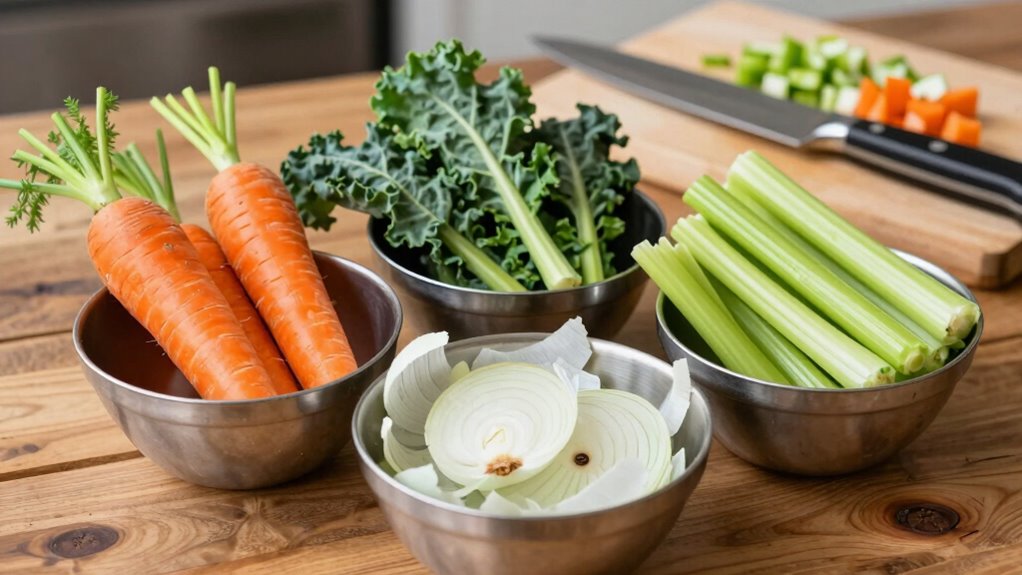
To make the most of vegetable scraps, you should start by thoroughly rinsing them to remove dirt and pesticides. Proper preparation guarantees better flavor and safety. Once cleaned, store scraps in airtight storage containers to prevent spoilage and odors. Consider using freezer-safe containers or resealable bags for longer preservation. Label containers with the date to track freshness. To reduce waste, explore composting techniques like vermicomposting or cold composting, which turn scraps into nutrient-rich soil. Keep scraps separate from other kitchen waste to streamline your composting process. Regularly empty and clean storage containers to prevent mold and bacteria buildup. Additionally, understanding composting methods can help you turn scraps into valuable soil amendments, promoting sustainable gardening practices. Proper scrap storage techniques further enhance the efficiency of root-to-stem cooking and reduce environmental impact. Incorporating supportive breakfast options such as vegetable-based dishes can also complement your sustainable cooking efforts. This approach helps you efficiently use scraps in cooking and supports sustainable practices. Proper prep and storage make root-to-stem cooking easier and more eco-friendly. Moreover, employing efficient storage solutions can further extend the lifespan of your vegetable scraps, minimizing waste.
Essential Tools and Techniques for Using Vegetable Scraps
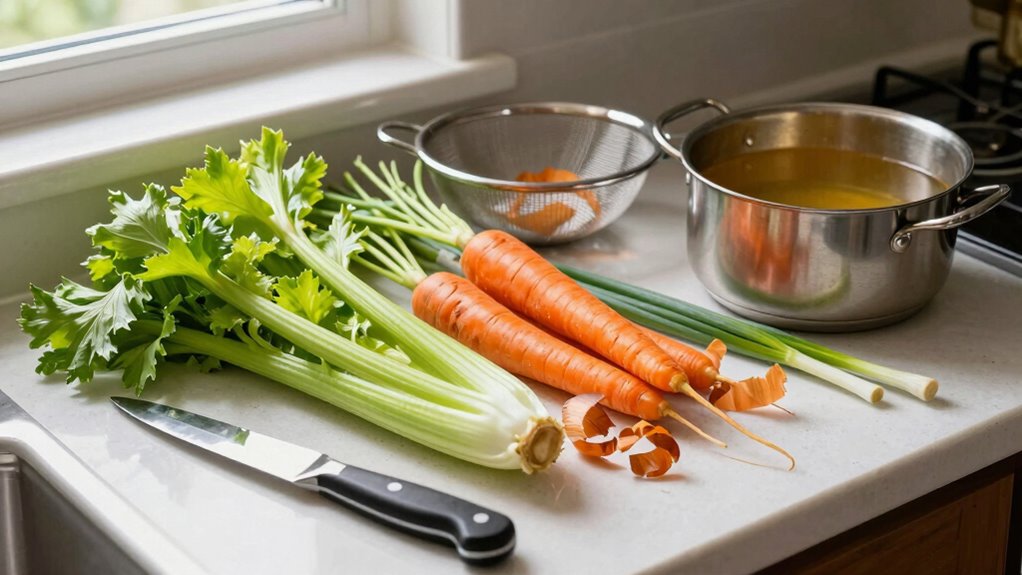
Using vegetable scraps efficiently starts with having the right tools and knowing key techniques. Keep your kitchen organized by storing scraps in clear containers or designated bins, making them easy to access and identify. Use a sharp knife or mandoline for precise, quick trimming, which minimizes waste and speeds up prep. A fine-mesh strainer or cheesecloth is essential for extracting maximum flavor when making broths or stocks. To enhance flavor, toast scraps like onion skins or garlic peels before adding them to your boil. Remember, consistent technique and proper storage not only streamline your process but also boost flavor enhancement, turning humble scraps into rich, savory bases. Mastering these tools and methods helps you maximize every bit of your vegetables. Proper storage ensures your scraps stay fresh and ready for use, reducing waste and improving flavor. Additionally, understanding the culinary principles behind flavor extraction can help you make more flavorful, nutrient-rich broths from scraps, and utilizing power tools like a sharp knife or mandoline can make prep faster and more precise.
Easy Recipes Using Carrot Tops, Broccoli Stems, and Potato Skins
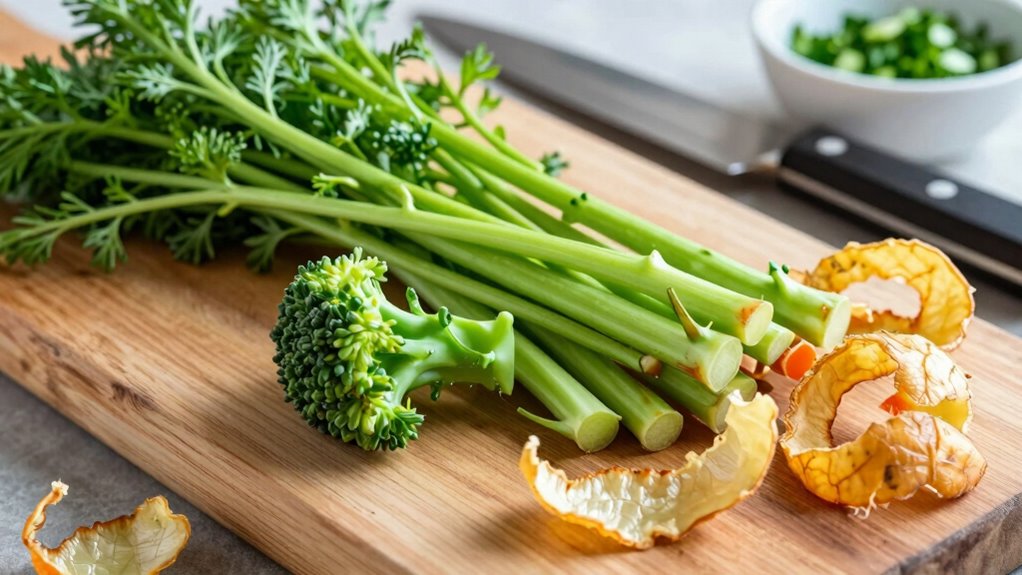
You can turn carrot tops, broccoli stems, and potato skins into delicious, nutritious meals with simple recipes that require minimal effort. By focusing on flavor pairing, you enhance the natural tastes of these scraps, making them the star of your dish. Proper kitchen organization helps you keep scraps accessible, reducing waste and inspiring creativity. For example, blend carrot tops into pesto, chop broccoli stems for stir-fries, or roast potato skins with herbs for a crispy snack. Keep these tips in mind:
Transform kitchen scraps into tasty, nutritious dishes with simple, flavor-focused recipes and organized prep.
- Store scraps in designated containers for easy access
- Experiment with complementary herbs and spices
- Use small portions to prevent waste
- Mix scraps into versatile dishes like soups or salads
- Maintain an organized kitchen to streamline root-to-stem cooking
- Practicing kitchen organization makes it easier to incorporate scraps regularly
These practices empower you to maximize flavor and minimize waste effortlessly.
Ways to Incorporate Scraps Into Soups, Stocks, and Salads

Using scraps in soups, stocks, and salads boosts flavor and makes your meals more vibrant. It’s also a smart way to cut down on food waste and get the most out of every ingredient. By incorporating these leftovers, you create richer dishes while being more environmentally conscious.
Enhancing Flavor Profiles
Incorporating scraps into soups, stocks, and salads is a simple way to boost flavor while reducing waste. To maximize flavor enhancement, focus on seasoning strategies that draw out natural umami and depth. Use vegetable scraps like onion skins, garlic peels, and carrot tops to add complexity. Consider roasting scraps before adding them to intensify their aroma. Incorporate herbs and spices from scraps for layered seasoning. Keep in mind these key points:
- Balance strong flavors with mild ingredients for harmony
- Use scraps at different stages to build depth
- Avoid over-seasoning; taste as you go
- Combine scraps with aromatics like bay leaves or peppercorns
- Strain scraps carefully to avoid cloudy liquids
- Employ natural filtration systems to clarify broths without chemical additives.
Reducing Food Waste
Ever wondered how to turn kitchen scraps into flavorful additions instead of waste? By incorporating scraps into soups, stocks, and salads, you’re practicing smart food preservation and ingredient sourcing. Vegetable peels, onion ends, and herb stems add depth to homemade broths, reducing reliance on store-bought options and minimizing waste. Compost scraps when possible, but use what you can in your cooking to boost flavor and nutrition. This approach not only cuts down on landfill waste but also stretches your ingredients further, saving money. Plus, it encourages mindful consumption and sustainable habits. Learning to utilize scraps effectively transforms your kitchen into a zero-waste zone, making every part of your produce count and elevating your cooking to a more eco-friendly, resourceful level.
Benefits of Root-To-Stem Cooking: Saving Money and Reducing Waste
Root-to-stem cooking helps you save money and cut down on food waste by making the most of every part of vegetables. By using scraps like stems, leaves, and peels, you contribute to kitchen sustainability and support food waste reduction. This approach not only minimizes waste but also stretches your grocery budget. When you embrace root-to-stem cooking, you turn what might be discarded into nutritious ingredients.
- Reduce the need to buy extra produce
- Maximize ingredient use and flavor
- Lower your environmental impact
- Encourage mindful shopping habits
- Support a more sustainable food system
Common Challenges With Vegetable Scraps and How to Fix Them
While using vegetable scraps is a great way to reduce waste, it can also come with some challenges that might discourage you from making the most of every part. One common issue is dealing with tough or uneven peeling, which can make scraps less appealing for cooking. To fix this, refine your peeling techniques by using sharp tools and gentle motions. Storage solutions also matter; scraps can spoil quickly if not stored properly. Keep them in airtight containers or reusable bags in the fridge, and use them within a few days. Proper food storage practices help maintain freshness and prevent spoilage, ensuring your vegetable scraps stay usable longer. Being mindful of spoilage prevention techniques can further extend their usability. For example, choosing the right preservation methods can significantly prolong freshness. Additionally, understanding the vegetable characteristics can help you determine the best way to prepare and store your scraps for future use. Proper preparation and storage techniques are essential for minimizing waste and maximizing flavor. Here’s a quick guide:
| Challenge | Solution | Tips |
|---|---|---|
| Difficult peeling | Use sharp peels or tools | Avoid thick or fibrous layers |
| Spoilage of scraps | Proper storage | Keep dry and cooled |
| Scraps drying out | Use airtight containers | Cover with a damp cloth if needed |
Making Root-To-Stem Cooking a Daily Habit
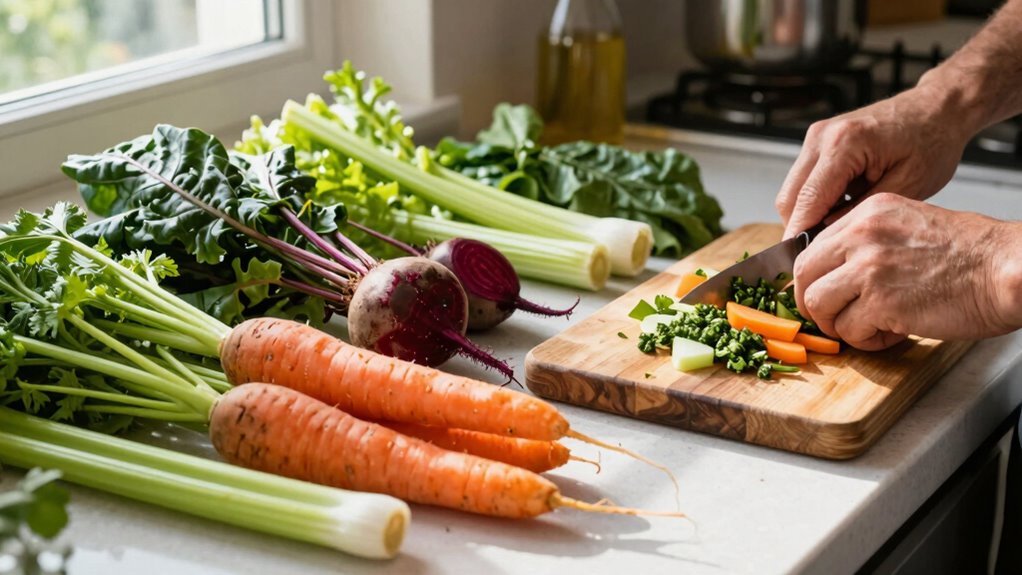
To make root-to-stem cooking part of your daily routine, start by finding creative ways to use scraps in your meals. Establishing simple habits, like saving vegetable ends or planning meals around these parts, makes it easier to stay consistent. Once you integrate these steps into your daily life, you’ll naturally develop a sustainable cooking practice. Incorporating eco-friendly accommodations can also inspire you to adopt more environmentally conscious habits in other aspects of your life. Understanding wood movement and how it affects materials can help you make smarter choices when repurposing scraps or planning your kitchen waste management. Additionally, learning about biography finder insights can motivate you to explore the stories behind ingredients, adding depth to your cooking journey. Being aware of sustainable practices can further enhance your commitment to reducing waste and supporting eco-friendly methods. Developing an awareness of waste reduction techniques can help you optimize your use of scraps and minimize unnecessary disposal.
Incorporate Scraps Creatively
Incorporating scraps creatively transforms everyday kitchen waste into valuable ingredients, making root-to-stem cooking easier to practice daily. Use scraps like carrot tops, onion peels, and beet greens to add flavor and nutrition. These leftovers can be turned into broths, pestos, or flavor-enhancing toppings, reducing waste and boosting taste. To maximize their potential, consider:
- Incorporating vegetable scraps into homemade stocks
- Using citrus peels for zest and aroma
- Blending greens into smoothies or pestos
- Composting kitchen scraps to enrich garden soil
- Experimenting with different flavor combinations for new dishes
- Exploring AI ethics to develop sustainable and responsible cooking practices that minimize waste and promote environmental stewardship. Additionally, staying informed about performance metrics can help optimize the use of scraps and assess their contribution to your cooking efficiency. Understanding the circular economy principles can further inspire innovative ways to reuse kitchen waste and create a more sustainable culinary routine. Recognizing food waste reduction strategies can also help you align your cooking habits with environmental goals and resource conservation.
Establish Routine Habits
Turning root-to-stem cooking into a daily habit requires establishing simple routines that become part of your regular kitchen practices. Start by organizing your kitchen to make scraps easily accessible, encouraging consistent use. Incorporate meal planning into your routine, mapping out recipes that utilize vegetable tops, peels, and stems. When you plan your meals ahead, you’re more likely to save scraps and find creative ways to use them. Keep containers for scraps visible and ready, turning waste into valuable ingredients. Make it a habit to check your scrap containers regularly and incorporate them into your cooking. Over time, these routines will become second nature, reducing waste and elevating your cooking skills. Consistency is key to making root-to-stem cooking a sustainable part of your daily life.
Creative Ideas to Use Every Part of Your Vegetables
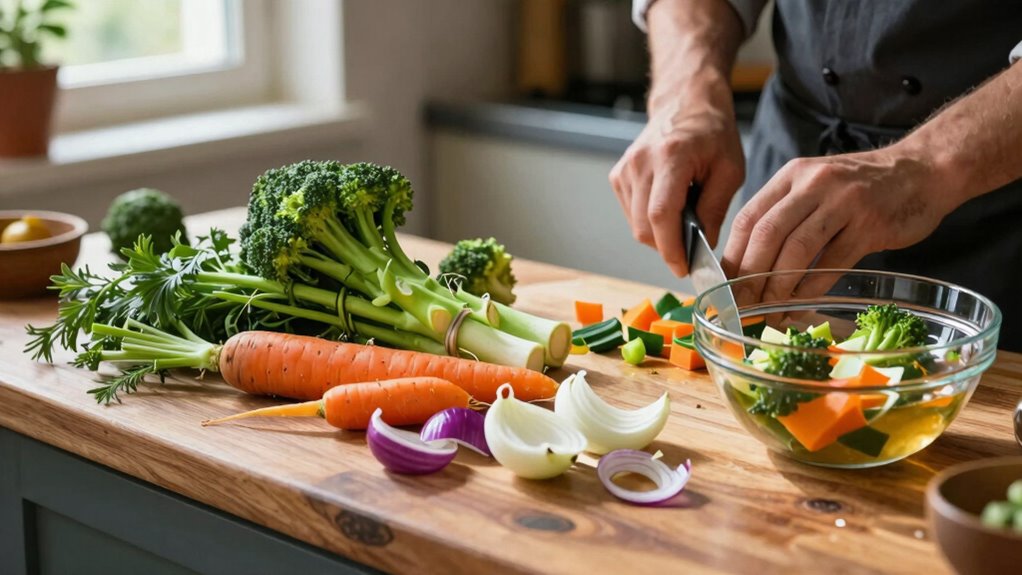
Have you ever wondered how to make the most of every vegetable you buy? Using stems, peels, and scraps can discover new flavors and nutrition. Get creative by transforming vegetable scraps into plant-based proteins with fermentation techniques, turning leftovers into tasty, probiotic-rich snacks. You can also simmer vegetable tops for broth, use peels in pestos, or dry scraps for seasonings. Here are some ideas to inspire you:
Make the most of vegetable scraps by fermenting, simmering, roasting, blending, and composting to reduce waste and boost flavor.
- Incorporate vegetable stems into salads for crunch
- Ferment peels into tangy condiments or drinks
- Roast vegetable ends to develop sweet, smoky flavors
- Blend scraps into smoothies or soups for extra nutrients
- Use peels and trimmings for homemade compost or broth bases
Every part of your vegetables has potential—think beyond the usual and reduce waste while boosting flavor.
Frequently Asked Questions
How Do I Know Which Vegetable Scraps Are Edible and Safe?
To identify safe scraps, look for common edible parts like carrot tops, onion skins, and celery leaves. Avoid scraps with mold, sliminess, or a bad smell, as these indicate spoilage. Always wash scraps thoroughly before using, and be cautious with unfamiliar vegetables—research their edible parts first. When in doubt, stick to well-known, safe-to-eat vegetable scraps to guarantee you’re using only edible and safe leftovers.
Can Root-To-Stem Cooking Be Done With All Types of Vegetables?
Think of root-to-stem cooking as a canvas—you can use most vegetable varieties, but some require different cooking techniques. Leafy greens, stems, and roots work well, while delicate vegetables like tomatoes or lettuce aren’t ideal. To succeed, learn which parts are edible and adapt your methods accordingly. With a little practice, you’ll turn scraps into culinary treasures, making the most of every vegetable and reducing waste.
How Long Do Vegetable Scraps Stay Fresh for Cooking Purposes?
Vegetable scraps typically stay fresh for about 3 to 5 days in the fridge, depending on the type and freshness when collected. To maximize their usability, store scraps in an airtight container and use them promptly to reduce waste. This practice supports composting benefits and takes advantage of seasonal availability, ensuring you’re using ingredients at their peak. Keep an eye on scraps, and don’t hesitate to cook or freeze them soon after collecting.
Are There Specific Storage Methods to Maximize Scrap Longevity?
Did you know that properly stored scraps can last up to three months? To maximize their longevity, store vegetable scraps in airtight containers or freezer bags, removing excess air to prevent spoilage. Label them clearly and keep them in the coldest part of your freezer. This way, you reduce waste, save money, and always have fresh scraps ready for broths, stocks, or composting.
How Can I Incorporate Scraps Into Meals Without Altering Flavor?
You can incorporate scraps into meals without altering flavor by using milder parts like carrot tops or onion ends in broths and stocks, which preserve flavor and reduce waste. Add these scraps during cooking, then strain them out, ensuring the main dish remains unchanged. This method maximizes flavor preservation while reducing waste, allowing you to enjoy the benefits of root-to-stem cooking without compromising taste.
Conclusion
Think of root-to-stem cooking as tending a garden where every part blooms. When you use every scrap, you’re nurturing your kitchen’s bounty, turning simple leftovers into a thriving, waste-free oasis. Like a gardener who cherishes each seed, you’ll find beauty and value in every piece. Embrace this practice daily, and watch your cooking flourish, transforming scraps into a lush landscape of flavor, savings, and sustainability.