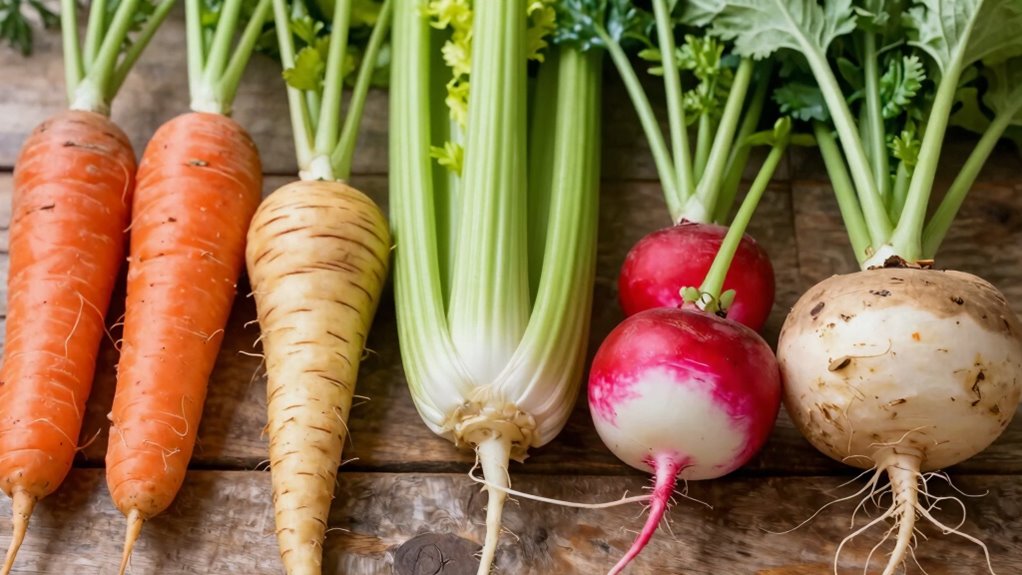

To start root-to-stem cooking, choose five versatile vegetables like carrots, broccoli, radishes, onions, and potatoes. Keep the edible parts you usually toss—carrot tops, broccoli stems, radish greens, onion skins, and vegetable peels—and find creative ways to use them. Add stems to salads, turn peels into broth, or incorporate greens into sauces. As you get comfortable, you’ll discover how much flavor and nutrition you can uncover from every part—there’s plenty more to explore beyond the basics.

Get kitchen staples and gadgets delivered free — and shop member deals
- Fast, free delivery on millions of items
- Access to Prime Big Deal Days deals on October 6–7
- Prime Video, Amazon Music and more included
Key Takeaways
- Start with versatile vegetables like carrots, broccoli, radishes, onions, and celery, which have edible stems, tops, or peels.
- Save and incorporate vegetable scraps such as peels, stems, and greens into stocks, salads, or pestos.
- Use carrot tops and radish greens in salads or pestos to maximize their nutritional value.
- Collect vegetable peels for homemade broths to reduce waste and add flavor.
- Experiment gradually, incorporating scraps into everyday meals to build sustainable cooking habits.
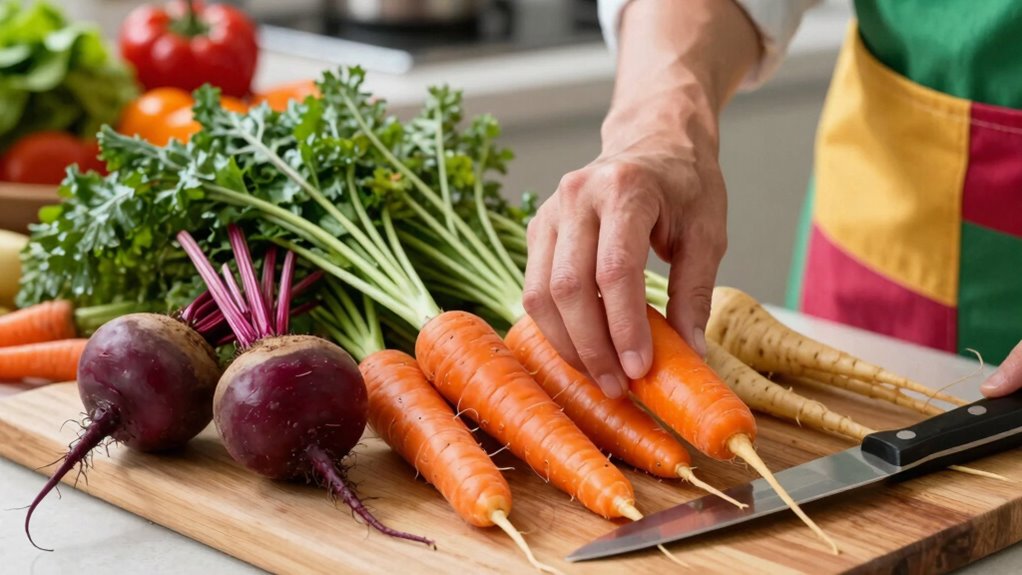
Root-to-stem cooking is a simple way to reduce waste and make the most of your produce. When you embrace this approach, you’re not just stretching your groceries further—you’re also supporting sustainable eating practices that benefit the environment. By using every part of the vegetables you buy, you cut down on kitchen waste and lessen your carbon footprint. It’s a practical way to be more mindful of how you consume food, helping you turn scraps into delicious meals instead of discarding them. Starting with vegetables makes this method accessible because most parts—roots, stems, leaves, and peels—are edible and packed with flavor and nutrients.
When you begin, you might be surprised how many vegetable scraps you typically toss out. For example, carrot tops, broccoli stems, and radish greens are often discarded but can be repurposed into flavorful dishes. Instead of throwing away those ends and stems, wash and chop them to add to soups, stews, or stir-fries. By doing so, you’re not only reducing kitchen waste but also enhancing your meals with extra nutrition and flavor. Incorporating these parts into your cooking means you’re practicing sustainable eating by making full use of what you buy, minimizing waste, and saving money.
Getting comfortable with root-to-stem cooking requires a little experimentation. Start small—try using vegetable peels in homemade stocks or save the stems for pestos. For example, broccoli stems can be shredded and added to salads, while onion skins can be dried and used to add depth to broths. As you become more familiar, you’ll develop a habit of checking your vegetable scraps before discarding them. This habit helps you see the potential in every part of your produce, reducing overall kitchen waste, and understanding how to utilize all edible parts can lead to a more sustainable eating approach. Recognizing the value of food scraps can inspire more creative and resourceful cooking practices. Incorporating food scraps into your cooking not only minimizes waste but also introduces new flavors and textures to your meals. Over time, this practice becomes second nature, reducing your overall waste and making your kitchen more eco-friendly. Embracing sustainable eating practices can transform your cooking habits and contribute positively to the environment.
As an affiliate, we earn on qualifying purchases.
Frequently Asked Questions
How Do I Store Root Vegetables to Keep Them Fresh Longer?
To keep root vegetables fresh longer, you should focus on proper vegetable preservation and storage techniques. Store them in a cool, dark, well-ventilated place, like a cellar or pantry, ideally around 32-40°F. Keep them away from moisture to prevent rot, and avoid storing with onions. Use breathable containers like mesh bags or baskets to promote airflow. Regularly check for spoilage to maintain freshness and extend their shelf life.
Are There Specific Tools Needed for Root-To-Stem Cooking?
Some believe you need special tools for root-to-stem cooking, but that’s not entirely true. You primarily need sharp knives for precise trimming and peeling, along with peelers and paring knives. To guarantee kitchen safety, always keep your tools well-maintained and sharp, preventing accidents. A sturdy cutting board is essential, and regular tool maintenance keeps everything in top condition. With these, you can confidently work efficiently and safely.
Can Root-To-Stem Methods Be Applied to Fruits as Well?
Yes, you can apply root-to-stem methods to fruits too. For fruit preservation and preparation techniques, use peels, cores, and stems creatively—think of making fruit preserves, smoothies, or compost. Just like with vegetables, using every part minimizes waste and maximizes flavor. Be sure to wash fruits thoroughly and consider the texture or taste of each part before including it in your recipes for the best results.
How Do I Choose the Best Vegetables for Beginners?
You should choose vegetables that are easy to handle and versatile for beginners, like carrots, zucchini, and potatoes. Consider seasonal variations, as fresh, in-season produce has better flavor and texture. Look for vegetables with firm, unblemished surfaces. Experiment with flavor pairings like herbs, garlic, or lemon to enhance taste. Starting with familiar, readily available vegetables makes your cooking experience enjoyable and helps you build confidence in root-to-stem techniques.
What Are Common Mistakes to Avoid in Root-To-Stem Cooking?
You can’t afford to make careless mistakes in root-to-stem cooking—it’s as essential as breathing! Avoid common pitfalls like rushing and neglecting knife safety; always handle knives carefully. Use proper peeling techniques to prevent waste and injury, and don’t discard edible parts prematurely. Pay attention to the textures and flavors of each vegetable, ensuring you prepare them correctly. These steps help you maximize flavor and minimize waste, making your cooking more sustainable and delicious.
Conclusion
By embracing root-to-stem cooking, you’re not just saving food waste—you’re nurturing your connection to every part of your vegetables. Think of it like finding hidden treasures in your kitchen, turning scraps into delicious meals. It’s simple, rewarding, and respectful to nature, much like a gentle hug from the earth. So, start small with these five vegetables and watch your cooking—and appreciation—grow. Your kitchen adventures will become more sustainable and satisfying than ever before.
Fall Picks
fall essentials
As an affiliate, we earn on qualifying purchases.



![Eating Out [Grickle]](https://thegracefulkitchen.net/wp-content/uploads/2026/10/eating-out-grickle-featured-260x140.jpg)