
To make a flavorful, eco-friendly roasted vegetable scrap stock, gather your vegetable trimmings like onion skins, carrot ends, and celery leaves, and freeze them until you have enough. Roast the scraps until caramelized and fragrant, then simmer them in water for at least an hour. Strain the broth, store it properly, and enjoy a zero-waste, nutrient-rich addition to your soups and stews. Keep exploring to discover more tips for maximizing flavor and sustainability in your cooking.

Get kitchen staples and gadgets delivered free with Prime
- Fast, free delivery on millions of items
- Prime Video, Amazon Music and more included
- Member-only deals all year
Key Takeaways
- Collect and freeze vegetable scraps like onion skins, carrot ends, and herb stems until enough for roasting.
- Roast scraps until caramelized to develop rich, smoky flavors and natural sweetness.
- Simmer roasted scraps in water for at least one hour to extract maximum flavor.
- Strain the broth, discard solids, and store in airtight containers for freshness.
- Using scraps reduces waste, enhances dish flavor, and promotes eco-friendly cooking practices.
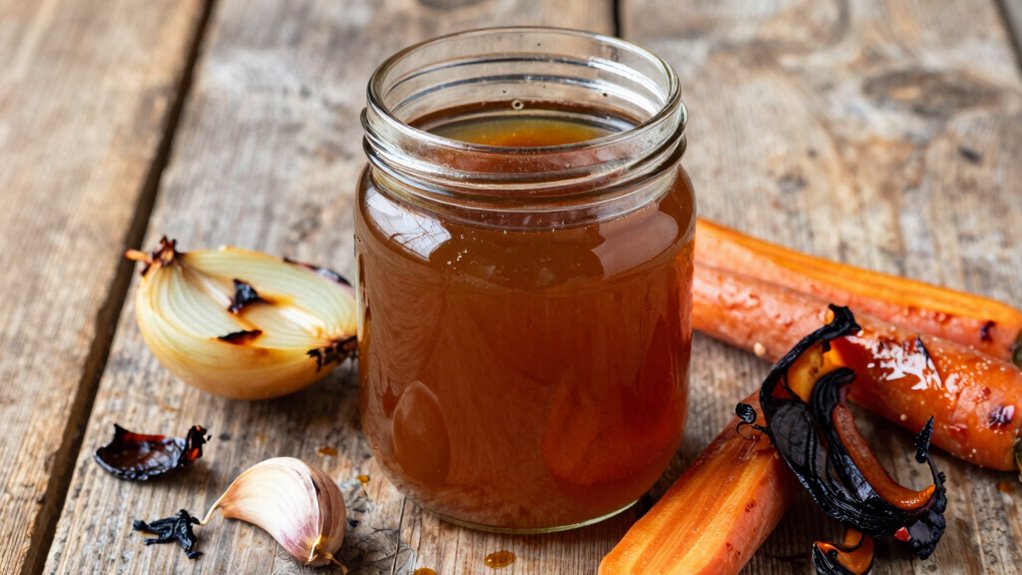
Making your own roasted vegetable scrap stock is an easy way to reduce waste and add rich flavor to your dishes. Instead of tossing vegetable trimmings or peels, you gather them and transform them into a nourishing broth. This zero-waste approach not only minimizes your environmental impact but also boosts the flavor profile of your soups, stews, and sauces. Roasting the scraps first deepens their natural sweetness and imparts a smoky aroma, elevating the overall taste of your stock. You’ll notice that this process creates a more complex flavor enhancement compared to plain vegetable broth, giving your meals a richer, more satisfying taste.
Transform vegetable scraps into flavorful, eco-friendly broth by roasting and simmering—reducing waste while enriching your dishes.
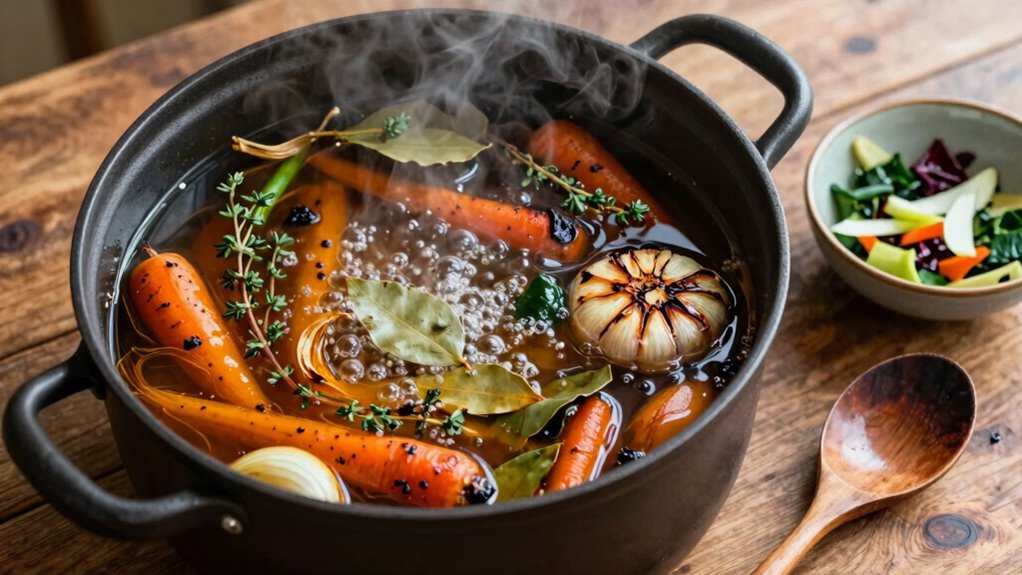
To start, keep a container in your freezer dedicated to collecting vegetable scraps—onions, garlic skins, carrot ends, celery leaves, mushroom stems, and herb stems work especially well. Once you have enough, spread these scraps on a baking sheet and roast them in the oven until they’re caramelized and fragrant. Roasting enhances their natural sugars and creates a deeper, more robust flavor that’s perfect for your stock. After roasting, transfer the scraps into a large pot, add water, and bring everything to a simmer. Let it cook gently for at least an hour, allowing the flavors to meld. Understanding flavor development is key to making a truly delicious broth. Incorporating a variety of vegetable scraps can also enrich the nutritional content of your broth, making it even more beneficial for your health. Including zero-waste cooking techniques like this not only benefits the environment but also encourages mindful, resourceful kitchen habits. Additionally, using sustainable cooking practices can help reduce your overall ecological footprint. Strain the broth through a fine sieve, discard the solids, and you’ll have a flavorful, nutrient-rich stock ready to use.
When it comes to storage, it’s best to keep your roasted vegetable scrap stock in airtight containers in the refrigerator if you plan to use it within a few days. For longer storage, freezing is your best bet. Use ice cube trays or small containers to portion out the broth, making it easy to add a splash of flavor to recipes whenever needed. Label the containers with the date so you can keep track of freshness. Proper storage tips ensure your broth maintains its vibrant flavor and prevents spoilage, so you always have a handy, zero-waste ingredient on hand.
As an affiliate, we earn on qualifying purchases.
Frequently Asked Questions
Can I Use Frozen Vegetable Scraps for Roasting?
Yes, you can use frozen vegetables for roasting. Just keep in mind that frozen vegetables often release more moisture, so you might want to thaw and drain them slightly before roasting to prevent steaming. Use your usual roasting techniques—spread them evenly on a baking sheet, toss with oil, and roast until crispy. This way, you’ll still get flavorful, caramelized vegetables perfect for broth or other dishes.
How Long Can I Store the Vegetable Scrap Stock?
You can store your vegetable scrap stock in airtight storage containers in the refrigerator for up to 4-5 days. For longer shelf life, freeze it for up to 3 months. Make certain to label containers with the date. Proper storage containers prevent spoilage and maintain flavor. Always check for signs of spoilage before using, and if in doubt, discard to ensure safety.
What Are Some Flavor Variations for the Broth?
You can transform your broth into a flavor symphony with creative spice combinations and flavor infusion. Add herbs like thyme or rosemary for earthy notes, or toss in ginger and garlic for warmth. For a smoky twist, include smoked paprika or chipotle. Curry powders or star anise can turn your broth into an exotic elixir. Experiment freely—your broth’s personality depends on the spices and herbs you choose to dance with.
Is It Safe to Reuse Vegetable Scraps Multiple Times?
Yes, you can reuse vegetable scraps like peelings multiple times, but the flavor will weaken with each reuse. To maximize composting benefits, collect fresh peelings regularly and avoid overusing scraps, which can lead to less nutritious broth. Reusing vegetable peelings reduces waste and supports sustainable practices, while fresh scraps provide better flavor. Keep an eye on the broth’s taste and aroma to determine when it’s time to start fresh.
Can I Add Herbs or Spices During Roasting?
Absolutely, you can add herbs or spices during roasting to create rich spice infusions and enhance flavor. Think of it as planting seeds of flavor, letting them bloom during roasting. Use herb combinations like rosemary and thyme or spices like cumin and paprika to deepen your broth’s taste. Toss them onto your veggies before roasting, and you’ll end up with a more aromatic, complex broth that elevates your dishes.
Conclusion
So, next time you toss those veggie scraps, remember—they’re not just garbage; they’re your ticket to a zero-waste broth extravaganza. Imagine turning kitchen scraps into liquid gold, while Mother Earth sighs in relief. With each simmer, you’re basically giving your compost pile a standing ovation. Who knew that compost’s best friend could also be your secret weapon against food waste? Cheers to turning leftovers into liquid love—sustainability never tasted so good.
NFL season / tailgating Picks
team gear
As an affiliate, we earn on qualifying purchases.