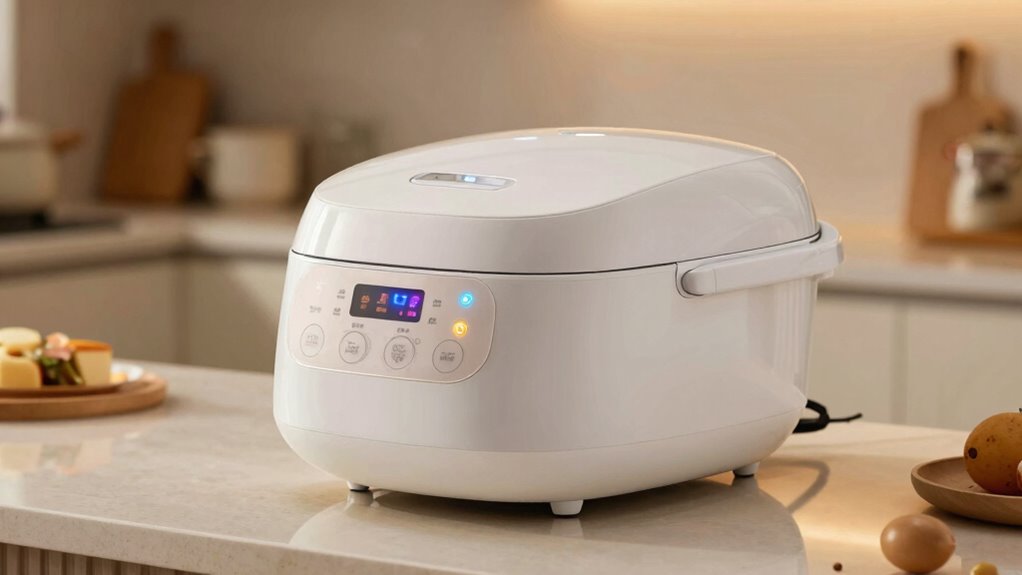
To understand your rice cooker’s settings without the jargon, focus on basic functions like white rice for fluffy, quick results, and brown rice for tougher grains needing longer cooking. Use steam for vegetables or special functions like risotto and porridge for different textures. Keep warm maintains rice’s temperature, while delay start lets you plan meals ahead. If you keep exploring, you’ll discover how to tailor each setting for perfect rice every time.
Key Takeaways
- Use basic modes like white rice for everyday cooking and brown rice for tougher grains, avoiding technical jargon.
- Match settings to rice type and desired texture for fluffy or softer results.
- Utilize keep warm and delay start functions to plan meals and keep rice fresh without confusion.
- Follow simple water-to-rice ratios and cooking times to ensure perfect, safe results.
- Properly clean and maintain your rice cooker to prevent issues and improve performance.
How to Use Your Rice Cooker Settings for Perfect Results

Ever wonder how to get perfectly cooked rice every time? Your rice cooker offers various settings for different cooking rice variations, so you can tailor the process for fluffy, tender results. Start by selecting the right setting based on your rice type—white, brown, sushi, or jasmine. Pay attention to water levels and cooking times, which may change with each mode. Proper rice cooker maintenance is essential; clean the inner pot and lid regularly to prevent residue buildup that can affect performance. Use the correct measuring cups and avoid opening the lid midway, as this interrupts the cooking process. Understanding cooking modes can help you better navigate your rice cooker’s functions. Knowing how each setting works can also help you adjust for desired rice texture, ensuring your rice turns out just right. Regularly checking and adjusting water levels based on your rice type can improve results significantly. Additionally, experimenting with different cooking techniques can help you achieve the perfect rice consistency. Mastering the temperature settings can also optimize cooking results, especially for specialty rice dishes. With a little practice, you’ll master each setting, ensuring consistent, delicious rice every time.
Understanding Basic Settings: What Each Mode Does
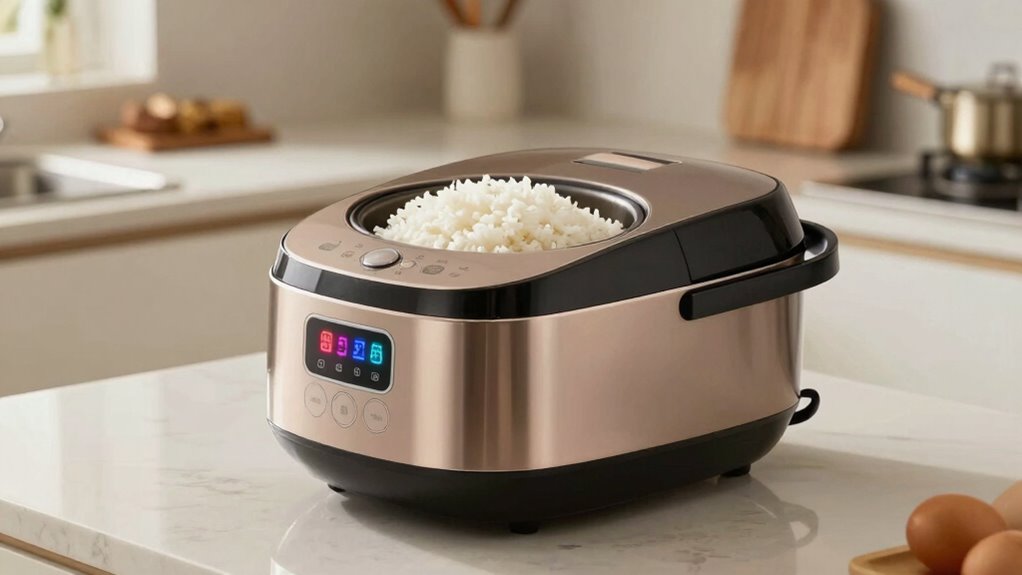
Understanding the basic settings on your rice cooker is key to achieving consistent results. Each mode serves a specific purpose, from standard cooking to quick or delicate modes. The regular or “white rice” setting is ideal for most types of rice, balancing heat and cooking time for safety and quality. The “brown rice” or “long grain” mode adjusts temperature and duration for tougher grains, ensuring thorough cooking without burning. Some models include “steam” or “keep warm” modes, which help you safely hold rice at serving temperature without overcooking. Knowing what each mode does helps you use your rice cooker more efficiently, saving energy and promoting cooking safety. Using the right setting for your rice type guarantees better results and reduces waste. Additionally, understanding the cooking modes can help you explore other techniques like steaming vegetables or preparing specialty dishes. Being familiar with these settings can also enhance your ability to use your rice cooker for multi-purpose cooking, making it a versatile tool in your kitchen.
Choosing the Right Setting for White, Brown, and Whole Grain Rice
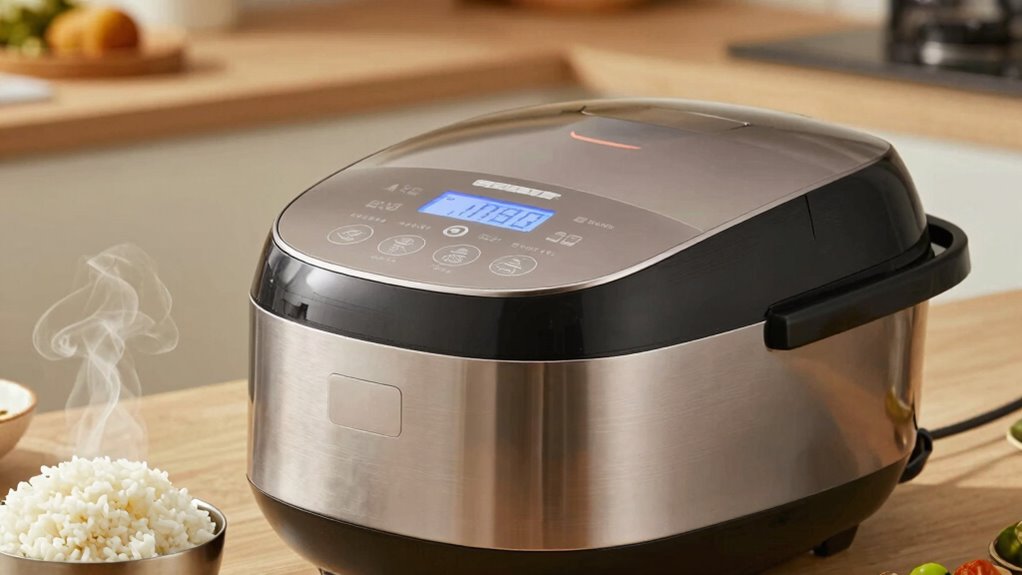
To get the perfect rice, you need to choose the right setting based on the type you’re cooking. White, brown, and whole grain rice each have different ideal cooking times, textures, and absorption needs. Understanding these differences helps you select the best setting for consistently delicious results. Additionally, using pet-friendly kitchen products and maintaining a clean cooking environment can ensure safety and hygiene while preparing your meals. Knowing the different pool types can also inspire you to create a versatile and relaxing space that complements your lifestyle. Being aware of the best gear and knife roundups for smart shopping can help you equip your kitchen with the right tools for perfect rice every time.
Ideal Cooking Times
Choosing the right cooking setting on your rice cooker is essential for perfect results, especially since different types of rice require varying times to cook thoroughly. For white rice, most cook cycles last around 10-15 minutes, ensuring it becomes fluffy and tender. Brown rice takes longer—about 20-45 minutes—due to its outer bran layer, so select a setting designed for whole grains. Whole grain rice, like wild rice, can take even longer, sometimes up to an hour. Adjusting cooking times based on rice variety is key to cooking safety; undercooked rice can pose health risks, while overcooking might lead to mush. Always follow the manufacturer’s recommended times for each rice type and avoid rushing the process to guarantee safe, well-cooked rice. Proper kitchen gear care can also help ensure your rice cooker functions optimally and lasts longer. Additionally, understanding cooking times for each rice type can help prevent common mistakes and improve overall results. Being aware of factors like rice moisture content can further refine your cooking process for the best texture and flavor.
Texture Preferences
Selecting the right cooking setting directly influences the texture of your rice, guaranteeing it meets your preferences. For white rice, choose a setting that produces a fluffy, tender grain, ideal for dishes where a light texture is desired. Brown and whole grain rice benefit from longer, slower cooking to enhance flavor and soften the tougher bran layers, which also boosts nutritional value. If you prefer a chewier bite, opt for a setting that keeps the grains slightly firmer. Conversely, for softer rice, select a setting that allows for complete absorption and gentle steaming. Adjusting these settings can also help maximize flavor enhancement by revealing more natural flavors and preserving nutrients. Proper air quality in your kitchen can also improve rice flavor by reducing dust and airborne contaminants that might affect cooking. Maintaining a clean rice cooker and using filtered water can further improve cooking quality and ensure better taste. Additionally, using appropriate water-to-rice ratios can significantly influence the final texture and flavor, helping you achieve consistent results. Being mindful of cooking time adjustments based on rice type can also enhance the overall outcome. A good understanding of number conversions can assist in accurately measuring ingredients or adjusting recipes, ensuring each grain reaches your preferred mouthfeel while maintaining its nutritional benefits.
Grain Absorption Needs
How your rice absorbs water depends on its type, and the right setting can make all the difference. Different grains have unique rice absorption rates, so choosing the correct setting helps achieve perfect moisture control. White rice needs less water and cooks quickly, so use a setting tailored for faster absorption. Brown and whole grain rice require more water and longer cooking times due to their tougher outer layers, so select a setting that allows for gradual moisture absorption. Proper rice absorption ensures evenly cooked rice with the right texture. Using the appropriate setting helps prevent under- or overcooking, maintaining ideal moisture control. Additionally, understanding the grain absorption process can help you better tailor your cooking methods for consistently perfect results. Ultimately, matching the setting to your grain type guarantees fluffy, well-cooked rice every time.
Using Special Settings for Risotto, Porridge, and More

Many rice cookers come equipped with special settings that make preparing dishes like risotto and porridge easier and more consistent. These settings help you achieve the right texture and flavor without constant monitoring. For example, the risotto setting gently simmers rice, allowing flavors to develop fully, while the porridge setting softens grains for a smooth, hearty result. These options also support flavor enhancements, such as infusing herbs or spices during cooking, and cater to nutritional options by preserving vitamins and minerals. Additionally, some settings are designed to optimize cooking techniques, ensuring your dishes turn out perfectly every time. Incorporating these settings can also help in exploring emerging trends in digital cooking appliances, making your culinary experience more innovative and efficient. Using specialized settings can also assist in meal planning, allowing you to prepare multiple dishes with consistent results. Moreover, these specialized modes often include energy-efficient features, helping to reduce electricity consumption during meal preparation. Utilizing precise temperature control can further enhance the quality of your dishes by maintaining optimal heat levels throughout the cooking process.
How Do Keep Warm and Delay Start Work?
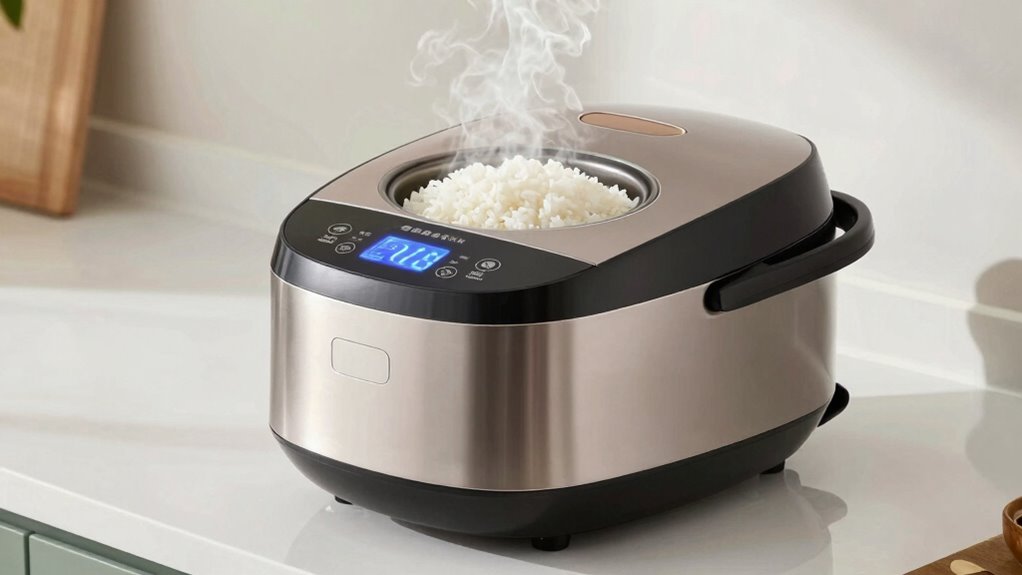
You can keep your rice warm after cooking and delay start times to fit your schedule. Understanding how these functions work helps you plan better and guarantees your food stays fresh. Let’s explore practical tips for using the keep warm feature and setting the delay start effectively. Incorporating smart technology features can further optimize your rice cooker’s performance and energy efficiency.
How Keep Warm Functions
Ever wonder how your rice cooker keeps rice warm after cooking, or how the delay start feature allows you to plan ahead? The keep warm function maintains just the right temperature to prevent rice from drying out, while conserving energy. It gently simmers rice, helping flavor enhancement by preserving aroma and taste. This setting is ideal for late eaters or when you need to prepare meals in advance.
- Maintains ideal temperature without overcooking
- Uses minimal energy to keep rice fresh
- Prevents rice from drying out or becoming mushy
- Ensures rice stays flavorful and appetizing
- Saves energy compared to reheating or leaving on high heat
This feature balances flavor and energy efficiency, keeping your rice ready without waste.
Delay Start Timing
Wondering how the delay start timing works alongside the keep warm function? When you set the delay timer, your rice cooker begins cooking at a specified future time, so your rice is ready when you want it. Keep warm then kicks in automatically to maintain perfect texture without overcooking. Some cooking myths suggest delay start ruins rice, but it works well for all rice varieties if timed correctly. Understanding these settings helps you avoid common mistakes and enjoy fresh rice anytime.
| Timing Setting | How It Works | Best For |
|---|---|---|
| Delay Start | Prepares rice later | Busy mornings |
| Keep Warm | Maintains temperature | Late eaters |
| Combined | Delays cooking, keeps warm | Flexible schedules |
| Rice Variety | Adjusts cooking time | Different rice types |
Practical Usage Tips
Understanding how the keep warm and delay start functions work together can help you plan your meals more efficiently. When used properly, they preserve flavor enhancements and make meal prep seamless. For example, you can delay cooking until just before you get home, ensuring hot, fresh rice. The keep warm setting then maintains ideal temperature without overcooking, helping with cleaning maintenance later. To maximize these features:
- Set delay start early to save time
- Use keep warm to prevent rice from drying out
- Avoid leaving rice on keep warm too long to prevent spoilage
- Regularly clean the cooker to maintain performance
- Combine delay start with keep warm for fresh meals without stress
These tips help you enjoy flavorful rice and keep your cooker in top shape.
Troubleshooting Common Rice Cooker Setting Issues
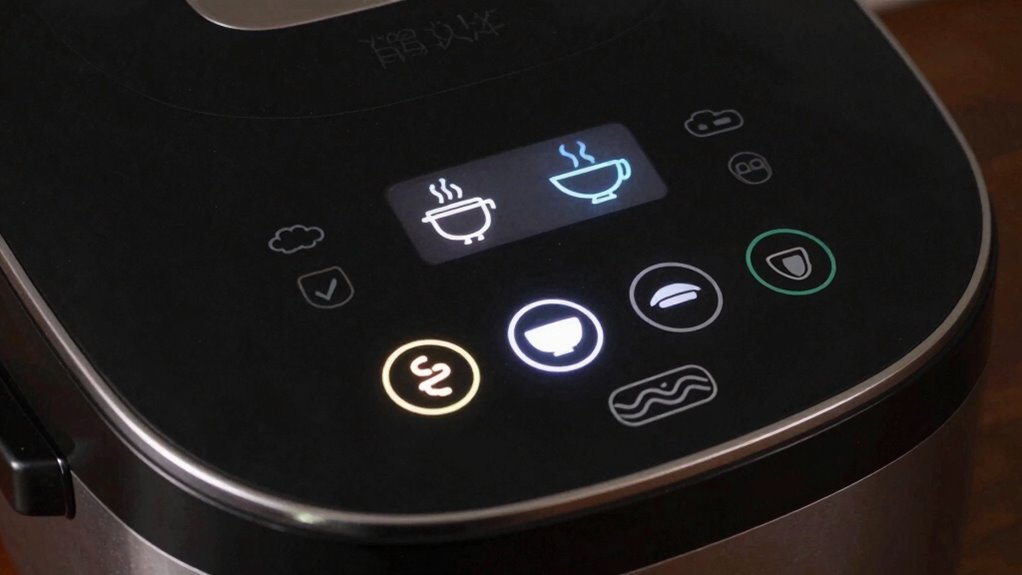
Are you frustrated when your rice cooker doesn’t seem to follow the settings you select? Sometimes, issues like undercooked or overcooked rice happen due to simple problems. First, check if the lid is sealed properly; a loose lid can affect cooking performance. Also, make certain that your rice cooker is clean and free of residue—this is vital for rice cooker safety and proper operation. If your cooker switches to keep-warm mode prematurely, it might need a reset or a quick maintenance tip like unplugging it for a few minutes. Regular cleaning and maintenance tips help prevent these issues. Finally, always use the recommended water-to-rice ratio. Troubleshooting these common setting issues keeps your rice cooker functioning correctly and guarantees perfect rice every time.
Frequently Asked Questions
Can I Cook Other Foods Besides Rice in My Rice Cooker?
Yes, you can cook other foods besides rice in your rice cooker. It’s great for cooking grains like quinoa or oatmeal, and you can also prepare vegetables by steaming them alongside or after the grains. Just adjust the settings accordingly and monitor cooking times. Using your rice cooker for these tasks makes meal prep easier and saves time, giving you versatile options for healthy, homemade dishes.
Are There Safety Tips for Using Different Rice Cooker Settings?
Think of your rice cooker as a trusted guide on your culinary journey. Always use the Steam function carefully, ensuring the lid is secure to prevent steam burns, and avoid overfilling to prevent messes. When using Keep Warm, check periodically to prevent food from drying out or spoiling. Follow manufacturer instructions, and never leave it unattended during cooking. These simple safety steps keep your cooking safe and your kitchen harmonious.
How Do I Clean My Rice Cooker After Use?
To clean your rice cooker, unplug it first, then remove the inner pot and lid. Use gentle cleaning methods with a soft sponge and mild detergent, avoiding abrasive scrubbers that could damage non-stick surfaces. Rinse thoroughly and dry completely before reassembling. For stubborn stains, soak the inner pot in warm, soapy water. Choose a mild detergent suitable for cookware to keep your rice cooker in top shape.
What Should I Do if My Rice Cooker Doesn’T Turn On?
If your rice cooker doesn’t turn on, first check the power source and make certain it’s plugged in properly. Test different outlets if needed. Then, inspect the cord and plug for damage. Sometimes, using different settings can reset or activate the cooker. If it still doesn’t work, try cleaning the contacts inside and make sure no debris is blocking the connection. If problems persist, it might be a faulty unit requiring professional repair or replacement.
Can I Adjust Cooking Times Manually on My Rice Cooker?
Did you know 70% of rice cooker users prefer manual timing for perfect results? You can usually adjust cooking times with setting adjustments, but not all models allow this. For manual timing, check your cooker’s manual or controls to see if you can set a custom cooking duration. If it’s possible, simply select the setting, then tweak the timer to match your desired cooking time for the best results.
Conclusion
Think of your rice cooker as a trusted companion in the kitchen, guiding you to perfect dishes with each setting. When I first learned to navigate its modes, it was like revealing a secret recipe book—suddenly, every grain turned out just right. With a little practice, you’ll master the basics, turning simple ingredients into comforting, home-cooked meals. Embrace the process, and soon, your rice cooker will become your culinary best friend, always ready to serve up perfection.