
To reduce food waste in just 15 minutes a day, start by tracking what you throw away using a journal or app, which helps identify waste hotspots. Plan your meals with simple apps, control portion sizes with measuring tools, and stay organized with fridge notes. Incorporate small daily habits like reusing leftovers and checking expiration dates. Keep exploring easy strategies that fit into your routine to make a bigger impact over time.
Key Takeaways
- Log discarded food daily to identify waste patterns and adjust shopping or meal plans accordingly.
- Set small, achievable goals like portion control or meal prep to reduce leftovers efficiently.
- Use a weekly menu app to plan meals, preventing impulse buys and minimizing spoilage.
- Store perishables properly with clear labels and check expiration dates regularly.
- Reuse leftovers creatively and donate excess non-perishable items to local food banks.
Why Reducing Food Waste Matters and How to Get Started
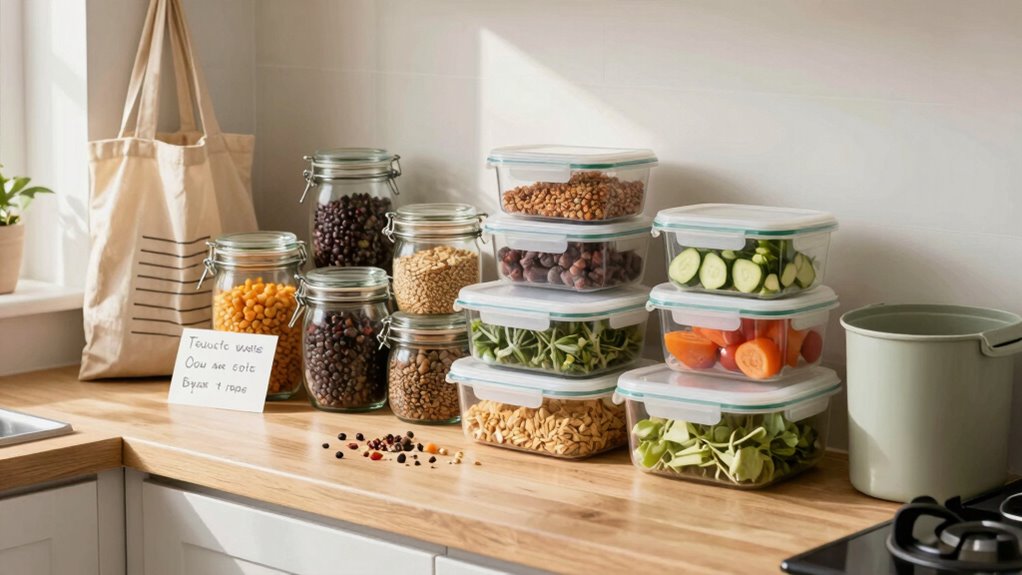
Reducing food waste is essential because it benefits both the environment and your wallet. When you donate excess food, you’re helping those in need and preventing perfectly good items from going to waste. Look for local food banks or shelters that accept donations and make regular contributions. Composting strategies are another effective way to manage scraps and organic waste at home. By composting, you turn food scraps into nutrient-rich soil, reducing landfill waste and supporting your garden. Incorporating composting techniques can help maximize space and efficiency in your composting efforts. Getting started is simple: plan your meals, buy only what you’ll use, and store food properly to extend freshness. Incorporate food donation and composting into your routine, and you’ll make a meaningful impact on reducing waste while saving money and supporting your community.
How to See Where You Waste the Most and Set Achievable Goals
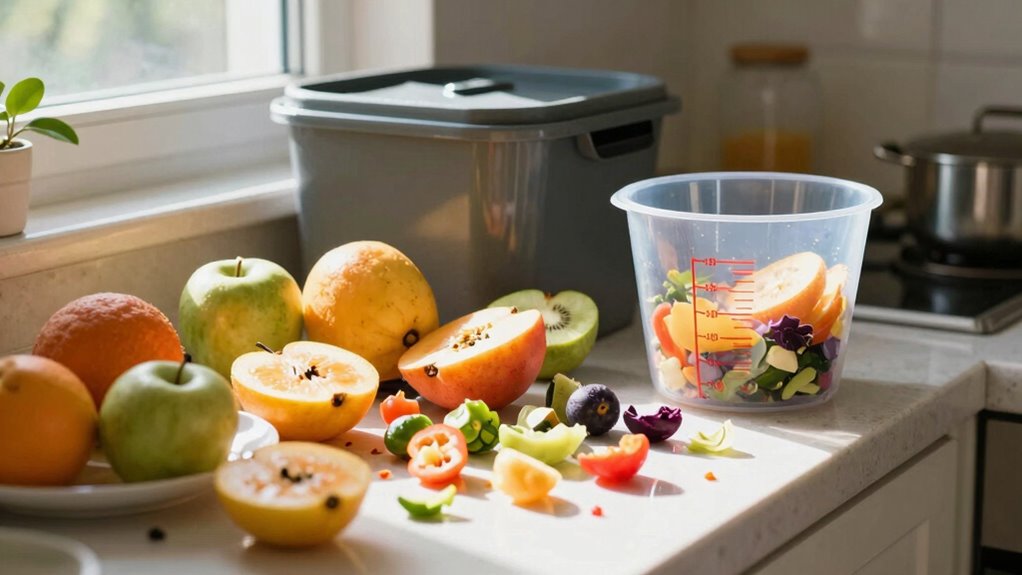
Ever wonder where most of your food waste happens? Start by tracking your habits to identify problem areas. Review your meal planning to see if you’re buying more than you need or cooking too much. Pay attention to portions—over-serving leads to leftovers that often get discarded. Use simple tools like a waste journal or app to log what gets thrown out and when. This helps you see patterns and pinpoint where waste is highest. Once you identify those areas, set achievable goals, like improving portion control or adjusting your grocery list. Making small, targeted changes keeps you motivated and prevents overwhelm. Additionally, understanding food waste statistics can motivate you to stay committed to your goals. Developing an awareness of food waste reduction strategies can further empower your efforts to minimize waste and enhance your sustainability practices. Recognizing support breakfast options can inspire you to incorporate more sustainable and efficient meal choices. Being aware of the environmental impact associated with food waste can deepen your motivation to reduce it. By understanding your waste hotspots, you can create realistic strategies to cut down waste and save money.
Easy Daily Habits and Tools to Waste Less Food
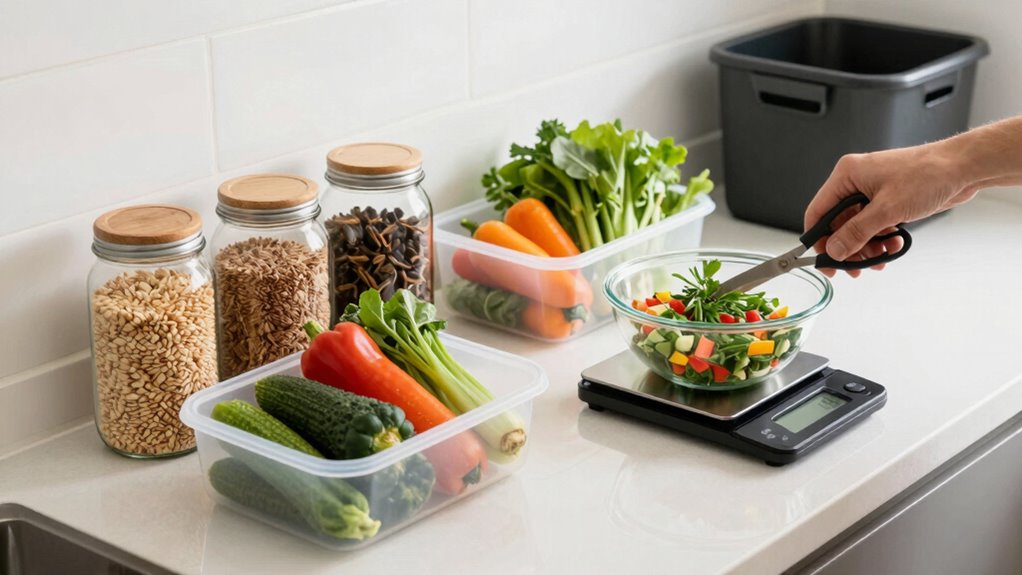
Incorporating simple daily habits and using practical tools can make a big difference in reducing food waste. Start with meal planning to organize your grocery list and avoid impulse buys. Use portion control to prevent leftovers from going bad. Keep a running inventory of your fridge to track what needs to be used soon. To help visualize this, consider the following:
| Habit | Tool | Benefit |
|---|---|---|
| Meal planning | Weekly menu apps | Reduces overbuying |
| Portion control | Measuring cups/spoons | Prevents excess leftovers |
| Inventory check | Fridge notes | Avoids forgotten food |
| Leftover reuse | Food storage containers | Minimizes waste from spoilage |
Additionally, understanding color accuracy in your food storage and display areas can help you better assess spoilage and freshness, ultimately reducing unnecessary waste. Paying attention to food expiration dates can also help prevent discarding still-edible items prematurely. Proper storage techniques not only extend the shelf life of perishable items but also help you recognize signs of spoilage more effectively, further reducing waste. Incorporating eco-friendly storage solutions can further enhance your efforts in waste reduction and sustainability.
Frequently Asked Questions
Can Composting Help Reduce Overall Food Waste Effectively?
Composting can definitely help reduce overall food waste effectively. By composting food scraps, you divert organic waste from landfills, reducing methane emissions. You also promote waste segregation, making it easier to donate non-compostable food items. This process encourages responsible waste management, minimizes environmental impact, and supports sustainable practices. So, start composting and consider food donation to make a real difference in reducing food waste daily.
How Can Meal Planning Minimize Leftovers and Waste?
Think of meal planning as your culinary symphony, orchestrating perfect harmony between portions and ingredients. You can minimize leftovers and waste by practicing portion control, ensuring you cook just enough. Craft a detailed shopping list that aligns with your meal plan, preventing impulsive buys. This mindful approach streamlines your shopping, keeps waste at bay, and transforms your kitchen into a well-tuned orchestra, where every note—every meal—is perfectly played.
Are There Apps to Track and Reduce Food Waste Daily?
Yes, there are apps that help you track food expiration dates and improve your shopping habits daily. Apps like NoWaste or FoodKeeper allow you to scan barcodes, set reminders for expiry, and plan your meals better. By using these tools, you can prevent overbuying, use ingredients before they spoil, and reduce unnecessary waste, making your efforts more effective and eco-friendly every day.
What Are Creative Uses for Leftover Food?
Think of leftover food as a treasure chest waiting to be opened. You can craft creative recipe ideas like turning roasted vegetables into flavorful soups or creating savory pancakes from mashed potatoes. Use leftover transformation tips like repurposing cooked grains into salads or blending fruits into smoothies. With a little imagination, you transform scraps into delicious meals, reducing waste and delighting your taste buds. Your kitchen becomes a culinary adventure!
How Does Proper Food Storage Extend Freshness?
Proper food storage extends freshness by enhancing food preservation and preventing spoilage. You should store perishable items in airtight containers or wrap them tightly to limit exposure to air and moisture. Keep your fridge at the right temperature, around 40°F, to slow bacterial growth. Use labels to track expiry dates, and organize your fridge so older items are used first. These steps help you enjoy food longer and reduce waste.
Conclusion
By dedicating just 15 minutes a day, you can considerably cut down your food waste—saving money and helping the environment. Did you know that roughly one-third of all food produced globally is wasted? That’s about 1.3 billion tons each year! Small daily habits add up, making a big difference over time. Start today, see where your waste happens, and watch how easy it is to make a positive impact with just a few minutes each day.