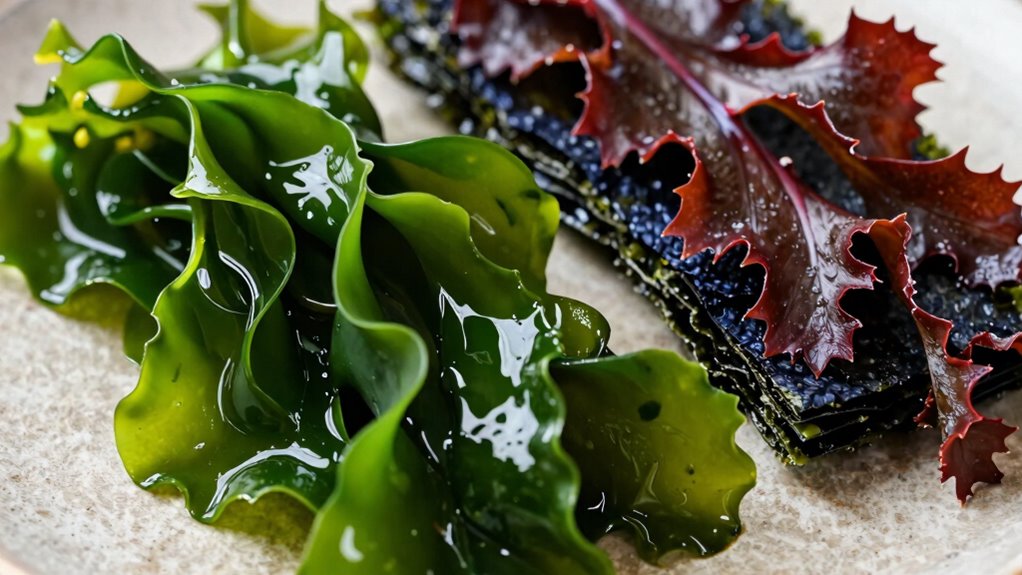

You can use raw kelp, nori, and dulse in various ways to boost nutrition and flavor. For kelp, soak and add it to soups or salads. Nori works well as a snack or shredded onto rice bowls and sushi. Dulse can be eaten raw, blended into smoothies, or toasted for a crunchy snack. Incorporating these sea vegetables is simple and versatile—if you keep exploring, you’ll discover even more creative ideas and benefits.

Get kitchen staples and gadgets delivered free with Prime
- Fast, free delivery on millions of items
- Prime Video, Amazon Music and more included
- Member-only deals all year
Key Takeaways
- Rinse raw kelp, nori, and dulse thoroughly to remove dirt or salt before use.
- Add rehydrated kelp to soups, stews, or salads for added umami and nutrition.
- Use raw nori sheets as a snack or shred into rice bowls, sushi, or grain dishes.
- Incorporate raw dulse into smoothies, or toast it for a crunchy snack or topping.
- Store raw sea vegetables in a cool, dry place to preserve freshness and flavor.
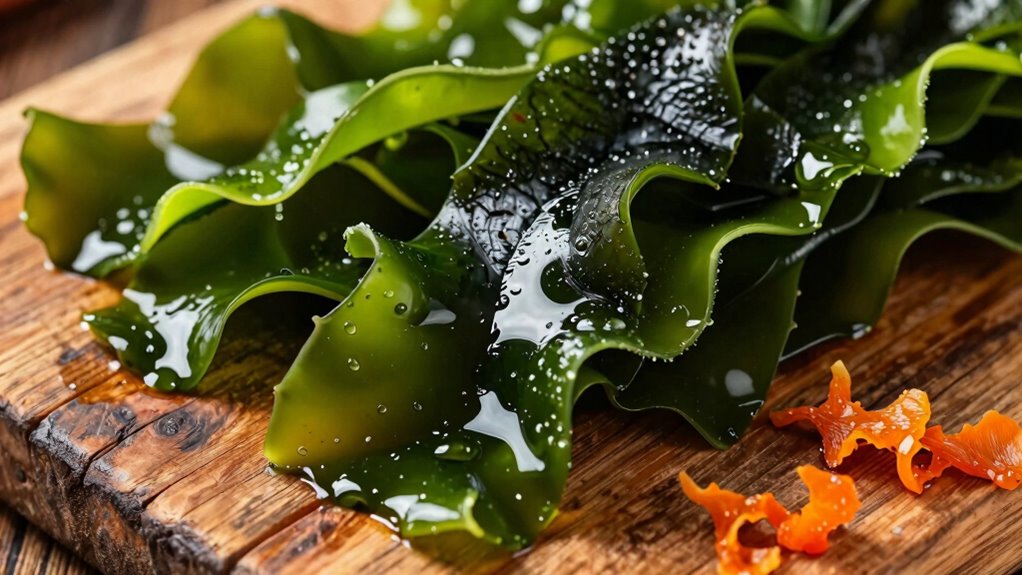
Sea vegetables like kelp, nori, and dulse are versatile ingredients that can elevate your meals with their rich umami flavor and packed nutrients. These sea vegetables are harvested through sea vegetable cultivation, a process that involves sustainable farming methods to guarantee a steady supply of fresh, high-quality greens. When you explore different types, you’ll notice how each has its unique texture and flavor profile, making them suitable for a variety of dishes. Understanding the differences in cultivation and nutritional content helps you incorporate these superfoods into your diet more intentionally. sustainable farming methods ensure that these nutritious greens are harvested responsibly, supporting both environmental health and consistent supply.
Kelp, a large brown seaweed, is often cultivated in colder waters where its hearty stalks grow quickly. Its cultivation involves farming on ropes or nets submerged in the ocean, which encourages sustainable harvesting and minimizes environmental impact. Nori, the thin, dark sheets commonly used in sushi, is cultivated in shallow coastal waters through a process that involves spreading spores over nets and carefully controlling growth conditions. Dulse, a red seaweed, is harvested both wild and farmed, often from colder Atlantic waters, where its tender leaves thrive. Learning about seaweed cultivation can deepen your appreciation for the sustainability efforts behind these foods. Knowing how these sea vegetables are cultivated helps you appreciate their freshness and the environmental efforts behind their production.
When you compare their nutritional profiles, you’ll see significant differences that make each suitable for specific health benefits. Kelp is rich in iodine, essential for thyroid health, along with calcium, magnesium, and antioxidants. Nori offers a good source of vitamin B12, which is rare among plant-based foods, and also provides protein, fiber, and iron. Dulse packs a punch with high levels of potassium, vitamin C, and healthy antioxidants, making it useful for immune support and hydration. Comparing their nutritional content allows you to choose the right sea vegetable for your dietary needs, whether you’re after more minerals, vitamins, or protein.
Using these sea vegetables in your cooking is straightforward. You can rehydrate dried kelp by soaking it in water, then add it to soups, stews, or salads to boost flavor and nutrition. Nori sheets make a quick snack or can be shredded into rice bowls and sushi. Dulse can be eaten raw or added to smoothies, or toasted for a crunchy snack. Incorporating these into your meals not only enhances taste but also introduces a rich source of nutrients that support overall health. As you experiment, you’ll discover how versatile and beneficial raw sea vegetables truly are, making them an excellent addition to your pantry.
As an affiliate, we earn on qualifying purchases.
Frequently Asked Questions
Are Raw Sea Vegetables Safe to Eat Daily?
Yes, you can eat raw sea vegetables daily, but moderation is key. They offer incredible nutritional benefits like iodine, vitamins, and minerals, boosting your health. Their culinary versatility lets you add them to salads, smoothies, or snacks easily. However, too much can lead to excess iodine intake or other health issues. Always listen to your body and consider consulting a healthcare professional to enjoy their benefits safely every day.
How Do I Store Raw Sea Vegetables Properly?
Think of storing raw sea vegetables as safeguarding treasure from the ocean’s depths. Keep your seaweed harvested fresh by using airtight containers or resealable bags, removing excess air to prevent spoilage. Store them in the refrigerator, ideally in the crisper drawer, to maintain their freshness. For longer storage, consider freezing, ensuring they’re dry beforehand. Proper storage techniques preserve flavor, texture, and nutritional value, just like protecting a precious bounty from the sea.
Can Raw Sea Vegetables Be Used in Smoothies?
Yes, you can use raw sea vegetables in smoothies to add a savory, umami flavor. Start by blending small amounts of kelp, nori, or dulse into your smoothie recipes for a boost of nutrients. The seaweed flavor pairs well with fruit and greens, enhancing your drink’s health benefits without overpowering it. Just make certain the seaweed is finely blended to avoid any gritty texture for a smooth, delicious result.
Do Raw Sea Vegetables Contain Allergens?
You might wonder if raw sea vegetables contain allergens, and the answer isn’t straightforward. During seaweed harvesting, some varieties can carry traces of allergens like iodine or shellfish proteins, which might trigger reactions. Always check allergen labeling carefully, especially if you have sensitivities. While most people tolerate seaweed well, it’s wise to introduce it gradually, staying alert for any adverse reactions.
How Do I Tell if Raw Sea Vegetables Are Fresh?
To tell if raw sea vegetables are fresh, look for bright, vibrant colors and a firm texture—these are key freshness indicators. Smell them; they should have a clean, ocean-like aroma without a strong fishy or sour scent. To preserve their freshness, store seaweed in airtight containers in the fridge and avoid exposure to moisture. Regularly check for sliminess or discoloration, which signal that freshness has declined.
Conclusion
Embracing sea vegetables like kelp, nori, and dulse opens a doorway to a world of oceanic treasures. With each gentle addition, you invite the whispers of the sea into your kitchen, cultivating flavors that soothe and energize. Let these vibrant greens become your secret allies, enriching your dishes with their subtle magic. As you nurture this connection, you’ll find yourself delicately weaving the ocean’s essence into every meal, creating a harmonious dance of taste and well-being.
Halloween Picks
halloween
As an affiliate, we earn on qualifying purchases.