
Raw sauces like pesto and salsa bring fresh, vibrant flavors to your meals while preserving essential nutrients and antioxidants. You can enjoy creamy, herbal pestos made with raw nuts and herbs, or zesty salsas full of tomatoes, onions, and peppers, all with high vitamin content. These sauces are quick to prepare, versatile, and perfect for boosting your health. Keep exploring to discover tips on making perfect raw sauces and how to incorporate them into your favorite dishes.
Key Takeaways
- Raw pesto retains antioxidants and healthy fats by avoiding cheese and cooking, enhancing flavor and nutrient content.
- Traditional salsa combines fresh vegetables and herbs, preserving vitamins, fiber, and natural sweetness for vibrant, nutrient-rich sauces.
- Both raw pesto and salsa are quick to prepare, versatile, and boost meals with fresh flavors and essential nutrients.
- Using raw nuts and herbs in sauces maximizes antioxidant intake and supports overall health benefits.
- These raw sauces are ideal for dipping, topping, or mixing into dishes, promoting healthy eating with minimal processing.
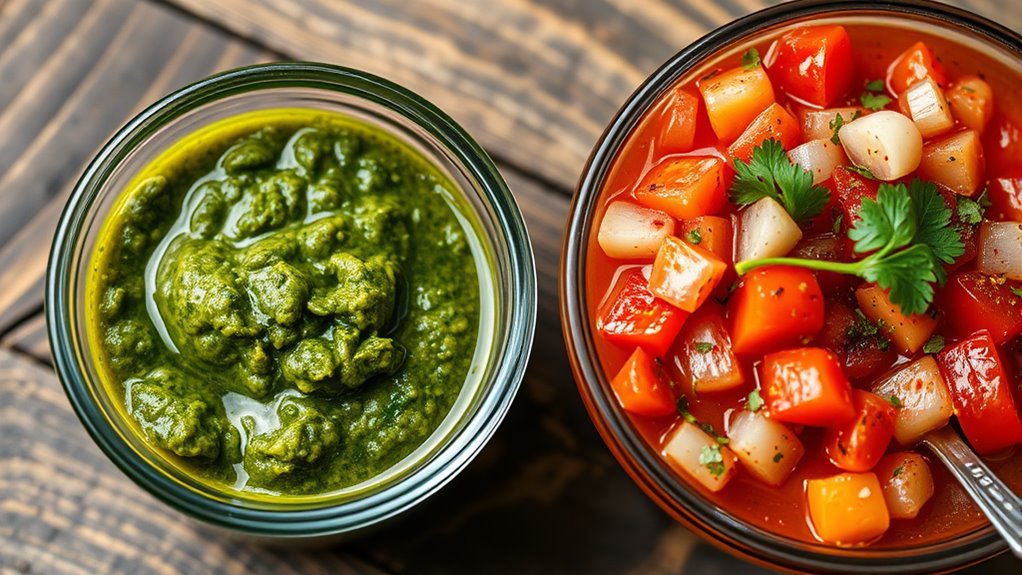
Raw sauces and dressings have become popular choices for adding fresh, vibrant flavors to your meals without cooking. They bring a burst of freshness and allow you to enjoy the true essence of ingredients. When it comes to raw options like pesto and salsa, you get to explore an array of flavor combinations that elevate simple dishes into gourmet experiences. These sauces aren’t just about taste; they also offer impressive nutritional benefits, making them a smart addition to your diet.
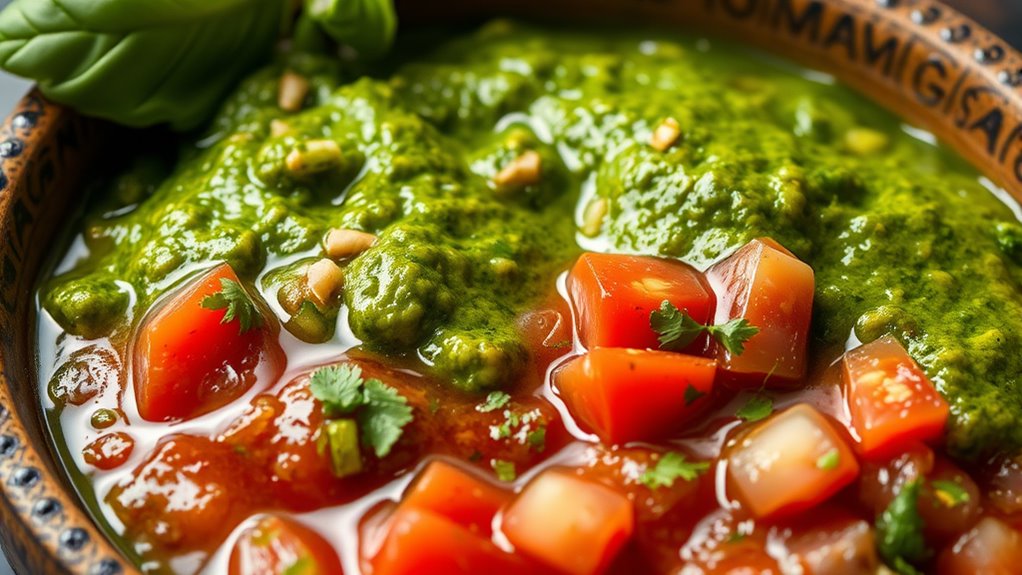
Pesto, traditionally made with fresh basil, garlic, pine nuts, olive oil, and Parmesan cheese, can be transformed into a raw sauce by omitting or reducing the cheese and opting for raw nuts. This variation enhances the natural flavors and preserves nutrients that might be lost during cooking. You can experiment with different herbs like cilantro or parsley, or add roasted or raw nuts to create unique flavor combinations that suit your palate. The vibrant green color and aromatic punch of raw pesto make it perfect for drizzling over salads, zucchini noodles, or grilled vegetables. Because it’s raw, you retain a high level of antioxidants, healthy fats, and vitamins, which support your overall well-being. The healthy fats from olive oil and nuts help improve heart health, while the antioxidants boost your immune system.
Salsa, on the other hand, is a versatile raw sauce that combines fresh tomatoes, onions, peppers, lime juice, and herbs. Its flavor combinations are endless—think sweet and spicy with mango and jalapeño, or smoky with roasted chipotle peppers. Making salsa raw preserves the natural sweetness of tomatoes and the crispness of fresh vegetables, delivering a lively taste that’s perfect for dipping or topping dishes. The nutritional benefits of raw salsa are significant: it’s rich in vitamin C, lycopene, and fiber. These nutrients support immune health, improve skin, and promote digestion. Plus, raw salsa is low in calories but high in flavor, making it an ideal addition to a balanced diet.
Both pesto and salsa exemplify how raw sauces can enhance your meals with bold flavors and essential nutrients. They are quick to prepare, adaptable, and packed with health benefits, giving you the freedom to experiment with flavor combinations that keep your meals exciting. Incorporating proper tools and techniques can make the process easier and more enjoyable. By choosing raw, you’re not only elevating the taste but also maximizing the nutritional value of your ingredients. Whether spread on toast, stirred into pasta, or used as a topping for grilled proteins, these sauces add freshness and vigor to every bite. Embracing raw sauces like pesto and salsa means you enjoy the full spectrum of flavors and nutrients that nature offers, all in a simple, delicious package.
Frequently Asked Questions
Can Raw Sauces Be Stored Safely for Long Periods?
Raw sauces like pesto and salsa can be stored safely for a limited time, typically up to a week in the fridge. To extend their shelf life, use proper storage techniques like airtight containers and keep them refrigerated at or below 40°F. Always check for signs of spoilage before consuming. While freezing can help, the texture may change, so it’s best to consume raw sauces fresh whenever possible.
Are Raw Sauces Suitable for All Dietary Restrictions?
Raw sauces are like a versatile wardrobe, fitting many dietary restrictions. You’ll find gluten-free options and vegan adaptations that suit your needs, making them suitable for most diets. However, always check ingredients carefully, as some may contain hidden animal products or gluten. With a little attention, you can enjoy raw sauces safely and confidently, knowing they align with your dietary choices and preferences.
How Do Raw Sauces Differ Nutritionally From Cooked Sauces?
Raw sauces typically retain more nutrients because they aren’t exposed to heat, so you get better nutrient retention and flavor preservation. Cooking can break down vitamins and alter flavors, reducing their nutritional value and changing taste profiles. By choosing raw options, you preserve more of the natural nutrients and vibrant flavors, making your meals more nutritious and flavorful. So, raw sauces often offer a healthier, fresher taste compared to cooked sauces.
What Are Some Tips for Customizing Raw Sauces for Allergies?
To customize raw sauces for allergies, you should use allergy-friendly ingredients like seed butters instead of nuts or gluten-free soy sauce. Always read labels carefully to spot hidden allergens and avoid cross-contamination. You can swap ingredients to suit your needs, like using fresh herbs instead of pre-made mixes. Experiment with different flavors while keeping safety in mind, and always double-check ingredient lists for peace of mind.
Can Raw Sauces Be Used in Baking or Cooking?
Yes, you can use raw sauces in baking or cooking for flavor enhancement and texture modification. Adding pesto or salsa to baked dishes can deepen flavors and introduce fresh, vibrant notes. When incorporating them, consider reducing other liquids to prevent sogginess and adjust cooking times to maintain desired textures. This technique offers a quick way to boost taste and add a unique twist to your cooked dishes.
Conclusion
Don’t think raw sauces like pesto and salsa are bland or boring. With fresh ingredients and simple prep, they pack bold flavors that elevate any meal. Plus, they’re quick to make and retain their nutritional goodness. So, skip the store-bought versions and try making your own—you’ll be amazed at how much tastier and healthier they are. Give it a shot, and you’ll never go back to processed sauces again!