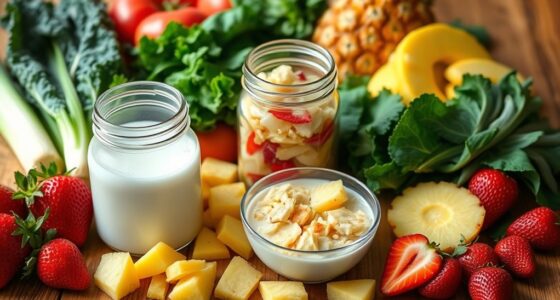

Consuming raw foods boosts your gut microbiome by introducing beneficial bacteria, natural enzymes, and fermented probiotics that improve digestion and immune health. Raw fruits, vegetables, and fermented foods like sauerkraut or kimchi add live microorganisms that diversify your gut bacteria, supporting better nutrient absorption and resilience. Plus, natural enzymes in raw foods help ease digestion and reduce bloating. Keep exploring to discover how these simple changes can transform your gut health and overall well-being.
Key Takeaways
- Raw foods introduce beneficial bacteria and natural enzymes that support microbiome diversity and overall gut health.
- Fermented raw foods like sauerkraut and kimchi provide live probiotics that enhance gut flora balance.
- Consuming raw foods preserves natural enzymes, aiding digestion and nutrient absorption.
- A diverse microbiome from raw foods improves immune function and resilience against pathogens.
- Reduced additives and processing in raw foods help maintain a healthy, balanced gut microbiome.
Have you ever wondered how eating raw foods impacts your gut bacteria? When you choose to include raw fruits, vegetables, and other unprocessed foods in your diet, you’re doing more than just nourishing your body—you’re also influencing your microbiome. Raw foods are packed with beneficial bacteria and natural enzymes that can support your digestive health. One of the key advantages of consuming raw foods is the fermentation benefits they offer. Fermentation is a natural process where beneficial bacteria break down food, creating probiotics that enhance your gut flora. Eating raw, fermented foods like sauerkraut, kimchi, or raw yogurt introduces live microorganisms directly into your digestive system, helping to balance and diversify your microbiome. This diversity is essential because a rich and varied microbiome is linked to better digestion, stronger immunity, and even improved mood.
In addition to promoting beneficial bacteria through fermentation, raw foods excel at enzyme preservation. When you cook foods at high temperatures, you often destroy many of the natural enzymes they contain. These enzymes are indispensable because they assist in breaking down food, making nutrients more accessible for absorption. By eating raw, you retain these enzymes, which can help your body digest food more efficiently. This means your gut doesn’t have to work as hard to process nutrients, reducing stress on your digestive system. Enzyme preservation in raw foods also supports overall gut health, as a well-functioning digestive system is less prone to issues like bloating, indigestion, and irregularity. Moreover, understanding the importance of microbiome diversity highlights how raw foods can contribute to long-term health resilience. The natural enzymes and bacteria present in raw foods help to foster a thriving environment for beneficial microbes. The more diverse your gut bacteria are, the better equipped your body is to fend off harmful pathogens and maintain a balanced immune response. Raw foods also tend to be less processed, often containing fewer additives and preservatives that could disrupt your microbiome. This natural, unaltered state helps nurture the delicate balance of your gut flora, contributing to overall health and well-being.
Frequently Asked Questions
Do Raw Foods Provide Enough Probiotics for Gut Health?
Raw foods alone typically don’t provide enough probiotics for ideal gut health. While they can contribute to probiotic diversity and support gut flora enhancement, they usually lack sufficient live strains. To truly boost your gut microbiome, consider adding fermented foods like yogurt, kefir, or sauerkraut. Combining raw foods with probiotic-rich options helps guarantee you’re getting enough beneficial bacteria to improve digestion, immunity, and overall well-being.
Can Eating Raw Foods Lead to Food Poisoning?
Sure, eating raw foods can be a gamble—food safety risks are real, and food poisoning is a possibility. Ironically, the nutritional benefits of raw foods often outweigh the dangers, but you still need to handle them properly. Wash everything thoroughly, keep your kitchen clean, and buy from trusted sources. Doing so helps you enjoy the health perks while minimizing the risk of foodborne illness.
How Does Cooking Affect Beneficial Microbiota in Foods?
Cooking reduces beneficial microbiota in foods by destroying live bacteria and enzymes. This process decreases enzyme activity, which can affect digestion, and lowers nutrient bioavailability, making some nutrients less accessible to your body. Although cooking can make foods safer, it often diminishes the probiotic benefits you get from raw foods. To balance safety and nutrition, consider incorporating both cooked and raw foods into your diet.
Are Raw Foods Suitable for People With Weakened Immune Systems?
Think of your immune system as a delicate garden that needs protection. If your immune suppression is significant, raw foods might be like wild weeds—harboring harmful bacteria that can cause illness. For safety, you should be cautious with raw food safety, especially when your defenses are down. Cooking helps eliminate dangerous microbes, making food safer and reducing risks for those with weakened immune systems.
What Are the Risks of Consuming Contaminated Raw Produce?
Consuming contaminated raw produce poses risks like foodborne illnesses from bacteria or parasites. Cross-contamination concerns are common during handling, increasing your risk of infection. Pesticide residue on raw fruits and vegetables can also be harmful if ingested regularly. To reduce these risks, wash produce thoroughly, peel when possible, and buy from trusted sources. Proper handling and cleaning help protect you from potential contaminants and pesticide residues.
Conclusion
By embracing raw foods, you can unlock a microbiome that’s more powerful than any superhero’s arsenal. Your gut will thank you, and your overall health could skyrocket beyond your wildest dreams. Remember, every raw bite you take is like planting a tiny superhero inside your gut, fighting off bad bacteria and boosting your immune system. So, go ahead—trust in raw foods and watch your microbiome transform into an unstoppable force!