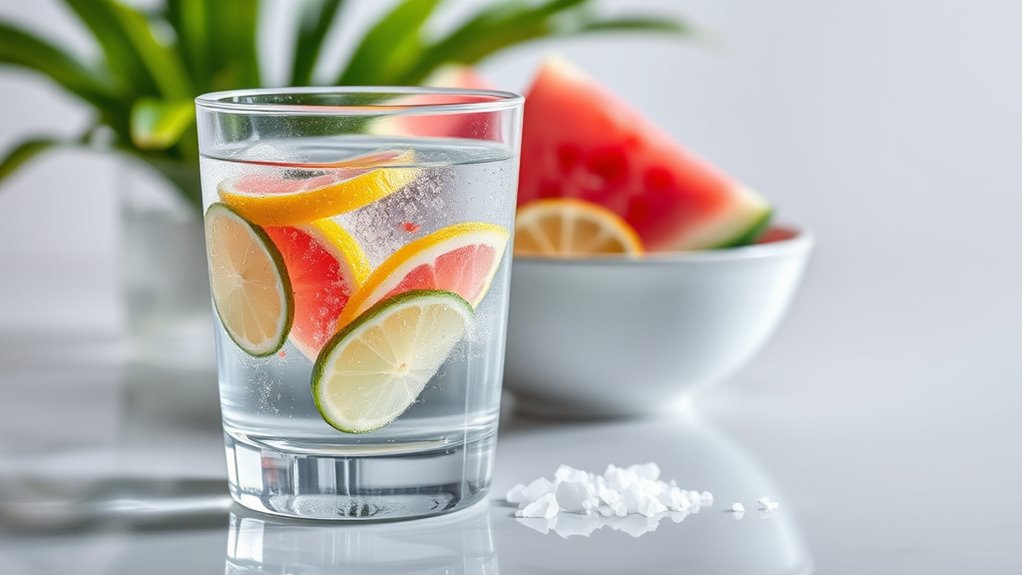

Proper hydration isn’t just about drinking water; it involves balancing water with electrolytes like sodium, potassium, magnesium, and calcium. These minerals are essential for maintaining fluid levels, supporting muscle function, and ensuring nerve signals work correctly. When you’re active or in hot weather, you lose electrolytes through sweat, so replenishing them helps prevent dehydration symptoms like fatigue and cramps. Keep exploring to discover more ways to stay properly hydrated and healthy.
Key Takeaways
- Water maintains overall bodily functions, while electrolytes regulate fluid balance, muscle function, and nerve signaling.
- Proper hydration requires balancing water intake with electrolyte replenishment, especially during exercise or hot climates.
- Electrolyte-rich drinks prevent muscle cramps and dehydration symptoms caused by mineral loss through sweat.
- Indicators like dry mouth, dark urine, and fatigue signal the need for increased hydration and electrolyte intake.
- Maintaining hydration supports energy, recovery, and overall health by preventing fatigue and dehydration-related issues.
Have you ever wondered how much water you truly need each day? The answer isn’t one-size-fits-all; it depends on your activity level, climate, and overall health. But understanding the importance of proper hydration goes beyond just drinking water. Electrolyte balance plays a pivotal role in maintaining your body’s fluid levels, muscle function, and nerve signaling. When you’re dehydrated, your body struggles to perform these essential functions, which can lead to fatigue, headaches, and even more serious health issues. That’s why it’s indispensable to pay close attention to hydration tips that help you stay balanced both in water intake and electrolytes.
Proper hydration depends on activity, climate, and health—balancing water intake with electrolytes is key.
To stay properly hydrated, you need to think beyond just sipping water—especially during intense activities or hot weather. Incorporating electrolyte-rich drinks can help replenish critical minerals like sodium, potassium, magnesium, and calcium that are lost through sweat. These minerals are necessary for maintaining electrolyte balance, which guarantees your cells work efficiently and your muscles don’t cramp. When you neglect this balance, you risk developing dehydration symptoms even if you’re drinking enough water. Hydration tips such as consuming electrolyte drinks during and after exercise can make a big difference, helping you recover faster and keeping your body functioning at its best.
Another key hydration tip is to listen to your body’s signals. Thirst is an obvious indicator, but other signs like dry mouth, dark urine, or fatigue also suggest you need more fluids. Keep a water bottle handy throughout the day and sip regularly, especially if you’re active or in a hot environment. Remember, it’s better to hydrate consistently rather than gulp large amounts infrequently, which can upset your electrolyte balance. Eating water-rich foods like fruits and vegetables also supports hydration, providing natural sources of electrolytes without added sugars or artificial ingredients. Incorporating wall organization solutions can help remind you to hydrate regularly by creating a visual cue in your living space.
Furthermore, adjusting your hydration based on circumstances makes all the difference. If you’re exercising intensely or spending time outdoors in the heat, increase your intake of water and electrolyte-rich beverages. If you’re feeling dizzy or weak, it might be a sign you’re losing too many electrolytes and need an immediate boost. Maintaining electrolyte balance isn’t just about avoiding dehydration; it’s about optimizing your overall health and energy levels. Hydration tips that focus on balancing water and electrolytes will help you stay alert, perform better physically, and recover quickly from exertion. Ultimately, paying attention to your hydration needs and incorporating these simple strategies can help you feel your best every day.
Frequently Asked Questions
How Do I Know if I’M Drinking Enough Water Daily?
You can tell if you’re drinking enough water by paying attention to your hydration tips and daily water intake. If your urine is light yellow or clear, you’re likely well-hydrated. Thirst is a sign you need more fluids, but don’t wait until then. Aim for about 8 glasses or 2 liters daily, adjusting for activity level and climate. Stay consistent, and listen to your body’s signals.
Can Overhydration Be Dangerous?
Overhydration can be dangerous because it risks causing electrolyte imbalance, which can lead to serious health issues like hyponatremia. When you drink too much water too quickly, your body struggles to maintain proper sodium levels, leading to swelling, confusion, or even seizures. To avoid these risks of overhydration, listen to your body’s thirst signals, and balance water intake with electrolyte-rich drinks, especially during intense exercise or hot weather.
Which Electrolytes Are Most Important for Hydration?
You need sodium, potassium, magnesium, and calcium for ideal hydration. These electrolytes help maintain electrolyte balance, ensuring your cells function properly and preventing dehydration. When developing hydration strategies, include foods and drinks rich in these minerals or consider electrolyte supplements, especially during intense exercise or heat. Balancing electrolytes keeps your body hydrated, supports muscle function, and boosts overall performance, making them essential for effective hydration.
How Does Hydration Affect Mental Clarity and Focus?
Think of hydration as the engine that powers your mind’s clarity. When you stay properly hydrated, water intake boosts cognition and sharpens your focus, like a lens clearing to reveal details. Dehydration clouds your thinking, making concentration a struggle. Drinking enough water helps your brain function ideally, allowing you to process information faster. So, keep hydrated, and watch your mental clarity and focus become as sharp as a blade.
Are Sports Drinks Necessary for Proper Hydration During Exercise?
Sports drinks aren’t always necessary for proper hydration during exercise, especially if your workout lasts less than an hour. They can help maintain electrolyte balance and replace lost minerals during intense or prolonged activity. For most workouts, water suffices. However, if you’re sweating heavily or exercising for extended periods, drinking sports drinks can help prevent dehydration and restore electrolyte levels, supporting your performance and recovery.
Conclusion
Staying properly hydrated is like tending a vibrant garden; water and electrolytes nourish your body, keeping everything blooming and thriving. When you drink enough, you paint your day with energy and clarity, avoiding the dry, cracked landscape of dehydration. Remember, every sip is a gentle rain that sustains your inner world. So, make hydration your daily ritual—your body’s lush, thriving garden depends on it. Keep the flow alive, and flourish.