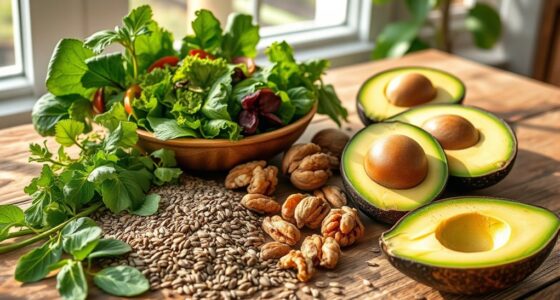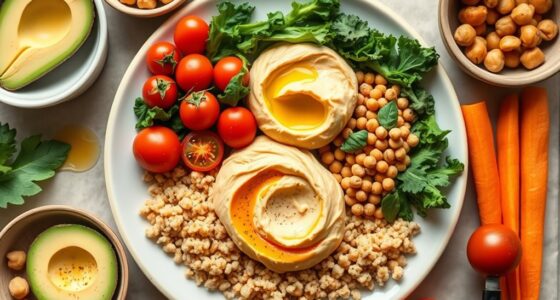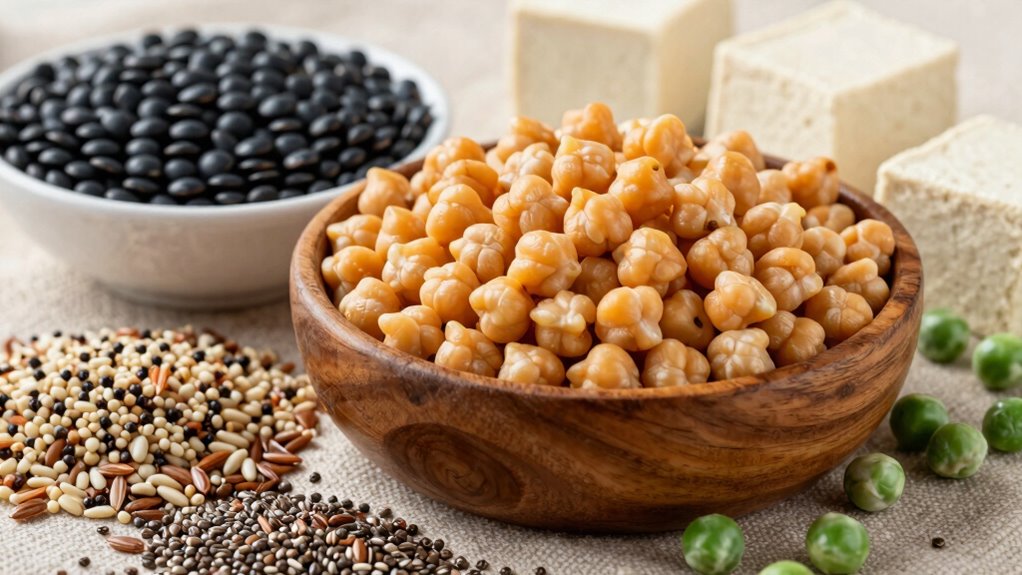

You can boost your plant-based diet by including pulses like lentils, chickpeas, and black beans, which are rich in protein, fiber, and nutrients. Seeds such as chia, hemp, and sunflower also provide healthy fats and complete amino acids, perfect for smoothies or snacks. Whole grains like quinoa and farro add energy and variety, often serving as excellent meal bases. Exploring these options helps improve nutrition and sustainability—keep going to discover even more ways to diversify your meals!

Get kitchen staples and gadgets delivered free — and shop member deals
- Fast, free delivery on millions of items
- Access to Prime Big Deal Days deals on October 6–7
- Prime Video, Amazon Music and more included
Key Takeaways
- Pulses like lentils, chickpeas, and black beans are rich in protein, fiber, and versatile for various dishes beyond tofu.
- Seeds such as chia, hemp, and sunflower provide healthy fats and complete proteins, suitable for smoothies and baked goods.
- Whole grains like quinoa, farro, and bulgur supply complex carbs and complete proteins, supporting energy and nutritional diversity.
- Natural emulsifiers from pulses and seeds improve food texture and stability in plant-based dairy alternatives and spreads.
- Incorporating pulses, seeds, and grains promotes dietary variety, sustainability, and balanced plant-based nutrition.
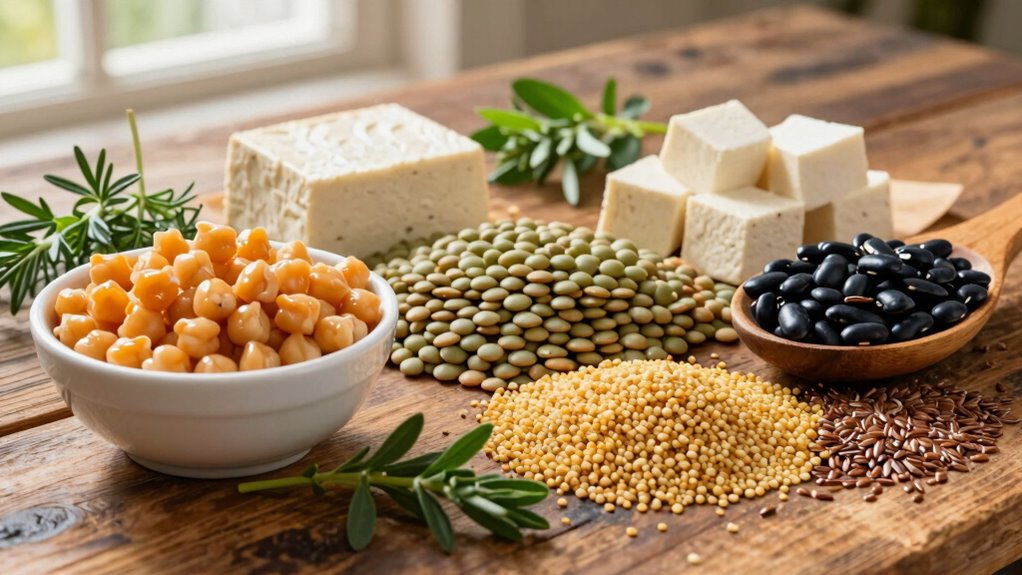
While tofu has long been the go-to plant protein, there’s a growing world of options that offer variety and nutritional benefits. You might discover that exploring different legume varieties opens up new culinary possibilities. Legumes, including lentils, chickpeas, and black beans, pack a punch of protein, fiber, and essential nutrients. They’re versatile, suitable for salads, stews, and spreads, and can easily substitute meat in many dishes. Incorporating a range of legume varieties into your diet not only diversifies your nutrition but also supports sustainable eating habits. Additionally, many legumes and seeds contain natural plant-based emulsifiers that improve food texture and stability. Beyond legumes, seeds are gaining recognition as powerful plant-based proteins. Chia seeds, hemp seeds, and sunflower seeds provide healthy fats, fiber, and a good amount of protein per serving. For example, hemp seeds offer a complete amino acid profile, making them a valuable addition to smoothies, yogurt, or baked goods. Seeds can be ground into flours or used whole, adding texture and nutritional density to your meals. Their inclusion helps you create balanced, satisfying dishes that go far beyond traditional tofu. Whole grains also serve as excellent sources of plant protein. Quinoa, farro, and bulgur are just a few options that supply both complex carbohydrates and protein, helping you maintain energy levels. Quinoa, in particular, is notable as a complete protein, containing all essential amino acids. You can use these grains as a base for salads, bowls, or side dishes. By integrating whole grains into your meals, you not only enhance your nutrient intake but also introduce delightful textures and flavors that keep your diet interesting. Incorporating plant-based protein sources such as these offers a broader spectrum of nutrients compared to relying solely on tofu. In addition to these protein sources, plant-based emulsifiers derived from legumes and seeds are transforming food textures and stability. These natural emulsifiers, such as those extracted from beans and seeds, help create smooth, cohesive plant-based dairy alternatives, sauces, and spreads. They improve mouthfeel and consistency without relying on artificial stabilizers. Using plant-based emulsifiers aligns with a clean-label approach and enhances the nutritional profile of your homemade plant-based foods. Incorporating variety in your plant-based diet can also promote better nutrient absorption and overall health. Altogether, exploring these plant proteins beyond tofu broadens your culinary horizons and boosts your nutrition. Whether you’re adding legume varieties to your favorite dishes, sprinkling seeds for extra crunch, or cooking with whole grains, you’re making smarter, more diverse choices. Natural emulsifiers derived from legumes and seeds further support your efforts to create satisfying, plant-based meals that are both delicious and nourishing. This expanded approach ensures you enjoy a varied diet packed with protein, fiber, and essential nutrients, all while supporting sustainability and your health goals.
As an affiliate, we earn on qualifying purchases.
Frequently Asked Questions
How Do Plant Proteins Compare Nutritionally to Animal Proteins?
Plant proteins often have different amino acid profiles compared to animal proteins, which are usually complete sources. However, many plant-based options like pulses, seeds, and grains can be combined to meet your amino acid needs. Protein digestibility may be lower in some plant proteins due to fiber and antinutrients, but proper preparation enhances absorption. Overall, plant proteins can be just as nutritious, especially with balanced variety and mindful intake.
Are Plant-Based Proteins Suitable for Athletes and High-Performance Diets?
Think of plant-based proteins as the new Achilles’ heel of myths—many believe they can’t fuel high-performance. In reality, they’re suitable for athletes and intense diets, especially when combined thoughtfully. Ethical considerations add to their appeal, making them a sustainable choice. You can power through your workouts with pulses, seeds, and grains, proving, like the myth-busting hero, that plants are a formidable source of strength and endurance.
What Are the Best Plant Proteins for People With Food Allergies?
If you have food allergies, allergy-friendly options like quinoa, amaranth, and buckwheat serve as excellent alternative protein sources. You should also consider seeds like chia, hemp, and sunflower seeds, which are generally safe and nutrient-dense. Always check labels for cross-contamination. These options help you meet your protein needs without risking allergic reactions, making them ideal for creating a safe, balanced diet with diverse, plant-based proteins.
How Can I Incorporate More Plant Proteins Into My Daily Meals?
Think of your meals as a symphony, and plant proteins as the vibrant instruments that bring harmony. To incorporate more, try meal prep tips like batch-cooking pulses, seeds, and grains ahead of time. Add flavor enhancements such as herbs, spices, or citrus to boost taste. Mix these into salads, stir-fries, or smoothies to diversify your diet effortlessly, making each meal both nutritious and exciting.
Do Plant Proteins Contain All Essential Amino Acids?
Plant proteins often have incomplete amino acid profiles, meaning they lack one or more essential amino acids. However, some, like quinoa and soy, are complete proteins, providing all essential amino acids you need. To guarantee you’re getting a full amino acid profile, combine different plant proteins throughout the day, such as pulses with grains or seeds, which complement each other and support your nutritional needs effectively.
Conclusion
So, next time you’re craving protein, think beyond tofu. Pulses, seeds, and whole grains aren’t just alternatives—they’re waiting to transform your meals in unexpected, delicious ways. The possibilities are endless, and the best part? You’re just getting started. Are you ready to explore these hidden gems and open a whole new world of plant-based power? Your taste buds—and your body—will thank you. The journey to better, bolder eating is just beginning.
Fall Picks
fall essentials
As an affiliate, we earn on qualifying purchases.