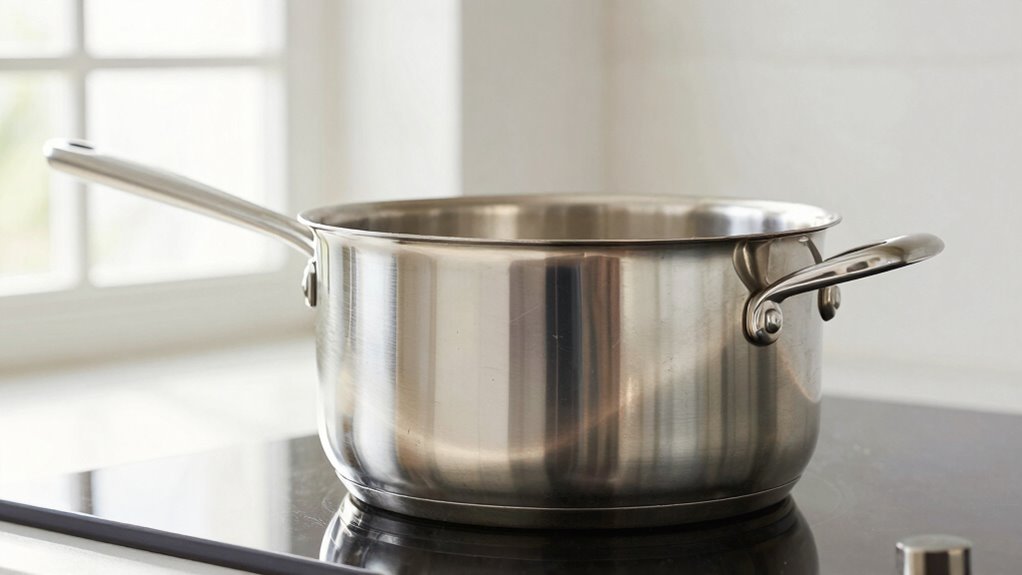

Many products claim to be ‘non-toxic,’ but these labels can be misleading because standards vary, and claims are often unverified or outdated. Toxic chemicals may still leach from coatings or materials, especially as they degrade over time. To truly protect yourself, question what materials and tests back up these claims. If you want to learn what hidden risks to watch for and how to choose safe cookware, keep exploring this important topic.

Get kitchen staples and gadgets delivered free with Prime
- Fast, free delivery on millions of items
- Prime Video, Amazon Music and more included
- Member-only deals all year
Key Takeaways
- “Non-toxic” claims vary by region, with inconsistent standards and marketing tactics, making verification essential.
- Even labeled non-toxic cookware can degrade over time, potentially releasing harmful chemicals through chipped coatings or worn surfaces.
- Chemical leaching depends on materials, coatings, heat, and food acidity, so long-term safety cannot be guaranteed solely by initial labeling.
- Durability and quality of coatings are critical; damaged or poorly applied coatings pose health risks from particle ingestion.
- Consumers should question the safety of cookware by examining material composition, testing, and regulatory compliance, not just marketing claims.
As an affiliate, we earn on qualifying purchases.
What Does ‘Non-Toxic’ Mean in Cookware Labels?
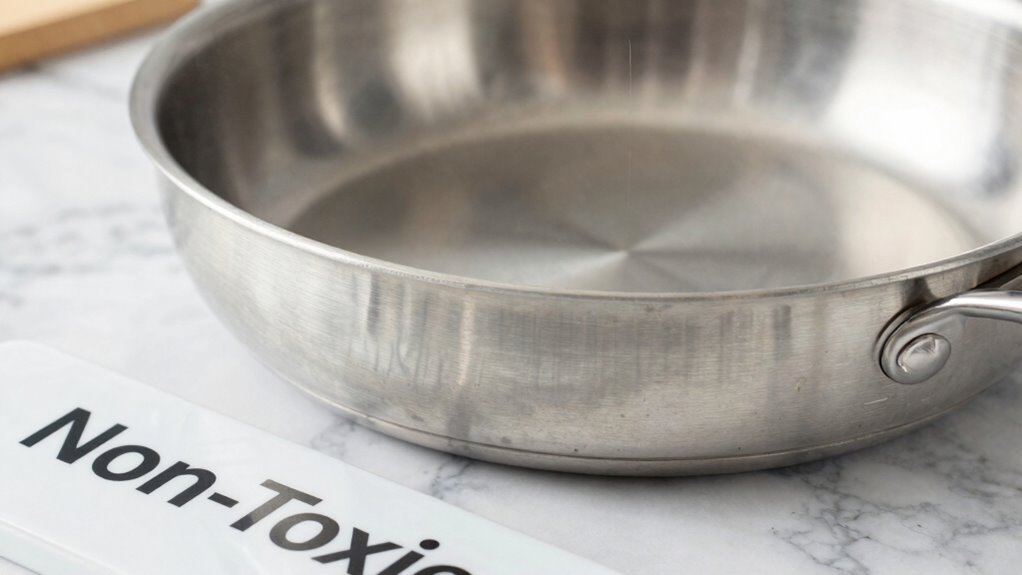
When you see the term “non-toxic” on cookware labels, it generally means that the product is free from harmful chemicals that could leach into your food. However, it also hints at the environmental impact of its manufacturing processes. Non-toxic cookware is often made with materials that are safer for both your health and the planet. These materials typically involve manufacturing methods that minimize pollution and reduce the use of toxic substances. By choosing non-toxic options, you’re supporting more sustainable production practices that prioritize ecological health. For example, some non-toxic cookware options are designed with eco-friendly manufacturing processes that aim to reduce environmental footprint. Additionally, understanding the environmental impact of different cookware materials can help you make more sustainable choices. Recognizing the importance of sustainable textile care and innovative fabric technologies highlights how manufacturing practices can influence environmental health and product safety. It’s also important to consider how material safety impacts the overall safety and longevity of cookware. Keep in mind, though, that “non-toxic” doesn’t automatically guarantee eco-friendliness or safe manufacturing. Still, understanding how these products are made helps you make more informed choices about the cookware you bring into your kitchen.
Do Non-Toxic Claims on Cookware Really Mean Safety?
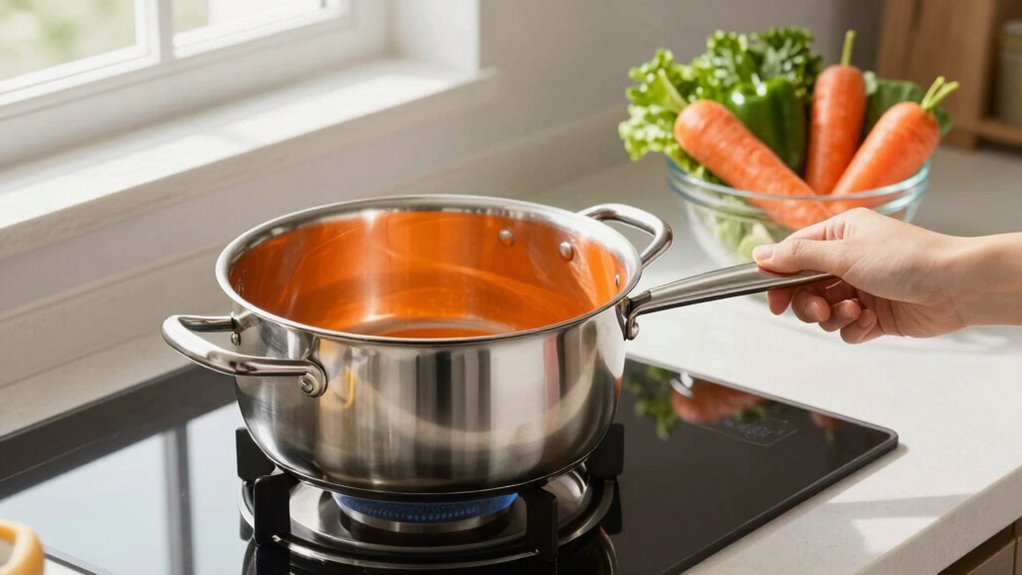
You might assume non-toxic labels mean your cookware is completely safe, but standards can vary greatly. Some claims aren’t strictly regulated, leaving you unsure about what’s truly safe long-term. Without clear, consistent rules, it’s hard to know if these products will protect your health over time. Additionally, affiliate disclosures and privacy policies can influence how companies promote their products, further complicating trust in these claims. Recognizing the regulatory landscape surrounding non-toxic products can help you make more informed choices. Being aware of natural materials and how they are sourced can also provide additional assurance about the safety and sustainability of your cookware options.
Regulatory Standards Variability
Have you ever wondered if a non-toxic label on cookware truly guarantees safety? The truth is, regulatory standards vary widely across regions, making it hard to trust every claim. Cultural perceptions influence what’s considered “safe,” often shaping marketing strategies rather than actual safety tests. Different countries set different limits on chemical emissions and materials, so a product deemed safe in one place might not meet standards elsewhere. This regulatory variability can mislead consumers into assuming universal safety. Manufacturers may exploit these disparities to market products as “non-toxic” without rigorous testing. Additionally, understanding the specific device and network security measures in place can help consumers better evaluate the safety of products and materials marketed as non-toxic. Recognizing the importance of material safety standards used in manufacturing can further inform consumers’ choices and skepticism.
Long-Term Health Uncertainty
Even if cookware is labeled as “non-toxic,” it doesn’t necessarily mean it’s safe for long-term use. Chemical exposure over time can still occur, especially as coatings or materials degrade. You might think you’re protected, but without long-term studies, safety remains uncertain. Your consumer awareness plays a pivotal role—knowing what substances are in your cookware can help reduce potential risks. Here’s a quick comparison:
| Non-Toxic Claims | Long-Term Safety |
|---|---|
| Based on current tests | Unclear without long-term data |
| Focus on immediate safety | Long-term effects may differ |
| Varies by manufacturer | No guaranteed durability |
Understanding these nuances helps you make smarter choices about cookware longevity and chemical exposure. Additionally, material degradation over time can impact the safety of non-toxic cookware. Recognizing that chemical leaching can increase as materials break down emphasizes the need for ongoing research on long-term safety. Moreover, comprehensive testing is crucial to truly assess the safety of these products over extended periods, especially since initial safety claims may not reflect long-term realities. Furthermore, regulatory standards may vary widely, influencing how these claims are made and interpreted.
How Are Non-Toxic Cookware Tested for Safety?

To guarantee non-toxic cookware is safe for everyday use, rigorous testing methods are applied to evaluate their chemical safety and material integrity. These tests assess ceramic durability and metal reactivity, ensuring the cookware won’t leach harmful substances. Manufacturers often conduct chemical leaching tests, exposing cookware to high heat and acidic foods to observe potential transfer of chemicals. They also perform durability tests to check for cracks or chips that could release particles. Additionally, surface testing ensures coatings are evenly applied and free of toxic residues. Resistance to corrosion and scratching is assessed to confirm long-term safety. Conducting comprehensive safety assessments is essential to confirm that non-toxic cookware truly remains safe over time. Incorporating laboratory measurement tools can help ensure accuracy and reliability in these safety evaluations. Moreover, continuous quality control is crucial to maintain safety standards throughout production. Implementing standardized testing protocols aligned with industry compliance requirements can further enhance consumer confidence in non-toxic cookware. Regular performance testing under real-world cooking conditions provides additional assurance of durability and safety.
What Hidden Risks Should You Watch Out For?
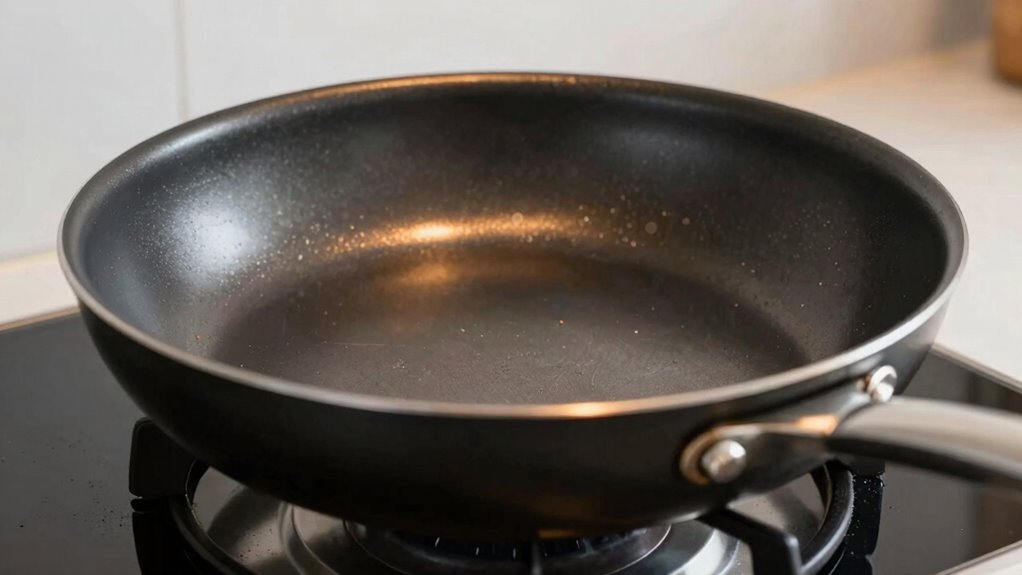
Even non-toxic cookware can pose hidden risks, like unknown chemicals leaching into your food over time. You should also consider whether the coating is durable enough to withstand regular use without breaking down. Staying aware of these issues helps guarantee your cookware remains safe and reliable. Additionally, researching market reputation can help you choose brands that prioritize safety and quality. It’s also wise to be aware of care and maintenance practices that can extend the lifespan of your cookware and prevent deterioration.
Unknown Chemical Leaching
While many non-toxic cookware options claim to be safe, some may still leach hidden chemicals into your food. Chemical migration can occur when materials aren’t properly tested, especially under high heat or with acidic ingredients. This hidden leaching poses risks, as chemicals can enter your food without obvious signs. Additionally, cookware durability plays a role: cheaper or poorly made products may degrade faster, increasing the chance of chemical migration over time. You should watch out for:
- Unknown chemical residues from manufacturing
- Weak heat resistance leading to material breakdown
- Variations in chemical migration based on food acidity
- Long-term durability impacting safe usage
- Material testing is essential to ensure cookware safety and prevent unseen chemical leaching.
Understanding these risks helps you make informed decisions and avoid cookware that might silently compromise your health through unseen chemical leaching.
Coating Durability Concerns
Coating durability directly impacts the safety and longevity of your cookware. If a coating doesn’t withstand regular use, it can chip, peel, or wear down, releasing particles or exposing the base material. This compromises not only your cookware’s lifespan but also your health. Many non-toxic coatings prioritize material composition to avoid harmful chemicals, but their coating longevity varies. Cheaper or poorly applied coatings tend to degrade faster, increasing the risk of ingestion. Even high-quality non-stick surfaces can lose their integrity over time. Regular use, cleaning, and temperature fluctuations accelerate wear. To guarantee safety, choose cookware with proven durability, and replace items once the coating shows signs of deterioration. Paying attention to coating longevity helps protect you from hidden risks associated with compromised surfaces.
How to Compare Popular Non-Toxic Cookware Options
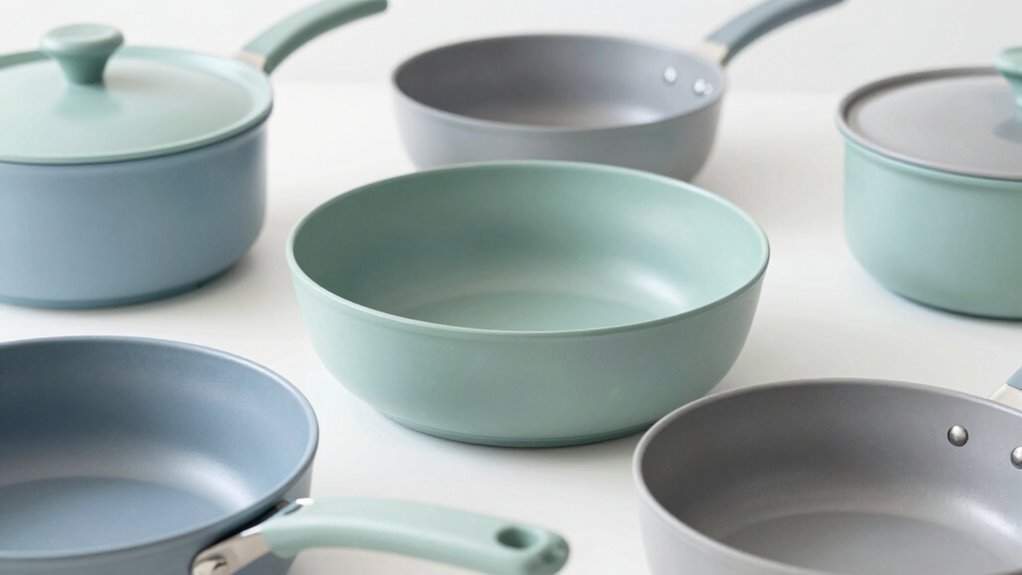
When comparing popular non-toxic cookware options, you should carefully evaluate key factors such as material safety, durability, and heat performance. These elements directly impact your cooking techniques and the ease of cookware maintenance. For example, some materials heat evenly but may require special cleaning. Consider how each cookware type responds to different heat levels and whether it suits your usual recipes. Additionally, assess if the material is safe at high temperatures and doesn’t leach harmful chemicals.
- Material composition and safety certifications
- Resistance to scratches and warping
- Compatibility with various heat sources
- Ease of cleaning and maintenance routines
Key Questions to Ask When Choosing Non-Toxic Cookware
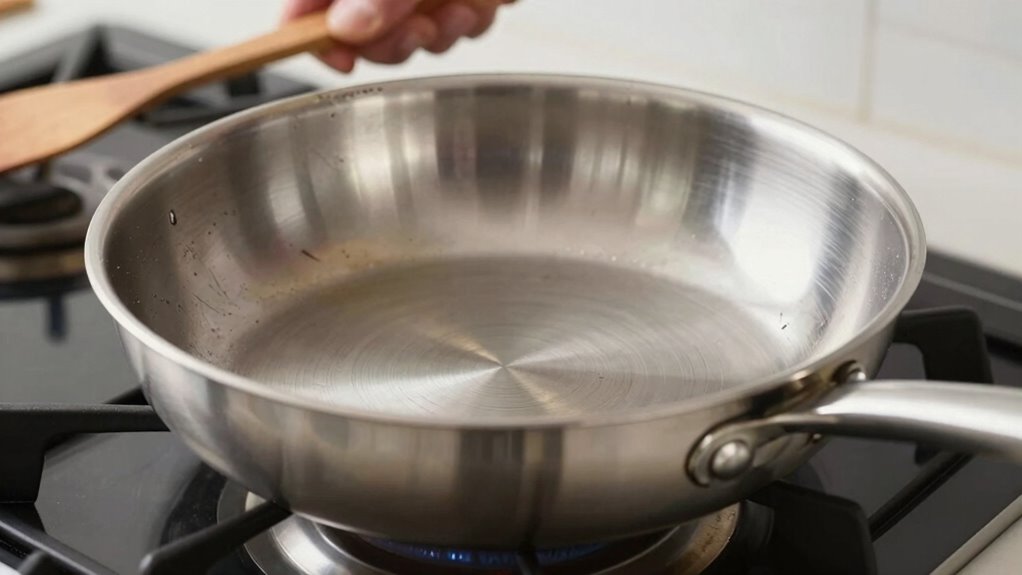
Choosing the right non-toxic cookware involves asking the right questions to guarantee it meets your safety and performance standards. First, consider your cooking techniques—will you need high heat, non-stick surfaces, or specific materials? Understanding how the cookware performs at various temperatures helps assure safety and efficiency. Ask about how easy it is to clean; kitchen cleaning routines matter because some materials may require special care to prevent damage or buildup. Check if the cookware releases any harmful substances during use, especially when exposed to different cooking techniques. Also, inquire about the durability of the materials and whether they resist scratching or staining. Getting clear answers to these questions helps you select cookware that’s safe, effective, and suits your daily cooking and cleaning habits.
What Does Science Say About Safe Cookware Materials?
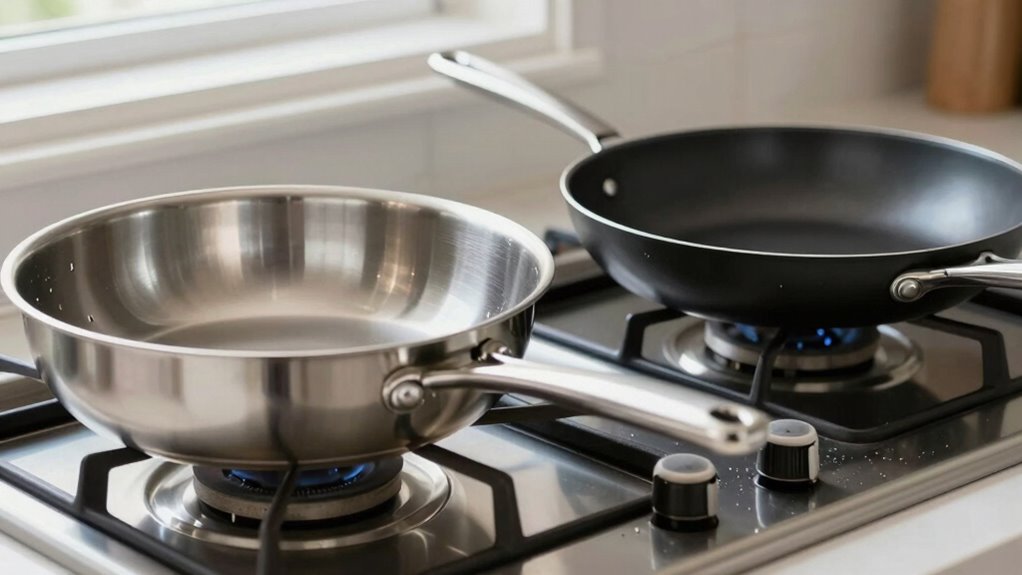
Science shows that the safety of cookware materials depends on their chemical composition and how they interact with heat during cooking. Materials like ceramic and metal each have unique properties influencing safety, durability, and potential chemical leaching. For example, ceramic durability varies widely, with some glazes containing heavy metals, while others are more stable. Metal composition also matters: stainless steel resists corrosion, but reactive metals like copper or aluminum may release substances into food. Research indicates that high-quality ceramic coatings tend to be safer, but only if they’re free from toxic additives. Understanding these factors helps you make informed choices.
- Ceramic durability impacts longevity and safety
- Metal composition determines reactivity and potential leaching
- Glaze quality influences chemical stability
- Heat interaction affects material integrity
Tips for Finding Truly Non-Toxic Cookware
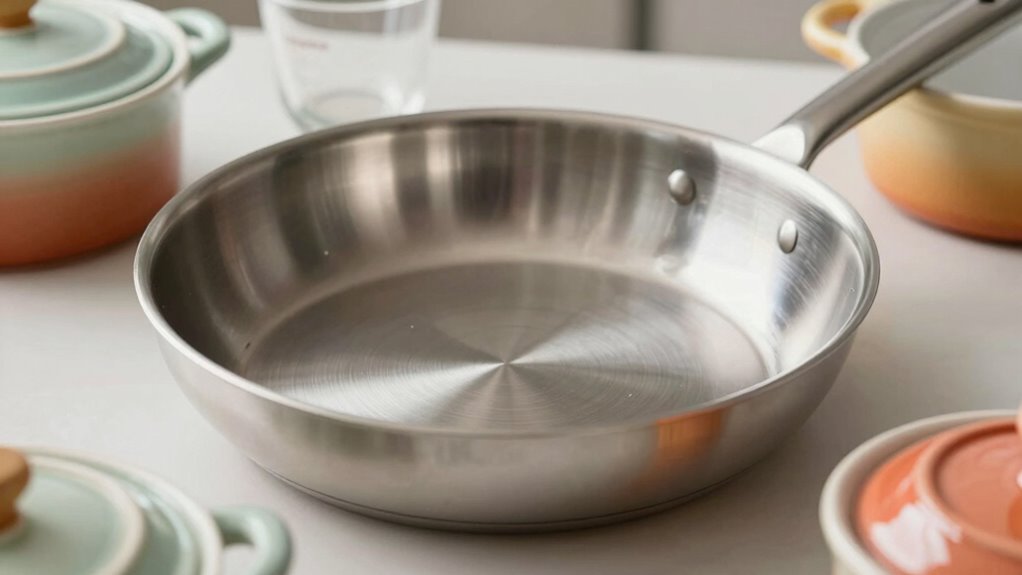
Finding truly non-toxic cookware requires careful research and mindful selection. Start by checking labels and manufacturer info to verify materials are free from harmful chemicals like PFAS or PFOA. Prioritize cookware that complements your kitchen aesthetics with simple, natural finishes. Consider the type of cooking techniques you use—stir-frying, simmering, or baking—since different materials perform better with specific methods. For example, cast iron or stainless steel can handle high heat, while ceramic-coated options are ideal for low-oil cooking. Always read reviews and ask questions about the manufacturing process. By focusing on safe materials, suitable cooking techniques, and your kitchen’s style, you can choose cookware that’s both beautiful and non-toxic, giving you peace of mind with every meal.
Frequently Asked Questions
Are All Non-Toxic Cookware Labels Regulated by Authorities?
Not all non-toxic cookware labels are regulated by authorities. While some brands meet certification standards for chemical safety, others may not undergo strict testing or verification. You should always check for reputable certifications, like those ensuring compliance with safety standards. Relying solely on marketing claims can be risky, so researching the brand’s safety practices and verifying their adherence to certification standards helps guarantee you’re choosing truly non-toxic cookware.
Can Cookware Labeled Non-Toxic Still Leach Harmful Chemicals?
While cookware labeled non-toxic might seem safe, don’t assume it’s free from risks. Chemical leaching can occur, especially under high heat or with damaged surfaces, posing health risks you might not expect. Even non-toxic labels don’t guarantee no harmful chemicals will leach into your food. Always check for certifications and avoid chipped or scratched surfaces, because subtle damage can increase the potential for chemical leaching and impact your health.
How Long Does Non-Toxic Cookware Typically Last Before Degrading?
Non-toxic cookware usually lasts around 3 to 5 years before it starts degrading, depending on the material and usage. For cooking safety, it’s important to monitor signs of wear, like scratches or peeling, which can compromise durability. High-quality materials like ceramic or stainless steel tend to be more durable, but over time, all cookware may show signs of aging. Regular inspection helps guarantee your cookware remains safe and effective.
Are There Certifications That Guarantee Truly Non-Toxic Cookware?
You might find certifications like NSF International or ASTM F-2992 helpful, as they set rigorous standards for healthy alternatives. For example, a brand with NSF certification guarantees their cookware meets strict safety criteria, ensuring it’s truly non-toxic. Always check for these certification standards before buying, because they provide objective proof that the cookware is free from harmful chemicals, giving you peace of mind while cooking.
Does Non-Toxic Cookware Require Special Maintenance or Cleaning?
Non-toxic cookware usually requires simple maintenance and cleaning routines. You should clean it regularly, using gentle cleaning techniques to avoid damaging the surface. Avoid abrasive scrubbers and harsh chemicals, as they can harm the non-toxic coating. A routine cleaning frequency of after each use is ideal, and hand washing is generally recommended. Proper maintenance techniques help preserve the cookware’s non-toxic qualities and extend its lifespan, ensuring safe cooking every time.
Conclusion
Just like Pandora’s box, the promise of “non-toxic” cookware can hide surprises. Don’t take claims at face value—ask questions, do your research, and choose wisely. With a little detective work, you can steer clear of hidden risks and find cookware that truly safeguards your health. Remember, the power to protect yourself is in your hands—so open the box of knowledge and make informed, safe choices for your kitchen.
NFL season / tailgating Picks
team gear
As an affiliate, we earn on qualifying purchases.