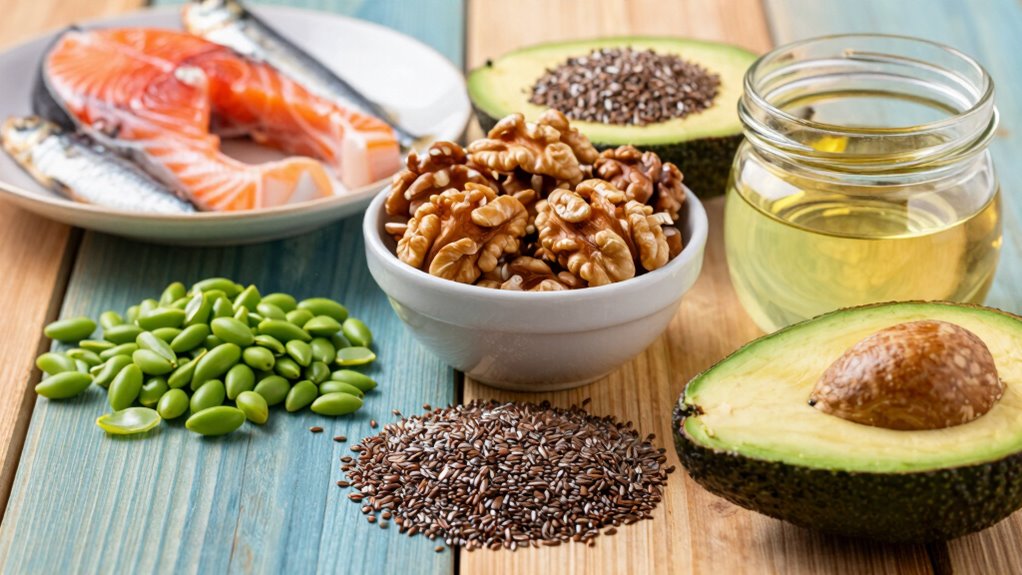

Plant-based omega-3s include ALA, found in seeds and nuts, while EPA and DHA mainly come from marine sources or algae supplements. Your body can convert ALA into EPA and DHA, but the process is inefficient and varies for everyone. To get enough EPA and DHA directly, algae-based supplements are a good choice. Keep exploring to understand how to optimize your omega-3 intake and support your health effectively.

Get kitchen staples and gadgets delivered free with Prime
- Fast, free delivery on millions of items
- Prime Video, Amazon Music and more included
- Member-only deals all year
Key Takeaways
- ALA is a plant-based omega-3 found in foods like flaxseeds and walnuts, while EPA and DHA are mainly from marine sources or algae.
- The body converts ALA into EPA and DHA, but this process is inefficient and varies among individuals.
- Algae-based supplements provide direct EPA and DHA, ensuring adequate intake without reliance on conversion.
- EPA and DHA are important for brain, heart, and eye health, making direct sources more effective.
- Choosing plant-based sources supports sustainability and reduces environmental impact compared to fish oils.

If you’re looking to boost your omega-3 intake without consuming fish, plant-based sources offer a healthy and sustainable alternative. Omega-3 fatty acids are essential for your body, supporting brain health, reducing inflammation, and improving heart function. While fish is a common source, many people prefer plant-based options for ethical, environmental, or dietary reasons. The two main types of plant-based omega-3s are ALA (alpha-linolenic acid) and the longer-chain EPA (eicosapentaenoic acid) and DHA (docosahexaenoic acid). Understanding how these work can help you make smarter choices about your diet.
Plant-based omega-3s like ALA, EPA, and DHA support health without fish, making sustainable, ethical choices easier.
ALA is found in foods like flaxseeds, chia seeds, walnuts, and hemp seeds. Your body can convert ALA into EPA and DHA, but this process isn’t very efficient. The conversion efficiency varies among individuals, often resulting in only a small percentage of ALA turning into the longer-chain omega-3s your body needs. This means that even if you’re eating plenty of ALA-rich foods, you might not get enough EPA and DHA without additional sources. That’s where algae benefits come into play. Algae are the original source of EPA and DHA in the marine food chain, and consuming algae-based supplements or foods derived from algae can directly provide these essential fatty acids. This bypasses the inefficient conversion process and guarantees you get a reliable supply of EPA and DHA.
The conversion efficiency from ALA to EPA and DHA is a vital aspect to think about if you’re relying solely on plant-based sources. Your body’s ability to convert ALA into the more beneficial EPA and DHA varies based on genetics, age, and overall health. Because of this, many health experts recommend supplementing with algae-based products to fill the gap. These supplements are a direct and sustainable way to access EPA and DHA without harming marine ecosystems or relying on fish oils. They also tend to have a higher bioavailability, meaning your body can absorb and use them more effectively. Additionally, research shows that relying on plant-based omega-3 sources can be a more environmentally friendly choice, helping to preserve marine biodiversity. Incorporating sustainable dietary choices can further support environmental health and promote a balanced ecosystem. Moreover, choosing algae-based options can contribute to a more sustainable diet and reduce your ecological footprint.
Furthermore, understanding the conversion process can help you optimize your omega-3 intake by tailoring your diet to include the most effective sources. In essence, if you’re committed to a plant-based lifestyle, understanding the differences between ALA and EPA/DHA is key. While ALA is easier to obtain from everyday foods, its limited conversion efficiency means you might not get enough of the long-chain omega-3s your body needs. Incorporating algae-based supplements offers a practical, sustainable way to maximize algae benefits by providing direct access to EPA and DHA. This approach guarantees you’re meeting your omega-3 needs without compromising your dietary principles or the health of our oceans.
As an affiliate, we earn on qualifying purchases.
Frequently Asked Questions
Can Plant-Based Omega-3s Fully Replace Fish-Derived Omega-3s?
Plant-based omega-3s can’t fully replace fish-derived omega-3s because they mainly provide ALA, which your body needs to convert into EPA and DHA. Fish mimic this process naturally, storing these nutrients from algae cultivation. While plant sources support health, you might not get the same direct benefits as from fish. To cover all bases, consider algae-based supplements, which offer EPA and DHA directly, mimicking fish’s omega-3 profile.
Are Plant-Based Omega-3 Supplements as Effective as Fish Oil?
Plant-based omega-3 supplements can be as effective as fish oil, especially for those with dietary preferences favoring plant sources or seeking plant sustainability. While they often contain ALA, your body converts it into EPA and DHA, though less efficiently. If you’re aiming for direct EPA/DHA intake, algae-based supplements provide a more comparable alternative. Ultimately, both options support heart health and inflammation reduction, fitting various lifestyle choices.
Which Plant Sources Provide the Highest Omega-3 Content?
You’ll find that flaxseeds, chia seeds, and walnuts are top plant sources with high omega-3 content. Flaxseeds, in particular, pack a significant amount of ALA, making them an excellent choice for plant-based omega-3s. Chia seeds and walnuts also offer substantial amounts, helping you boost your omega-3 intake naturally. Incorporating these into your diet guarantees you get valuable omega-3s from plant sources, supporting your health effectively.
How Long Does It Take to See Health Benefits From Plant-Based Omega-3s?
You might start noticing health benefits from plant-based omega-3s in about 4 to 8 weeks, depending on your dietary patterns. Absorption rates vary, with ALA converting less efficiently to EPA and DHA, so consistent intake is key. If you stick with omega-3-rich foods like flaxseeds or walnuts regularly, you’ll likely see improvements in inflammation, heart health, and brain function over time.
Are There Any Side Effects From Consuming Plant-Based Omega-3s?
Think of plant-based omega-3s as gentle rain nourishing your garden—generally, they’re safe and rarely cause side effects. Unlike fish oils, they don’t carry risks of contamination, and they won’t alter taste preferences or cause fishy aftertastes. Some people might experience minor digestive discomfort initially, but it’s usually temporary. Overall, consuming plant-based omega-3s offers a safe, natural way to boost your health without the worries associated with fish contamination or flavor changes.
Conclusion
So, if you think you’re just eating some simple plant oils, think again—you’re actually fueling a whole other universe inside your body! Choosing between ALA and EPA/DHA is like picking between a gentle stream and a roaring river of health benefits. Get it right, and you might just discover superpowers you never knew you had. Don’t settle for ordinary—supercharge your life with the right omega-3s and watch your health skyrocket into the stratosphere!
Fall Picks
fall essentials
As an affiliate, we earn on qualifying purchases.